
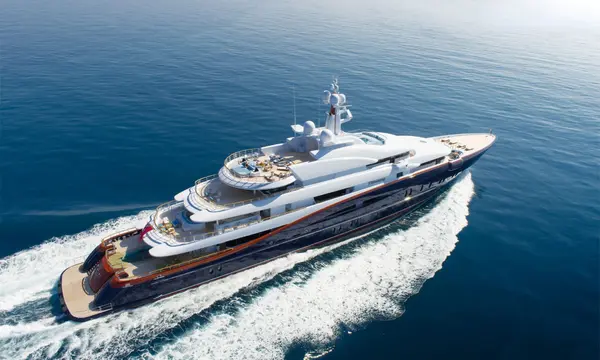
MarQuip Marks 25 Years of Superyacht Exhaust Engineering
MarQuip marks 25 years of specialist exhaust engineering, tracing its development from wet-exhaust technology to compact emissions systems for superyachts.
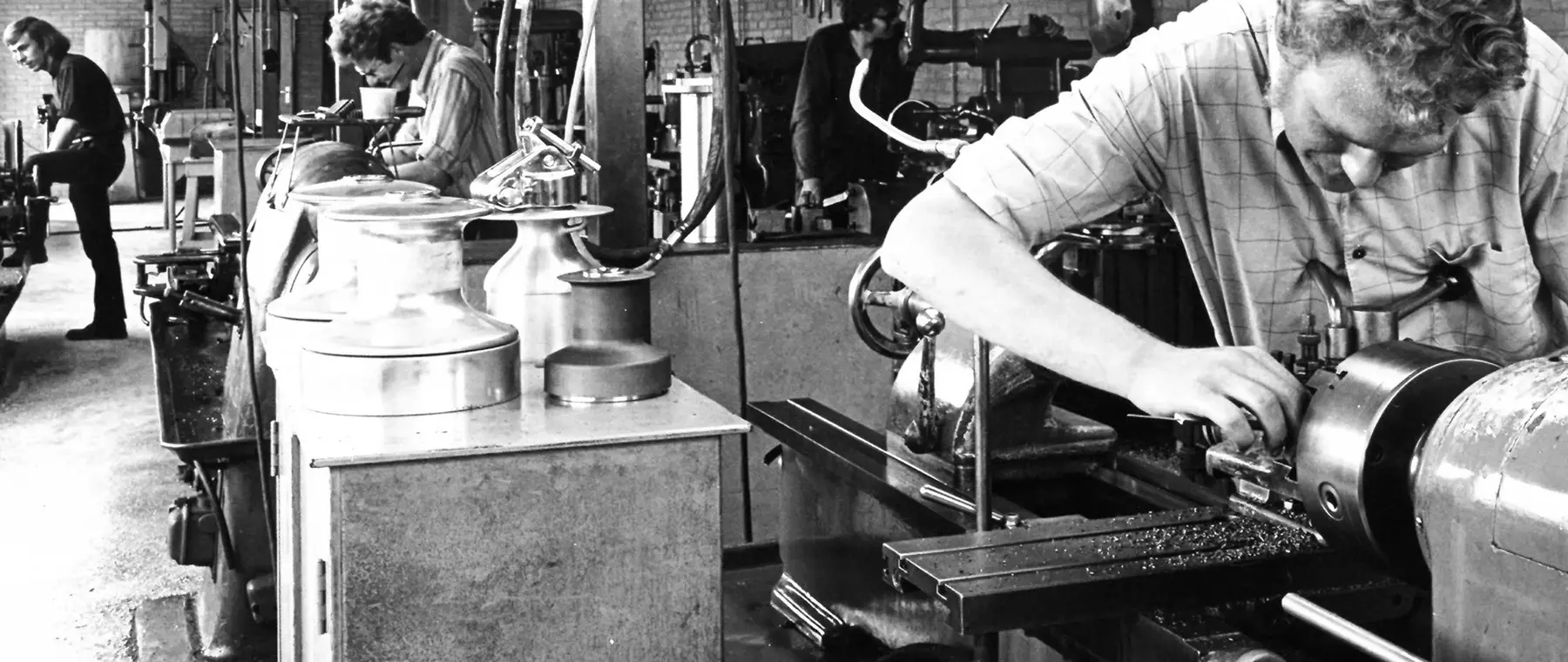
Historical Rondal engineering workshop in the 1980s official anniversary photograph
Rondal's 50th-anniversary account traces the development of its custom aluminium and composite spars, from Endeavour's rig to modern large-yacht manufacturing.
Rondal's participation in METSTRADE 2026 comes in the fiftieth anniversary year of the marine engineering business established by Wolter Huisman in 1976. The Dutch supplier published an account of that history on 23 March and a management interview in July. Both remain useful background to its present activities because they trace the development of a specialist capability that has changed considerably as sailing yachts have become larger. The history begins with the manufacture of custom spars within the Royal Huisman shipbuilding operation and extends to the fabrication of substantial composite structures. The significance of the anniversary is not the introduction of another product during the November exhibition. Rather, it is an opportunity to examine how the industrial arrangements supporting custom sailing yachts have evolved. This article focuses on the company's rig and structural engineering history, distinct from Superyacht Guide's recent coverage of its captive winch technology. Rondal's anniversary account is the source of the historical milestones and comparative manufacturing claims discussed here.
According to Rondal, Wolter Huisman separated the shipyard's mast-making department into a dedicated operation in 1976. Initially called Marquip, the business manufactured spars and distributed components. Its establishment illustrates an important development within custom yacht construction: the opportunity to retain specialised technical work within a closely related industrial organisation while offering the resulting capability to a wider group of customers. The mast of a sailing yacht is a substantial engineered structure whose design cannot be divorced from the rigging loads, geometry and operational requirements of the vessel. Developing a supplier able to manufacture such a structure in accordance with the needs of an individual project can provide a builder with more control over the process. In 1989, the original business took the Rondal name, reflecting its connection with the shipyard's origins and its work with aluminium. The company reports that it had by then developed a product range extending well beyond masts. Its history is therefore also that of increasing specialisation within the wider yachtbuilding supply chain.
One of the milestones identified in the anniversary account is the 53-metre mast manufactured for the J Class yacht Endeavour in 1989. The company describes a challenge arising from the size of the required section. Rather than commission an extrusion of a profile proportioned to that one installation, the engineers developed a structure from formed aluminium plates. The method made it possible to vary plate thickness and produce a controlled taper along the mast. For a large sailing yacht, these are meaningful considerations because structural mass and its position influence the vessel's behaviour. The rig carries the forces associated with the sails while the supporting structure and rigging must transfer those forces appropriately into the vessel. A change to the manufacturing method may offer opportunities to distribute material more effectively, but its success depends on the detailed design and quality of fabrication. The historical example does not establish a general preference for built-up aluminium structures in every application. It illustrates the kind of project-specific engineering response that a dedicated large-yacht supplier can develop.
The next major change in the company's account concerns the rig for Hyperion, commissioned by Jim Clark. Rondal describes the decision to use carbon composites as a particularly demanding step because it required the development of capabilities that were not already available within the operation. A composite curing facility was constructed and specialists with relevant knowledge were recruited. The company also worked with a materials supplier on prepreg materials and a curing process that did not depend on using a conventional autoclave for the complete structure. The resulting mast was approximately sixty metres in length, according to the anniversary account. Its manufacture was an important departure from the established aluminium work because the properties and behaviour of a composite structure depend on factors including the arrangement of the reinforcing fibres and the processing of the resin system. The manufacturing operation must be capable of achieving the requirements derived from the engineering design. It is not sufficient to select a strong material in isolation from its geometry, joints and production process.
The company's account identifies a succession of projects requiring adjustments to the scale of its composite manufacturing facilities. The development of a 61-metre mast for Athos in 2010 prompted an extension of the curing oven. Later projects for yachts including Sybaris, Pink Gin VI and Ngoni required still greater lengths, extending beyond seventy metres. Rondal reports investment in fibre-cutting equipment, autoclaves and ultrasonic inspection capability alongside the physical enlargement of the facilities. The relationship between these investments is particularly important. A production hall long enough to accommodate a structure does not automatically provide the controlled manufacturing and inspection conditions necessary to complete it. The process must support the intended geometry and material properties along the entire length. The ability to handle the structure during manufacturing and move it after completion is another consideration. For a yacht owner commissioning a very large rig, the practical questions include the scope of the engineering, the proposed manufacturing method and the arrangements for inspection and acceptance. The anniversary history shows how successive projects influenced the scale of these specialist resources.
Rondal also identifies large composite projects outside the mast and boom category. Examples in the company account include a substantial carbon rudder for Sea Eagle, the keel trunk for Nilaya and a curved superstructure for Sarissa. These examples demonstrate that experience in composite manufacturing may be relevant to other elements of a yacht, although the functions and load cases of those elements are different. A rudder interacts with water and forms part of the steering arrangement; a keel trunk must accommodate requirements associated with the vessel's keel system; a superstructure influences the physical configuration of accommodation and external spaces. The material alone does not establish that the same production process or design approach can be used interchangeably for each. Rather, the supplier's expertise may provide a basis for cooperation with the organisations responsible for the relevant part of the yacht. Its ability to respond to one unusual requirement can help explain why its manufacturing programme has extended into other highly specialised work. The particular design and approval conditions of each project remain essential.
In its anniversary report Rondal describes rebuilding its curing oven in 2023, creating a facility covering about one thousand square metres. The company identifies the rig for Royal Huisman's 85-metre Project 410 as an example of the work supported by that development. Its July management interview refers to the capability to produce composite spars of approximately ninety to ninety-five metres in one piece and identifies four large carbon masts then in production for Royal Huisman sailing yachts. Those figures are statements from the supplier. They provide a sense of the scale of the manufacturing capability but cannot be treated as independent certification of its performance or a disclosure of the delivery schedule for every project. The distinction between the length of a yacht and the length of its mast is also important: an eighty-five-metre yacht does not necessarily require an eighty-five-metre mast. The complete rig arrangement will depend on the design of the sailing vessel. The production capacity described by Rondal creates opportunities for particular projects rather than an obligation to use the maximum available dimensions.
Although much of the company's historical development concerns carbon composites, the July interview also emphasises the continuing role of aluminium spars. Managing director Harald Lubbinge identifies the replacement of furling masts on a 49-metre Perini Navi ketch as an example of its recent aluminium work and describes its custom tapered construction capabilities as relevant to the refit market. An owner replacing an existing rig may have different priorities from the team designing a new performance sailing yacht from a blank sheet. Equipment compatibility, structural arrangements, availability of suitable processes, the precise reason for replacement and the total project cost can all influence the choice. A material change may affect several related components and should be assessed accordingly. Superyacht Guide has not independently inspected the manufacturing facility or verified comparative material-performance claims. The anniversary nevertheless provides a useful perspective on the continuing relationship between traditional metal fabrication and modern composites within the superyacht sector. The supplier's long-term development is an example of how the requirements of one custom project can stimulate capabilities subsequently available to other owners and shipyards.
Primary source: Rondal official 50th-anniversary engineering account, 23 March 2026.
Further information: Rondal official management interview, 7 July 2026.
Rondal archive / official company anniversary article. Historical workshop scene, not current manufacturing facilities. Official source.
Continue reading
MarQuip marks 25 years of specialist exhaust engineering, tracing its development from wet-exhaust technology to compact emissions systems for superyachts.
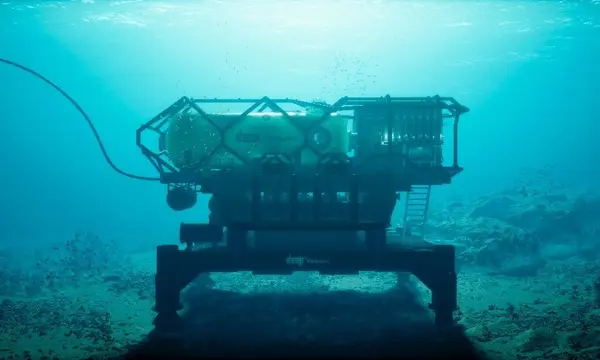
Triton Submarines provided engineering and integration assistance for DEEP's Vanguard human habitat, installed 17 metres underwater at Tennessee Reef in the Florida Keys.
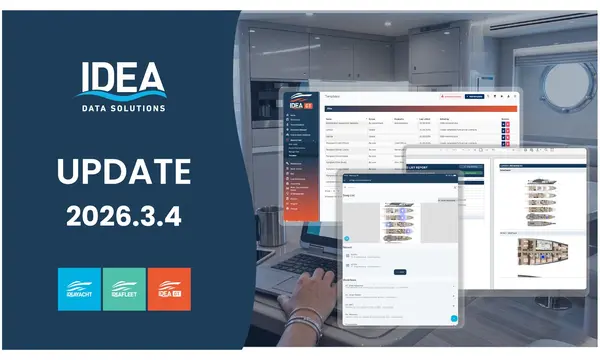
IDEA Data Solutions release 2026.3.4 introduces structured purchase and work-order wizards, crew Hours of Rest improvements and tablet-friendly yacht management software.
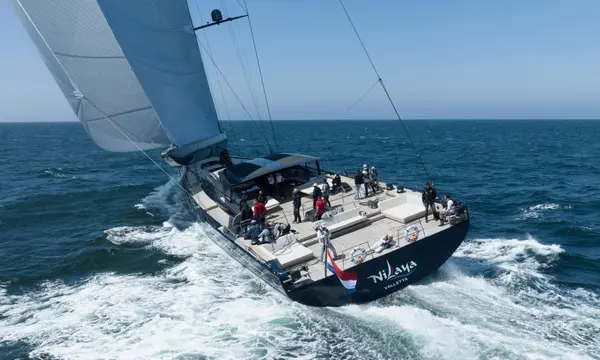
Royal Huisman has detailed the lightweight construction and engineering methods behind 47-metre performance cruiser Nilaya.
Superyacht Guide
Continue into the wider Superyacht Guide.
Business opportunities · Superyacht Guide
Companies serving the superyacht market can discuss clearly identified advertising, sponsorship and business-profile opportunities. Commercial activity remains separate from independent editorial coverage.