Inside 30m URSUS After Royal Balk's Major ReCraft
By Superyacht Guide Newsroom · Edited by Superyacht Guide Newsroom
Inside 30m URSUS After Royal Balk's Major ReCraft | Original cleared SYG Nov25 batch10 ursus
A technical look at Royal Balk’s extensive rebuild of Acico yacht URSUS from 24m to about 30m, including new hull sections, tender arrangements and propulsion.
The 30.36-metre Acico motor yacht URSUS has returned to attention following the circulation of photographs documenting the substantial rebuild carried out by Royal Balk Shipyard and Mulder Design. The latest trade coverage in November 2026 shows how the finished yacht's exterior and accommodation differ from her original 24-metre form. This is a new look at the result of an established project, not an assertion that the yacht was launched for the first time this month. The yard's own statement dates her relaunch to January 2025 and describes the rebuilding work as a complex structural and technical transformation.
URSUS is a useful example because the programme went considerably beyond replacing decorative finishes. The yard extended the vessel at both ends, altered the deck and tender arrangements, introduced different propulsion components and revised guest and crew facilities. Retaining an existing yacht while changing her length demands an integrated approach to naval architecture, structural engineering and the original owner's requirements. That has relevance to yacht owners considering whether an established hull can be adapted to future needs. The story is about verified engineering choices and the completed project, not an assumption that every older yacht can economically be extended in a similar manner.
Royal Balk Shipyard states that URSUS originally measured approximately 24 metres and was lengthened to 30 metres. The more recent fleet descriptions give a finished length of 30.36 metres, reflecting the precision of the vessel data after rebuilding. The yard says the bow and stern were removed and replaced as part of an extensive project undertaken after discussions that began in 2022. Such work substantially affects hull form, internal arrangement, weight distribution and the structures supporting mechanical systems. It is qualitatively different from installing a deck extension that leaves the rest of a yacht unaltered.
Changing length creates opportunities and obligations at the same time. A new stern can accommodate different access to the water, while bow modifications may improve circulation or free space for equipment. Yet the work must also preserve appropriate strength, stability and service access. The yacht's new dimensions cannot be assumed to provide a proportional increase in every internal space. A buyer or refit client should ask for the certified as-built drawings, stability information and full details of any hull alterations. The yard's statement establishes the broad scope, while individual engineering calculations remain confidential project records.
Mulder Design worked with Royal Balk Shipyard to develop the reconfiguration of URSUS, introducing a different hull and exterior arrangement while seeking to retain the character of the original yacht. The yard describes use of computational fluid dynamics calculations to refine the hull extensions, reduce resistance and improve seakeeping potential. These are design objectives and engineering methods, not an independently measured guarantee that a particular sea condition or fuel saving has been achieved. The distinction is important because hydrodynamic improvements depend on speed, loading, hull condition and many interacting systems.
The involvement of a naval architect in a project of this scale is essential. Extending a steel or aluminium hull affects the relationship between structural loading, buoyancy and longitudinal balance, while added spaces change equipment placement and weight. The design team must consider whether the operating profile of the finished yacht matches the owner’s intentions and whether the original machinery can be retained. URSUS demonstrates how refit engineering becomes a fresh design problem instead of simply following old drawings. The completed outcome can be assessed with delivery documentation and actual operating records rather than general descriptions alone.
A principal aim of the extension was to create a redesigned beach club and additional seating close to the water. Those spaces change how guests use a yacht at anchor and can make an older vessel feel more closely aligned with current expectations for outdoor living. The yard's account specifically links the redesigned stern with a new seating arrangement, showing that the lengthening had functional purposes rather than merely producing an impressive new number in a vessel register. The latest exterior photographs provide visual evidence of the revised overall form, although they cannot substitute for a measured accommodation plan.
A water-level leisure area brings practical requirements beyond seating and finishes. Access steps, drainage, surface durability, tender movements and safe circulation need to be addressed together. A yacht manager would also want to understand how the beach club is protected in transit and how its fittings can be maintained. The public description does not provide a full inventory of swimming platforms or lifting systems and this article does not invent one. The general lesson is that a structural extension should be planned around actual owner use, not around a decorative feature considered in isolation.
Royal Balk Shipyard reports that the tender garage was relocated during the reconstruction, allowing a new seating space in the bow. The project also included an additional crew cabin. These changes illustrate why a large refit must deal with crew and service arrangements as seriously as guest spaces. A newly extended exterior is of limited practical value if tender storage blocks access, working routes become unsafe or the crew lack adequate rest facilities. The new arrangement reflects the owner's decision to redistribute functions throughout an existing hull.
A yacht's operational flow is difficult to judge solely from photographs. Crew members may need to move equipment, service machinery, prepare food and operate tenders without conflicting with guest circulation. Repositioning a garage can therefore have consequences for storage, lifting arrangements, structure and electrical systems. An additional cabin also changes ventilation, fire safety and the relation of crew spaces to technical installations. The official yard announcement identifies these elements as part of URSUS's new design, but gives no basis to describe the cabin occupancy, complete emergency arrangements or final equipment brands without further documents.
The yard states that URSUS received new diesel-electric pods and Veth Azimut drives supplied through Twin Disc, while retaining Volvo Penta D9 main engines and Stamford generators. It also lists a seawater cooling system, an additional Veth bow thruster, Furuno navigation equipment, dynamic positioning and wing stations. Those are substantial changes to the operating systems, providing a particularly instructive example of a refit in which some established machinery remains while the surrounding installation is extensively reworked. No unverified figures for speed, horsepower or consumption should be attached to the finished configuration.
A mixed old-and-new machinery package has implications for maintenance and commissioning. Controls, cooling, power distribution and alarm arrangements must work together despite components coming from different periods of the vessel's history. Owners should establish who supports each system, how software and electrical interfaces are documented and which service procedures apply. The decision to retain major machinery might reflect condition, design compatibility or economic factors, but the public source does not disclose the owner's calculations. The useful editorial point is that a rebuild may involve replacing interfaces and drive arrangements without discarding every existing component.
According to Royal Balk Shipyard, the refit also brought new FSC-certified teak on the decks and a hull finish inspired by the Batumi Gold colour associated with Range Rover. These choices show that engineering work and aesthetic continuity were considered together. The yard describes a goal of keeping the yacht coherent, even as its proportions and usable spaces changed. Such continuity can be valuable to owners attached to a particular vessel, but the resulting appearance must be supported by durable materials and a realistic maintenance regime. Finishes should be inspected for condition, attachment and repairability before any purchase or subsequent refit decision.
The yacht's original charm was part of the owner's brief, according to the yard. That is a more subtle objective than trying to make every surface resemble a new-build specification. Refits can preserve features that still work well while modernising the areas that create daily limitations. Designers and shipyard teams must distinguish an authentic character worth retaining from arrangements that need to change for safe or comfortable use. The published photographs can convey the intended stylistic result; only onboard experience and inspection can establish the usability of every modified space under real operating conditions.
The yard says the owner's initial approach occurred in 2022 and the final programme included an 18-month recraft. It reported the yacht's relaunch on 10 January 2025, with sea trials and delivery activities to follow. Later trade reporting refers to delivery in November 2025, but the yard's original statement should not be rewritten to imply that delivery had already happened on relaunch day. Those are distinct phases in the lifecycle of a rebuild: emergence from the shed, return to the water, testing and acceptance. Keeping them separate prevents a historical project from appearing to be a fresh 2026 launch.
Refit owners can learn from the amount of coordination involved. Opening an old vessel reveals constraints that may be difficult to anticipate from drawings, while changes to hull length affect multiple trades. Close cooperation between project managers, designers, technicians and owners is central to avoiding mismatched interfaces or late rework. Published statements from the yard credit the integrated team and the owner's participation, but do not disclose the total price, financing or full set of technical survey findings. Those absent figures should not be guessed from the project's visual scale or the yacht's final length.
The renewed interest in the yacht is useful as an industry example of how an established vessel can be given a different operational future without being replaced. The original 24-metre platform has become a yacht of approximately 30 metres, with additional space for guests and crew and a significantly changed propulsion arrangement. That makes URSUS relevant to owners considering extensive reconstruction rather than routine refurbishment. Yet the feasibility of a comparable project depends on each hull, the regulatory requirements and the total cost of work. The existence of one completed transformation is not a promise that every project can be delivered to the same outcome.
The November images highlight visible results, while the original shipyard and designer accounts provide the more reliable basis for describing the engineering. Future reporting should distinguish additional verified operating experience from an attractive photograph and should identify precisely what, if anything, has changed since the 2025 completion programme. URSUS demonstrates the potential of coordinated naval architecture, yacht management and skilled shipyard work. The broader lesson is that large yacht refits benefit from disciplined planning, explicit documentation and respect for the practical realities of extending and modernising an existing vessel.
Primary source: Royal Balk Shipyard primary account of the January 2025 URSUS relaunch and major ReCraft.
Further information: SuperYacht Times, November 2026 newly released images of refitted URSUS.
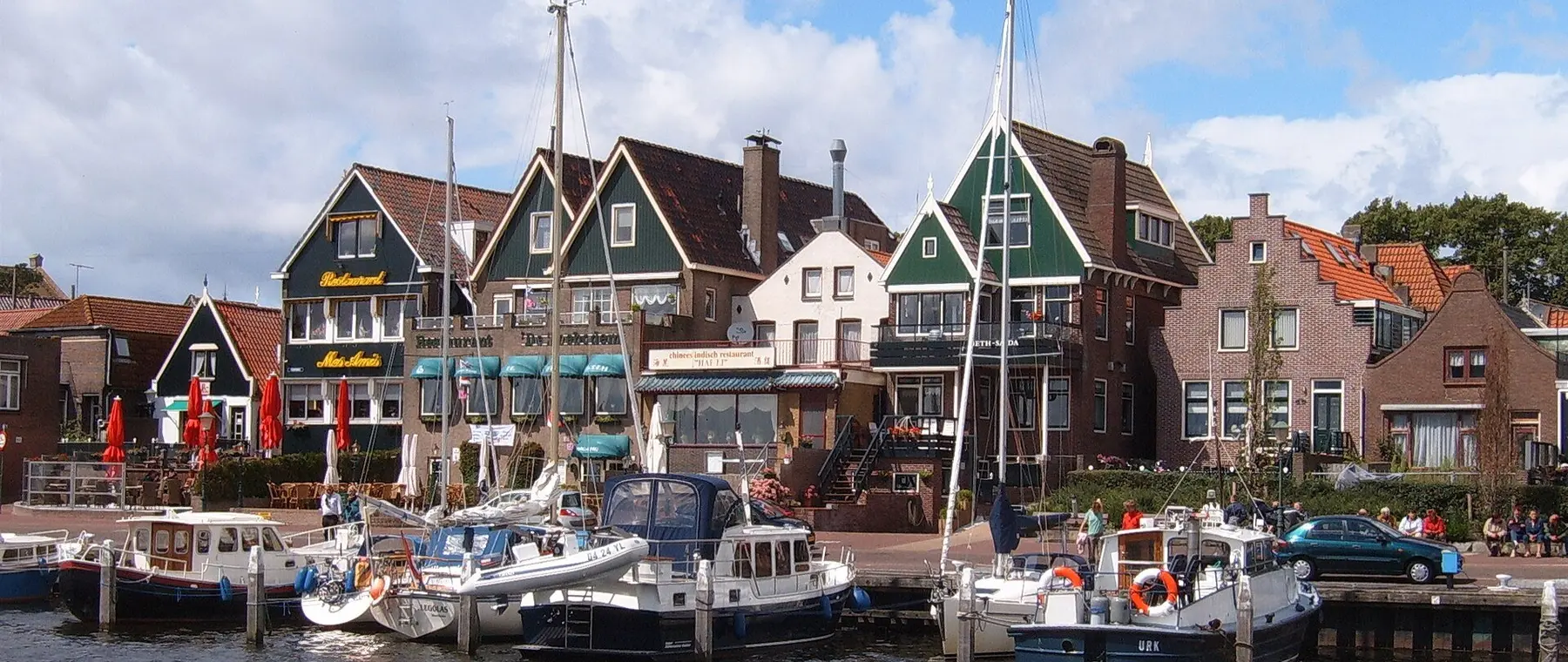
Archival photograph of Urk harbour, Netherlands, where Royal Balk Shipyard operates; not an image of URSUS or its 2025 rebuild. Photo: Markus Bernet; CC BY-SA 2.5 via Wikimedia Commons. Resized for web. Official source.
Explore
Go deeper into the yachts, companies, events and destinations directly connected to this article.
Continue reading
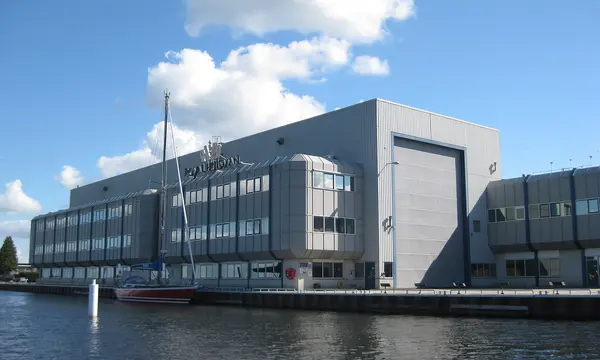
Royal Huisman sailing yacht ODALISQUE, 25.6m, enters a major technical and interior refit at Royal Balk Shipyard, with Rhoades Young Design involved.

Pendennis details a second major transformation of the 68.8m expedition yacht JESTER, with hybrid propulsion, new machinery and exhaust treatment following her 2023 rebuild.

Royal Balk Shipyard in Urk says demand is growing for its large yacht ReCraft programmes. The yard reports four completed refits in 2026 and …

Videoworks’ Paolo Tagliapietra explains Starlink and OneWeb redundancy, varying maritime service permissions, satellite costs and yacht cybersecurity.
Superyacht Guide
Continue into the wider Superyacht Guide.
Business opportunities · Superyacht Guide
Companies serving the superyacht market can discuss clearly identified advertising, sponsorship and business-profile opportunities. Commercial activity remains separate from independent editorial coverage.

