25.6m Royal Huisman ODALISQUE Enters Royal Balk Refit
By Superyacht Guide Newsroom · Edited by Superyacht Guide Newsroom
Royal Huisman ODALISQUE Enters Royal Balk Refit | Original cleared SYG 20261125 odalisque
Royal Huisman sailing yacht ODALISQUE, 25.6m, enters a major technical and interior refit at Royal Balk Shipyard, with Rhoades Young Design involved.
The 25.6-metre sailing yacht ODALISQUE, built by Royal Huisman in 1989, has entered a substantial refurbishment programme at Royal Balk Shipyard in the Netherlands. The work brings together interior redesign and technical renewal while explicitly retaining the recognisable character of a Dutch-built sailing yacht from the late 1980s. Coverage published on 24 and 25 November identifies the yard as the location of the project, with Rhoades Young Design involved in the new accommodation scheme. The story concerns a real existing vessel and an active refit, not a prospective yacht concept or an unconfirmed contract.
The arrival is consequential because a major rebuild of an established sailing yacht requires a different discipline from finishing a new production hull. Age, earlier interventions, the owner's expectations and the integrity of the original yacht must all be reconciled. ODALISQUE offers a particularly clear example: the stated design approach does not seek to disguise the vessel's period identity. Instead, the team plans to modernise the experience inside and renew systems while preserving her exterior lines. That balance is the central issue for owners considering a comparable investment in a proven design.
The yacht was originally launched as FOFTEIN and subsequently sailed under the name FOFTEIN STAR before becoming ODALISQUE. She was designed and engineered by Henry A. Scheel, whose involvement is part of the historical identity that the refit team now has an opportunity to respect. Published reporting gives her length as 25.6 metres and volume as approximately 100 gross tonnes. Her age and proportions place the project within the specialised market for substantial classic-yacht renewal rather than normal annual servicing or a brief interior refresh.
Historical continuity has practical value beyond sentiment. A well-proportioned exterior helps distinguish a classic sailing yacht from more recent designs, and owners may regard that identity as a reason to invest in the existing hull instead of replacing the vessel. Yet a recognisable silhouette does not remove the burden of technical scrutiny. Materials, service installations and the accumulated effects of decades afloat must be assessed against today's intended use. The project therefore offers an opportunity to understand how a specialist yard can treat heritage and usability as related, not opposing, objectives.
Rhoades Young Design is reported to be responsible for ODALISQUE's interior transformation. The stated direction is toward a warmer, more contemporary accommodation environment rather than a visual reconstruction of an unchanged 1989 interior. This distinction matters: the public announcement describes an intention, not a room-by-room inventory of completed alterations. There are no verified details of specific cabin counts, finishes or furniture suppliers that would justify describing final spaces as if they had already been delivered to the owner.
The functional opportunity in such work is broader than selecting attractive surfaces. Circulation, use of storage, maintenance access, lighting and the relationship between crew workspaces and guest accommodation can make an established hull feel significantly more useful. Designing within a fixed structure demands compromises that do not arise on a blank drawing board. The challenge for the interior designers is to obtain the desired comfort while recognising the yacht's construction, stability requirements and mechanical access. Those are project considerations rather than claims about unannounced features aboard ODALISQUE.
The announced work also extends to a comprehensive technical overhaul. Royal Balk Shipyard is overseeing engineering and technical execution, with specialist contractors identified in reporting as List and ESU. Their participation illustrates the multi-company coordination involved in a programme that touches both habitable areas and the infrastructure behind them. The phrase technical overhaul should not be interpreted as a confirmed change of engines, rig, batteries or navigation systems, because no authoritative published equipment schedule establishes those particular decisions.
A technical refit on a yacht of this vintage can bring difficult sequencing questions. Engineers need access to machinery and service routes before new interior finishes conceal those areas. Electricians must coordinate loads, distribution and equipment placement with designers who are working within the same constrained volume. Survey findings can affect budgets and programme priorities after opening-up begins. None of these general risks confirms that ODALISQUE has a defect; they explain why a shipyard needs to control interfaces between drawings, installation, inspection and eventual commissioning.
The reported brief calls for ODALISQUE's classic exterior form to remain recognisable. That is a meaningful constraint on a large project, because visible deck alterations, changed glazing or disproportionate additions might undermine the very appearance that makes the yacht distinctive. The preservation decision gives the owner a consistent visual identity while allowing significant investment in spaces and systems that visitors do not see from the quayside. The outcome will be judged in part by how little the revised yacht's exterior appears to have changed.
It would nevertheless be misleading to equate preservation with an absence of technical work on deck. A well-managed refit may have to inspect, repair or replace components while retaining their appearance and position. Naval architecture and class requirements may limit what can be changed, especially around openings and structural connections. The public reporting does not provide the yard's final survey list or regulatory approvals. For readers, the important distinction is between the confirmed objective to protect the original profile and the still-unpublished details of the alterations that may support it.
The Dutch shipyard is handling ODALISQUE as a substantial specialised refit rather than as a new-build commission. Its public description of yacht-refit services emphasises a tailored engineering and restoration approach. That capability is relevant to a classic Royal Huisman because technical trades, finish work and project control must converge on an existing structure with limited room for redesign. The yard's connection to the wider Dutch yachting ecosystem also places it among companies experienced in vessels whose long service lives depend on periodic, carefully specified renewal.
The yard's responsibility is not simply to perform a list of isolated jobs. It must connect the owner's priorities, the designers' intentions, specialist suppliers and technical inspections into an executable sequence. Construction records and the opening-up phase can revise the sequence as practical conditions become visible. Public announcements identify the participants and broad scope, but do not disclose the project's total budget, contractual milestones or guaranteed handover date. Treating those figures as unknown is important for an accurate account of a live yard programme rather than a speculative commercial estimate.
Reports identify Taco Zwarts of TZ Technical Support as the owner's representative. That role brings an additional layer of coordination between the owner, designers, yard and specialist contractors. A representative can translate operating objectives into priorities and review whether proposed solutions are suitable for the vessel's intended use. The designation should not be confused with yacht ownership: public disclosure of a professional representative does not identify the beneficial owner or establish private financial arrangements behind the work.
The involvement of separate interior, electrical and technical partners also illustrates why interface management is central to contemporary refits. A joinery design can depend on the final routing of services; new equipment can require ventilation and access; and finishing work must allow for inspection before a yacht returns to the water. The reported team is an example of a collaborative delivery structure, not proof that every proposed system has already been installed. As the yard proceeds, verified photographs and subsequent official progress statements will be more reliable than assumptions about completion percentages.
A classic yacht refit asks an owner to weigh intangible value against measurable utility. Historic identity, sailing characteristics and the satisfaction of preserving a recognised design can be decisive factors, even though none can be reduced to a straightforward resale-price calculation. An extensive refit may be worthwhile for an owner committed to the vessel's long-term use, but that does not mean it automatically increases market value by the same amount as the expenditure. ODALISQUE's programme highlights the relevance of condition, operational plans and workmanship rather than a simplistic financial return formula.
The sector also faces the broader problem of maintaining skilled trades able to work sympathetically with older construction methods while integrating modern equipment. Documentation, material selection, fault isolation and the preservation of service access are essential to that work. For yacht managers, the lesson is to define the refit objectives before committing to the most visible decorative changes. For builders and suppliers, the project illustrates a continuing market for lifecycle services and refurbishment expertise alongside the publicity surrounding launches of new superyachts.
The confirmed development is the yacht's arrival at Royal Balk Shipyard for the announced programme, as described in the November reporting. Subsequent milestones will include completion of the design coordination, execution of the technical and interior work, testing and eventual return to service. The precise order and timing of these phases are not publicly confirmed. No completion date, yard invoice, projected resale price or privately negotiated specification is established by the available source material, and readers should not infer one from the announcement.
For now, ODALISQUE stands as a documented example of a classic vessel moving into a materially more ambitious restoration phase. The value of the work will depend on how convincingly the team reconciles a 1989 design with current expectations for comfort, reliability and maintainability. Future coverage should focus on the yard's confirmed technical changes, the designers' completed accommodation spaces and sea trials when those facts become available. In the meantime, the strongest editorial account is specific about the reported project while being disciplined about the details that remain undisclosed.
Primary source: YACHT magazine, 25 November 2026, Royal Huisman ODALISQUE classic refit report.
Further information: Royal Balk Shipyard official yacht refit services.
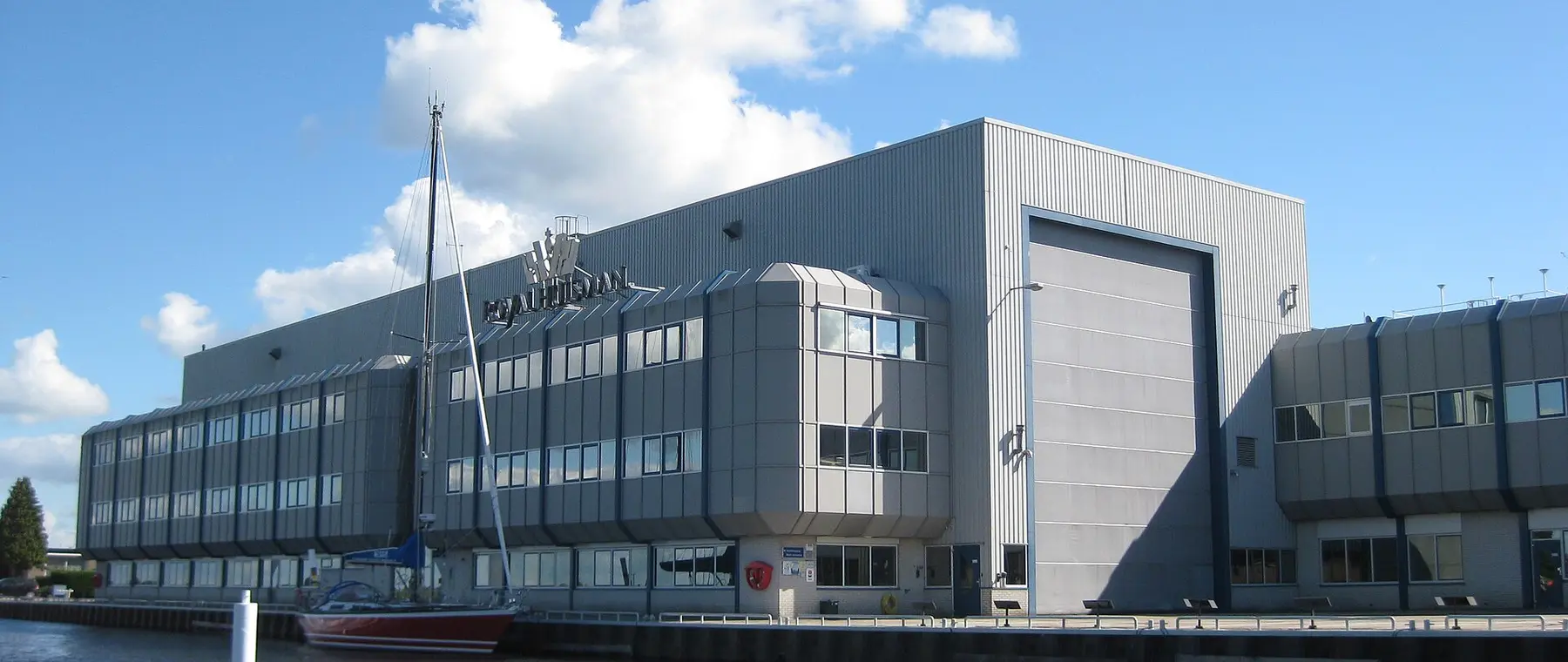
Archival photograph relating to Royal Huisman, builder of ODALISQUE; not a photograph of ODALISQUE or her current Royal Balk refit. Creator: Marion Golsteijn; CC BY-SA 3.0, Wikimedia Commons. Resized for web. Official source.
Explore
Go deeper into the yachts, companies, events and destinations directly connected to this article.
Continue reading
A technical look at Royal Balk’s extensive rebuild of Acico yacht URSUS from 24m to about 30m, including new hull sections, tender arrangements and …

Royal Balk Shipyard in Urk says demand is growing for its large yacht ReCraft programmes. The yard reports four completed refits in 2026 and …
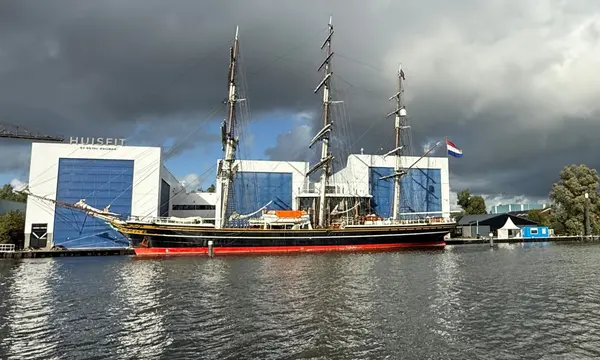
The 76-metre clipper Stad Amsterdam has selected Royal Huisman’s Huisfit division for a programme of refit work, according to the yard’s October announcement.

Flexiteek International's Flexiteek 3 synthetic decking uses bio-attributed PVC derived from tall oil, with extensive colour choices and practical refit considerations.
Superyacht Guide
Continue into the wider Superyacht Guide.
Business opportunities · Superyacht Guide
Companies serving the superyacht market can discuss clearly identified advertising, sponsorship and business-profile opportunities. Commercial activity remains separate from independent editorial coverage.

