Royal Huisman Reveals Parallel Production Methods Behind 81m Project 412
By Superyacht Guide Newsroom · Edited by Superyacht Guide Newsroom
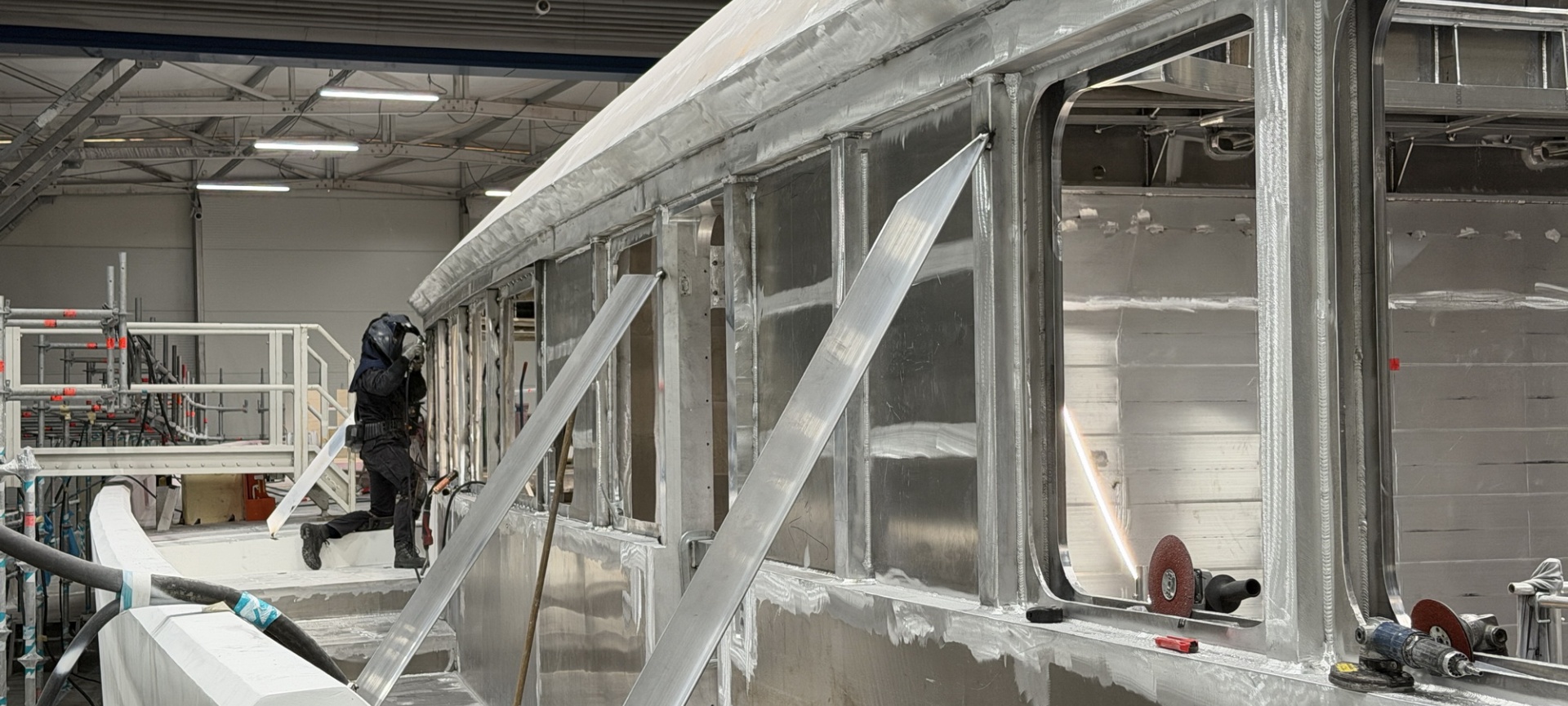
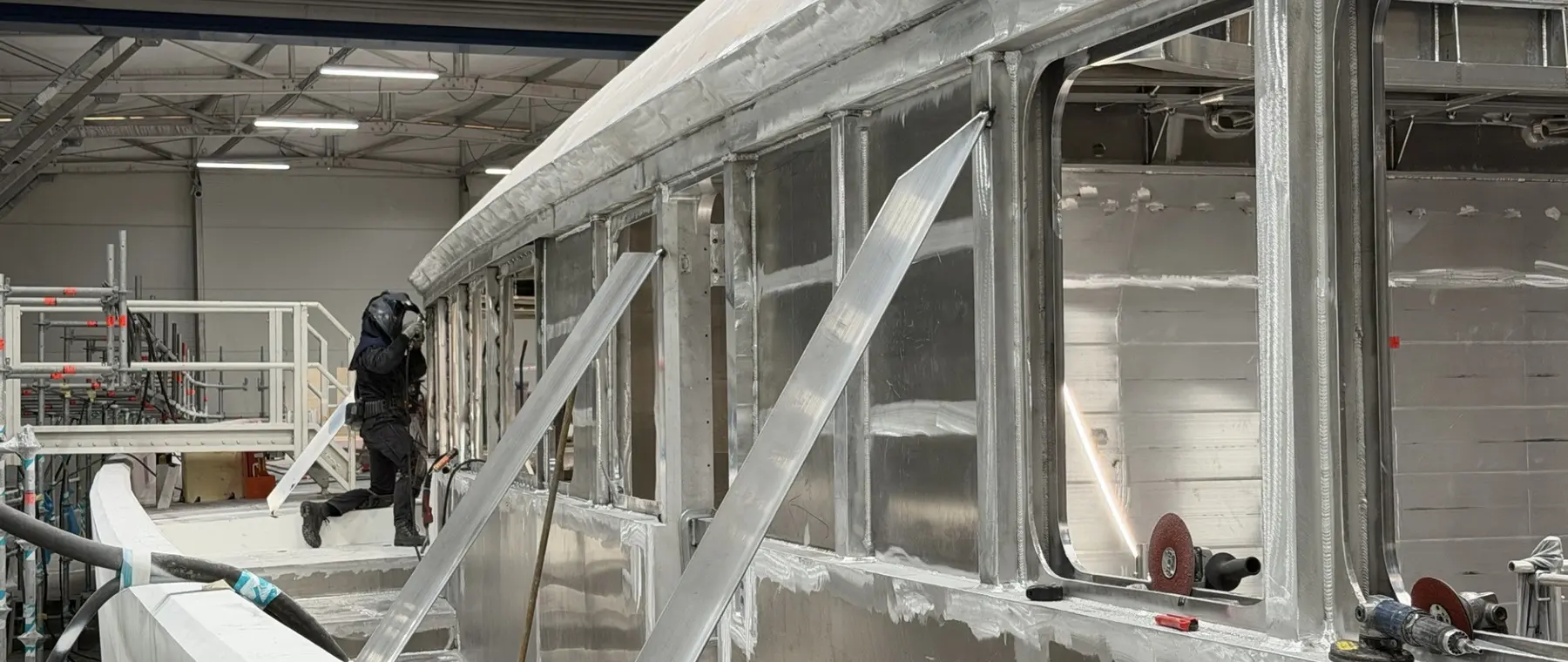
Royal Huisman official Project 412 concurrent production construction photograph summer 2026
Royal Huisman documents coordinated workshop and onboard production for its 81m Trident schooner, from technical skids to accommodation modules and machinery.
Royal Huisman has published a behind-the-scenes account of the construction of its 81-metre Project 412, a contemporary flybridge schooner in the Trident 810 series. The shipyard's INHUIS feature, entitled The Art of Building Simultaneously, documents the work performed in its construction hall, furniture department and technical workshops during summer 2026. It offers an unusually practical perspective on how the engineering and manufacturing of a fully custom sailing superyacht are coordinated.
The feature is distinct from the shipyard's earlier announcements about the turning of the hull in March. It describes subsequent work on the vessel and the processes supporting that work, rather than announcing another hull milestone or providing a new delivery date. Royal Huisman continues to identify 2028 as the scheduled delivery year. The construction photographs accompanying the account show the yacht during the summer, not necessarily its condition in November.
A large custom yacht is rarely built through a simple sequence in which one trade completes all its work before the next begins. The structure, engineering installations, accommodation and exterior equipment all have dependencies on one another. Royal Huisman's account illustrates how those dependencies are managed through the preparation of assemblies away from their final positions on board.
An important issue is the interface between assemblies. A piece of joinery produced in a workshop must correspond to the dimensions of the space on the yacht, while the technical equipment behind it needs adequate clearance, access and ventilation. A component intended for installation in a machinery space must be compatible with the supporting structure, the adjacent services and the route by which it will be brought aboard.
These requirements make the underlying design information particularly important. Parallel manufacturing is only useful if the participants have a dependable understanding of the current specification. If an adjustment on the yacht is not communicated to the workshop responsible for an adjoining component, the resulting rework may outweigh the time saved by producing the parts separately.
According to the shipyard, within four months of turning Project 412's hull, the superstructure had been added and major machinery installed. Its account describes preparatory work for insulation, technical installations and interior outfitting in progress at that point. The series of summer photographs provides examples of the activities being undertaken in different parts of the vessel and in the workshops.
These photographs should not be interpreted as a complete construction survey. They illustrate individual aspects of the work, and the condition shown in any one photograph may correspond to a different moment in the manufacturing sequence. The shipyard has not supplied a percentage-complete figure or made a new announcement about the yacht's present commissioning status.
The significance of the documented progress lies in the overlap between disciplines. Major elements of the vessel's structure were already in place while other components were being manufactured independently. For an owner monitoring the programme, progress in the workshops can be as relevant as visibly changing conditions on the hull.
Royal Huisman describes the manufacture and assembly of guest and crew accommodation components in its furniture workshop. The work includes provision for technical items, such as air-conditioning fan-coil units and their drip trays. Module preparation is consequently not limited to the visible decorative surfaces.
Producing furniture under workshop conditions can make it easier to work on several sides of an assembly. Craftspeople can examine fittings, joints and finishes before the item is installed within a confined space. Access for measuring and adjusting components may be more straightforward than it would be aboard a vessel surrounded by other contractors.
The process also depends on the timely resolution of decisions affecting the furniture. The positions of access panels, switches, ventilation openings and equipment cannot always be changed without consequences for the design. An owner considering changes to a room's arrangement should understand when those decisions begin to affect manufacturing elsewhere. A modification that appears relatively modest on a drawing can have implications for both the technical and the decorative work.
A second example highlighted by the yard is the production of custom-engineered skids, comprising equipment, piping and supporting arrangements prepared as assemblies. The feature shows work on these systems at various stages, including completed assemblies and those awaiting painting. Royal Huisman also describes resilient mounting intended to address the transmission of vibration.
The benefit of preparing equipment on a common supporting arrangement is that some connections and tests can be completed in a controlled environment before installation. Engineers have access to the equipment and can inspect how individual items are mounted in relation to one another. Where appropriate, this can make it easier to identify manufacturing problems before an assembly is moved to the yacht.
Workshop verification does not replace the commissioning of the complete installation on board. The behaviour of an individual assembly may depend on its connections with the wider electrical, mechanical or control systems. Final verification must address those connections and the conditions applicable to the vessel. The publication does not provide details of the project's specific test procedures or acceptance criteria.
The construction images also document the application of vibration-damping material in the engine room and the installation of insulation in future accommodation areas. On a yacht intended for extensive voyages, the control of noise and vibration can influence the quality of life experienced by owners, guests and crew.
Different sources of unwanted sound require different engineering responses. Machinery can transmit vibration through its supporting structure, while airborne sound can pass through openings and partitions. Pipework and ventilation systems may introduce other transmission paths. A successful approach consequently requires coordination between the machinery installation, the structure and the outfitting work rather than reliance on a single material.
The presence of damping and insulation products in the photographs establishes that such work was taking place. It does not establish the noise levels that will be achieved in the finished accommodation. Those can only be determined through the relevant design assessments and tests. An owner interested in acoustic performance should establish the contractual criteria and the conditions under which they will be measured.
Royal Huisman's planning methodology divides a newbuild into eight principal stages. The account describes a progression from agreements and concept development through engineering, construction, fitting out and eventual testing and commissioning. At the transition points, the yard reviews milestones before the programme advances.
The distinction between a stage and an individual production task is useful. Several tasks can proceed at the same time while the project remains subject to an overall sequence of engineering and commercial decisions. The planning arrangement is intended to make those decisions visible and provide a means to confirm that the necessary information is available before later work depends on it.
For an owner's representative, the usefulness of a milestone review is that it can identify which questions remain open, whose responsibility they are and how they could affect subsequent activities. The process does not guarantee that every uncertainty will be resolved early, especially where bespoke equipment requires further development. Its purpose is to help manage those uncertainties through defined decisions and coordinated work.
Project 412 belongs to the Trident 810 series, which Royal Huisman presents as a basis for highly personalised large sailing yachts. The builder has identified a carbon rig and an integrated sailing system supplied by its sister company Rondal. The yacht's configuration is that of a flybridge schooner.
An established architectural basis can allow a design team to begin with previous engineering knowledge rather than treating every aspect of the yacht as entirely new. The extent to which that foundation can be reused will depend on the decisions made for a particular commission. Significant changes in weight, equipment or accommodation could still require detailed engineering and assessment.
The collaboration with a rig supplier is another example of the interfaces that must be resolved. Large sailing equipment requires integration with supporting structures, controls and deck arrangements. The completed installation must satisfy the requirements of the individual yacht, and the published feature does not specify the results of any final rig or sailing trials.
The most useful aspect of the feature is its demonstration that substantial progress can be made away from the hull itself. A visit to a construction hall may therefore provide only part of the picture. Furniture under assembly, equipment being tested and remaining engineering decisions can all have an important bearing on the eventual installation schedule.
An owner commissioning a custom vessel should seek a reporting arrangement that reflects these different activities and explains their dependencies. That makes it possible to distinguish a delay in an isolated task from a problem that affects the wider delivery programme. Reports should also identify decisions required from the owner's team in sufficient time for the consequences to be evaluated.
Royal Huisman's account gives a documented view of its approach through a specific yacht under construction. It does not claim that Project 412 has been delivered or that the work shown represents her exact current condition. The scheduled 2028 delivery remains the shipyard's stated objective. Until subsequent milestones are confirmed, the value of this release is the detailed insight it provides into the manufacturing process behind an exceptional sailing yacht.
Primary source: Royal Huisman official INHUIS feature, The Art of Building Simultaneously.
Photo: Royal Huisman, official INHUIS construction feature; summer 2026 progress, not a November photograph. Official source.
Explore
Go deeper into the yachts, companies, events and destinations directly connected to this article.
Continue reading
Royal Huisman's 65-metre performance ketch Aquarius has won Best in Sail 40m+ at the 2026 International Superyacht Society Design & Leadership Awards in Fort …
Royal Huisman has detailed the lightweight construction and engineering methods behind 47-metre performance cruiser Nilaya.
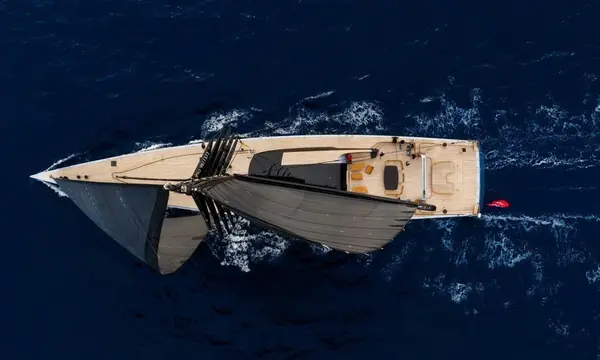
Royal Huisman has detailed how the 60-metre sailing yacht Sarissa uses diesel-electric propulsion, batteries and efficiency measures to reduce energy demand.
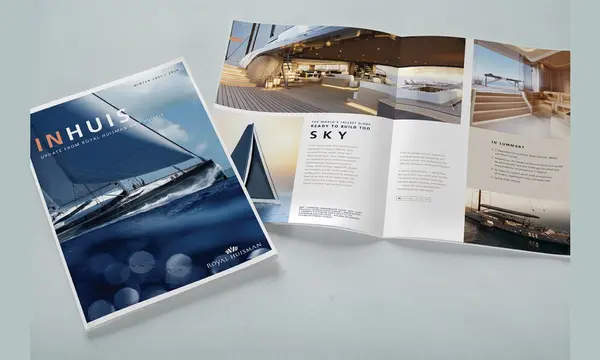
Royal Huisman’s winter INHUIS update brings together current orders, ready-to-build sailing concepts, Aquarius, Huisfit and recent awards.
Superyacht Guide
Continue into the wider Superyacht Guide.
Business opportunities · Superyacht Guide
Companies serving the superyacht market can discuss clearly identified advertising, sponsorship and business-profile opportunities. Commercial activity remains separate from independent editorial coverage.