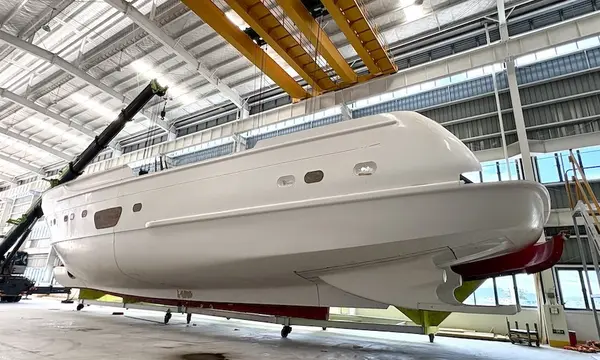
Selene Releases Second 27.93m 92 Ocean Explorer Hull as Deck Lamination Begins
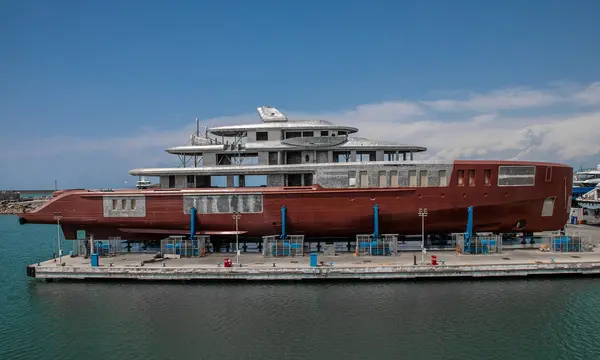
Selene Yachts has released the hull of S9206, the second 27.93m Selene 92 Ocean Explorer, with deck lamination now under way. The long-range yacht …
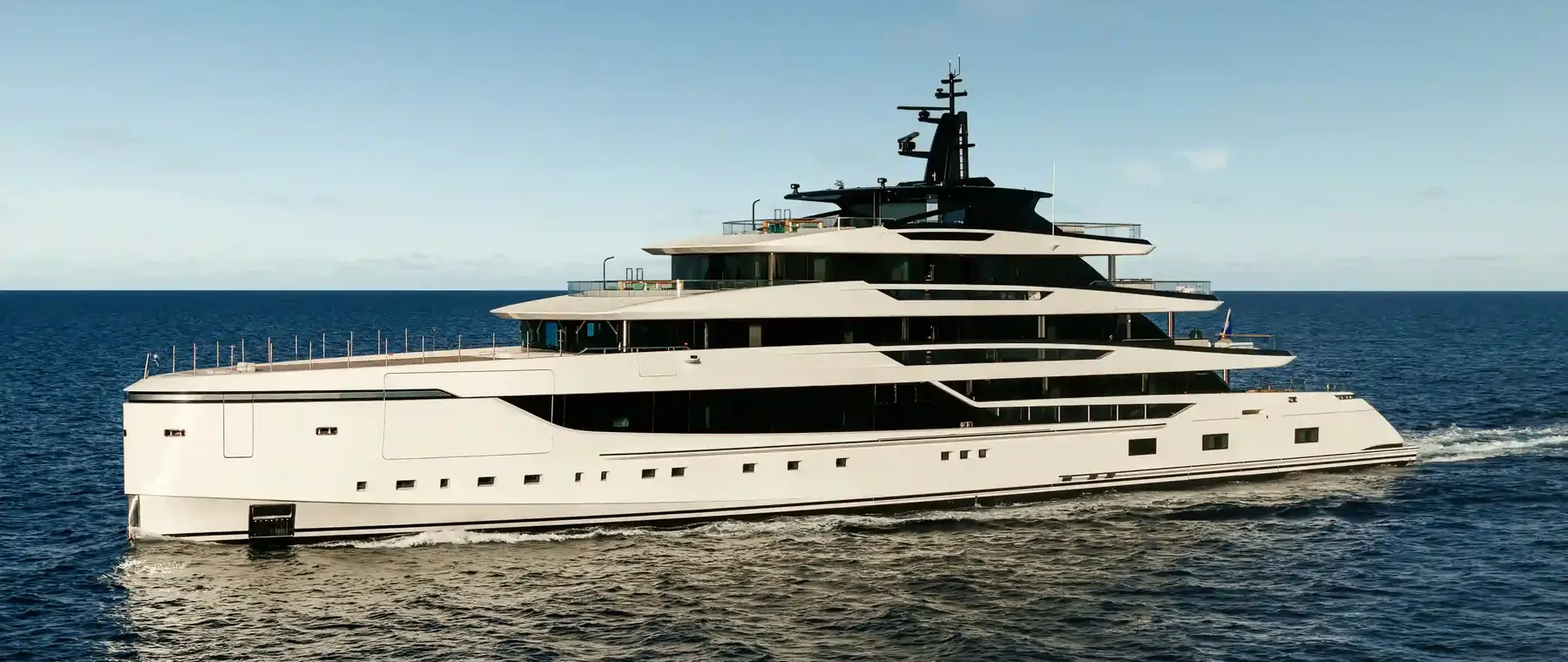
Inside Silver Fox, the first Sanlorenzo 74Steel flagship, combining diesel-electric technology, exceptional private spaces, bespoke design and an expansive waterfront lifestyle.
Sanlorenzo’s move into the upper reaches of large-yacht construction has taken a significant step forward with the 74Steel, a flagship platform designed to combine the volume and technical capability of a very large superyacht with the Italian builder’s traditionally restrained approach to design.
The first yacht in the series, now known as Silver Fox, was launched in late 2025 and delivered in 2026. Rather than simply enlarging an existing Sanlorenzo concept, the 74Steel represents a new technical and architectural platform, allowing individual owners to substantially alter layouts, interiors, propulsion choices and even exterior details while retaining an established engineering foundation.
At approximately 1,900 gross tons, the 74Steel sits close to the upper boundary of the market Sanlorenzo has deliberately chosen to occupy. It is large enough to provide the private decks, wellness spaces, technical redundancy and substantial crew infrastructure expected aboard a modern flagship, without moving into the still more complex world of multi-thousand-gross-tonne gigayachts.
Perhaps the most important aspect of the 74Steel is that it is not intended to produce a series of nearly identical yachts.
Sanlorenzo developed an engineered platform that can be extensively modified around each owner. Different yachts in the series can have individual interior designers, layouts, bow configurations and propulsion arrangements.
That philosophy was evident before the first yacht was even completed. Sanlorenzo reported that three units had already been sold, with another under negotiation at the time the original flagship was unveiled.
The approach sits somewhere between a fully bespoke one-off superyacht and conventional series production: the expensive and technically demanding foundations of the yacht are proven, while much of what the owner actually sees, uses and experiences remains highly personal.
Silver Fox demonstrates just how far that customisation can extend.
One of the defining features of the first 74Steel is the amount of yacht dedicated exclusively to its owner.
Rather than limiting the owner to a large forward suite on the main deck, the design incorporates a dedicated owner’s deck, creating what is effectively a private apartment within the yacht.
The owner’s interior accommodation includes a private lounge and office, an extensive dressing area, two spa-inspired bathrooms and a king-size bed positioned to take advantage of views towards a private forward terrace.
That terrace includes its own hot tub, while another private exterior area aft can be configured for secluded dining.
Access has also been carefully considered. The circulation routes can restrict unnecessary movement through the owner’s areas, allowing the deck to remain genuinely private even when the yacht is operating with guests, crew and staff elsewhere onboard.
It illustrates an increasingly important distinction in large-yacht design: luxury is not simply measured by the size of a cabin, but by control over space, privacy and movement.
At the opposite end of the yacht, the stern has been developed around another major priority in contemporary superyacht design: direct access to the sea.
When fully opened, the beach club and surrounding exterior areas can expand to approximately 290 square metres at sea level.
Fold-down bulwarks increase the usable width of the space, while the transom opens into the swim-platform arrangement to create a large walk-around waterfront environment.
Inside is a substantial wellness complex.
The arrangement can include a gym with a fold-down platform, massage room, sauna, hammam, plunge pool and a dedicated family area for younger guests.
Above, a glass-bottomed swimming pool on the main aft deck allows natural light to pass into the spaces below, connecting two otherwise separate levels of the yacht.
The significance of the beach club goes beyond its dimensions. Much of the space became possible because of the way Sanlorenzo approached the yacht’s machinery and propulsion architecture.
The first 74Steel was developed with a diesel-electric propulsion system engineered with Siemens Energy.
Instead of relying on a traditional arrangement in which large main engines are mechanically connected directly to propeller shafts, the system uses multiple variable-speed generator sets to produce electrical power.
The original technical specification describes six Volvo Penta-Mase generator sets supplying power to twin 1,000kW Schottel E-Pods, supported by approximately 1.5MWh of lithium iron phosphate battery capacity.
This architecture provides benefits beyond propulsion efficiency.
Large pieces of machinery no longer have to be positioned according to the rigid geometry imposed by long conventional drive shafts. Naval architects therefore gain considerably more freedom when deciding where technical equipment should be located.
On the 74Steel, some of that freedom has been converted directly into guest space, particularly around the stern, beach club and wellness areas.
Redundancy is also central to the concept. Multiple generators, electrical systems and propulsion components mean that the loss of a single element does not necessarily mean the loss of the yacht’s essential operating capability.
The yacht’s HVAC system uses Variable Air Volume technology to regulate conditioned-air delivery according to temperature and occupancy requirements in different zones, helping manage comfort, noise and energy use across a yacht of this volume.
Exterior design is by Zuccon International Project, continuing a long relationship between the Rome-based studio and Sanlorenzo.
At this scale, however, yacht design becomes as much an architectural exercise as a styling exercise.
The 74Steel uses strong horizontal lines, large areas of glazing and carefully controlled proportions to prevent its considerable internal volume from dominating its appearance.
Vertical and sculpted bow treatments can vary between individual hulls, demonstrating another unusual element of the platform: even the overall length can change slightly depending on the configuration selected by an owner.
The first yacht combines that exterior architecture with interiors by Francesco Paszkowski Design in collaboration with Margherita Casprini.
The interior concept uses curved furniture, softer architectural forms, matte wood finishes and individually selected stone and marble treatments rather than attempting to communicate luxury simply through highly polished surfaces.
The result is intended to make a yacht of considerable scale feel residential and personal rather than monumental.
Guest accommodation aboard the first yacht is concentrated primarily on the main deck.
Five ensuite suites include two twin cabins, two doubles and a full-beam VIP suite.
The VIP is particularly substantial, incorporating its own living area that can be separated from the sleeping space.
A central corridor leads aft towards the main saloon, where lounge and cinema functions are combined.
Beyond this is the formal dining area, capable of seating up to 14 people.
Large sliding glass doors on both sides of the approximately 130-square-metre combined lounge and dining area can open the interior towards the sea, creating cross-ventilation and reducing the sense of separation between interior and exterior spaces.
Further aft, twin stairways connect directly with the wellness facilities below, while the swimming pool forms the visual centrepiece of the open aft deck.
The bridge deck illustrates the challenge of designing a yacht that must simultaneously operate as a sophisticated ship and a private residence.
The wheelhouse covers approximately 56 square metres and uses an integrated bridge system, with a walk-around Portuguese bridge providing additional external visibility.
Forward deck space can also serve as a touch-and-go helicopter landing area, adding another layer of operational capability without requiring a permanent hangar and aviation infrastructure.
The captain has accommodation on this level, along with an additional cabin that can be used by staff or a pilot.
Aft, however, the deck returns to guest use.
The skylounge can function as a television and relaxation room, with sliding and folding glass panels opening it into an intermediate teak-decked area and then onwards to an exterior dining veranda.
Rather than treating inside and outside as separate environments, the layout attempts to make the boundary between them progressively disappear.
A yacht of this scale succeeds or fails partly according to spaces its guests may rarely see.
The lower and tank decks therefore devote considerable volume to crew operations, storage, provisioning and technical services.
The original arrangement includes 11 crew cabins forward on the lower deck, with the captain accommodated separately on the bridge deck. An additional cabin can be adapted for use as a hospital berth.
Two dedicated crew staircases connect the operational decks, allowing crew to move efficiently around the yacht without repeatedly crossing guest circulation routes.
The yacht also carries substantial cold and frozen storage, dry stores, refrigerated waste facilities and a wine cellar.
Crew welfare has been considered too, with dedicated relaxation and exercise areas.
Perhaps the most unusual provision is an area designed for hydroponic cultivation.
This allows selected vegetables and plants to be grown onboard without soil, using nutrient-rich water systems. On a yacht designed for extended cruising, the concept provides both practical fresh produce and an unusual degree of self-sufficiency.
Two tender garages are positioned amidships rather than allowing tender storage to consume the main beach-club area.
The original configuration was designed around a roughly 10-metre limousine tender, a separate crew tender and a selection of water toys.
Locating these functions amidships helps preserve the stern almost entirely for guest recreation.
It is another example of how modern superyacht design has changed.
Twenty years ago, the stern of a large yacht might have been dominated by engineering, tender storage and a relatively simple swim platform. On yachts such as the 74Steel, the same area has become some of the most valuable guest real estate onboard.
Perhaps the clearest demonstration of the 74Steel concept arrived with the second yacht.
Virtuosity, unveiled in 2026, uses the same underlying 74Steel philosophy but has been transformed into a dramatically different yacht through close collaboration between its owner, Sanlorenzo and Studio Paolo Ferrari.
Among its most extraordinary features is a living tree extending through two decks, together with a submerged aquarium incorporated into the yacht and a radically reinterpreted waterfront area.
The contrast between Silver Fox and Virtuosity is important.
They are recognisably members of the same Sanlorenzo flagship family, but they are not simply sisterships distinguished by different furniture and colour schemes.
They demonstrate how a common engineering platform can become the foundation for genuinely different architectural identities.
The significance of the Sanlorenzo 74Steel is not simply that it became the builder’s largest yacht.
Its more interesting achievement is the attempt to solve one of the fundamental compromises in modern superyacht construction.
Fully bespoke yachts offer almost unlimited freedom, but every major technical decision may have to be engineered specifically for one vessel. Series-built yachts provide greater certainty and proven engineering, but traditionally restrict how far an owner can depart from an established design.
The 74Steel attempts to occupy the space between those two approaches.
Its underlying engineering provides a repeatable foundation, while architecture, layouts, interiors, propulsion choices and lifestyle spaces can be extensively reshaped around the individual owner.
Silver Fox shows one interpretation: large family spaces, an exceptional private owner’s domain, extensive wellness facilities and strong emphasis on practical long-term life aboard.
Virtuosity has already shown another.
For Sanlorenzo, that may ultimately be the real importance of the 74Steel. It is not simply one flagship yacht.
It is a platform designed to create many different flagships.
Continue reading
Selene Yachts has released the hull of S9206, the second 27.93m Selene 92 Ocean Explorer, with deck lamination now under way. The long-range yacht …
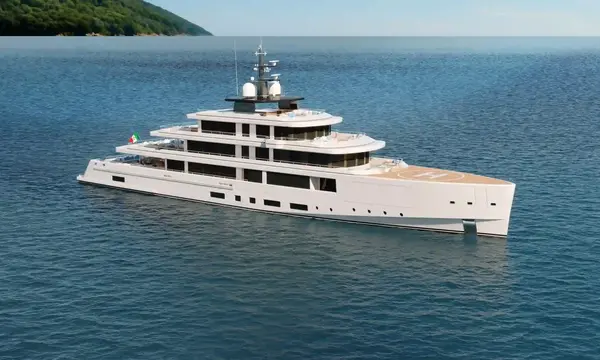
Antonini Navi will bring fresh construction updates to Cannes, with EVO 31 due to launch in October and Lounge 40's hull due to be …
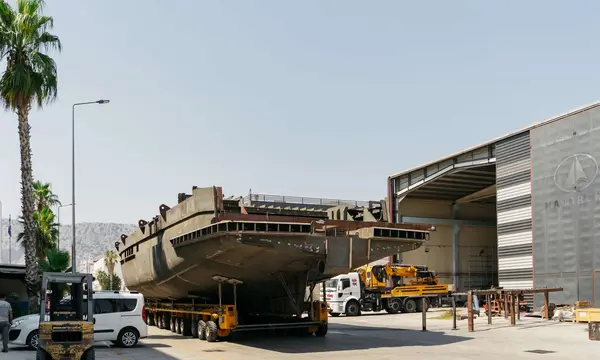
Bering Yachts has turned the steel hull of the first 33.1m Bering 110 in Antalya, moving the crossover project into its next construction phase.
Benetti’s full-custom 80-metre Project Iron Man has arrived at the builder’s Livorno shipyard, where machinery, technical systems and interiors will now be installed ahead …
Superyacht Guide
Continue into the wider Superyacht Guide.