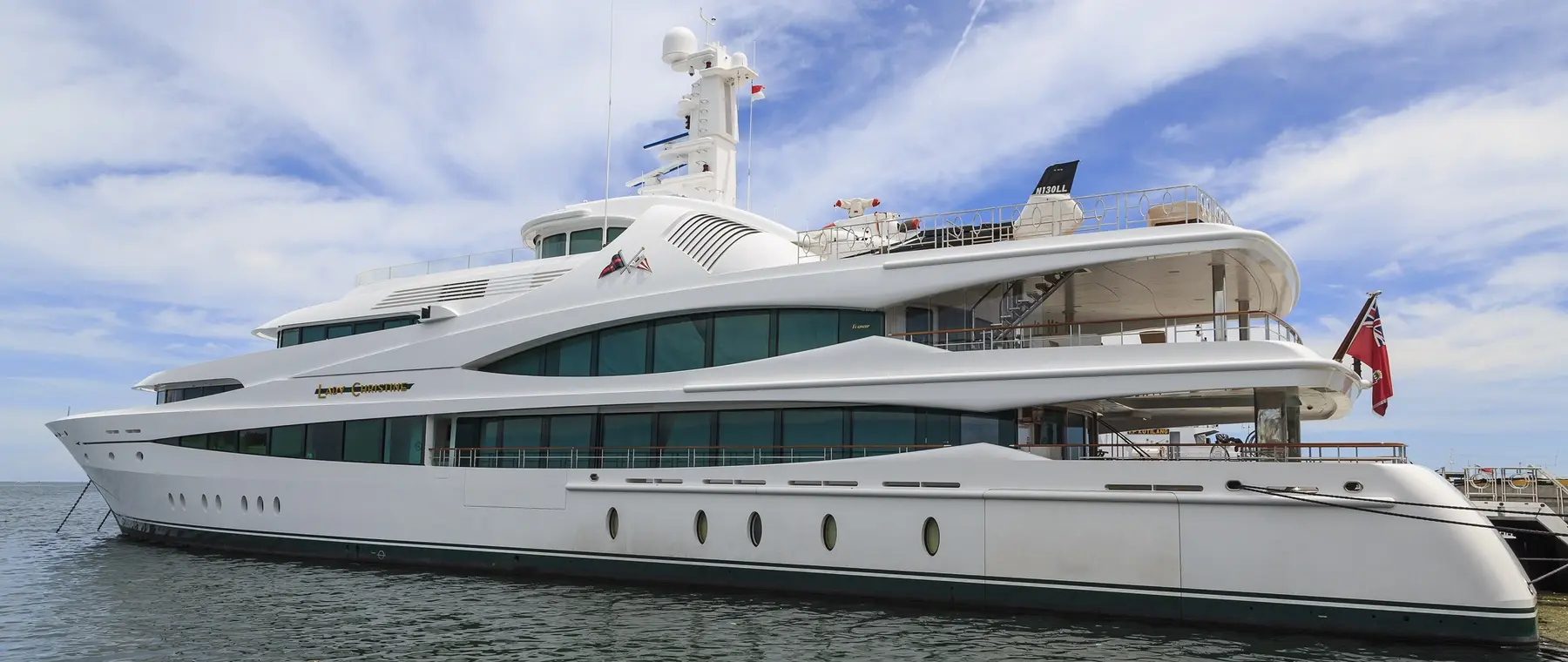
LADY CHRISTINE at Benoa — archival illustration for yacht customs reporting
HM Revenue & Customs revised the goods declaration section of UK pleasure craft arrival guidance on 16 November, including overseas equipment purchases.
HM Revenue & Customs revised its guidance for pleasure craft arriving in the United Kingdom on 16 November 2026, clarifying the goods that must be declared by people travelling aboard. The update concerns the existing arrival guidance, not an announcement of an entirely new customs regime. It is nevertheless relevant to superyachts returning from overseas cruising or completing work at shipyards outside the United Kingdom. The official publication covers arrival reporting, immigration clearance, the declaration of goods and circumstances in which tax relief may be available when a vessel returns to the country. The precise treatment of an individual yacht depends on its voyage, use, ownership and import status. Captains and management teams preparing a UK arrival should accordingly review the updated guidance alongside any advice applicable to the specific vessel.
The revision history published by HMRC identifies the goods declaration section as the part amended on 16 November. That distinction matters because the wider guidance dates from 2021 and has been revised on several previous occasions. Captains should not assume that every requirement in the November version is newly introduced. The updated publication should instead be treated as the current official reference for the particular subjects it addresses. The distinction between a changed instruction and an unchanged instruction reproduced within a revised document can be important when updating a yacht's operations manual. A management company should record the version date, identify the affected section and determine whether existing onboard procedures reflect the current instructions. This is more useful than circulating a broad statement that customs rules have changed without establishing what has actually been revised.
Large yachts can accumulate considerable quantities of goods during a cruising season. Purchases may range from ordinary personal items to valuable equipment fitted during overseas maintenance. HMRC's arrival guidance explains that certain goods must be declared, referring to restricted items, goods intended to be left in the country and purchases exceeding the applicable personal allowances, subject to the relevant conditions. It expressly includes equipment purchased and fitted to a vessel outside the UK. This is a reminder that a yacht's goods declarations cannot necessarily be limited to suitcases or items brought aboard by guests immediately before departure. Captains should establish which purchases belong to the vessel and which are personal to individuals on board. They should then obtain appropriate advice about the applicable declaration and tax treatment. Actual invoices and installation records provide a better foundation for that assessment than estimates of the cost.
The distinction between ordinary maintenance and substantial improvement can have particular significance when an owner brings a vessel back to the United Kingdom following an overseas refit. A refit may consist of numerous individual contracts, some concerning repairs, others concerning replacements or improvements. Records should identify the nature of each item, where the work was carried out and the amount charged. HMRC's guidance on returning vessels identifies conditions for Returned Goods Relief, including previous circulation of the vessel in the UK and limitations concerning work carried out overseas. A manager should not infer eligibility from the fact that the yacht was previously based in Britain. The particular circumstances and any alternative applicable customs procedures need independent consideration. Where the financial value of the works is substantial, obtaining specialist advice before the vessel departs for the United Kingdom can reduce uncertainty at arrival.
The guidance also describes the established mechanism for submitting pleasure craft reports. Such reports provide the relevant authorities with information concerning the vessel, voyage, persons and goods on board. If voyage arrangements change, the owner or person responsible should address the relevant reporting amendments promptly. This has practical consequences for superyacht itineraries because changes can occur after an original plan has been agreed. Weather, maintenance, berth availability or guest travel may affect the final arrival arrangements. A captain should establish which member of the team is responsible for submitting and updating the report, and preserve confirmation that the relevant steps have been completed. A shore-based management company can support that process by ensuring that documentation is available, but the existence of shore-side assistance does not remove the need for accurate information concerning the actual vessel and voyage.
HMRC's publication discusses which vessels may report under the pleasure craft procedure. It describes recreational use and recognises that certain hired or chartered vessels can fall within the relevant reporting arrangements when used solely for private recreation. Other circumstances require commercial reporting. This is a customs-reporting distinction; it should not be confused with the vessel's status for every other legal purpose. A yacht may be subject to maritime safety or employment requirements that are not determined solely by the customs reporting route. The appropriate procedure must be established against the actual facts and official guidance. Management teams that operate fleets with mixed ownership and use arrangements should avoid applying a single arrival classification indiscriminately. Instead, they should identify the particular voyage circumstances and obtain clarification where the published guidance does not resolve them.
The wider guidance also addresses immigration clearance for people aboard arriving pleasure craft. Crew and guests may hold different nationalities and possess different rights or permissions to enter the country. The captain cannot safely infer that requirements applicable to one passenger will apply equally to everyone else aboard. Before departure, a yacht's team should establish what documentation is needed and which persons require permission from Border Force. The arrangements for receiving clearance should also be understood. Under the official guidance, disembarkation must not precede relevant permission where that permission is required. Remote clearance may be available in appropriate circumstances. This part of arrival planning is especially important where personnel changes or guest movements occur shortly before the voyage. A complete and current passenger and crew list, maintained securely, can help the responsible team avoid errors.
The guidance distinguishes arrivals in Great Britain, Northern Ireland and certain movements involving the Isle of Man and other territories. A description of a voyage as an arrival in the UK does not, on its own, establish whether a particular reporting requirement applies. Captains need to review the route, departure point and intended place of arrival. The appropriate requirements should be considered before the voyage rather than inferred from a procedure followed on a previous trip. Where reporting is required, the guidance also describes displaying the yellow Q flag on entry into UK waters and retaining it until the relevant customs reporting is complete. Superyacht management teams should examine these instructions in the current official text because broad summaries cannot capture every exception or special circumstance. Practical readiness includes ensuring that the crew has access to the required documentation and understands the sequence of events.
The publication's discussion of Returned Goods Relief is particularly important to brokerage purchasers. An existing yacht may have an international movement history that extends across the ownership periods of several different parties. Its historical presence in a jurisdiction is not a substitute for establishing the current owner's entitlement to relief. The official guidance identifies restrictions where a vessel was exported and subsequently sold to a new owner outside the country, while acknowledging that other reliefs may be relevant in particular circumstances. Purchasers should investigate the vessel's customs status during the transaction rather than postpone the question until the first arrival. This can affect both the economic assessment of the purchase and the documentation needed from the seller. Owners contemplating a change of residence or a permanent return should obtain specialist guidance before committing to a particular delivery or import arrangement.
For an internationally operating yacht, the most useful response to the November update is a controlled review of existing procedures. The latest official publication should be available to the captain and relevant shore-based personnel, with responsibilities established for declarations, voyage reporting and immigration clearance. Managers should reconcile overseas purchases and refit invoices against any applicable import obligations and ensure that information provided by guests is handled appropriately. The 16 November revision concerns goods declarations specifically; it does not establish that the entire arrival process has been replaced. The wider guidance remains important because the various stages of arrival interact in practice. Superyacht Guide recommends using the current GOV.UK text as the authoritative starting point and obtaining competent customs advice on vessel-specific matters, rather than treating this industry report as an individual determination of tax liability.
Primary source: HM Revenue & Customs guidance, updated 16 November 2026.
CEphoto, Uwe Aranas / Wikimedia Commons, CC BY-SA 3.0 (resized and JPEG re-encoded). Archival illustration; no association with a UK customs proceeding. Official source.
Explore
Go deeper into the yachts, companies, events and destinations directly connected to this article.
Continue reading
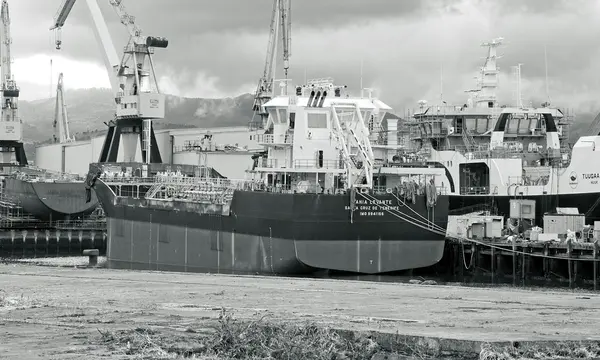
Royal Hakvoort Shipyard has confirmed that the 38.25-metre motor yacht Soprano has returned for maintenance and what the builder describes as her ten-year Lloyd's …

Confindustria Nautica presented the eighth edition of its customs and tax guide, covering temporary admission and refit-related guarantees for visiting yachts.

Camper & Nicholsons says internationally mobile yacht owners should review the evidence supporting Temporary Admission as EU customs authorities apply closer scrutiny.
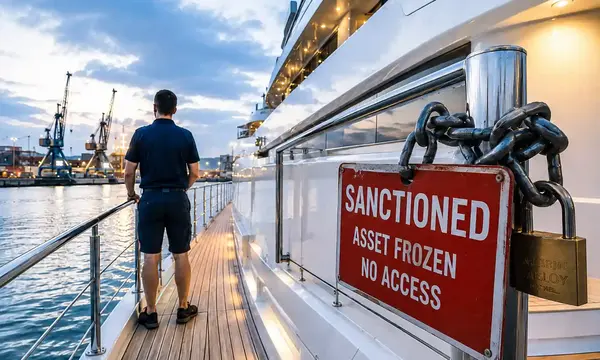
A sanctions freeze can immobilise a superyacht without making its crew sanctioned, leaving wages, contracts and daily operations caught between employment law and financial …
Superyacht Guide
Continue into the wider Superyacht Guide.
Business opportunities · Superyacht Guide
Companies serving the superyacht market can discuss clearly identified advertising, sponsorship and business-profile opportunities. Commercial activity remains separate from independent editorial coverage.

