Scanstrut Navlight Shares 2026 DAME Overall Design Award
By Superyacht Guide Newsroom · Edited by Superyacht Guide Newsroom
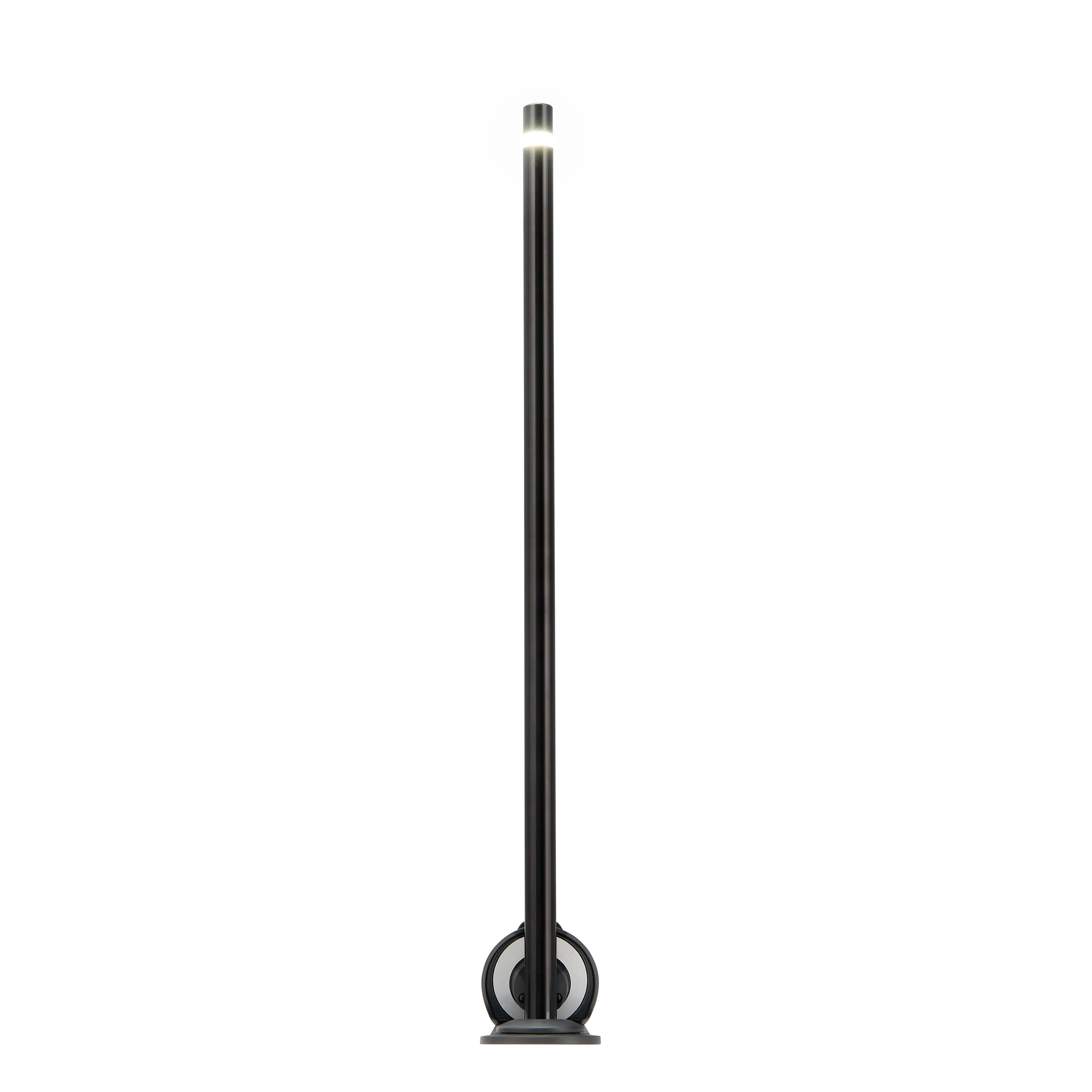
Scanstrut wireless-powered removable navigation pole light official product photograph 2026 DAME award
Scanstrut's wireless navigation pole light earns a joint Overall DAME Design Award at METSTRADE 2026, bringing contactless power to marine tender lighting.
Scanstrut's Wireless Powered Navigation Pole Light has been named one of three joint Overall Winners of the 2026 DAME Design Awards at METSTRADE in Amsterdam. The result was announced by the organiser on 17 November 2026, giving the British marine-equipment company another distinction for a product previously recognised at the October IBEX Innovation Awards. The new development is the DAME result, not a second product introduction or a claim that the light has been installed on a newly delivered superyacht.
The jury also recognised Garmin's Signal VHF and Remote system and Teignbridge Propellers International's controllable-pitch propeller. Those are separate products with different purposes; the common factor is the judges' assessment of design. Scanstrut's entry addresses removable navigation lighting, a subject especially relevant to the tenders and supporting small craft routinely operated from larger superyachts. The light itself is not a 24-metre yacht. Its significance to this publication rests on how reliable tender equipment supports the operations of a superyacht and its professional crew.
METSTRADE says the 2026 DAME Awards marked the first time in their 35-year history that the jury named three Overall Winners. Jury chair Andre Hoek explained that the final assessment could not separate the three highest-rated products, prompting an unprecedented shared outcome. The competition received 153 entries, with 74 products nominated. The organisers also announced nine category winners, 19 special mentions and an Environmental Design Award, illustrating that the overall recognition formed part of a wider equipment-design programme.
The numbers describe the scope of the competition, not evidence that any of the winning products has been independently proven to outlast all rivals in long-term service. The organisers assess design qualities across numerous categories, whereas vessel operators need additional information about certification, installation and maintenance. Scanstrut's award is therefore a useful signal that the judging panel valued its approach to a familiar problem. A captain deciding what to fit to a tender should still demand the product's current specifications, installation instructions and evidence that it meets the requirements for the boat in question.
The central feature of Scanstrut's light is contactless power delivery. Conventional removable pole lights often depend on metal contacts between the detachable pole and its base. In marine conditions, those interfaces can accumulate salt, water, dirt and corrosion, potentially making the connection unreliable. Scanstrut says its SystemOne wireless-power approach transfers power through the mounting arrangement without exposing the conventional metal-to-metal electrical contacts that users must otherwise keep clean.
This is not a claim that the system operates without any wired electrical supply. The fixed base still needs a suitable connection to the vessel's electrical system; the change concerns how power reaches the detachable pole. That distinction is important for engineers and installers. Removing one exposed connector interface may reduce a known vulnerability, but it does not remove the need for proper cabling, fuses, mounting, waterproofing or routine checks. Nor can a manufacturer's description by itself establish maintenance-free operation over many seasons in every climate.
Scanstrut introduced versions of the navigation pole light in lengths of approximately 600 and 1,200 millimetres. The company describes the product as dropping into its receiving base without conventional plugs or exposed electrical contacts. For the crew of a superyacht tender, a removable arrangement can be useful when a boat must fit into a garage, pass under a door or travel in a lifting cradle. The height and position of a navigation light nevertheless need to be assessed against the actual tender's design and applicable regulations.
Superyacht tenders are exceptionally varied. A small rescue boat, a high-performance guest tender and an enclosed limousine tender can have very different visibility, storage and lighting requirements. A pole that is convenient to remove may still be unsuitable if its approved location obstructs crew access or if passengers can inadvertently strike it. The correct installation needs a secure socket, clear operating instructions and crew training. An award for a component cannot certify the complete lighting arrangement of a vessel whose dimensions and intended uses are unknown.
Scanstrut's October technical announcement describes a two-nautical-mile all-round white navigation light. This is a defined light characteristic, not an assurance that the product alone provides all navigation lights required on every boat. Requirements for visibility, colour, location and the combination of lights depend on vessel size, propulsion status and the applicable navigation rules. A superyacht's main hull and its tender may have different obligations, and a removable all-round light must be fitted in a manner that preserves its intended visibility.
For a yacht manager, correct specification should begin with the actual craft rather than a catalogue image. The crew should identify whether the tender is powered or under sail, its certified dimensions, the waters in which it operates and the lights already installed. A compliant replacement must be selected and tested for that use. The product's advertised two-nautical-mile characteristic can inform the discussion, but it is not a substitute for checking the relevant approvals and installation standards.
Accounts of the DAME judging highlight the relationship between a robust mounting socket, water drainage and sealed power transfer. These details address an everyday source of frustration on open boats: water remaining around a fitting after spray, washing or heavy rain. A mount that avoids exposed metal contacts can be advantageous in such circumstances, especially if the pole is regularly taken out for stowage. Yet owners should distinguish the design intention from measured service-life evidence, which would require inspection over time.
Marine hardware is judged in use as well as in a showroom. A base may be repeatedly stepped on, washed, exposed to cleaning products or subjected to loads that the designer did not intend. Good installation practice protects the mounting substrate and electrical cable, while the vessel's maintenance schedule should include checks for physical damage, correct engagement and reliable illumination. The absence of a conventional socket contact should never be an excuse to omit daily checks before a tender is dispatched at dusk or in reduced visibility.
Large superyachts can operate several supporting boats with different duties: transferring guests, servicing water sports, carrying stores or providing additional operational flexibility. Their crew must manage storage, lifting, fuel or battery charging, safety equipment and the readiness of each boat. A small fitting that fails can prevent an otherwise serviceable tender from being used safely at night. That is why seemingly minor marine-electrical design decisions can have consequences for the wider guest programme.
The distinction in scale is important. A product intended for a smaller supporting craft should not be presented as an innovation for the navigation-light array of a 60-metre motor yacht without separate evidence. Its appropriate relevance may instead be a tender carried aboard such a yacht. There, a removable light can interact with garage clearances, handling routines and the boat's existing electrical system. A professional captain or engineer should assess those interfaces before procurement and establish a simple pre-departure check for the crew assigned to the tender.
Scanstrut had already announced an IBEX 2026 Innovation Award in the Deck Equipment and Hardware category for the same wireless-powered pole light. Its October statement focused on the weaknesses of corrosion-prone contacts and the simplified arrangement for fitting the removable pole. The DAME decision was a distinct later judgement by a different competition. Presenting the chronology correctly avoids implying that the manufacturer launched two separate lights or introduced a substantially revised model in November.
Awards can help a supplier reach designers, boatbuilders and fleet operators who might otherwise overlook a familiar piece of equipment. However, two awards do not replace third-party testing to an applicable marine standard or the practical experience of a vessel's crew. For a tender installation, it remains reasonable to ask how the base is serviced, whether replacement poles are stocked, what happens if the light stops working and whether the product is readily available in the intended cruising regions. Operational confidence depends on such details rather than an award count.
The wireless pole-light system was developed in partnership with Perko, a long-established marine-lighting company. Scanstrut's contribution includes its SystemOne wireless-power technology, while the collaboration brings the product into a category where conventional fitting, visibility and compliance considerations are essential. The public technical material should be read for the exact responsibilities and approvals of each model; the existence of a partnership should not be taken to mean that every Scanstrut product incorporates Perko components or vice versa.
For the professional yachting sector, supplier relationships can matter because servicing frequently takes place far from the builder or original outfitter. A yacht tender that cruises between the Mediterranean and Caribbean may require replacement parts, mounting guidance and routine help from a local technician. Established distribution and clear product documentation can reduce uncertainty, but the availability of a specific item must be checked in the port concerned. No announcement reviewed states that this pole light has become standard equipment on a particular superyacht fleet.
The DAME jury's recognition suggests a broader design principle: identifying a recurring failure mode and removing the vulnerable interface rather than merely improving its protective coating. That approach can be relevant throughout marine engineering, where equipment is exposed to moisture, salt and repeated mechanical handling. Designers developing tender garages, exterior docking stations and removable deck equipment may find the general lesson useful even if the Scanstrut product is not a suitable choice for their own application.
An equipment change also creates new technical questions. Engineers should evaluate how wireless power transfer behaves if a component is misaligned, whether the design provides clear feedback that power is reaching the light and what inspection tasks the manufacturer recommends. These are matters for product documents and practical trials, not facts established merely by the award report. As always with safety-relevant fittings, the correct response to innovative design is a disciplined evaluation rather than either automatic acceptance or blanket scepticism.
METSTRADE's annual equipment exhibition brings together component makers serving several kinds of boating, from modest recreational craft to large sailing and motor yachts. The 2026 DAME finalists covered navigation and communication, propulsion, deck equipment, safety, onboard comfort and manufacturing materials. The three joint winners provide examples of how the jury assessed improvements in very different areas. A small lighting component, a bridge radio and a propeller system can all be technically interesting without being suitable for the same vessel.
The Scanstrut light falls in the navigation and communication section of that comparison. Its specific achievement is a design solution for a removable all-round white navigation light. The Garmin and Teignbridge products have already warranted their own, separate technical coverage; this report addresses the remaining award-winner's distinct operating problem. The fact that the competition grouped them together does not justify repeating unrelated performance claims or presenting the awards as a measure of overall shipbuilding health.
The verified news is METSTRADE's 17 November 2026 announcement that Scanstrut's Wireless Powered Navigation Pole Light was a joint Overall DAME Design Award winner, alongside Garmin and Teignbridge. Scanstrut's own earlier release confirms its contactless SystemOne power approach, two-nautical-mile all-round white output and 600- and 1,200-millimetre pole variants. The product's October IBEX award is prior history, not the event reported here. Neither official source identifies a specific superyacht that has selected the new light.
The implications for owners are therefore practical and limited. A superyacht tender fleet may have good reason to assess a removable light which reduces exposure of conventional electrical contacts. Whether it is appropriate depends on the individual craft's navigation-light obligations, storage geometry, power supply and maintenance support. An award can highlight promising marine design, but a reliable tender operation is built from approved equipment, proper installation, clear crew procedures and continuing inspection. Scanstrut's new DAME recognition adds a credible industry milestone to that evaluation without settling it for every vessel.
Primary source: METSTRADE official Scanstrut Wireless Powered Navigation Pole Light product listing, September 2026.
Further information: METSTRADE official 17 November 2026 DAME Design Awards winners announcement.
Photograph: Scanstrut, official product photography of the Wireless Powered Navigation Pole Light; METSTRADE awarded it joint Overall DAME winner in November 2026. Official source.
Explore
Go deeper into the yachts, companies, events and destinations directly connected to this article.
Continue reading
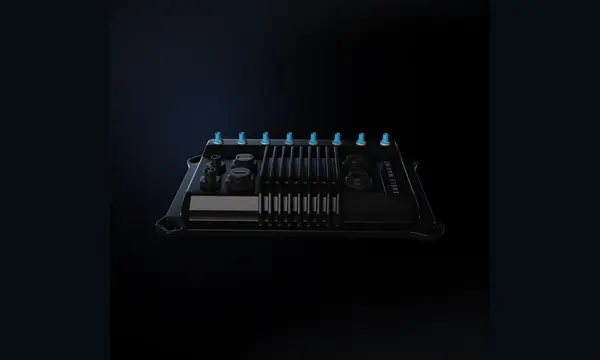
Eagle Marine presents a modular ADAS platform combining cameras, onboard computing and third-party applications for yacht navigation and docking assistance.

Superyacht navigation specialist dsnm has acquired sister company NavigatX, bringing navigation management, passage-planning software and bridge refit support together.

Avikus USA executive Sangwon Shin is discussing how sensors, steering, propulsion and AI need to operate as one system for future assisted superyacht navigation.
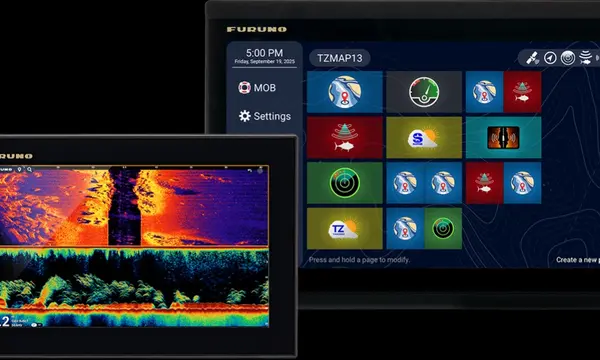
Furuno’s TZMAP9 and TZMAP13 combine stand-alone navigation, TZ MAPS cartography and built-in TruEcho CHIRP sonar in compact displays.
Superyacht Guide
Continue into the wider Superyacht Guide.
Business opportunities · Superyacht Guide
Companies serving the superyacht market can discuss clearly identified advertising, sponsorship and business-profile opportunities. Commercial activity remains separate from independent editorial coverage.