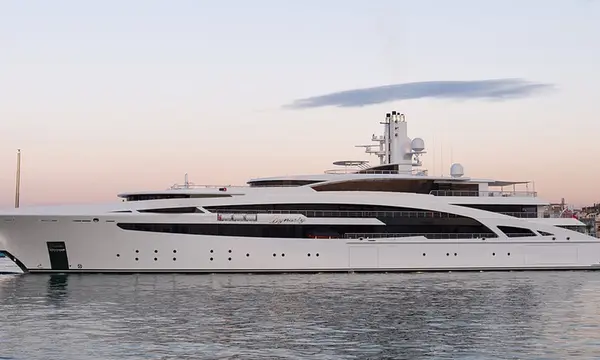
Cramm Details Flush-Retracting Navigation-Light Masts for Large-Yacht Deck Design
Cramm Yachting Systems details stainless-steel telescopic navigation-light masts for superyachts, with flush deck retraction and managed cables at METSTRADE 2026.
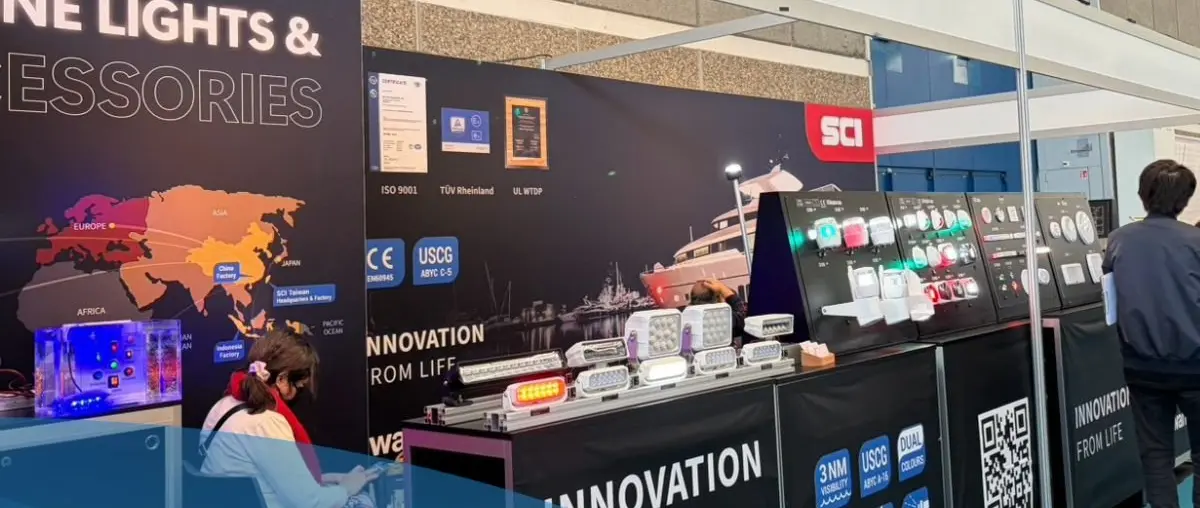
Shin Chin Industrial (SCI), original company event image, 26 November 2026.
Shin Chin Industrial reported on its METSTRADE 2026 presentation of marine searchlights, navigation lamps and electrical controls, highlighting the decisions facing large-yacht builders.
Taiwanese marine equipment manufacturer Shin Chin Industrial (SCI) has published a report on its participation in METSTRADE 2026, held in Amsterdam from 17 to 19 November. In the company's 26 November review, the emphasis is on marine searchlights, navigation lights and electrical switches, categories that look relatively modest beside major engines or propulsion systems but form an important part of a yacht's daily operation. SCI says it used the show to demonstrate products and discuss the demands of different marine applications with industry visitors.
For builders and operators of superyachts of 24 metres and above, the important question is not whether a show stand contained a new vessel. It is how a supplier's components can fit into a vessel's electrical architecture, bridge operations, exterior arrangements and maintenance programme. The company has described a fresh period of trade-show engagement, rather than announcing an unverified large-yacht contract or a newly certified system.
The first-party report identifies the C2-317 marine searchlight, navigation lamps and electrical switch products among the equipment it presented to visitors. The company places the products within a broader effort to meet potential distributors, professional customers and equipment partners. METSTRADE is primarily an industry-to-industry event, making it a natural venue for a supplier to learn what designers and installers expect before a product becomes part of a detailed vessel specification.
SCI's report, dated 26 November, is an account of its presence at the show rather than a catalogue of confirmed orders. That distinction matters. Exhibiting a component establishes its availability for discussion and assessment; it does not establish that a particular shipyard has selected it for a yacht under construction. Professional reporting should keep the manufacturer announcement separate from potential applications which still depend on independent engineering review and commercial negotiations.
The company highlights the C2-317 searchlight and describes a multidirectional adjustment capability for marine search and lighting tasks. A searchlight is a familiar piece of bridge equipment, yet installation choices involve mounting height, illumination, power supply and the view from different operating positions. For a large yacht, controlled light can assist close-quarters manoeuvring and identification in darkness, but it must be used responsibly so that it does not impair other vessels or the crew's night vision.
A technical buyer would need to evaluate a specific product's beam characteristics, environmental protection, control arrangements and electrical compatibility, rather than infer performance from a model name. The manufacturer's demonstration provides a starting point for discussion. Any assertion that a particular searchlight meets an applicable requirement or is suited to a named yacht would require documented specification and review which the exhibition summary does not itself supply.
SCI's METSTRADE overview also features navigation lamps. Their outward appearance may seem like a styling detail, but the function of navigation lights is fundamentally different from decorative lighting. On a superyacht, a suitable installation has to fit the vessel's geometry while supporting the required visibility, positioning and operating conditions. Designers cannot simply move lights to more visually discreet locations without checking whether the result still meets the relevant navigation requirements.
The manufacturer's product demonstration should be read in that context. It illustrates a category in which industrial design and regulation must work together, while a specific installation still depends on the yacht's size, configuration and flag requirements. The bridge team also needs straightforward means to monitor equipment status and deal with failures. Good visual integration has little value unless watchkeepers can rely on the system in normal operation and in adverse weather.
The published recap identifies marine switches and electrical controls among SCI's products. These are components owners and crew interact with repeatedly, whether they are operating lighting, access systems or ancillary equipment. On a luxury yacht, a switch assembly may be judged for tactile quality and appearance, but behind the finish lie practical questions about connections, load ratings, corrosion resistance and replacement parts.
Switchgear selection becomes particularly important when multiple contractors work on one yacht. The interior designer may want a consistent aesthetic, the electrician may require defined interfaces, and the shipyard must preserve access for inspection. A supplier's ability to document product variants and support repeatable installations therefore matters more than a photograph of a single attractive control panel. SCI's display invites precisely that kind of detailed product assessment.
Bridge, deck and interior equipment do not operate independently of the electrical distribution network. A searchlight or lighting control has to be coordinated with the yacht's supply voltage, protection scheme, wiring routes and monitoring arrangements. If equipment is installed in an exposed position, designers must also assess sealing and service access. It is the integrated system, not only the stand-alone component, that determines whether a design remains dependable at sea.
In a newbuild programme these decisions should enter the equipment schedule early, with the supplier providing correct technical documentation before final cable runs and mounting arrangements are fixed. During refit, the challenge may instead be compatibility with existing controls and spare-part arrangements. SCI's exhibition report does not settle these issues for a particular yacht, but the categories it presented are directly relevant to both types of project.
SCI describes METSTRADE as a setting for engaging manufacturers, brands, professional visitors and distributors from different markets. Face-to-face equipment discussions may reveal how expectations differ among boatbuilders, service companies and export regions. The company says the exchange of product information and customer requirements helps guide its manufacturing and product development activities.
For superyacht procurement, distribution coverage is more than a sales concern. Internationally operated yachts may need equipment support when they are far from the country of build, and a replacement lamp or switch may need to match an existing installation. A supplier considering expansion should be evaluated for documentation, parts identification, availability and practical routes to service. A trade-show contact is the beginning of that relationship, not a substitute for long-term support.
An official exhibitor report is useful evidence of which products a manufacturer actively promoted at a given event. In this case, SCI has supplied a contemporary account and its own event photography, allowing the participation and broad product categories to be checked without relying on a competing publication. The report does not establish independently measured beam performance, durability figures, certifications or new commercial contracts for the equipment shown.
That limitation should be kept visible because equipment stories can easily turn generic product descriptions into unsupported claims. A buyer may ask whether a control is suitable for a particular outdoor environment, or how a navigation lamp meets a specific rule. The proper answer comes from the manufacturer datasheet and the vessel's design review, not from enthusiasm generated during a show. Those distinctions protect owners and preserve the value of accurate industry reporting.
On a fully custom superyacht, even apparently small components can generate significant coordination work. The deck department might want an accessible mounting location, the designer a clean exterior line, the electrician a reliable cable route and the captain intuitive controls. The selected supplier must be able to confirm what is actually delivered and how it should be installed. A successful yacht specification resolves those requirements before fabrication makes later changes expensive.
The process should also consider maintainability. Equipment exposed to weather and salt needs accessible inspection points, clear documentation and an appropriate replacement strategy. Standardising certain components across a fleet or project can simplify spare-part management, but only when standardisation fits the vessel's design and operational needs. SCI's range may offer choices for that assessment; it cannot be assumed that one model will satisfy every application.
Marine lighting is influenced by several overlapping goals: navigational safety, practical deck illumination, energy use, night-time comfort and the appearance of the yacht. A technically successful solution balances these aims instead of allowing any one of them to dominate. Searchlights and navigation lamps are particularly visible examples because their function is integral to safe operations, even where owners demand understated styling.
Electrical controls sit at a different point in the same conversation. They connect crew and guests to the systems around them, while their suitability depends on reliable electrical engineering. When manufacturers present lighting and switches together, it provides an opportunity to review hardware as part of the whole vessel rather than treating the products as isolated finishing touches. That systems-based perspective is especially useful in larger custom yachts.
METSTRADE's value to suppliers is the concentration of technical and commercial specialists who ordinarily work across separate markets. The Amsterdam show ended on 19 November, while SCI's recap appeared one week later. The account therefore describes concluded activity rather than anticipating an event that has yet to happen, and does not imply that the manufacturer has made announcements after 26 November which are not documented.
There is no need to inflate the news into a breakthrough product launch. The meaningful development is that a marine equipment producer has reported its 2026 international exhibition participation and identified the product categories it is offering for professional assessment. The announcement is relevant to companies supplying larger yachts, where small components often have a disproportionate influence on installation effort, ongoing servicing and the quality of daily operations.
A yard interested in SCI's offering could request product datasheets, installation drawings, conformity documentation and evidence of environmental testing for the actual models under consideration. It would also be reasonable to establish who provides service support in the yacht's intended cruising regions and whether replacements can be obtained without redesigning an interface. Those questions are constructive next steps rather than reported decisions or established qualifications.
For the superyacht sector, the outcome of SCI's Amsterdam appearance will depend on such practical evaluations. A well-designed searchlight, navigation lamp or switch can help a yacht operate safely and consistently, but the benefits need to survive the complete specification, installation and maintenance process. The company's dated report is an opening for that discussion and provides a clear primary-source record of what was placed in front of the international market.
The primary source for this article is Shin Chin Industrial's official METSTRADE 2026 recap published 26 November 2026. Named product categories and the event participation are reported as company disclosures. Engineering considerations and potential relevance to yachts of 24 metres and above are editorial analysis; no undisclosed specifications, newbuild orders or certifications are inferred.
The accompanying photograph is an original SCI event image published by the manufacturer alongside its own recap, showing its 2026 exhibition display. It is credited to SCI/Shin Chin Industrial. The photograph is not presented as a vessel installation or as an image sourced from a third-party magazine, and it is not AI-generated.
Shin Chin Industrial (SCI), original company event image, 26 November 2026.
Continue reading
Cramm Yachting Systems details stainless-steel telescopic navigation-light masts for superyachts, with flush deck retraction and managed cables at METSTRADE 2026.
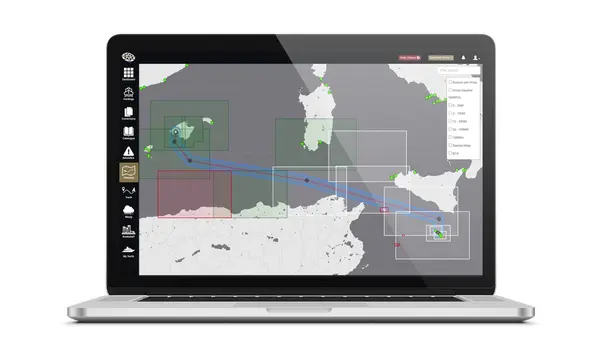
dsnm presents Compass software for superyacht chart corrections, passage planning, i4 Insight C-Map overlays and digital cruising publications at METSTRADE 2026.
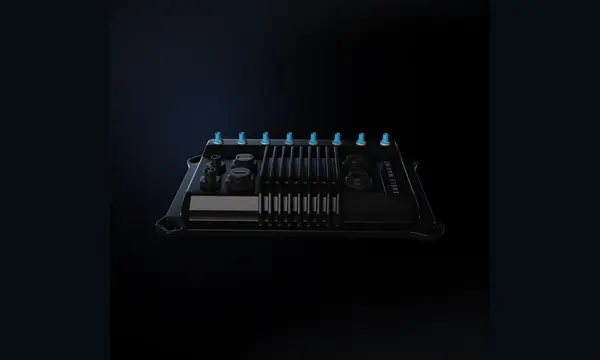
Eagle Marine presents a modular ADAS platform combining cameras, onboard computing and third-party applications for yacht navigation and docking assistance.

Superyacht navigation specialist dsnm has acquired sister company NavigatX, bringing navigation management, passage-planning software and bridge refit support together.
Superyacht Guide
Continue into the wider Superyacht Guide.
Business opportunities · Superyacht Guide
Companies serving the superyacht market can discuss clearly identified advertising, sponsorship and business-profile opportunities. Commercial activity remains separate from independent editorial coverage.