Seares Details Active Mooring Dampers for Superyachts and Marinas
By Superyacht Guide Newsroom · Edited by Superyacht Guide Newsroom
Seares Details Active Mooring Dampers for Superyachts and Marinas — licensed SYG News 26Nov batch04
Seares explains how its Seadamp mooring system combines damping, load monitoring and energy recovery for superyachts and marina pontoons, for yacht owners.
Seares, an Italian specialist in intelligent mooring technology, is positioning the same underlying damping system for use by both superyachts and the marinas that accommodate them. In an interview published by Marine Industry News on 25 November, chief executive and co-founder Giorgio Cucè explained how the company's Seadamp system combines mechanical and electronically controlled resistance to manage movement in mooring lines. The system can also recover some energy and generate monitoring data. The potential attraction is not merely a smoother berth but more information about what happens to the yacht and its mooring equipment when wind, waves and passing traffic introduce changing loads.
A large yacht alongside a quay or pontoon is never entirely stationary. Wind, wash, waves and changing water levels can create movement that is transmitted through its lines and the structures to which those lines are attached. The forces can be particularly troublesome when a marina is exposed to waves or when a yacht has limited room to move. A mooring arrangement therefore has to balance restraint with an ability to absorb some of the energy entering the system.
Conventional methods may use carefully selected lines, elastic components and appropriate geometry to control the loads. Seares proposes an additional engineered approach in which damping can respond to changes in movement. That does not eliminate the need for competent seamanship or approved mooring arrangements. A marina operator and yacht captain must still assess the vessel, weather exposure and safe operating limits at the actual berth.
The company describes applications for marinas as well as for boats and superyachts. This is commercially significant because the two users face related but different concerns. A captain may focus on how the vessel moves and whether mooring loads risk damaging deck fittings or lines. A marina manager has to consider the movement of floating pontoons, wear on infrastructure and the reliability of the berth for different visiting craft.
A solution serving both sides could help align the management of a particular berth, but the benefits cannot simply be assumed. A yacht-installed unit will experience different movement and maintenance conditions from a fixed marina installation. Each requires appropriate engineering, inspection and an understanding of the forces involved. The same brand of equipment does not establish that every configuration has the same rating or performance.
According to the 25 November interview, Seadamp uses three technical layers. The first is an elastic element made from steel or rubber that provides an initial response as the mooring line is loaded. The second is a hydraulic piston with valves that progressively control movement. The third is a mechatronic unit that converts reciprocating motion into rotary motion connected to a motor-generator.
This layered arrangement is more complex than a simple rubber snubber. Its operating principle is to manage how quickly and strongly the system responds as external forces vary. The precise behaviour will depend on component dimensions, load settings and installation. Owners should therefore request a technical specification for the proposed unit rather than infer an acceptable working load from a general description of the technology.
The motor-generator can provide a braking effect as the yacht or pontoon moves against the mooring equipment. The interview explains that increased braking resistance can also allow more energy to be recovered. In principle, this energy can support sensors and electronics within the unit, reducing the need for a separate power connection for some monitoring functions. It is a useful idea because permanently installed monitoring devices can be difficult to wire and maintain in exposed locations.
The scale of recovery needs to be understood realistically. The source does not establish that a mooring damper generates enough energy to power the yacht or marina, and the amount available depends on movement. Recovery should be viewed as a feature supporting the equipment's operation, not as an alternative to shore power or propulsion. A prospective customer should ask how the electronic system is supplied when the berth is unusually calm.
Seares says the system can gather information about loads on mooring lines, acceleration and movement, including observations relevant to conditions above and below the waterline. The interview also mentions optional load pins and other sensors. Such data can help operators understand patterns that are otherwise difficult to observe continuously. For example, repeated peaks may identify times when a berth experiences greater motion or when a particular line configuration merits attention.
Data do not automatically solve a problem. Measurements need reliable calibration, a clear method of interpretation and a person responsible for responding to them. An owner may find little benefit in collecting thousands of readings if the management team has no process for reviewing unusual events. A useful monitoring system should support decisions about maintenance, berthing and safety rather than simply produce graphs.
The mechatronic unit is described as allowing changes to damping stiffness from above the water. This could offer an operational advantage when wave conditions alter and a fixed response is no longer ideal. For marina operators, a remotely adjustable system may reduce the need for manual intervention on hard-to-access equipment. For yacht crews, control could help the mooring arrangement respond to different conditions while remaining within its intended range.
However, adjustable equipment introduces its own questions. Who is authorised to change settings, how are changes recorded, and what happens if the electronic controls lose power or communication? A captain or marina engineer should understand the default behaviour and emergency procedures. A claim of remote adaptability is not a substitute for a safe mechanical design or an agreed division of responsibility.
Cucè states that the system can reduce peak loads by up to 70 percent and that the adaptive mechatronic element may achieve reductions of up to 90 percent. These are manufacturer-reported figures from an interview, not independent performance guarantees for all berths. The words up to are important because the result will depend on the installation, the baseline against which it is measured and the type of movement being controlled.
A buyer evaluating the figures should request documented testing, instrumented measurements and an explanation of the conditions. A reduction observed with a specific line geometry or simulated wave period may not transfer unchanged to a different superyacht. Classification requirements and the safe working loads of deck equipment also need attention. Responsible procurement distinguishes a promising test result from a universal operational expectation.
The interview says Seadamp equipment has been used at the Yacht Club de Monaco since 2021. Cucè discusses challenges associated with deep water reaching approximately 40 metres beside some berths. Deep-water mooring arrangements may have long line runs and complex patterns of movement, making the response to wave energy particularly relevant. A working installation is a useful reference point for prospective customers.
Nevertheless, deployment at a prestigious location is not proof that every claim is independently certified. The specific equipment, service history and measured outcomes would have to be examined. Captains and marina engineers should ask for references appropriate to their own vessel size and operating environment. The value of the Monaco example lies in demonstrating use in a real marina setting while leaving technical validation to detailed evidence.
The company presents the equipment as a way to improve comfort and reduce wear during changing weather. For a marina with floating pontoons, repeated motion may impose maintenance demands that are not immediately obvious to visiting yacht owners. A better damping arrangement could in theory reduce stress and help operators manage exposed berths. This is the context in which Seares discusses greater resilience and longer periods of marina use.
Resilience should not be interpreted as permission to remain in an unsafe berth during a severe storm. Weather forecasts, berth exposure, vessel dimensions and port authority instructions remain decisive. Technology may reduce certain loads but cannot remove every hazard. A marina operator should maintain clear criteria for when yachts must take additional precautions or leave a vulnerable berth.
Cucè suggests that some marinas might avoid removing and reinstating floating infrastructure each season if they can manage mooring movement more effectively. That may be attractive where seasonal operations are labour intensive. But the interview does not establish that this outcome is appropriate for all installations or that the equipment necessarily pays for itself within a specific period.
A marina should compare the full costs of installation, maintenance, inspection, replacement and training against its current methods. Any decision to retain pontoons year-round must also account for local regulations and weather extremes. The possibility of reducing seasonal work is a business hypothesis to evaluate, not an automatic right granted by a new piece of hardware.
The interview also touches on changes to marina concessions in Italy, where competitive tendering is becoming a greater part of the operating environment. Cucè sees opportunities for marinas to differentiate themselves through investment in infrastructure and technology. Modernisation may support a stronger commercial proposal, but no particular technology can guarantee success in a concession process.
Marina authorities and bidders have broader responsibilities concerning access, environmental protection, finance and public use of waterfront assets. Mooring equipment is one possible part of an infrastructure strategy. Its suitability must be evaluated alongside location-specific engineering and the actual needs of the vessels using the facility.
A yacht's deck fittings, cleats, fairleads, winches and lines form a connected system. Installing one dampening component can change how forces are distributed, so the equipment should be considered as part of an engineered arrangement. Captains should confirm installation guidance and avoid mixing components with incompatible working loads. Insurers or class surveyors may also need information depending on the yacht and the intended installation.
Routine inspections remain important. Salt exposure, ultraviolet light, hydraulic seals and electrical connections can affect the service life of equipment. A system designed to collect data should also have a maintenance plan ensuring those readings remain reliable. Buying a sophisticated device is only the start of its operational life.
If a mooring system records movement and potentially associates it with a berth or vessel, operators need to decide how information is stored, accessed and shared. A captain may wish to see data affecting the yacht's safety, while a marina manager may need a broader view of infrastructure performance. The system's commercial documentation should explain access rights, retention and whether a network connection is required.
This may sound like an administrative matter, but it becomes important when owners want evidence following an unusual weather event or damage incident. Clear records can help establish what the sensors measured, provided the devices were properly maintained and data have been preserved. Monitoring should be designed for useful and responsible access from the beginning.
The 25 November interview offers an example of marine technology addressing both yacht operation and marina infrastructure. Seares presents a combination of elastic, hydraulic and electronic damping, together with monitoring and limited energy recovery. Its reported performance figures and Monaco experience make the proposition worth technical examination, while installation-specific evidence remains essential.
For owners and marina managers, the right next step is to define the mooring problem before selecting a solution. A detailed assessment of loads, movement, exposure and maintenance can establish whether an active damper would contribute meaningfully. The current news is the company's fresh explanation of its approach and its ambitions for marina and superyacht applications, not a blanket certification of reduced loads in every harbour.
Primary source: Zella Compton, Marine Industry News, firsthand Giorgio Cuce Seares Metstrade 2026 interview, 25 November 2026.
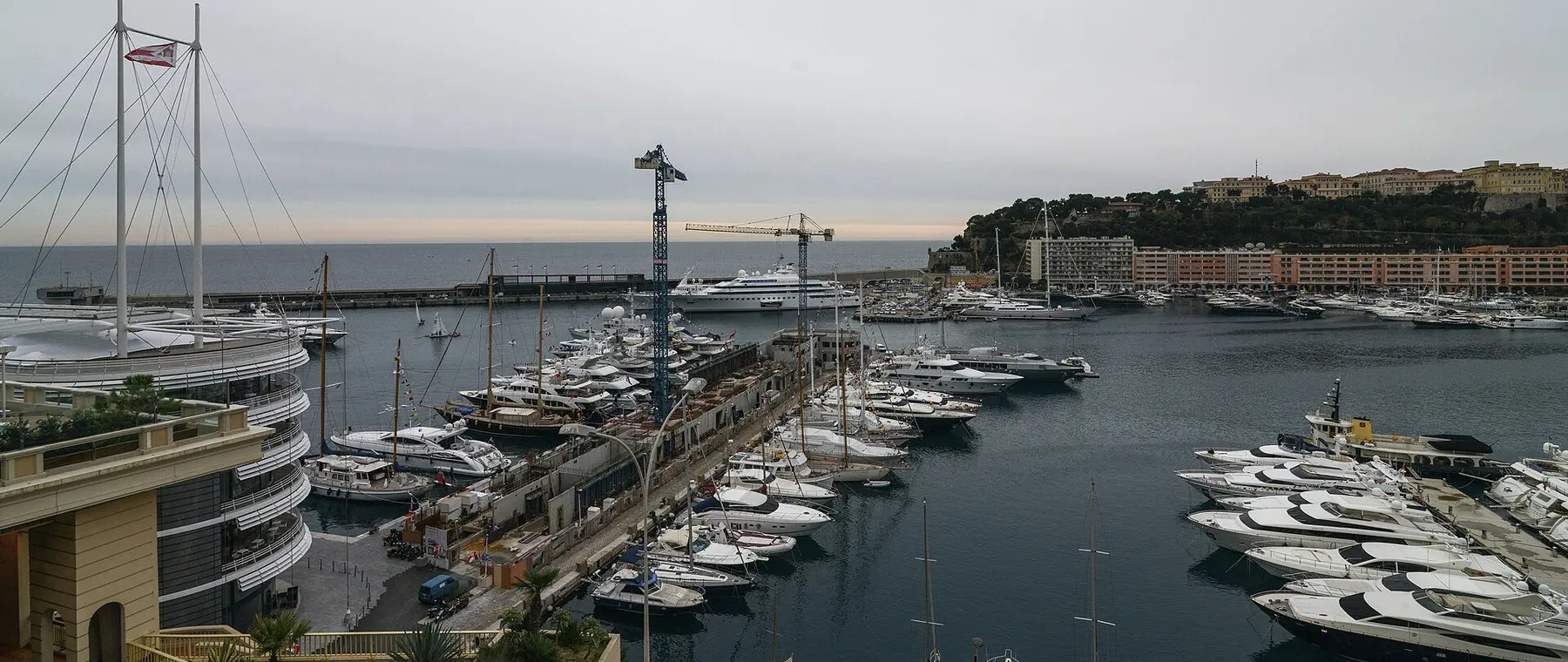
Licensed archival photograph of a Monaco or Mediterranean marina, not a verified Seares mooring damper installation. Photo: Jorge Láscar from Australia; CC BY 2.0 via Wikimedia Commons. Official source.
Explore
Go deeper into the yachts, companies, events and destinations directly connected to this article.
Continue reading
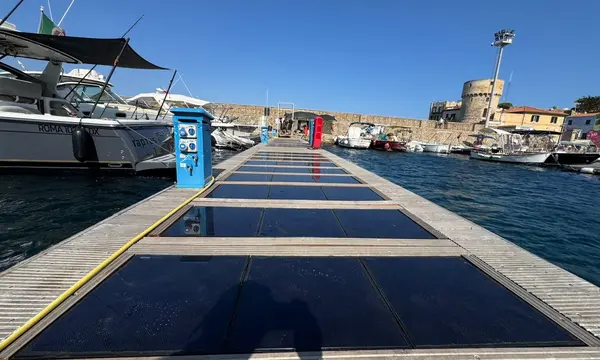
Seares and New Time activate an Isola del Giglio pilot pontoon combining walkable solar panels with wave-energy-recovering mooring dampers, rated at 5.2kW.
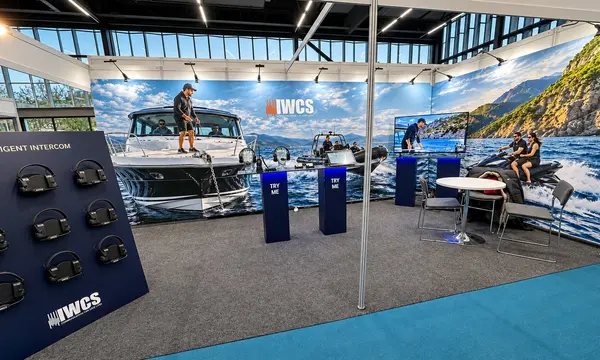
IWCS describes three days of product demonstrations and new marine communications contacts at METSTRADE 2026, thanking its distributors and confirming plans for 2027.
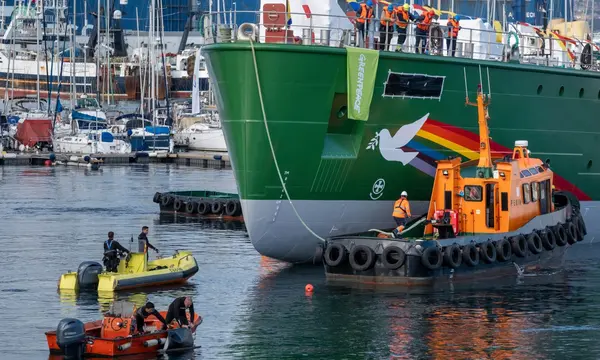
Greenpeace's 75-metre wind-powered campaigning and research ship has floated out at Freire Shipyard in Vigo, combining a DynaRig concept with hybrid onboard energy systems.
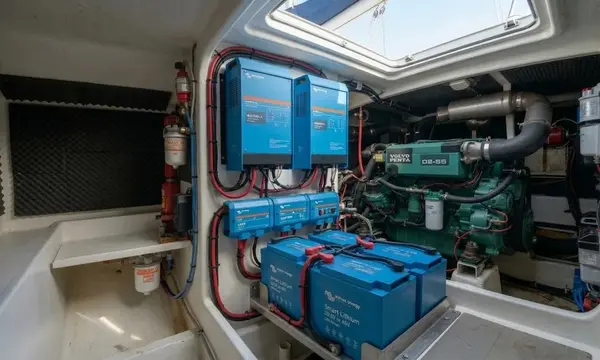
Valencia-based Mediterranean Yachts Solutions describes how 48V batteries, solar panels and high-output alternators may reduce generator use on suitable smaller boats.
Superyacht Guide
Continue into the wider Superyacht Guide.
Business opportunities · Superyacht Guide
Companies serving the superyacht market can discuss clearly identified advertising, sponsorship and business-profile opportunities. Commercial activity remains separate from independent editorial coverage.

