SF Marina Brings Heavy-Duty Floating Infrastructure to METSTRADE 2026
By Superyacht Guide Newsroom · Edited by Superyacht Guide Newsroom
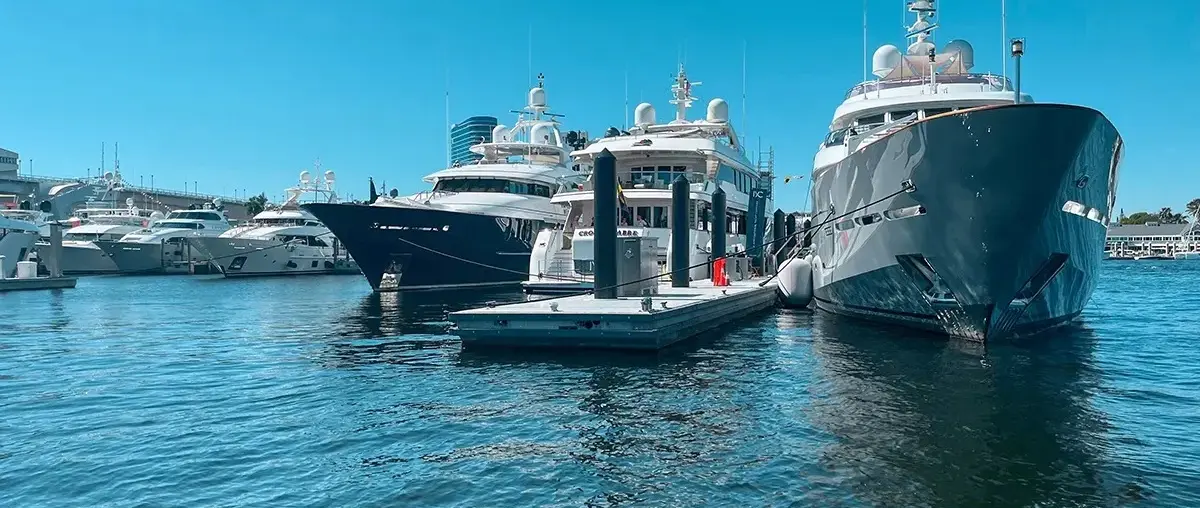
SF Marina Pier Sixty-Six official fuel dock press photograph August 2026
SF Marina will discuss floating concrete pontoons and breakwaters at METSTRADE, with earlier large-yacht fuel dock work providing practical context.
SF Marina System AB will use its presence at METSTRADE in Amsterdam from 17 to 19 November to discuss floating infrastructure for demanding marine installations. The Swedish company has announced that its team will exhibit at stand 09.311, with an emphasis on concrete pontoons, breakwaters and projects in exposed locations, including facilities intended for large yachts. The announcement was issued on 13 November. For superyacht marina operators, the immediate significance lies less in the exhibition itself than in the opportunity to examine the interaction between berth design, protection from environmental loads and the increasingly complex services required alongside a vessel.
The company has not announced a new pontoon model or a newly commissioned harbour in conjunction with this exhibition. Its announcement instead offers a point of departure for conversations about designing and upgrading marine installations. One earlier case provides concrete context: in August 2026 the company publicised delivery of a replacement fuel dock at Pier Sixty-Six Marina in Fort Lauderdale. That earlier project is not a November launch; it illustrates the sort of operational problem that the supplier intends to discuss in Amsterdam.
The geometry required to receive a yacht safely involves much more than matching the overall length of a vessel to the length of a pontoon. A designer has to consider how the beam of the yacht changes the usable turning area, particularly if several berths share the same fairway. The location of access doors, tenders and service connections can determine where a gangway and working area must be provided. It is therefore possible for a marina with substantial nominal berth length to have relatively little suitable space for a particular yacht.
For an operator planning an extension, the relevant starting point is the intended mix of vessels, not the maximum length that can appear on a marketing brochure. The dimensions of the berthing envelope, the configuration of mooring lines, the approach channel and the positions of adjacent structures must be assessed together. The larger the yacht, the more important it becomes to avoid an arrangement that restricts manoeuvring when the berths are occupied.
A floating platform moves with changes in water level. This can simplify access in some locations, but it does not automatically make every floating arrangement suitable for heavy yacht traffic. Local tidal range, harbour agitation, currents and the behaviour of a loaded platform must be incorporated into the engineering brief. The way individual units connect, the position of anchoring systems and the ability to accommodate water and electrical connections all affect the suitability of a proposal.
Concrete is commonly considered for substantial floating marine structures because it permits designers to create robust units with significant mass. The relevant question is whether the particular structure delivers the movements, structural capacity and operational characteristics that the intended facility requires. An operator comparing different construction methods should request the underlying design assumptions rather than treating the material alone as a guarantee of performance. The selection of systems should reflect whole-life maintenance and the conditions under which components can be inspected or repaired.
A geographical location that looks sheltered under summer conditions may respond very differently to seasonal winds or storm events. Wave energy can come through a harbour entrance or be generated locally across an exposed stretch of water. Reflections from hard harbour boundaries may complicate the picture. In a marina where passengers regularly embark and disembark, even moderate movement can interfere with the use of gangways and make routine loading difficult.
A floating breakwater can be one element of a harbour protection strategy, but its effectiveness must be evaluated against the local wave climate and the performance objectives of the site. Owners and developers should not assume that a breakwater selected for one harbour is appropriate for another. They need an assessment of site conditions, a clear statement of the operational envelope and a plan for circumstances in which berthing is no longer safe. Coordination between the marina, its engineering consultants and the yacht captain remains fundamental.
In its August announcement, SF Marina described a 70-metre floating concrete fuel dock supplied to Pier Sixty-Six in Florida, assembled from three Type 1540 units. The company said the installation was designed to receive vessels of up to 122 metres and incorporated fuel delivery, waste removal, water and safety-related equipment. The earlier press photograph accompanying this article comes from that project.
The example highlights a distinct part of marina infrastructure: the service berth. Rather than holding a yacht for several days or weeks, a fuel berth has to accommodate arrivals and departures while personnel complete work on board and alongside. If access is limited by another vessel or there is insufficient space for service personnel, a seemingly generous berth length may still be inadequate. The efficiency of the facility depends on how the physical layout supports the working process.
The height of the platform relative to the water surface is a consideration for a berth serving vessels with very different hull forms. A captain may have to use different access points depending on the vessel's loading and the circumstances of the arrival. Marina personnel must also be able to reach the relevant working positions without creating conflict with passengers, delivery vehicles or other activity ashore.
For a planned installation, an operator can ask for drawings illustrating typical yacht access arrangements and for an explanation of how those arrangements change when the platform is loaded. It may also be helpful to examine how mooring equipment is positioned in relation to services. A line leading across a working area or an awkwardly placed connection can create operational difficulties even if the pontoon itself has been engineered correctly.
A fuel berth should be designed in conjunction with the procedures that will be used to manage deliveries. The facility needs to account for the handling of hoses, communication between parties, monitoring during transfer and emergency access. The engineering and permitting requirements for such a facility depend on its location and the fuels and systems being installed; no single specification can be assumed to apply to every jurisdiction.
Operators considering similar projects should work through the sequence of a representative arrival. They can examine where the vessel will initially approach, how lines will be handled, where staff will stand and how service equipment will be deployed. The same review can consider how an interruption is handled and how access is maintained for emergency responders. Working through these questions early can identify spatial constraints before major structural decisions are fixed.
Replacing existing infrastructure at a working marina introduces constraints not always encountered on a new site. Existing utilities may have to remain operational, access may be needed throughout much of the construction period and neighbouring berth holders could be affected by temporary changes to the harbour layout. Managers must decide whether work can be staged in separate sections or whether a period of closure is necessary.
An initial survey should distinguish between elements that can be retained and those that need replacement. It is useful to establish the condition and capacity of anchoring arrangements, utility connections and interfaces with shore-based structures. The project team can then evaluate the consequences of changing the size or position of the floating platform. A staged installation may reduce disruption, but it must be reconciled with the engineering sequence and safe access requirements. These discussions are especially relevant to winter maintenance schedules in destinations where demand varies significantly across the year.
For developers, the November exhibition is an opportunity to bring a defined project rather than a general request for a quotation. A preliminary brief can identify the intended vessel mix, the operating season, available survey information, utility requirements and the main constraints imposed by the existing waterfront. Technical teams can then explain which information is still required before an engineered proposal can be prepared.
Questions about inspection intervals, access for maintenance, replacement of connection components and the treatment of utility interfaces are as important as initial acquisition costs. A marina director may also wish to discuss procurement lead times and the sequencing of site works in relation to fabrication and transport. The November appearance of SF Marina does not establish the price, delivery schedule or performance of any future project; those parameters would need to be assessed separately for each intended location.
A well-designed marina is a combination of civil engineering and day-to-day operational planning. Large-yacht demand can encourage developers to increase berth dimensions, but it is equally important to provide the supporting space and equipment that make those berths usable. The industry's conversations in Amsterdam this week offer a chance for operators to connect the requirements of yacht crews with the technical expertise of infrastructure suppliers.
SF Marina's exhibition is scheduled to begin on 17 November. At the time of publication, the company has described the intended areas of discussion, not the outcome of meetings or any contracts signed at the show. The relevant measure of success for individual marina projects will ultimately be how well the selected infrastructure supports the intended vessel fleet and how reliably it can be operated through the changing conditions of its particular harbour.
Primary source: SF Marina System AB press release via TheSeaWire, 13 November 2026.
Earlier project reference: SF Marina fuel dock release, 14 August 2026.
Photo: SF Marina System AB, August 2026 Pier Sixty-Six Marina fuel dock press release via TheSeaWire. Earlier project, not a photograph of METSTRADE 2026. Official source.
Explore
Go deeper into the yachts, companies, events and destinations directly connected to this article.
Continue reading
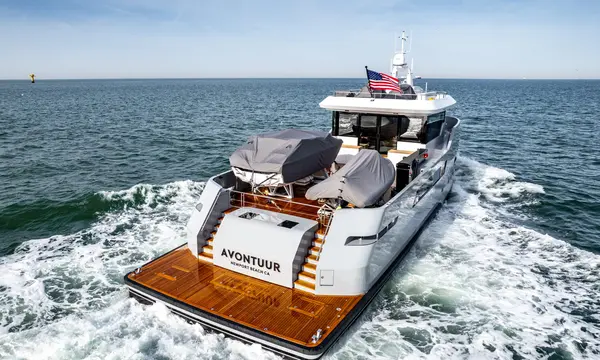
Lynx Yachts outlines the decision between a fast auxiliary boat and a separate support vessel, highlighting the payload, personnel and logistics of yacht extenders.

Versilia Supply Service outlines plans for a revised My VSS yacht procurement platform, with a catalogue of more than 200,000 products and quotation tools.

MedAire outlines wearable vital-sign monitoring for superyacht medical support, linking onboard observations with shoreside physicians through its advisory service.
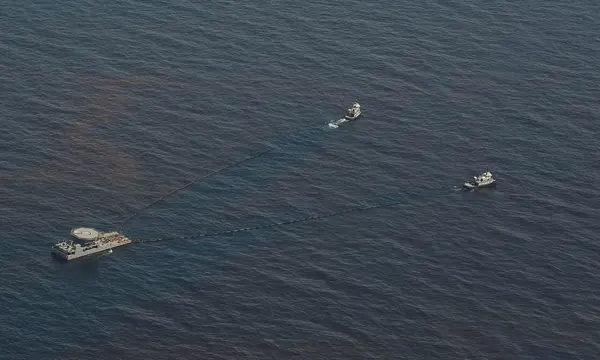
Six West African states validate a draft marine pollution response agreement, with signature planned for 2027 and implications for Atlantic yacht operations.
Superyacht Guide
Continue into the wider Superyacht Guide.
Business opportunities · Superyacht Guide
Companies serving the superyacht market can discuss clearly identified advertising, sponsorship and business-profile opportunities. Commercial activity remains separate from independent editorial coverage.
