

Tureddi Holds Coin Ceremony for 52m Stilnovo Yacht in Pisa
Tureddi Yachts marks construction of the 52m steel-and-aluminium Stilnovo 52 in Pisa with an owner-attended coin ceremony and confirmed design team.
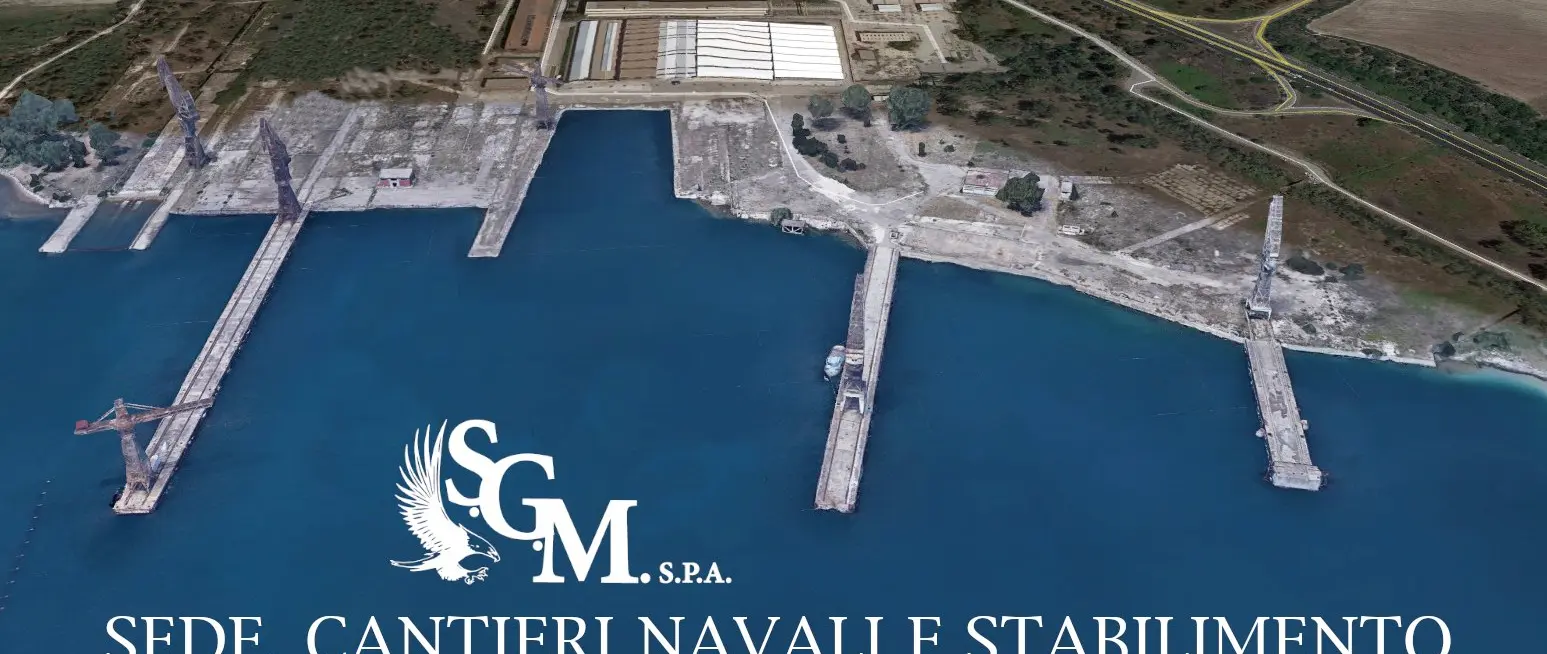
SGM Plans 17,000-Tonne Dry Dock Conversion for MISS NORA — SYG newsroom 25 Nov batch05
SGM has acquired the 130m MISS NORA barge for a planned 15,000–17,000-tonne floating dry dock at Taranto, with arrival expected on 25–26 November.
Italian engineering company SGM S.p.A. has acquired the 130-metre barge MISS NORA for a planned conversion into a semi-submersible floating dry dock at its facilities in Taranto. A company announcement circulated on 24 November 2026 describes the vessel as due to arrive in the city's Mar Piccolo area around 25–26 November, weather and sea conditions permitting. That timing is a forecast, not evidence that the barge has already entered the shipyard. The confirmed development is the announced acquisition and intended technical conversion, rather than an operating dry dock that has been commissioned.
The planned facility is associated with the former Cantieri Tosi site, where SGM is pursuing a broader industrial programme under managing director Maurizio Abbatematteo. The proposed infrastructure could eventually serve superyachts, commercial vessels and public-service fleets that need to be lifted out of the water for inspection or maintenance. Its potential importance comes from the limited availability of suitable dry-dock capacity in parts of southern Italy. However, operational capacity, certification and a schedule for accepting client vessels will need to be verified after the technical conversion is completed.
The barge is reported at approximately 130 metres long and 40 metres wide. These dimensions make her a substantial floating industrial platform, but they do not identify the maximum size or displacement of every vessel that might eventually be serviced. SGM's stated plan is to convert MISS NORA into a semi-submersible unit for docking operations. A semi-submersible dry dock must be able to ballast and deballast in a controlled way, submerge to receive a vessel and then raise it onto prepared supports.
The company's announcement cites a target lifting capacity of between 15,000 and 17,000 tonnes, with transport capacity described at approximately 22,000 tonnes. These figures relate to different technical functions and should not be interchanged. They are intended capabilities for the completed and approved facility, not independently verified measurements of a fully operational dry dock today. An engineering project of this nature requires systems integration, surveys and appropriate approval before heavy-lift operations can be treated as routine.
The planned arrival route includes passage through the navigable channel associated with Taranto's historic swing bridge. Moving a large industrial barge through a constrained maritime setting is a logistical operation in its own right. Navigation, traffic coordination, weather, tidal conditions and the availability of tugs or other support resources may all be relevant. The public announcement does not provide a complete movement plan, and none should be invented from the stated route.
SGM anticipated the barge's arrival around 25 or 26 November, expressly allowing for weather-related changes. For that reason, the responsible description on 25 November is that the vessel is expected or scheduled to arrive, rather than a claim that she has already passed the bridge. Confirmation of the movement would require a later dated report, an official port statement or another reliable operational source. The distinction matters when a very large floating unit must be manoeuvred into a working shipyard area.
Superyachts need periodic access to their underwater hulls, propellers, rudders, stabilisation equipment and other components. Haul-outs can also be necessary for classification surveys, coating work, repairs and major machinery interventions. A large floating dry dock can give a shipyard the ability to service vessels that are unsuitable for its smaller lifting systems. Where owners currently have to travel significant distances for comparable work, a regional facility may reduce logistical disruption.
Such benefits depend on the actual operating envelope of the finished installation. A vessel's weight distribution, beam, draft and required support plan must all be assessed before docking. The existence of a nominal lifting figure does not guarantee safe acceptance of every yacht below that displacement. Engineering and classification procedures establish those limits. SGM's proposal offers a credible development direction for the Taranto site, but the facility is not yet demonstrated to be available to commercial clients.
The planned infrastructure is intended to support multiple classes of vessel, including commercial craft and ships operated by public authorities. The company's statement mentions the Italian Navy, Coast Guard, Guardia di Finanza and other public-service fleets as possible beneficiaries of closer repair or maintenance capability. This is a statement of potential market relevance, not proof that long-term service contracts have been signed with each organisation.
A multi-sector facility can be commercially useful because maintenance demand does not follow exactly the same annual cycle in every industry. Yachts may seek refits between cruising seasons, while professional or government vessels have different availability constraints. Sharing facilities can also create complex scheduling requirements and the need to work within different technical standards. The long-term viability of such an arrangement will depend on the facility's eventual approval, skilled workforce, customer relationships and reliable execution of work.
Converting a large barge into a dry dock involves more than installing lifting equipment. Ballast tanks, pumping systems, controls, structural reinforcement, power supply and docking arrangements all have to work as a coordinated system. A vessel being lifted must be supported at locations consistent with its structural design. Emergency procedures and the ability to maintain controlled buoyancy are equally important. These are normal technical requirements associated with the kind of conversion SGM proposes.
The company says the work will be undertaken by its own workers and technicians at Taranto. The announcement does not provide a full engineering specification, the identity of every subcontractor or a verified completion date. It would therefore be premature to describe particular pump ratings, control software or specialist certification arrangements as already installed. An industrial milestone will be reached only when the conversion and all required testing establish what the facility can safely accommodate.
The former Tosi shipyard is part of a wider maritime industrial history in Taranto. Investment in the site could strengthen local work in engineering, fabrication, coatings, mechanical maintenance and associated services. For a visiting superyacht, a technical stop also generates demand for provisions, transport, accommodation and other shore support. These secondary effects help explain why local businesses and institutions have an interest in the development.
The source, however, does not provide a verified count of new jobs that will be created by the MISS NORA project or an independently evaluated forecast of annual economic benefits. Such projections need evidence from completed contracts, workforce plans and actual traffic. Describing the scheme as an opportunity is justified; assigning a guaranteed monetary result is not. The most immediate measurable milestones are the vessel's arrival, its conversion and its eventual acceptance into service.
SGM's announcement places the dry-dock plan alongside existing production work connected with Fincantieri. The company says its Taranto operations have completed a superstructure assignment and received additional orders. That industrial background helps demonstrate why the former Cantieri Tosi site is being presented as more than a future yacht marina. The capabilities used in naval fabrication may support a range of work, although they are not identical to the demands of a high-end superyacht refit.
A successful refit programme requires technical skills alongside project management, guest-area protection, documentation and service coordination. Owners will also want clear arrangements for insurance, warranties and the security of their vessels while work is in progress. The company announcement does not include a complete yacht-refit tariff, confirmed list of clients or a published dry-dock booking schedule. Those details must be developed and disclosed before the proposed capability can be judged against competing established facilities.
The company has also suggested that MISS NORA might assist with exceptional maintenance or possible future replacement of Taranto's swing bridge, potentially by providing temporary support or a floating working platform. This is a proposal for another use of a large barge, not a municipal project that has been awarded or approved in the material reviewed. The practical feasibility of any bridge-related role would depend on engineering, public-authority decisions and a project-specific operating plan.
Keeping this secondary idea separate from the shipyard's core conversion project is important. Both applications involve heavy structures and marine operations, but they have different safety considerations and approval requirements. The public statement illustrates the breadth of possible uses the company sees for the platform; it does not demonstrate that those uses will happen. The credible near-term story remains the intended dry-dock conversion at the Taranto yard.
Several milestones are still open as of the 24 November announcement. The physical arrival of MISS NORA was forecast for 25–26 November, subject to conditions. The conversion programme requires detailed work, and there is no independently confirmed commissioning date or available customer booking calendar. Likewise, the 15,000–17,000-tonne lifting range is a proposed capacity, not an operating certification disclosed with the release.
For large-yacht owners, the scheme could eventually widen the options for technical work in the central Mediterranean. For shipyard suppliers, it may create a new source of demand for fabrication and dock machinery. Both outcomes remain conditional. Superyacht Guide records the confirmed acquisition, size, proposed dry-dock conversion and the announced arrival window while avoiding an unsupported claim that the new facility is already serving superyachts.
Primary source: SGM S.p.A. company announcement published by SuperYacht24 on 24 November 2026.
SGM Taranto industrial shipyard image supplied with company announcement and published by SuperYacht24; illustrates the planned site, not a confirmed arrival photograph of MISS NORA. © SGM and original photographer. Official source.
Continue reading
Tureddi Yachts marks construction of the 52m steel-and-aluminium Stilnovo 52 in Pisa with an owner-attended coin ceremony and confirmed design team.

Ancona starts a €405,000 demolition of the former Tubimar complex to release industrial waterfront space for Ferretti Group and Palumbo Superyachts.

Antonini Navi lays the keel for its first 30m steel-and-aluminium XPD95 explorer, with interiors by Hot Lab and technical design by NAMES.
APM Keels has sent two telescopic keel assemblies ahead of schedule for separate Nautor Swan 108 yachts in build in Finland.
Superyacht Guide
Continue into the wider Superyacht Guide.
Business opportunities · Superyacht Guide
Companies serving the superyacht market can discuss clearly identified advertising, sponsorship and business-profile opportunities. Commercial activity remains separate from independent editorial coverage.