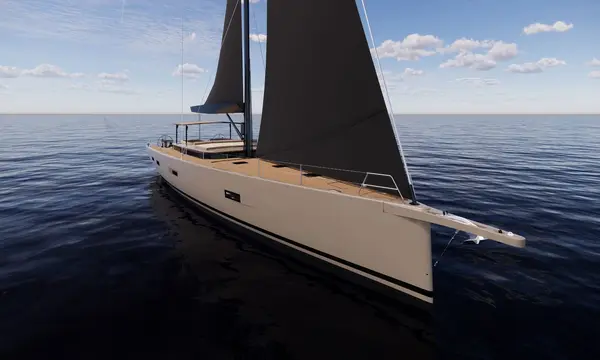
24m YYachts FITZROVIA Joins IYC Charter Fleet as First Hybrid Y8
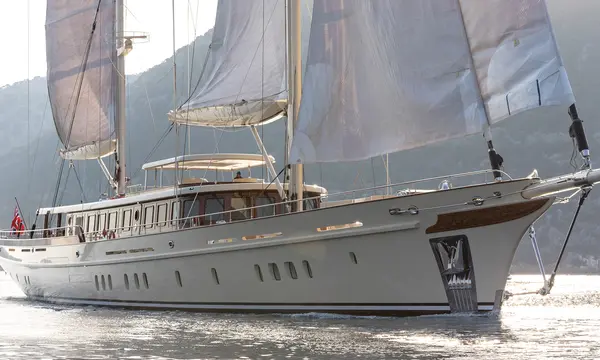
IYC has added the 24m YYachts FITZROVIA to its global charter fleet. Delivered in 2026, she is the first hybrid-powered Y8 and combines sailing …
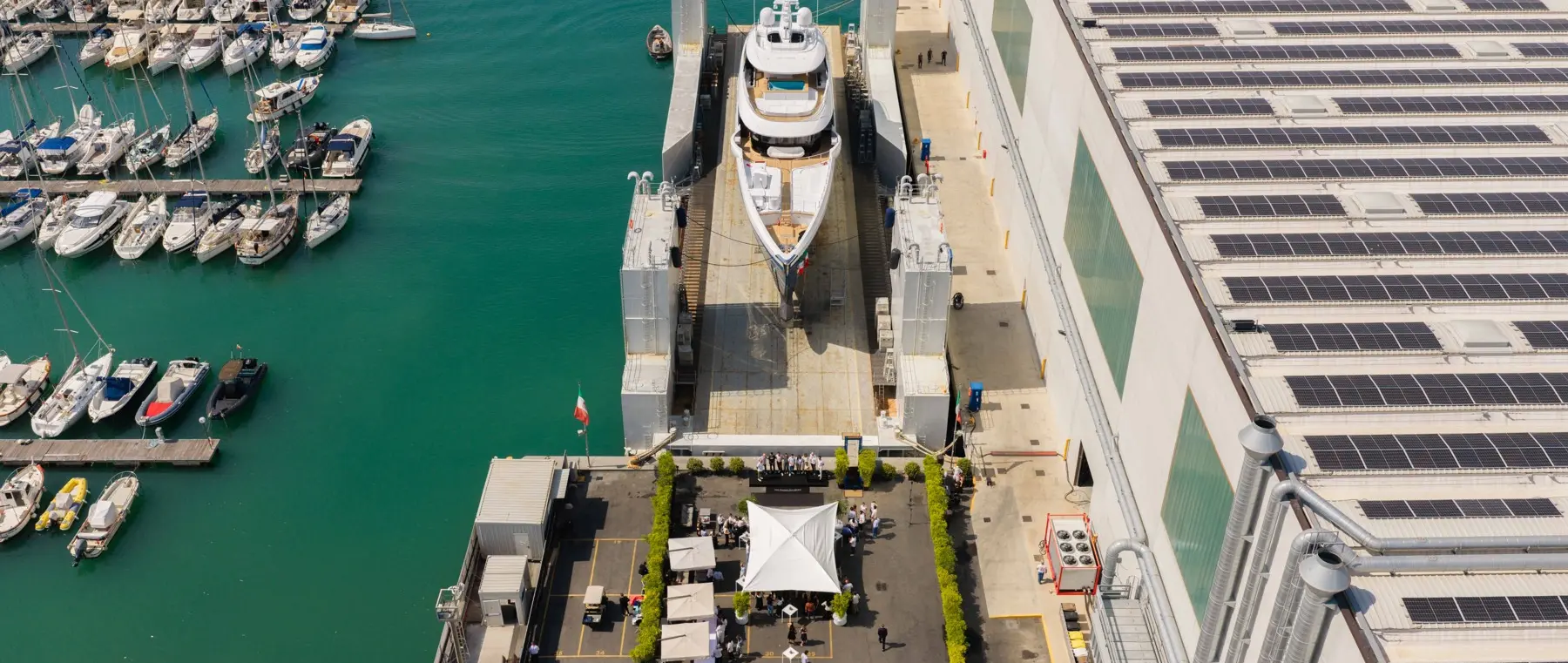
FGI's July 2026 project announcement confirms the launch of 53.5-metre Silvia in Marina di Carrara, with hybrid propulsion and owner-focused detailing.
The 53.5-metre motor yacht Silvia entered the water in Italy during July 2026, with FGI Yacht Group confirming the launch at Marina di Carrara. As a named, owner-commissioned vessel, she represents an actual construction milestone rather than a brochure proposal. Her pronounced blue hull helps distinguish the yacht visually, but the more consequential story is the integration of an individual interior brief with a hybrid propulsion platform. The project is the second hull in its Panorama series, with several important owner-specific features shaping the result.
The launch ceremony brought together people who had spent years on the project, including representatives of the owner's team and the firm overseeing the new-build relationship. FGI reports that its founder and chairman, Frank Grzeszczak Sr., represented the buyer from the initial concept through construction. That continuity gives a clearer picture of the long time horizon of superyacht commissioning. A bespoke yacht is not purchased at a single moment; it emerges through a sequence of decisions, technical reviews and negotiations that can continue well beyond the early design approval.
FGI also described a relationship with the client extending over twenty-eight years, seven transactions and three custom new-build projects. Those figures reveal the significance of established trust in this segment of the market. Repeated commissions allow the owner's team to refine preferences based on experience, including which interior arrangements genuinely improve life at sea and which features require too much maintenance or preparation. Silvia is therefore notable both as a substantial Italian launch and as the latest stage in a long collaboration built around a particular owner's expectations.
Silvia's hybrid propulsion system is among her most distinctive confirmed features. According to FGI, the arrangement permits quieter operation, reduces vibration and can provide several hours of hotel services in zero-emission mode. The last term should be understood precisely: it refers to the vessel's local onboard operating mode while using stored electrical energy, not a claim that building, charging or operating the yacht has no environmental impact. Such distinctions are important when evaluating sustainability statements around large, technically sophisticated private vessels.
For guests, the immediate benefit of electric hotel capability is likely to be experiential. Less generator noise and fewer transmitted vibrations can make a still anchorage feel more peaceful, especially in cabins and exterior social areas. The extent of that benefit depends on the specific system architecture, battery capacity, hotel demand and how the yacht is managed. FGI did not publish a complete independent energy balance in the launch announcement, so exact endurance under different loads should not be inferred from the general claim of several hours.
Engineering a hybrid superyacht introduces questions beyond selecting electric motors and battery modules. Fire protection, power management, charging strategy, cooling and operating procedures all require design coordination and crew training. On a yacht intended for private cruising, the machinery should support rather than interrupt the owner's preferred way of travelling. Silvia illustrates the appeal of that quieter future, while also demonstrating why serious reporting must distinguish confirmed installed capabilities from numerical performance figures that have yet to be released.
Piredda & Partners designed the 53.5-metre yacht, while interior studio RADYCA was responsible for bespoke accommodation. FGI identifies capacity for twelve guests in six staterooms, including a full-beam owner's suite with a private terrace. That arrangement makes the principal accommodation more than an enlarged sleeping cabin. It creates a separate relationship with the sea, allowing the owner a degree of privacy without requiring the use of shared exterior decks. Achieving such space within a technical vessel requires careful consideration of structure, circulation and exposure.
The private terrace is a particularly interesting architectural decision. Its value comes not simply from its floor area but from the route between the interior and exterior, the shelter available in different conditions and the level of visibility from adjacent spaces. A successful owner's area can feel connected to the wider yacht while remaining separate from guest hospitality and working crew movements. The design team's challenge is to balance this experience with the requirements of seaworthiness and the practical routines of a functioning ship.
RADYCA's tailored interior scheme underscores another principle of modern custom yacht building: highly individual spaces have to remain usable over years of travel. Delicate materials, intricate joinery and customised fittings can deliver extraordinary character, but they also need to withstand vibration, humidity and the daily attentions of a professional crew. The original source does not provide a complete room-by-room specification, and no unsupported details about fabrics or finishes are added here. What is established is the partnership between the designer, the shipyard and the owner's experienced representatives.
Silvia's construction history shows how a brokerage and project-management relationship can extend from identifying the owner's ambitions to monitoring the delivery of a complex physical object. In such work, the most important decisions may concern quality assurance, contractual specifications and the interpretation of technical documents rather than the attractive material used in a brochure. The yacht's launch is a visible milestone, but it rests on the less photogenic discipline of coordinating a large number of suppliers and specialists over an extended period.
The Panorama architecture and hybrid platform also point toward changing priorities in superyacht ownership. Owners increasingly ask about the quality of time spent aboard: acoustic comfort at anchor, private outdoor space, consistent service and flexible operation under different electrical loads. Those priorities do not replace traditional questions about range, safety and seaworthiness. They sit alongside them, making each design choice part of a wider system. Silvia brings several of these considerations into a real 53.5-metre vessel rather than leaving them at the level of a conceptual drawing.
FGI's July 2026 statement confirms a launch, and it should not be treated as a substitute for a later formal delivery announcement or verified sea-trial data. A new-build yacht must still complete the appropriate work before its full operating profile can be assessed. Nevertheless, the combination of distinctive blue hull, bespoke RADYCA interiors and hybrid hotel capability offers a substantial story for designers, owners and captains. Silvia illustrates how an established client relationship can turn a set of highly personal requirements into a named superyacht on the water.
Continue reading
IYC has added the 24m YYachts FITZROVIA to its global charter fleet. Delivered in 2026, she is the first hybrid-powered Y8 and combines sailing …
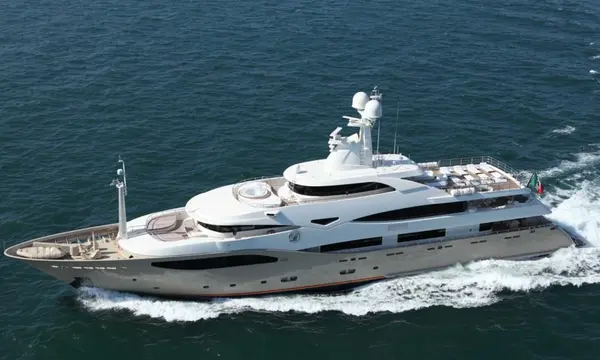
Videoworks has issued technical details of its completed digital refit aboard the 60m CRN charter yacht ELENI, covering multi-zone audio, a 115-inch upper-deck screen …
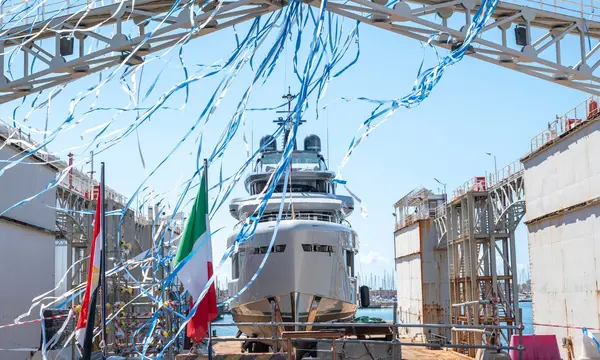
Tankoa has launched the 45-metre full-custom TX450 in Genoa, with hybrid propulsion and delivery approaching.
ARES Yachts’ 62-metre sailing yacht SIMENA has received the Monaco Yacht Show Blue Wake special prize for its parallel-hybrid propulsion and regenerative sailing capability.
Superyacht Guide
Continue into the wider Superyacht Guide.
Business opportunities · Superyacht Guide
Companies serving the superyacht market can discuss clearly identified advertising, sponsorship and business-profile opportunities. Commercial activity remains separate from independent editorial coverage.