Company
Water Revolution Foundation
Explore the company profile and related Superyacht Guide coverage.

Over 40 yacht-industry specialists met in Nice to test a shared Smart Materials Library and address evidence, maintenance and environmental decisions in superyacht interiors.
More than forty representatives of the superyacht supply chain met in Nice on 21 September 2026 to tackle a practical problem: how to introduce verifiable environmental criteria into yacht interiors without losing the quality, durability and bespoke character owners demand. The workshop was organised by Smart Interiors Horizon, an industry initiative operating within Water Revolution Foundation, and hosted by Zuretti Design at its Nice atelier. A detailed report was published on 8 October.
Participants came from shipyards, interior contractors, design studios, owners' representatives, specialist manufacturers and other companies whose products become part of a yacht. The gathering was not a new yacht launch or an award ceremony. Its relevance lies in bringing several groups into the same discussion about which environmental data is available, which decisions are made too late and how a shared information system could reduce repeated research.
An interior designer may choose a surface for its appearance, while the shipyard assesses installation and weight, the contractor considers fire testing and manufacturing, and the crew later deals with repair and cleaning. Each participant sees a different part of the same material's life. An attractive recycled product may still create problems if it cannot satisfy marine fire requirements or if replacing a damaged panel requires substantial demolition.
The workshop challenged what organisers described as a compartmentalised approach to the industry. One supplier might possess excellent manufacturing data but have little insight into the final installation; another may understand the owner's durability requirements but cannot verify the upstream material composition. Getting these groups to share evidence early can prevent environmental claims from becoming decorative labels added after specifications have already been frozen.
A central feature of the Nice meeting was a working review of the Smart Materials Library being developed by Smart Interiors Horizon. Participants were asked to use the platform against real problems raised during discussions, identifying areas where material information or supplier details needed to be strengthened. The initiative aims to create a shared reference that several parts of the industry can consult rather than leaving each yard and design studio to recreate its own database.
A useful materials library must do more than list attractive sample photographs. To support procurement, it should help professionals identify the product's intended use, known technical properties, test certificates, available environmental evidence and practical maintenance considerations. A library cannot replace class approval or an independent product assessment, but it can point a team toward documents that should be obtained before a material is accepted.
Luxury yacht interiors often use highly individual combinations of timber, stone, glass, leather, fabrics, resins, adhesives and specialist finishes. Some products are manufactured for a single project or in short batches, making comprehensive environmental testing harder to justify commercially. Other decorative materials cross national borders several times before installation, complicating the calculation of embedded transport and production impacts.
The service life of a yacht's interior also depends on the way it is used. An owner who entertains frequently, a charter vessel working through back-to-back seasons and a privately operated sailing yacht may impose different levels of wear. A technically sound comparison must consider how long a component lasts, what maintenance it requires and whether damage can be repaired locally. A single percentage claim about recycled content cannot answer all of those questions.
Water Revolution Foundation has also introduced a tiered approach to product evidence in its Hub of Verified Solutions. That programme distinguishes externally audited data, recognised certifications, simplified carbon or life-cycle calculations and full comparative life-cycle assessments. The Smart Materials Library discussion belongs to the same wider effort to make credible evidence usable during real purchasing decisions, although the two tools should not be presented as identical.
A supplier may be able to provide a fire certificate and an audited environmental-data sheet without having a full assessment covering production and disposal. A transparent database should allow buyers to see the difference. Designers then have to weigh technical requirements, visual intent, cost and practical longevity alongside the depth of environmental evidence. The objective is better-informed choices rather than a universal ranking based on one metric.
Yacht projects are unusually dependent on design changes. An owner may approve a sample, request a different sheen or change the colour palette months before delivery. Every late substitution can affect procurement, installation and documentation. Sharing a common supplier evidence base could allow teams to identify alternative materials sooner and understand whether a proposed replacement meets the original technical standards.
The benefit will depend on how the library is maintained. Information becomes stale as suppliers change formulations, move factories or obtain new certifications. A serious procurement workflow should record the product version, the date of documents and who is responsible for verifying an update. If a material's technical or environmental properties cannot be established, that uncertainty should be visible rather than concealed behind a glossy product description.
Smart Interiors Horizon operates as a collaborative committee within Water Revolution Foundation, an Amsterdam-based organisation working on measurable environmental improvements in superyachting. Zuretti Design hosted the workshop in Nice, offering a fitting venue: interior-design specialists are often the first to see the tension between a highly specific aesthetic brief and an incomplete supplier data set.
The committee's membership and participants include people from yards, design practices, subcontractors and the purchasing chain. None of these stakeholders can independently solve every issue. A builder cannot dictate the production footprint of every specialist material, while a designer cannot assume a supplier understands how a finish will perform in an offshore environment. Working across commercial boundaries is an essential part of making environmental criteria meaningful.
The Nice workshop concluded with a plan to refine the Smart Materials Library using the feedback received, increase the depth and coverage of the supplier and material database, and bring initial findings to The Superyacht Forum in Amsterdam. Organisers also anticipate a further Smart Interiors Horizon workshop in 2027. These are planned follow-up stages, not evidence that every library record is already complete or independently verified.
For a superyacht owner, the development may not be as visible as a new propulsion system, but it speaks to an increasingly important aspect of responsible commissioning. Interior choices made over thousands of square metres can influence maintenance, refit cycles, procurement and disposal for years. The real measure of this initiative will be whether designers and builders start using stronger, shared evidence before those choices become difficult to reverse.
Explore
Go deeper into the yachts, companies, events and destinations directly connected to this article.
Company
Explore the company profile and related Superyacht Guide coverage.
Continue reading

Water Revolution Foundation has introduced a four-tier verification framework for its Hub of Verified Solutions, giving yacht suppliers a staged route toward full LCA.
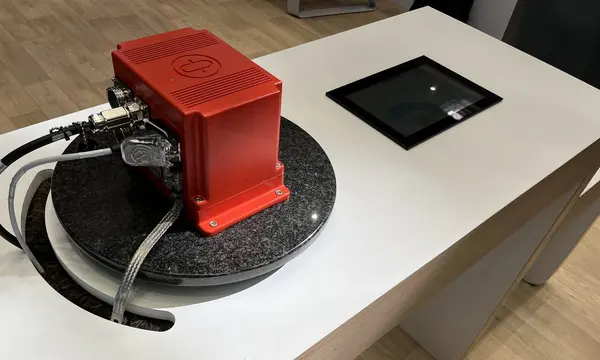
Anschütz has unveiled the Standard 100 MF, a maintenance-free gyrocompass designed for straightforward new-build and retrofit integration from 2027.
D-Marin UAE marina customers can now access marine insurance advice and risk-management services through ult. Insurance, with placement and claims handled by the broker.
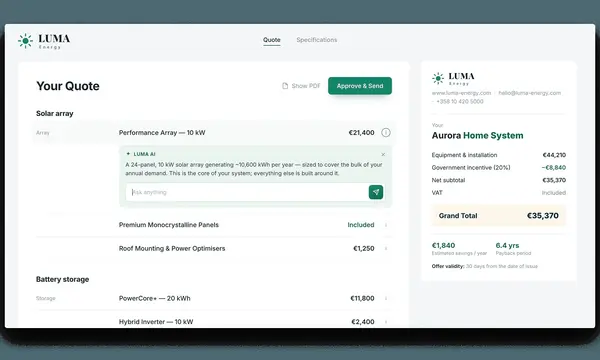
Cadentia's AION platform connects customer yacht enquiries with product configuration, interactive quotations and aftersales records; broader superyacht use remains prospective.
Superyacht Guide
Continue into the wider Superyacht Guide.
Business opportunities · Superyacht Guide
Companies serving the superyacht market can discuss clearly identified advertising, sponsorship and business-profile opportunities. Commercial activity remains separate from independent editorial coverage.