Company
Water Revolution Foundation
Explore the company profile and related Superyacht Guide coverage.
Image: Water Revolution Foundation
Water Revolution Foundation has introduced a four-tier verification framework for its Hub of Verified Solutions, giving yacht suppliers a staged route toward full LCA.
Water Revolution Foundation has introduced a four-tier verification framework for the Hub of Verified Solutions, its independent directory of environmental technologies and products for the yachting industry. The change gives suppliers a recognised entry point before they have completed a full comparative Life Cycle Assessment, while keeping the highest level tied to established LCA standards.
Until now, a product generally needed a completed comparative LCA or an Environmental Product Declaration before it could enter the Hub. The Foundation says the revised structure is intended to make the quality of available evidence visible to buyers while giving suppliers a practical route to strengthen that evidence over time rather than remaining outside the system until the final assessment is complete.
The Foundation stresses that the tiers are not a ranking of companies or a simple sustainability score. They represent increasing scientific rigour, with Tier 4 remaining the highest level and retaining the requirement for the full LCA approach built around internationally recognised ISO 14040 and ISO 14044 methodology.
Existing fully verified solutions have transferred to Tier 4, so the underlying benchmark has not been weakened for products that already completed that process. The change is the creation of lower entry tiers for suppliers that possess credible environmental data but have not yet completed the complete comparative assessment required at the top level.
For shipyards, designers and project managers, the practical difference is transparency at the point of specification. A product’s presence in the Hub can now be considered alongside the depth of verification behind it, allowing a buyer to distinguish between an early evidence base and a fully reviewed LCA rather than treating every environmental claim as equivalent.
That matters because material and equipment choices made during build and refit can affect a yacht’s footprint across manufacturing, installation, operation and eventual replacement. Independent scrutiny does not remove the need for project-specific engineering judgment, but it gives decision-makers a more structured evidence base when environmental performance forms part of the specification.
Water Revolution Foundation links the new structure to changing commercial pressure around Scope 3 emissions. Many specialist yacht suppliers are too small to fall directly within the narrowed mandatory scope of European corporate sustainability reporting, but their larger customers still need information about emissions embedded in purchased products and services.
Where product-specific data does not exist, buyers may have to rely on generic emissions factors that cannot reflect improvements a supplier has actually made. The tiered route is intended to make those improvements visible sooner while still showing exactly how far the evidence has progressed toward a full independent life-cycle assessment.
The Foundation’s central message is that the easier entry route does not replace the final standard. Suppliers can join at the level supported by their current data, understand what the next stage requires and work upward toward Tier 4, where the evidence is supported by the full comparative methodology.
For the superyacht sector, the framework is another step toward making environmental claims more auditable in procurement. As yachts become more complex and owners ask for measurable reductions rather than broad sustainability language, the ability to show both the claimed benefit and the strength of the evidence behind it becomes increasingly important.
Explore
Go deeper into the yachts, companies, events and destinations directly connected to this article.
Company
Explore the company profile and related Superyacht Guide coverage.
Continue reading
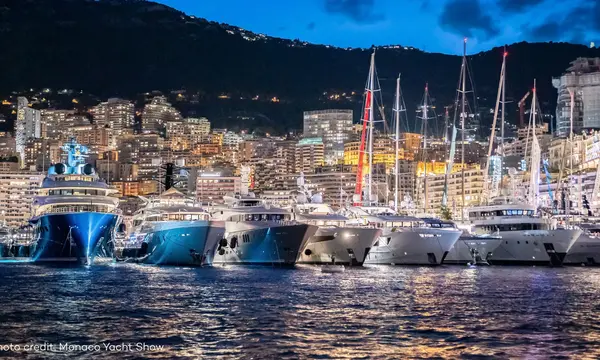
Water Revolution Foundation is delivering complimentary YETI Lite reports to yachts displayed at Monaco Yacht Show, providing estimated environmental performance benchmarks.
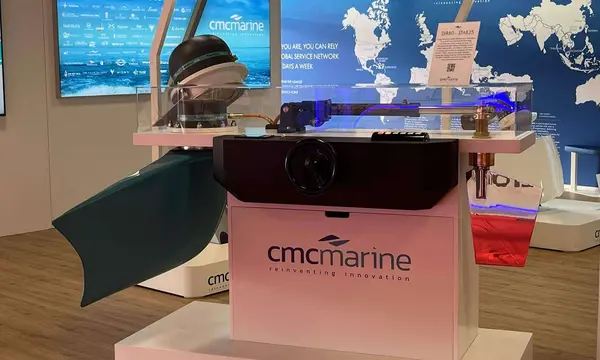
CMC Marine is showing new LA fins, Waveless STAB 50/60 units, five-blade Dualis Electra propellers and a new NMEA 2000 touchscreen at Monaco.
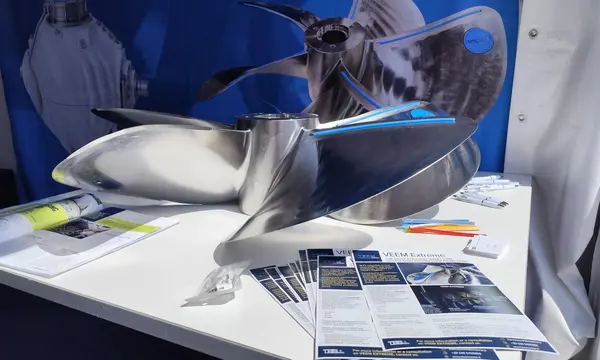
VEEM says Lloyd's Register-witnessed trials of its Extreme propeller and rudder delivered 18.1% higher efficiency and 11.9% lower fuel burn.
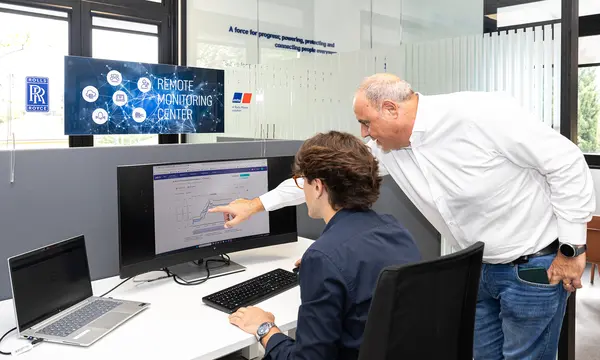
Rolls-Royce has opened a new mtu Remote Monitoring Centre in Arcola, Italy, with yacht and marine propulsion systems among the first applications monitored.
Superyacht Guide
Continue into the wider Superyacht Guide.