Company
Water Revolution Foundation
Explore the company profile and related Superyacht Guide coverage.
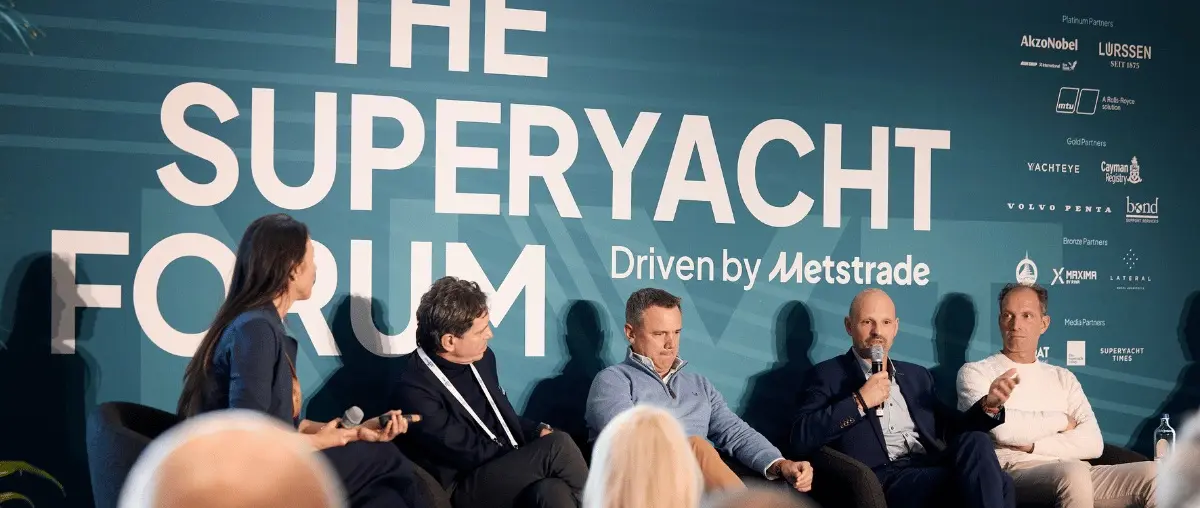
Superyacht Forum official HVO panel discussion photograph published March 2026
As the 2026 Forum opens, its earlier panel review highlights fuel compatibility, lifecycle emissions, sourcing and cost considerations for existing yachts.
As The Superyacht Forum opens in Amsterdam on 16 November 2026, the question of how to reduce emissions from existing yachts remains important alongside the development of new propulsion systems. Hydrotreated vegetable oil, generally known as HVO, is one of the alternatives already being used on some vessels fitted with compression-ignition engines. In a published review of its previous edition, dated 27 March 2026, the Forum documented the experiences of yacht operators, fuel suppliers and technical specialists who discussed the practical barriers to wider adoption. Those experiences merit examination ahead of the two-day 2026 meeting, which precedes the METSTRADE exhibition.
The discussion is particularly relevant to owners whose yachts have substantial remaining service lives and whose immediate plans do not include replacing the main machinery. Fuel substitution, where specifically approved for the installation, can provide a different path to reducing lifecycle greenhouse gas emissions from a conventional diesel-powered yacht. The published panel review is not a report of decisions taken at the 2026 meeting, and the experiences described in it should not be understood as current quotations or guaranteed availability at individual ports.
HVO is a paraffinic fuel produced by treating suitable oil-based feedstocks with hydrogen. It differs from conventional fatty acid methyl ester biodiesel in its chemistry and properties. Although its physical characteristics can make it suitable for many diesel installations, compatibility cannot simply be inferred from the word diesel on an engine specification. An operator must establish approval for the exact engine model and associated fuel system and consider any requirements imposed by its warranty, technical management arrangements or regulatory regime.
The essential distinction for the yacht owner is that the product can potentially be introduced without redesigning the vessel's propulsion arrangement. That differentiates it from a decision to install batteries for substantial propulsion duties or replace a main engine with machinery designed to operate on an entirely different fuel. There may still be work involved in confirming fuel specifications, adjusting procedures and ensuring that the vessel's arrangements for storage and supply are appropriate.
A suitable fuel should be procured against a recognised specification and the engine manufacturer's particular requirements. An assurance that a supplier is selling renewable diesel does not in itself establish that the delivered product meets those requirements. The ship's technical team should retain the relevant information alongside the records of the bunker operation.
The Forum review cites the potential for well-to-wake greenhouse gas emissions reductions of up to ninety per cent compared with fossil diesel. That upper figure is dependent on the pathway by which the renewable fuel is produced and cannot be taken as a universal reduction for every delivered litre. It concerns lifecycle assessment, including the origin of the feedstock and the energy and processes involved in producing and delivering it.
A diesel engine running on HVO continues to emit carbon dioxide during combustion. The potential climate benefit is assessed by considering the origin and lifecycle of the carbon rather than assuming that the engine has stopped emitting it. Feedstock production, land-use consequences, processing energy and transportation can influence the result. The provenance and sustainability credentials attached to a delivery consequently matter to any claim about emissions reductions.
For owners and yacht management companies, environmental reporting should identify the methodology and evidence used rather than automatically applying the most favourable figure appearing in promotional material. A fuel purchaser can ask for the sustainability information supplied with the product and ascertain whether it covers the actual batch delivered. That is especially valuable when an owner intends to use the information in a broader annual account of the vessel's operation.
One of the practical examples described by the Forum was the Sanlorenzo motor yacht LAMMOUCHE. Its captain reported that the vessel began using HVO in autumn 2022 and had obtained deliveries in Spain, France and Italy during its initial season. The review records that the yacht subsequently operated on HVO for much of its time across three seasons, while conventional fuel remained part of its overall operating pattern.
This is an example of one vessel's reported experience, not a fleet-wide survey. Its results are useful because they illustrate the interactions between a captain's planning, owner preferences and the availability of bunker deliveries. They do not demonstrate that the same pattern can be achieved by every vessel following a different cruising itinerary.
The captain's account also highlights the distinction between announcing an intention to use a renewable fuel and successfully integrating it into regular operations. Each replenishment has to be arranged at a suitable location and within the time available. A vessel must retain a workable contingency when its preferred product cannot be obtained.
The Forum's review gives an example from a July 2025 delivery in which conventional fuel was quoted at €1.39 per litre and HVO at €1.59 per litre. These are historical prices associated with a reported experience, not the prevailing market prices in November 2026. The difference illustrates why a charter operator might consider the cost of the alternative against the overall charter budget, rather than considering the percentage premium on the fuel in isolation.
The actual cost implication depends on the quantity purchased, the respective fuel prices and the cost of arranging delivery. For a hypothetical purchase of 10,000 litres at those historical unit prices, the difference in purchase cost alone would be €2,000. This calculation excludes differences in consumption, delivery fees, taxes and other contractual terms.
A yacht manager evaluating a proposed transition can request equivalent quotations and use the vessel's own records of consumption to estimate the financial implications. Seasonal changes in itinerary and guest use can influence the quantities required. That approach is preferable to relying on a cost calculation from a different vessel, even if its dimensions are broadly similar.
The other major barrier identified by the panel was distribution. The review describes a comparatively established network in parts of continental Europe, with road tankers supporting deliveries where fixed dockside infrastructure is limited. It also identifies difficulty in obtaining supplies in some Mediterranean island and eastern Mediterranean destinations.
The picture can change as distributors establish new supply arrangements, and historic observations should not be used as definitive statements about current port availability. The yacht's fuel agent and captain should check the intended location sufficiently early to establish the grade available, minimum order quantity, delivery times and the suitability of the proposed transfer arrangements.
A yacht operating a dual-season programme between the Mediterranean and the Caribbean may also need a different approach from one that cruises within a single region. Where the relevant equipment approvals permit blending or alternating compatible products, a lack of supply at one destination does not necessarily invalidate the whole initiative. Any transition must remain within the requirements applicable to the particular installation.
Panel participants described possible operational advantages associated with HVO, including cleaner combustion and reduced fuel odour. Those observations may be of interest to engineers and crews who work close to exhaust outlets and fuel-handling equipment. They should not be interpreted as guarantees of a particular maintenance saving or improvement in engine condition.
A yacht undertaking a controlled change can preserve baseline information about machinery operation and compare subsequent observations under similar conditions. Relevant indicators may include fuel consumption, maintenance findings and the condition of components identified by the manufacturer. Differences in operating load, weather and engine maintenance must be considered before attributing changes to the new fuel.
The chief engineer should also review the technical requirements relevant to the generators and auxiliary engines. A yacht may have several types of machinery with different approval histories, even when the main propulsion engines are compatible with the alternative product.
The Forum is scheduled for 16 and 17 November, with METSTRADE running from 17 to 19 November. The older HVO panel review provides a documented starting point for discussions among owners, managers, shipyards and equipment and fuel suppliers. Its value lies in the specific practical questions it raises about the adoption of a fuel that may be available for existing equipment.
An owner who wishes to investigate the option needs a coordinated approach to technical compatibility, sourcing, environmental documentation and financial assessment. A yacht's operating pattern should inform the proposal from the beginning. No decision or outcome from the 2026 meeting is being reported here. Further developments should be assessed against verified announcements issued during and after the event, rather than assuming that all of the barriers discussed in the earlier session have already been resolved.
Primary source: The Superyacht Forum official panel review, 27 March 2026.
Photo: The Superyacht Forum / METSTRADE, accompanying the March 2026 panel review; photograph from the earlier meeting, not the November 2026 forum. Official source.
Explore
Go deeper into the yachts, companies, events and destinations directly connected to this article.
Company
Explore the company profile and related Superyacht Guide coverage.
Continue reading

Over 40 yacht-industry specialists met in Nice to test a shared Smart Materials Library and address evidence, maintenance and environmental decisions in superyacht interiors.

Water Revolution Foundation has introduced a four-tier verification framework for its Hub of Verified Solutions, giving yacht suppliers a staged route toward full LCA.

More than 40 superyacht interior stakeholders convened in Nice to examine how materials, supply-chain choices and shared accountability affect sustainability in yacht construction.
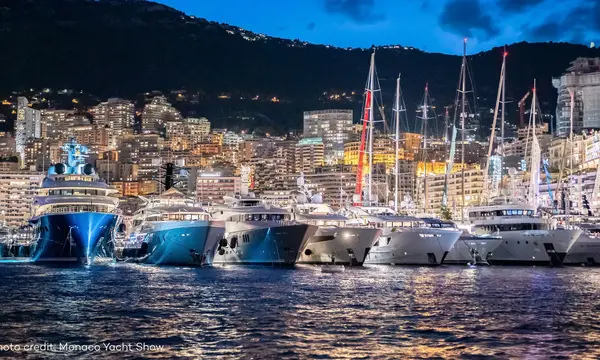
Water Revolution Foundation is delivering complimentary YETI Lite reports to yachts displayed at Monaco Yacht Show, providing estimated environmental performance benchmarks.
Superyacht Guide
Continue into the wider Superyacht Guide.
Business opportunities · Superyacht Guide
Companies serving the superyacht market can discuss clearly identified advertising, sponsorship and business-profile opportunities. Commercial activity remains separate from independent editorial coverage.