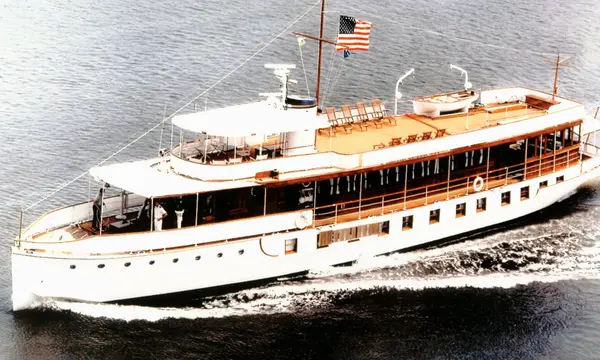
USS Sequoia: The Presidential Yacht Used by Nine U.S. Presidents
USS Sequoia served nine U.S. presidents and became a floating setting for diplomacy, political decisions and private presidential life. From Roosevelt and Kennedy to …
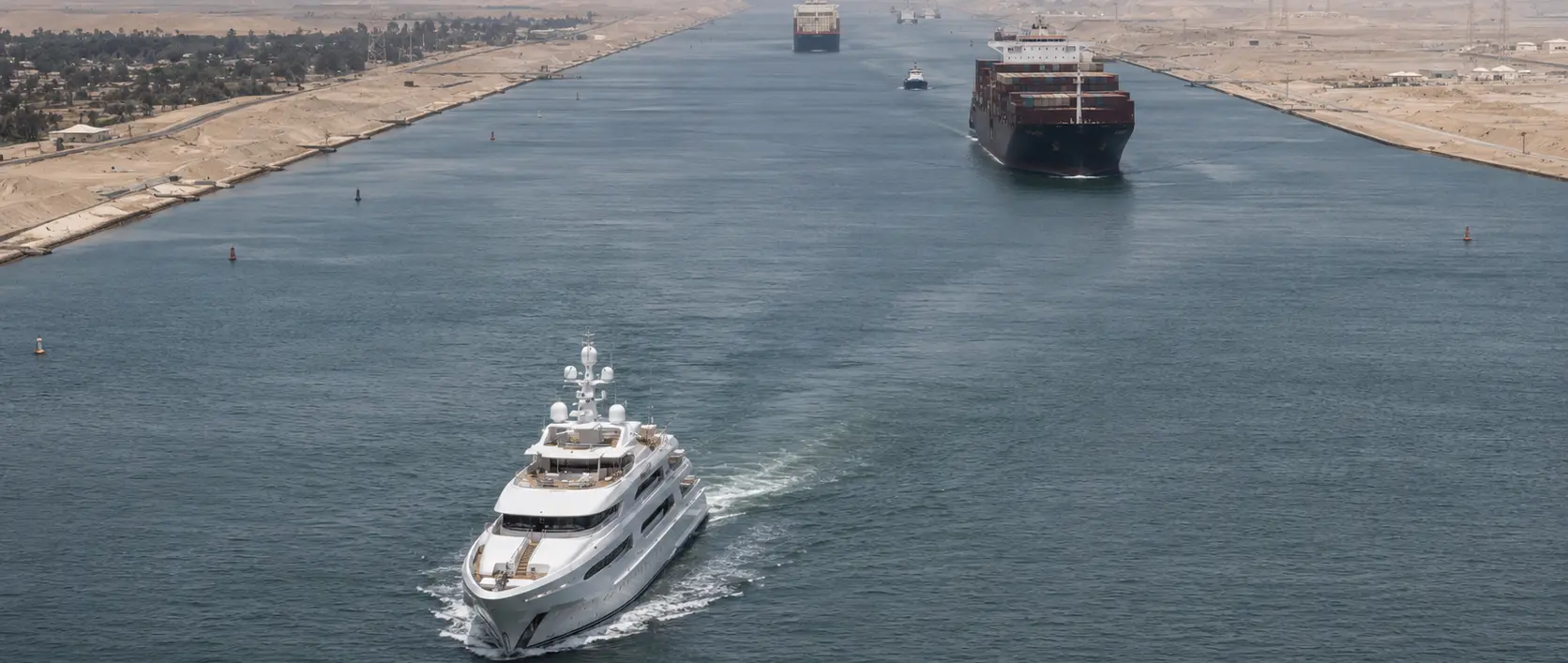
The Suez Canal Authority has increased the surcharge applied to yachts from 14% to 26%, adding new costs to superyacht repositioning between the Mediterranean, Red Sea and Indian Ocean.
The cost of moving a superyacht between the Mediterranean and the Red Sea has increased after the Suez Canal Authority raised the surcharge applied to yachts from 14 per cent to 26 per cent of normal transit dues. The revised rate came into effect on 15 July 2026 and applies in both directions, adding another consideration for owners, captains and managers planning seasonal movements towards Saudi Arabia, the Gulf, the Maldives, Seychelles and the wider Indian Ocean.
The change sounds dramatic, but it needs to be understood correctly. The Suez Canal Authority has not increased the underlying yacht tariff itself by 26 per cent. Instead, yachts fall within the Authority's category of special floating units, and the surcharge applied on top of normal transit dues has risen from 14 to 26 per cent. The underlying tariff structure remains separate from that surcharge.
This distinction matters because describing the change simply as a 26 per cent increase in Suez Canal fees would exaggerate its effect. A yacht previously paying normal transit dues plus a 14 per cent surcharge now pays those normal dues plus 26 per cent. On that portion of the bill, the move from 114 per cent of base dues to 126 per cent represents an increase of approximately 10.5 per cent in the combined base-plus-surcharge amount, rather than a 26 per cent increase in the total transit cost.
For example, if a yacht's calculated normal transit dues were $50,000, the old 14 per cent surcharge would have added $7,000, producing $57,000 before any other applicable charges. At 26 per cent, the surcharge becomes $13,000 and the equivalent figure rises to $63,000 — an additional $6,000. On normal dues of $100,000, the additional surcharge rises from $14,000 to $26,000, adding $12,000 to the transit. If normal dues were $250,000, the surcharge component would rise from $35,000 to $65,000, a $30,000 difference.
Those figures are illustrations of the new surcharge mathematics, not quotations for particular yachts. It would be misleading to say, for example, that every 60-metre yacht now pays a specific fixed Suez Canal fee. The Authority calculates dues according to vessel characteristics and tonnage, and even its dedicated yacht calculator distinguishes yachts below 300 tons from larger vessels. Two yachts of similar length can have very different volume, tonnage and therefore different transit assessments. Exact quotations also need to account for the individual vessel's documentation and any additional pilotage, agency or operational charges.
That makes gross tonnage and the yacht's Suez Canal measurement more useful for financial planning than length alone. A relatively slender 50-metre yacht and a high-volume 50-metre explorer may look comparable in a fleet list but present very different calculations when preparing a canal transit. Owners and managers considering a passage should therefore obtain a vessel-specific quotation rather than budgeting from another yacht's previous crossing.
The increase comes at an interesting moment for the developing Red Sea superyacht market. Saudi Arabia has invested heavily in marina and tourism infrastructure, while the Red Sea is increasingly being promoted as a winter cruising alternative to the Mediterranean and Caribbean. Egypt itself has previously introduced yacht incentives intended to encourage more traffic through the canal, including arrangements for smaller yachts and facilitations allowing yachts of 300 tons or more to join direct convoys and avoid waiting at the Great Bitter Lakes under specified conditions.
The new surcharge therefore does not make Suez unattractive by itself. For many yacht itineraries, geography remains overwhelmingly in the canal's favour. The Suez Canal Authority's own route comparisons show just how large the distance penalty can become when a vessel avoids Egypt and instead sails around southern Africa. For a Singapore–Rotterdam voyage, the Authority gives approximately 8,288 nautical miles via Suez compared with 11,755 nautical miles via the Cape, a difference of 3,467 nautical miles. Between Tokyo and Rotterdam, the difference is 3,315 nautical miles.
For a displacement superyacht averaging 12 knots, another 3,467 nautical miles represents approximately 12 additional days continuously under way, before weather, bunkering or operational stops are considered. Even at an average of 14 knots, the additional passage is more than ten days. The financial consequence is therefore not simply fuel: another ten or twelve days at sea means additional machinery hours, generator use, crew time, provisions, maintenance exposure and potentially a major disruption to charter or owner itineraries.
The comparison becomes even more extreme for a yacht simply moving between the Mediterranean and the Red Sea. The Suez Canal Authority lists Jeddah to Piraeus at approximately 1,316 nautical miles using Suez compared with 11,207 nautical miles around the Cape of Good Hope. The theoretical difference is almost 9,900 nautical miles — more than 34 days of continuous steaming at 12 knots. On a route such as that, avoiding a canal surcharge by sailing around Africa would normally make little economic sense purely as a cost-saving exercise.
The more difficult calculation begins when security is added to the equation. Red Sea shipping has experienced prolonged disruption because of regional conflict and attacks on commercial vessels, and major shipping companies have repeatedly altered routes according to their assessment of conditions around the Red Sea and Bab el-Mandeb. Some commercial services have cautiously resumed Suez transits in 2026, while uncertainty remains over a broad return to normal routing.
For a superyacht, that means the choice is not simply pay Suez or save the toll by going around Africa. Security assessments, flag-state advice, insurers, war-risk premiums, security contractors, crew welfare, fuel range and the owner's appetite for exposure can outweigh the canal fee itself. A technically cheaper route is irrelevant if insurers or management consider the voyage unacceptable, while a more expensive canal passage may remain attractive if it saves thousands of nautical miles and weeks of vessel operation.
There is also an important difference between superyachts and commercial ships when considering the Cape alternative. Commercial operators can model an additional voyage against freight rates, cargo commitments and vessel utilisation. A yacht's economics are different. An owner may value time above fuel cost, a charter yacht may lose valuable booked weeks through a prolonged repositioning passage, and a yacht heading to the Indian Ocean for a winter programme may have fixed guest or charter commitments that make several extra weeks at sea impractical.
The surcharge increase should therefore be viewed as another line in a much larger repositioning budget. For a large yacht, the direct increase could amount to thousands or tens of thousands of dollars depending on the underlying transit dues, but the financial impact of avoiding Suez altogether can be far greater once additional distance, fuel, machinery use, crew costs and lost operational time are considered.
Owners should also be cautious about relying on historic Suez invoices. The Authority has used temporary discounts, incentives and changing surcharge structures over recent years, including measures aimed specifically at encouraging yacht tourism. The current 26 per cent surcharge can also be amended or cancelled depending on maritime market conditions. A transit budget prepared from what the same yacht paid several years ago may therefore bear little resemblance to the current quotation.
For captains and managers, the sensible approach is to compare three figures before committing to a long-range repositioning: the current all-in vessel-specific Suez quotation, the operational cost of the alternative Cape route, and the insurance and security implications of entering the Red Sea. Only then can the true cost of the decision be understood.
The headline may be that the Suez Canal's yacht surcharge has risen to 26 per cent, but for most large superyachts the more important question is not whether the canal has become more expensive. It is whether that additional charge is significant enough to outweigh the extraordinary amount of time, fuel and vessel utilisation that the canal continues to save.
For many Mediterranean-to-Red Sea or Indian Ocean itineraries, the answer is likely to remain no. Suez is more expensive than it was before 15 July, but sailing thousands of additional nautical miles around Africa simply to avoid the increased surcharge can turn a relatively modest rise in transit costs into a far larger operational bill.
Continue reading
USS Sequoia served nine U.S. presidents and became a floating setting for diplomacy, political decisions and private presidential life. From Roosevelt and Kennedy to …
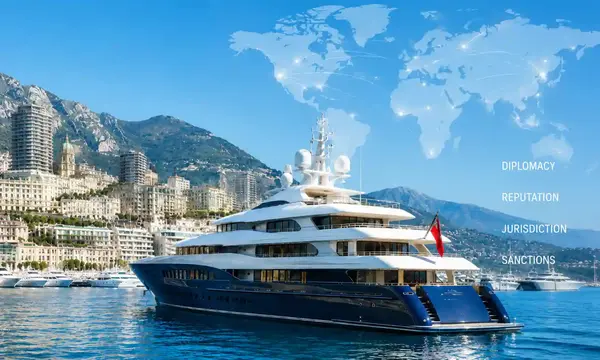
Superyachts are unusually visible forms of private wealth, so where they berth can carry reputational as well as legal significance. Soft power begins with …
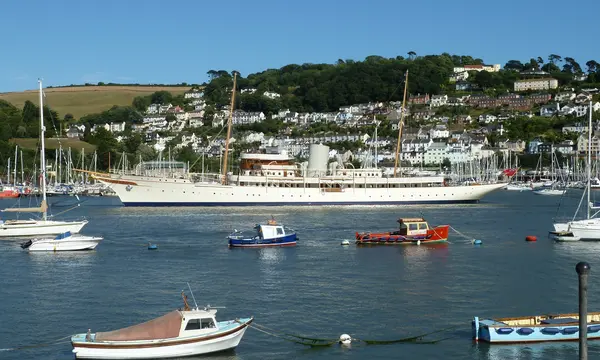
Nahlin is a 91.44-metre classic motor yacht built by John Brown & Sons in 1930 to a G.L. Watson design. Her 1936 Mediterranean charter …
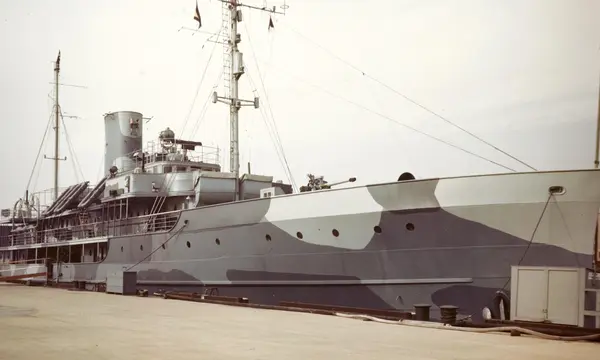
Built for Horace Dodge in 1921, SS Delphine survived sinking, wartime service as USS Dauntless and decades of uncertainty before a landmark restoration returned …
Superyacht Guide
Continue into the wider Superyacht Guide.