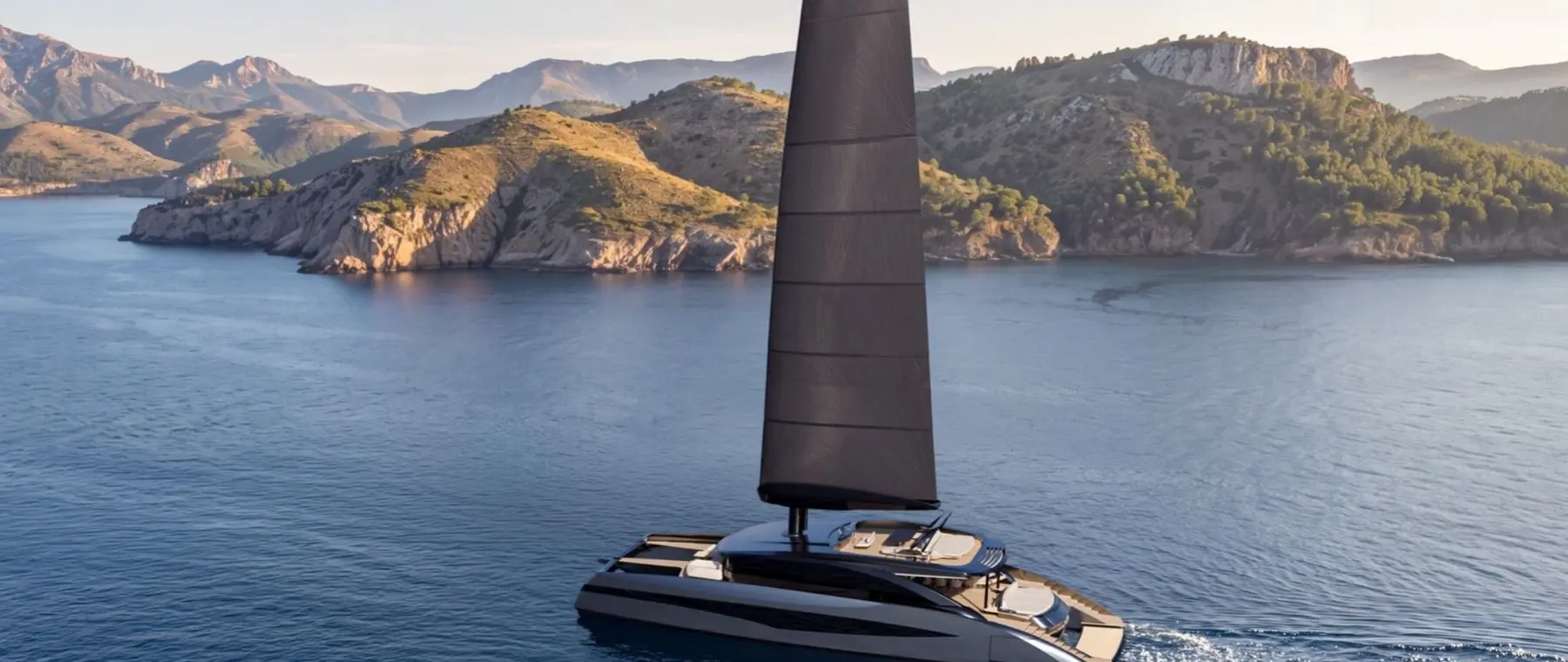
Sunreef Wing on future sailing catamaran, official Sunreef Yachts concept rendering

News

Sunreef Wing Promises Automated Sailing Across the Builder's Next-Generation Catamarans

Nov. 13, 2026 Technology

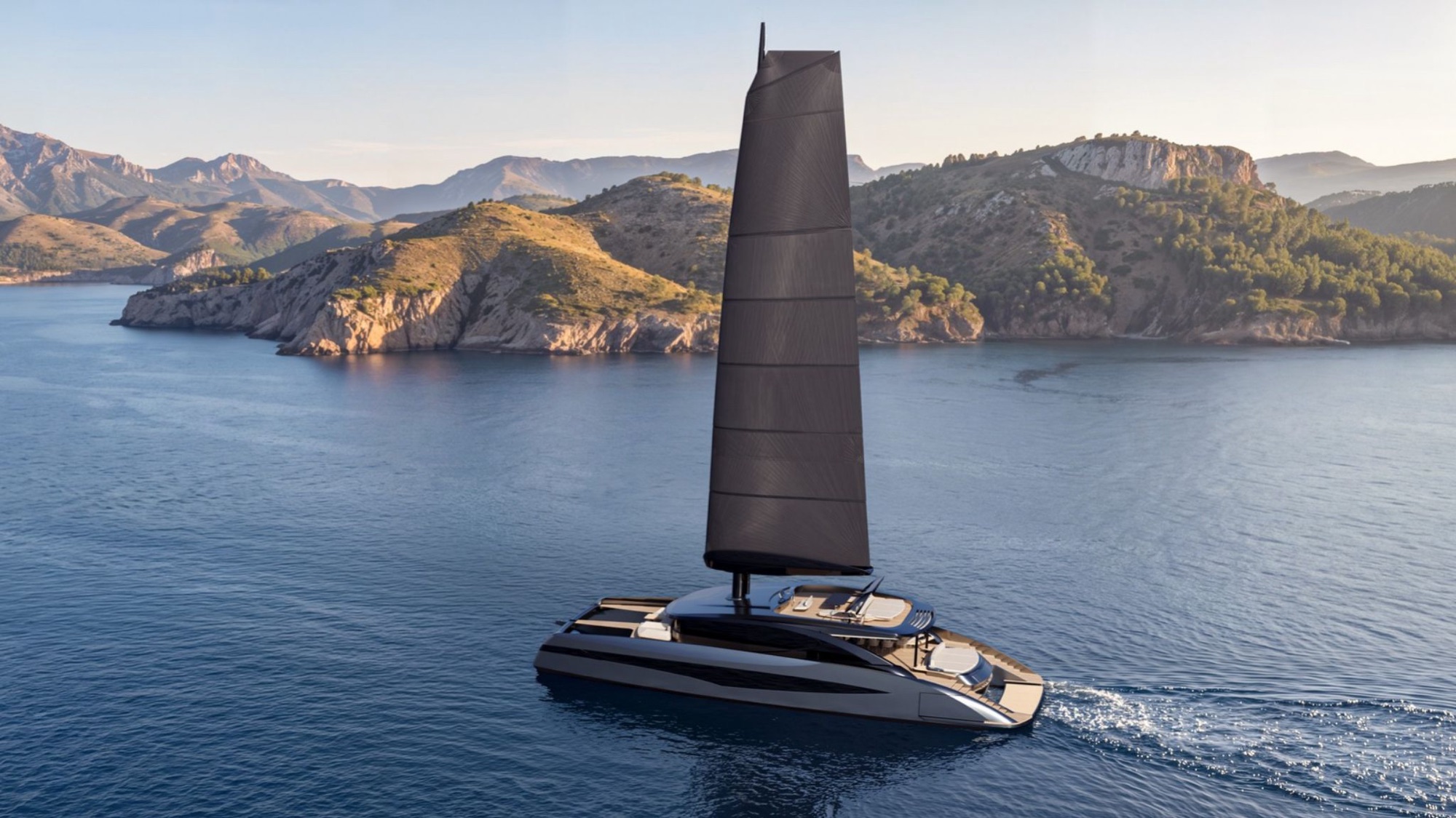
Sunreef Wing on future sailing catamaran, official Sunreef Yachts concept rendering

Sunreef Yachts reveals a 360-degree rotating wing sail with automatic handling, adaptive camber and AI-assisted control for its next-generation sailing catamarans.

Sunreef proposes a different way to manage wind power Sunreef Yachts has announced the Sunreef Wing, a self-supporting, automated wing intended for future sailing catamarans. The builder's 10 November 2026 statement describes a rig that rotates through 360 degrees, changes its aerodynamic profile and can be raised or lowered without the conventional sequence of crew handling a mainsail. An AI-assisted control arrangement is intended to coordinate the wing with rudders, propulsion and other onboard energy systems. The announcement is significant for larger sailing multihulls because sail management can be a major part of their operational workload. Yet the project remains a technology proposal in the material released so far: the company has not identified a first customer delivery, production installation date or independently verified sea-trial performance.

A self-supporting wing instead of the familiar rig The concept departs from the traditional arrangement of mast, standing rigging, boom and fabric sails. Sunreef describes a wing capable of turning independently to align itself with the wind, while adjusting its camber to alter the aerodynamic shape. The idea has precedents in other sailing applications, but its integration into a luxury cruising catamaran raises different questions of reliability, maintenance, visibility and access. A conventional sail can be inspected, repaired or removed using established techniques. A large wing introduces its own structures and control hardware, with requirements that will vary according to the installation. The manufacturer believes the new arrangement may involve fewer moving parts and less ancillary gear, but the actual service needs have yet to be documented in an operational fleet.

Hoisting while at anchor is a notable claim One detail in the release is the proposal that the wing can be raised even when a vessel is at anchor with the wind coming from astern. A traditional mainsail generally benefits from turning the vessel head to wind during hoisting, both to reduce pressure and manage loads. An automated wing that handles this differently could alter the way a sailing catamaran transitions between stationary and underway conditions. However, the announcement does not describe the exact mechanism, clearance requirements or safe operating wind-speed limits. Nor does it state how a captain would respond if the wing stopped partway through a movement. Those questions will be important before the proposed convenience can be evaluated as an operational advantage.

What does rotating through 360 degrees mean? Full rotation would allow the rig to adopt different angles relative to the vessel without being limited by a conventional boom and shroud layout. That freedom could help a control system seek a useful aerodynamic position across different points of sail. It would also require careful consideration of nearby superstructure, antennae and equipment. A graphic showing the wing above a flybridge is not a certified arrangement drawing for every model. The geometry, weight, bearings and structural load transfer would need to be designed around each yacht. Sunreef says it intends to bring the technology across its sailing portfolio, but that does not mean a single wing of identical dimensions can be fitted to all hulls.

Adaptive camber is central to the aerodynamic proposition Camber refers to the curvature of an aerodynamic section. Changing that curvature can alter lift, drag and the relationship between the force developed by the wing and the loads transferred to the vessel. Sunreef says its system will adjust camber as conditions change, an approach intended to improve efficiency without continuous manual trimming. The details of how the wing changes shape, what sensors it uses and how the control system handles extreme gusts are not fully specified in the announcement. Designers will need to examine how the structure responds to fatigue and peak loads as well as ordinary sailing conditions. Any efficiency advantage depends on the total aerodynamic and hydrodynamic system, not the wing profile in isolation.

Understanding the manufacturer's percentage claims Sunreef states that under optimal apparent-wind conditions its wing can generate 50 percent more aerodynamic lift and 40 percent more propulsive force than a conventional sail of the same area. Those figures should be attributed to the builder rather than treated as independently tested results. They do not establish that a catamaran will sail 40 percent faster, use 40 percent less fuel or perform better in every wind condition. Boat speed depends on drag, hull form, sea state, course, loading and the ability to turn aerodynamic force into forward motion. A meaningful comparison would specify the reference sail, wind speed and angle, area, test method and measured vessel response. None of that supporting dataset accompanied the initial public announcement.

Artificial intelligence has a practical task to perform The company describes an AI-assisted system that analyses sailing conditions and coordinates the wing, rudders and propulsion. Its proposed interface also accepts voice commands. Automation could reduce the number of routine adjustments required from crew, but the responsibility for the yacht remains with trained operators. A captain will want to understand how the system displays its decisions, what limits can be set and how control can be regained immediately. Artificial intelligence should not be presented as a substitute for navigational judgement, lookout, weather planning or safe watchkeeping. An effective system must behave predictably not only in normal conditions but also when a sensor gives misleading information or electrical power is interrupted.

Depowering is a central unresolved question A conventional sailing yacht can reduce sail through reefing or furling, according to the rig and conditions. A rigid or semi-rigid wing needs its own dependable means of reducing aerodynamic loads as the wind increases. The 2026 release does not provide a complete explanation of its storm procedure, effective area reduction or emergency depowering method. Those omissions do not prove a technical deficiency, but they prevent an independent assessment of safety from the public material. Before committing to a new rig concept, surveyors and operators would need details of the failure modes, structural load assumptions and procedures for protecting the yacht in severe weather. These matters are particularly important on large cruising catamarans expected to operate far from the builder.

Energy management is part of a wider concept Sunreef says the wing will interact with propulsion, hydrogeneration and its integrated Solar Skin technology. The company's aim is a coordinated onboard energy system, which could help reduce dependence on conventional fuel under suitable conditions. It also describes an ability to make use of apparent wind while the vessel is motoring. Such a claim requires careful interpretation. A system that captures energy from an airflow may also add aerodynamic drag, potentially increasing the power needed to maintain a given speed. The useful measurement is net energy after accounting for those effects. Sunreef has not published the electrical output, drag penalty or system-level energy balance for the new rig, so claims of free energy during motor operation would be misleading.

Solar Skin and hydrogeneration already have their own roles The builder has promoted solar integration and hydrogeneration on several of its large sailing catamarans. Solar Skin places solar-generating surfaces within parts of the yacht's composite structure, while hydrogeneration seeks to recover energy from the vessel's movement through the water. These technologies do not function identically or produce the same amount of energy in every operating condition. Their contribution depends on sun exposure, boat speed, electrical loading and the equipment installed. A future wing could become another input to the yacht's energy-management strategy, but the combined performance should be assessed over realistic voyages. A collection of promising components is not the same thing as a verified reduction in fuel use over a full charter season.

The significance for the superyacht sector Large Sunreef sailing catamarans can offer substantial guest space while retaining the ability to use wind propulsion. Their beam and volume make them different from narrow-hulled sailing monohulls, and the rig is an important part of the owner's design choices. Automation could appeal to owners who want the benefits of sailing without making every voyage a complex deck evolution. It may also change training requirements, with crew needing expertise in software control and electrical systems as well as traditional seamanship. Whether the balance is favourable will depend on real installation data, operating limits and the ability to maintain the system worldwide. The concept is relevant to the larger catamarans in Sunreef's range, although the first model has not been named.

A design rendering is not a working prototype photograph The company has released visualisations of the wing above a catamaran. These images help explain proportions and intended placement, but they must be labelled as renderings. They do not demonstrate that the full rig has completed sea trials or passed every relevant approval. For a publication covering complex yachts, the distinction between a product image, computer simulation and verified operational footage matters. A future technical report should establish whether a prototype has operated on the water, the range of conditions tested and the findings of any independent class or safety assessment. Until then, the announcement is an engineering concept with manufacturer-stated performance ambitions.

Reliability will depend on more than the number of moving parts Sunreef suggests a simplified rig arrangement may reduce maintenance. That is plausible as a design objective, but fewer components do not necessarily mean lower lifetime maintenance costs. A high-load bearing, actuator, control unit or structural joint may be critical and difficult to replace, especially far from a specialised service centre. Operators need to know inspection intervals, repair methods, spares availability and the consequences of a failure. Electronic components may also require software updates and cybersecurity protections. A new rig system should be assessed as a complete operational package over many years, including the practical ability to continue sailing or return to port safely when something stops functioning.

What buyers should ask before choosing the new rig Questions begin with the wing's dimensions, mass, centre of gravity and structural attachment. Owners should seek the published operating envelope, the method of depowering in heavy weather, availability of manual controls and details of the claimed aerodynamic testing. They should also understand the system's electrical consumption and how the yacht is configured when sailing close-hauled, motoring or anchored. If the installation affects bridge visibility, tender handling or access to the upper deck, those consequences must be addressed during design. Finally, class and flag requirements will need to be confirmed. The initial announcement cannot answer every question, and the correct response is to identify what evidence will be required before a purchase decision.

The next milestone is a real yacht at sea The most important future news will be Sunreef naming the first model fitted with the wing, showing the equipment operating under defined conditions and publishing credible technical results. The present announcement establishes the builder's direction: automation, adaptable aerodynamic shape and integration with onboard energy management. It also illustrates a wider change in sailing superyachts, where designers are reconsidering the relationship between traditional wind power and computer-controlled machinery. Sunreef's claims are ambitious and worth following, but the equipment's real value will be proved through durability, safety and everyday usefulness rather than through renderings alone.

**Reporting basis:** Sunreef Yachts' original statement of 10 November 2026, distributed with company renderings via Sail-World and other trade press. The 50% lift and 40% propulsive-force improvements are attributed manufacturer claims under stated optimal apparent-wind conditions, not independent results.

Primary source: Sunreef Yachts official announcement republished by Sail-World, 10 November 2026.

Rendering: Sunreef Yachts, official Sunreef Wing 2026 concept image supplied for press coverage; not a built yacht or sea-trial photograph. Official source image.

Photo licence and source

Rendering: Sunreef Yachts, official Sunreef Wing 2026 concept image supplied for press coverage; not a built yacht or sea-trial photograph.

Continue reading

All news

Superyacht Guide

Explore the superyacht world

Continue into the wider Superyacht Guide.

Business opportunities · Superyacht Guide

Reach the superyacht industry audience

Companies serving the superyacht market can discuss clearly identified advertising, sponsorship and business-profile opportunities. Commercial activity remains separate from independent editorial coverage.