
Avikus Brings Superyacht AI Navigation Integration Debate to IBEX 2026
Avikus USA executive Sangwon Shin is discussing how sensors, steering, propulsion and AI need to operate as one system for future assisted superyacht navigation.
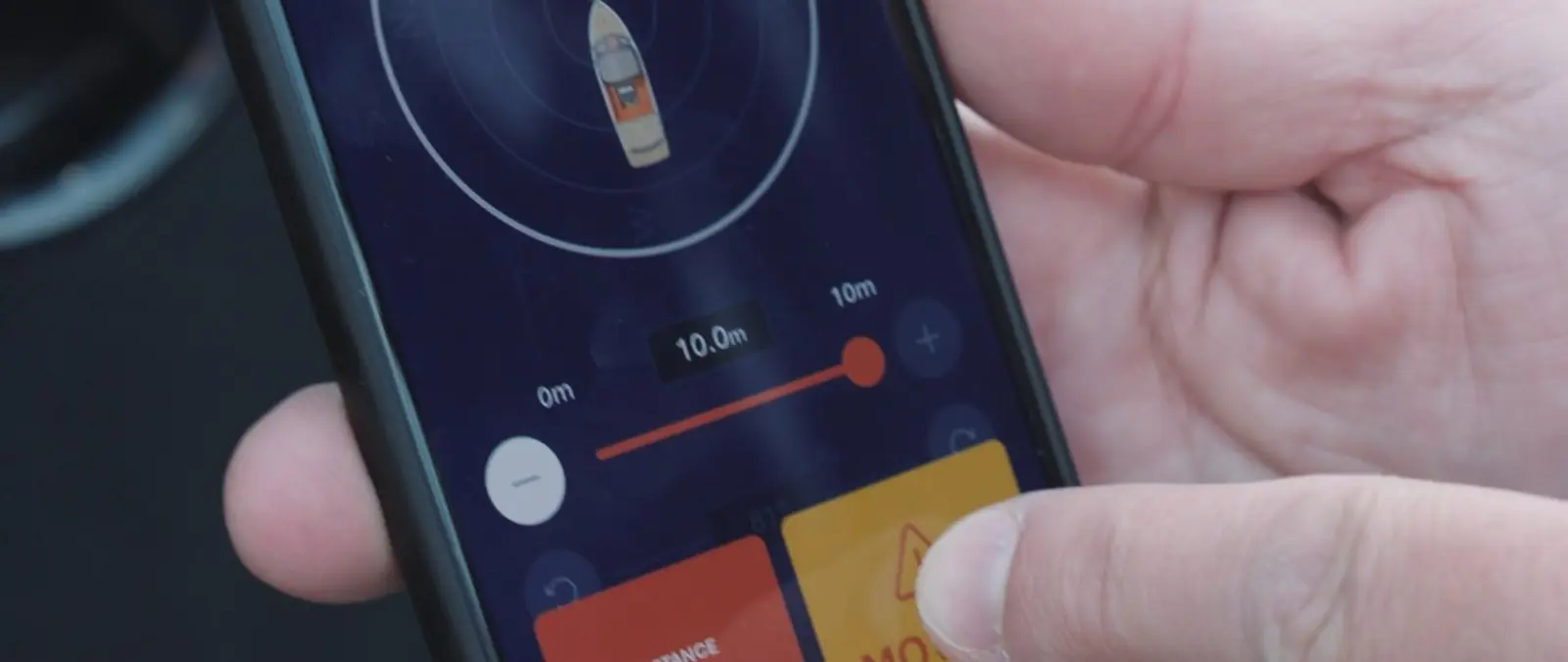
BlueNav, original company app photograph showing virtual anchor adjustment.
BlueNav Control adds virtual anchoring, docking assistance and precision positioning to compatible third-party electric propulsion, with applications to superyacht tenders.
French marine technology business BlueNav is widening the reach of its Smart Navigation functions through BlueNav Control, a product that it says can integrate with existing electric propulsion from other manufacturers. BlueNav first announced the product on 3 September 2026, and an Atlantic Cluster member update revisited it on 24 November; BlueNav's own site outlines the dedicated control unit, GPS Precision+ and smartphone interface. This is a follow-up on the existing technology, not a falsely dated November product debut. It is distinct from the Smart Mooring award discussed in the same November industry update.
For the superyacht industry, the most immediate potential application is on tenders and support craft rather than the main machinery of a large yacht. BlueNav's published range is primarily aimed at smaller boats. It would be inaccurate to suggest that the company has certified the new system for any unnamed 50-metre superyacht, or that an ordinary propulsion retrofit automatically brings the performance of a full dynamic-positioning installation.
The manufacturer's product page describes a system that combines a control module, GPS Precision+ receiver and BlueNav application to operate selected navigation-assistance functions with compatible third-party electric motors. It markets virtual anchoring, repositioning, controlled low-speed manoeuvres and related assistance without requiring owners to replace the existing electric propulsion. Those are manufacturer claims about intended features; performance and compatibility must be checked for each actual installation.
The distinction between adding a control layer and replacing a propulsion plant is commercially important. Changing motors can require substantial engineering, while adopting an interface to hardware already installed may be more attractive. However, using an existing drive successfully depends on whether the motor controllers accept the necessary commands, whether steering and thrust are predictable, and whether appropriate safety fallbacks remain available. An engineering evaluation cannot be reduced to an app demonstration.
BlueNav describes its virtual anchor as a position-keeping feature that uses electric thrust rather than lowering physical ground tackle. The system may help a skipper hold position briefly while preparing a manoeuvre or waiting for a suitable berth. It can also be described as a way of reducing the need to disturb the seabed during appropriate operating situations, but that environmental objective does not itself establish permission to station-keep in a protected area.
A vessel's ability to remain stationary depends on available thrust, wind, waves, current and the failure behaviour of its equipment. A controller is only one part of that equation. Operators should evaluate whether a physical anchor remains necessary or legally required, how position alarms are generated and what happens if power or positioning data is lost. Calling the feature an electronic anchor does not make it an all-weather mooring solution.
The product interface includes a feature that allows an existing virtual-anchor position to be adjusted without manually repeating a conventional low-speed manoeuvre. On the manufacturer's website, that is illustrated by a smartphone control example rather than an image of a particular superyacht installation. For a tender operator, a controlled position adjustment could be useful when guest embarkation, swimming activity or the position of nearby traffic changes.
Convenience needs to be weighed against responsibility for the vessel's immediate surroundings. The person controlling the system must still maintain awareness of other craft, underwater hazards and people in the water. Any remote interface should have clearly defined authority and limits, especially when several crew members or guests might be able to reach the application. The availability of a touch-screen control cannot replace an attentive helm.
BlueNav says GPS Precision+ is a key component of the control architecture, using a marine GNSS receiver and the Galileo High Accuracy Service. Its website advertises positioning precision down to approximately 20 centimetres under suitable conditions. That should be reported as the company's specification rather than an independently observed accuracy for every vessel, location or sea state. Dynamic control also depends on how accurately the craft responds to the calculated position.
A measured position on a digital screen may be very precise while the vessel itself continues to move because of momentum or environmental forces. A sensible assessment must examine the whole system, including update frequency, motor response, heading information and any delay in the control loop. Integrators should ask how the function behaves when satellite reception is degraded or when one of the propulsion units is unavailable.
The company's official compatibility information names Bellmarine analogue control and Oceanvolt digital control as examples, while inviting owners of other installations to request a technical assessment. It also states that more configurations are expected. A list of supported interfaces is an important limitation: it means the product should not be marketed as automatically suitable for every electric boat merely because it uses electric motors.
For shipyards and owners considering a tender retrofit, the first step should be a documented compatibility review. That ought to include the existing drive controller, battery configuration, safety interlocks, steering behaviour, control-bus access and appropriate manual override. Any proposed installation may need cooperation among the drive manufacturer, the BlueNav supplier and a qualified marine electrician before it can be commissioned as a dependable onboard feature.
Many large yachts carry smaller boats for transfers, water sports and operational support, and those craft can create significant handling demands in tight marina spaces. Low-speed control and position keeping might be attractive when a tender approaches a boarding platform or waits near a larger vessel. BlueNav Control's potential relevance lies in such support operations, but this article does not claim that any named superyacht has fitted the product.
Equipment selection for guest-service craft also requires careful attention to safety. Thrusters near swimmers, propeller protection, fallbacks during boarding and the ability to regain full manual control are central design issues. A feature useful for leisure boating should only be adopted in a professional tender fleet after the operating procedures and crew training have been updated to reflect its actual capabilities and limitations.
BlueNav's presentation describes an assistance sequence for placing a physical anchor and detecting possible drift afterward. The concept is that the electronics can help position the craft, support controlled deployment and alert the operator if the real anchor no longer holds. Those functions are separate from a virtual anchor, even though the manufacturer presents them as part of a related suite of Smart Navigation tools.
Anchor watch procedures should remain grounded in seamanship and local requirements. Alarm thresholds, battery endurance, traffic density and access to emergency propulsion all affect whether an automated response can be relied upon. It would be inappropriate to imply that a software-controlled position-keeping function guarantees that an anchored boat cannot drag. The system can provide additional information, but the vessel's master retains responsibility for safe anchoring decisions.
Electric propulsion avoids a local combustion exhaust stream while operating under battery power, but a position-keeping system still consumes energy whenever its motors provide thrust. The endurance of a virtual-anchor mode depends on boat mass, available propulsion, battery state and environmental loading. BlueNav's general environmental message concerns reduced engine noise and seabed disturbance, not a specific independently measured saving on a tender attached to a superyacht.
A realistic energy calculation should include time spent station keeping and the vessel's remaining reserve for a safe return. This is particularly relevant when guests are ashore and the tender must remain ready for collection. Environmental claims should also consider how batteries are charged and maintained. The fact that a system is electric does not mean it can operate for unlimited time without an energy-management plan.
Modern electronic assistance can make manoeuvring feel simpler, but it may also encourage overconfidence if operators are not familiar with the underlying system. A professional yacht tender fleet should understand which controls are automated, how to cancel a command and how to recover safely if the GPS, controller or propulsion interface fails. Familiarisation and practical drills need to be part of commissioning rather than an optional afterthought.
Owners should ask for clear documentation on fault alerts, manual takeover, maintenance intervals and software updates. Crew handovers are frequent in the large-yacht sector, so the system should not rely on one particularly knowledgeable operator to remain safe. The best automation makes its limits clear, supports predictable human control and can be maintained without creating difficult dependencies on a single mobile device.
The recent industry development is Atlantic Cluster's 24 November discussion of BlueNav's already announced control product, which first appeared in a BlueNav press release dated 3 September. The association update mentions the technology separately from the Smart Mooring accolades. BlueNav's own site specifies the virtual-anchor feature, GPS Precision+, an app-based interface and particular examples of compatible motor controls.
The announcement does not identify a new superyacht contract, establish approval for every electric drive or provide independently certified environmental savings. The technology is a worthwhile development to monitor for tender design and smaller commercial craft, but its broader adoption will depend on documented performance, support and safe installation. That narrower reading is more useful than presenting a control interface as a universal replacement for traditional boat-handling procedures.
This report draws on BlueNav's original 3 September 2026 launch announcement, its current product presentation, and the 24 November 2026 Atlantic Cluster update. Technical capabilities and precision claims are clearly attributed to the manufacturer, while suitability and operational risks are editorial analysis rather than demonstrated results for a particular superyacht.
The lead photograph comes from the official BlueNav website and shows the company's own position-adjustment interface. It is credited to the manufacturer and does not pretend to depict an installed system aboard a named yacht. It is a real first-party product visual rather than a stock picture or AI-generated illustration, and no separate unnamed photographer or unrestricted media licence is assumed.
BlueNav, original company app photograph showing virtual anchor adjustment.
Continue reading
Avikus USA executive Sangwon Shin is discussing how sensors, steering, propulsion and AI need to operate as one system for future assisted superyacht navigation.
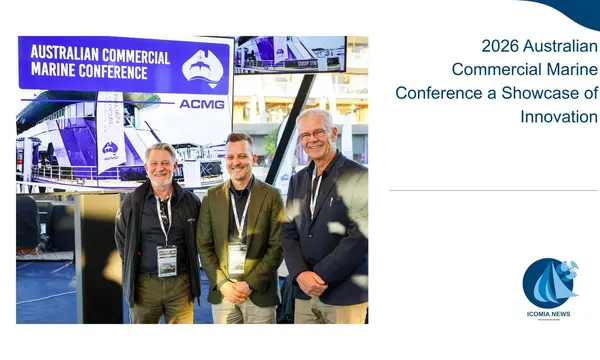
ICOMIA reports the Australian Commercial Marine Conference 2026, with technical presentations on electric propulsion, ventilation, trim systems and marine services.
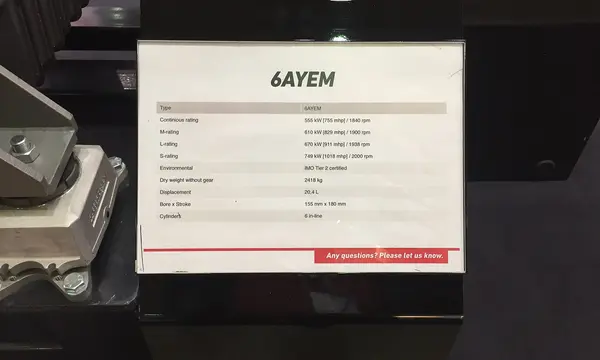
YANMAR has launched the YF12e four-mode hybrid propulsion package for 40–50ft displacement boats, bringing electric operation, diesel power and charging.
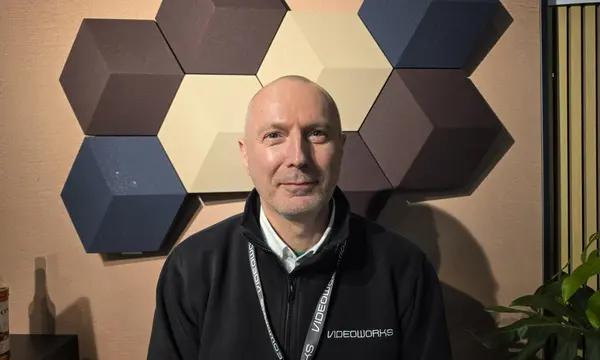
Videoworks’ Paolo Tagliapietra explains Starlink and OneWeb redundancy, varying maritime service permissions, satellite costs and yacht cybersecurity.
Superyacht Guide
Continue into the wider Superyacht Guide.
Business opportunities · Superyacht Guide
Companies serving the superyacht market can discuss clearly identified advertising, sponsorship and business-profile opportunities. Commercial activity remains separate from independent editorial coverage.