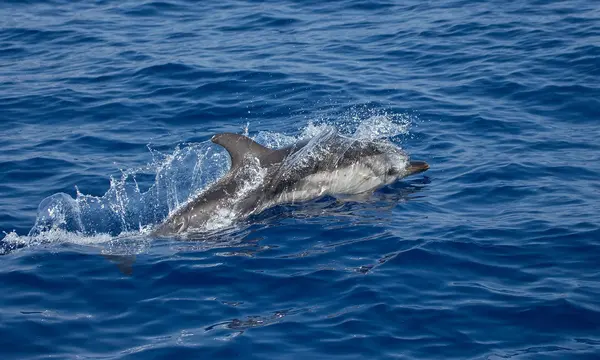
Water Revolution Calls for Whale-Safe Navigation in Mediterranean Yachting
Water Revolution Foundation urges yacht operators to incorporate whale-safe navigation and ecological information into northwestern Mediterranean passage plans.
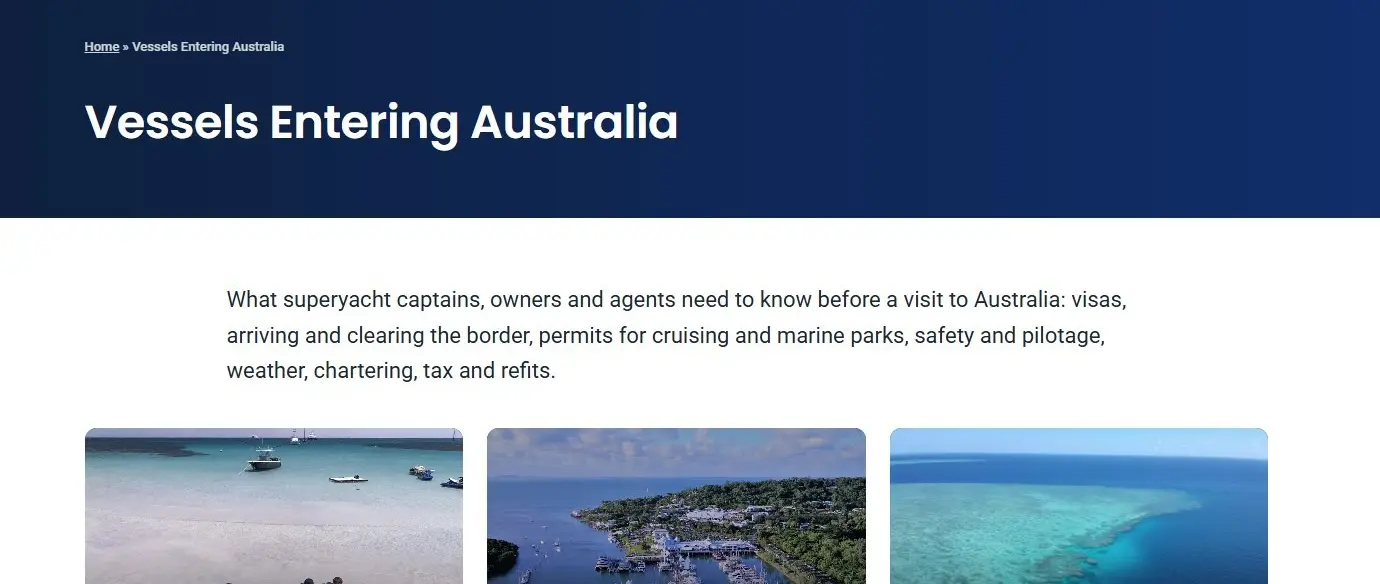
© Australian Marine / Superyacht Australia. Official screenshot of the new 2026 entry-guidance portal, not a photo of a yacht.
Superyacht Australia has expanded its entry and cruising guidance to bring government links, seasonal planning and state-by-state destination information into one national resource.
Superyacht Australia has launched an expanded national information service intended to help owners, captains, agents and yacht managers plan entry into Australian waters. Announced on 24 November 2026 through Australian Marine, the initiative brings topics that can otherwise be spread across many government, commercial and regional websites into a more coherent online guide. Its new Vessels Entering Australia section covers immigration, clearance, taxation, maritime safety, marine parks, pilotage and other matters that affect a yacht's arrival. Separate cruising pages describe destinations across the Australian states and Northern Territory. The announcement is significant precisely because a successful long-range voyage often depends on information that is administrative rather than glamorous. A captain needs the right documents and local procedures long before the owner arrives at the anchorage.
Australia is a large maritime destination with entry requirements administered by more than one authority. A foreign-flag yacht may need to consider border control, customs, immigration, maritime safety and biosecurity, alongside any relevant port or park permissions. These subjects are related, but they are not interchangeable. Clearance at a port is not the same as permission to undertake commercial charter, and a visa question cannot be resolved by checking only a marina's berth availability. The new association resource offers a starting place from which visitors can find the relevant official agencies. It should not be mistaken for a government permit system or an assurance that every yacht will qualify for a requested activity. The benefit is clearer navigation through the questions that need to be answered.
According to the association's launch announcement, the Vessels Entering Australia pages address visas for crew and guests, arrival and border procedures, customs and biosecurity, taxation, charter arrangements, safety and reporting, pilotage, marine park access, seasonal conditions and refit and haul-out options. That breadth is important because different departments within a yacht operation tend to focus on different requirements. A captain may prioritise clearance, a management company may be assessing potential charter structures, and the engineer may need to plan technical services. A central directory can improve coordination among these participants. The underlying obligations still need to be checked against current government instructions, and the published association overview should not replace professional advice for a complicated itinerary or an unusual commercial arrangement.
Superyacht Australia says its resource links to agencies including the Australian Border Force, Australian Maritime Safety Authority and Great Barrier Reef Marine Park Authority. These organisations have different responsibilities. Border and immigration processes are not administered by a regional tourism association; maritime safety has its own regulatory framework; environmental permissions may apply within protected marine areas. It would be misleading to describe Superyacht Australia itself as granting exemptions or clearances. A well-designed portal is valuable because it can direct users to the right official source without pretending to replace it. For international yachts, a practical plan should identify which authority governs each decision and maintain a record of the latest guidance before the vessel commits to a schedule.
The announcement describes cruising guides for every Australian state and the Northern Territory. Destinations named in the programme include the Great Barrier Reef and Whitsundays, Sydney Harbour, Tasmania's wilderness coast, Kangaroo Island, the Kimberley and Arnhem Land. These examples show how widely Australia's appeal extends beyond a single winter or summer circuit. Tropical cruising and southern itineraries can involve very different seasonal considerations, distances and service requirements. The existence of a guide does not mean every location is open for anchoring or every vessel can cruise without additional permission. An itinerary should be built around actual navigation, protected-area rules, weather windows and local availability rather than assuming that an attractive photograph represents an accessible destination.
Because of Australia's size, a yacht cannot responsibly apply one uniform weather assumption across the country. Northern tropical waters, temperate southern ports and remote western coastlines present different operational questions. The new portal includes seasonal planning advice, which can help managers recognise why choosing a cruising region and month needs to come before fixing an entire itinerary. Weather remains variable, and no association website can replace marine forecasts or the judgement of the vessel's command team. Nevertheless, a clear set of regional introductions can expose unrealistic plans at an early stage. This is useful for owners considering an extended visit rather than a short port call, where repositioning, shore-based support and crew rotation can become significant commitments.
Australia has detailed biosecurity controls because the movement of people, food, plants, animals and marine equipment can carry risks to local environments. For a yacht accustomed to moving between jurisdictions, preparation may involve inventories, declaration processes and attention to particular onboard stores. The new guide includes biosecurity among its entry topics, emphasising that successful arrival is not only a matter of passports and port fees. Requirements can change and may depend on the vessel's voyage history and cargo. Nothing in the announcement should be read as a simplified checklist guaranteeing compliance. The prudent approach is to consult the current Australian government sources linked from the portal and confirm specific requirements with authorised advisers before departure.
International yacht owners often ask whether a vessel can undertake charter during a visit to Australia. The association's new guide covers charter and taxation as distinct subjects, reflecting the fact that commercial activity introduces issues beyond ordinary private cruising. A particular yacht's flag, certification, ownership structure, operating arrangements and intended itinerary may affect the answers. Publicity for a destination cannot establish whether a foreign-flag yacht may advertise, embark passengers or receive commercial income under all circumstances. The practical value of a central information service is that it identifies the subject and points toward the relevant legal material. Operators should seek current specialist advice rather than treating any general article, including this one, as definitive tax or maritime-law guidance.
A cruising programme can fail at a practical level even when the paperwork is sound. Berth lengths, draught restrictions, shore power, fuel availability, security and local service capacity influence whether an intended stop is feasible. Superyacht Australia says its expanded cruising pages include information about superyacht marinas, bringing part of that logistical research closer to the destination overview. This can help a captain identify possible gateways and then contact the relevant harbour or marina directly. Availability should never be inferred from a permanent website listing, particularly during events or busy regional seasons. Confirmed reservations, pilotage arrangements and the yacht's operational limits remain separate decisions. Better information helps the preparation process, not the actual vessel handling.
The entry pages also introduce refit and haul-out considerations. This is relevant because an international visit may combine owner cruising with maintenance work, surveys, equipment changes or a planned yard period. A long itinerary can be used strategically to coordinate such work, but the choice of facility depends on vessel dimensions, capability, access and the scope of the project. The association resource may help visitors discover service regions without providing an assurance that every yard can handle a particular superyacht. A responsible project requires direct technical discussion, confirmed capacity and appropriate commercial arrangements. From an industry perspective, easier access to reliable information could benefit Australian support companies as well as visiting vessels.
Australian Marine credits Southern Sky AI with developing the expanded website and says its structure is intended to be accessible to artificial-intelligence search and itinerary-planning tools. This is an interesting operational development because captains and managers increasingly encounter automated summaries while researching unfamiliar jurisdictions. Better structured pages may help information be found, but they do not remove the risk that an automated answer may omit a qualification or rely on outdated material. The association's claim concerns its published design approach, not independent proof that every AI system will reproduce its guidance accurately. Managers should preserve source links and check the original government material, particularly when a decision carries regulatory or financial consequences.
A national portal becomes genuinely useful only if its links, descriptions and procedures remain current. Regulatory websites change, agency forms may be updated and seasonal destination information can become dated. Superyacht Australia says it is committed to keeping the resource current, an important statement of intent rather than a guarantee that every page will be updated at the moment a rule changes. Operators should record the date on which they checked an instruction and confirm critical requirements shortly before entry. Where professional agents are involved, responsibilities for monitoring changes should be clear. In that sense, the new service could improve the quality of questions asked by a visiting yacht, even when final answers still require specialist verification.
The association plans to work with state and regional tourism bodies to expand suggested itineraries in the run-up to the Brisbane 2032 Olympic and Paralympic Games. The reasoning is straightforward: major international events can bring additional interest in cruising, but owners may also want to explore coastlines far from the host city. Better regional content could encourage longer stays and broaden the places that benefit from visiting yachts. That possibility should not be described as a confirmed increase in yacht arrivals, charter bookings or marina revenues. The launch announcement presents a programme of content development, and its actual effects will need to be measured over time. It nonetheless signals a strategic effort to make Australia easier to understand as a cruising destination.
A prudent itinerary process starts by deciding the yacht's intended activity, identifying relevant government agencies, selecting plausible entry points and mapping seasonal and logistical constraints. The new portal can be used as an initial information hub for these tasks, with direct agency sources used for confirmation. Owners benefit when administrative risks are identified early, and captains benefit when destination research is organised around real operating requirements. The resource does not replace charts, local notices, navigational warnings or independent professional advice. It helps create a common reference point for the owner, captain, management company and shore agents. That coordination is particularly useful for a first Australian visit, where unfamiliar rules can create avoidable delays.
The 24 November 2026 announcement from Australian Marine and Superyacht Australia confirms the expansion of the national website, the new Vessels Entering Australia guide, state and territory cruising content and a planned programme of further itineraries. The article's featured image is a screenshot of the new guidance page supplied by the association, not a photograph of a particular visiting superyacht. No unpublished arrival data, berth availability or regulatory exemptions are asserted here. For the wider superyacht industry, the practical significance is that a complex destination is becoming easier to research through an identifiable national starting point, provided the legal and operational details continue to be checked at their source.
Continue reading
Water Revolution Foundation urges yacht operators to incorporate whale-safe navigation and ecological information into northwestern Mediterranean passage plans.
Burgess’s published 2025 Blue Oceans report details marine conservation, Water Revolution Foundation collaboration and training through UKSA and Caribbean Crew.

Burgess publishes new guidance on superyacht sustainability, focusing on energy, waste, lifecycle impacts and crew-led operational changes, with verified.

IDEA Data Solutions confirms new 2026.4.5 yacht-management software functions for crew records, maintenance tasks and shoreside fleet reports.
Superyacht Guide
Continue into the wider Superyacht Guide.
Business opportunities · Superyacht Guide
Companies serving the superyacht market can discuss clearly identified advertising, sponsorship and business-profile opportunities. Commercial activity remains separate from independent editorial coverage.