

Company
Water Revolution Foundation
Explore the company profile and related Superyacht Guide coverage.
Water Revolution Calls for Whale-Safe Navigation in Mediterranean Yachting — licensed SYG News 26Nov batch05
Water Revolution Foundation urges yacht operators to incorporate whale-safe navigation and ecological information into northwestern Mediterranean passage plans.
Water Revolution Foundation is urging closer cooperation between the yachting industry, scientists, conservation groups and authorities to reduce the effects of vessel activity on whales and other cetaceans in the northwestern Mediterranean. In an official 6 November report, the foundation describes its involvement in the ShiPrint project's programme of discussions concerning the Particularly Sensitive Sea Area, or PSSA, designated for cetacean protection. It highlights the role of voyage planning, operational choices and the use of ecological information in improving how yachts travel through waters that are important to marine mammals.
The northwestern Mediterranean is a prominent part of the international yacht cruising circuit, connecting French and Italian coasts with ports used by private and charter vessels. It is also home to a range of marine mammals. Large yachts, commercial ships, fishing vessels and smaller recreational craft may all operate in waters where whales and dolphins travel, feed or surface to breathe.
That overlap creates practical responsibilities for operators. A yacht may be on a carefully scheduled itinerary, yet marine mammals do not follow port booking calendars. A passage plan that considers ecological information can help captains remain alert to areas of concern without presenting the sea as a simple network of fixed zones where animals will always be found.
The foundation took part in events associated with the ShiPrint project, including an introductory webinar and an in-person gathering at the Genoa International Boat Show. The programme brought together people from the yacht industry, scientific organisations, conservation groups and authorities. It sought to explore how boating activities could reduce their effects on cetaceans through responsible navigation and better access to ecological knowledge.
The release describes constructive discussion rather than a final regulation imposed on every yacht. It does not publish a new numerical speed limit for all northwestern Mediterranean cruising or declare that particular yachts have breached the rules. Those distinctions matter when owners and captains use an industry article for operational planning.
A PSSA is a maritime designation used to recognise areas that are especially vulnerable to damage from international shipping activities. The northwestern Mediterranean designation reflects the importance of protecting cetaceans in a region with substantial maritime traffic. But readers should not assume that every form of voluntary guidance discussed by a conservation foundation has automatically become a binding requirement for all vessels.
Captains must review current charts, notices and applicable national and international rules for their actual route. The relevant legal obligations can depend on vessel type, size, location and other factors. The foundation's reporting provides a valuable conservation perspective, but it should be combined with official navigation information rather than treated as a complete legal briefing.
One risk where ships and large marine mammals share water is a collision. A whale may be difficult to see, especially in poor visibility or when it surfaces only briefly. The outcome can be serious for the animal and can also create hazards for a vessel. Collision risk is influenced by several factors, including speed, visibility, local conditions and the opportunity to detect an animal in time.
A careful passage plan can reduce avoidable risk but cannot guarantee that a whale will be visible before every encounter. Operators should maintain an effective lookout and follow the relevant navigation requirements. Any claim that a particular device or procedure completely eliminates the possibility of a strike would require far stronger evidence than the foundation's discussion report provides.
A vessel travelling faster covers more distance while its watchkeepers recognise a hazard and decide what to do. A reduction in speed may improve the time available for observation and response, although its practical effects depend on the vessel and conditions. The foundation emphasises responsible navigation without presenting a single new compulsory speed figure for every yacht.
Captains need to judge conditions using professional seamanship and current local instructions. Unnecessary manoeuvres can themselves create risk, so decisions near marine mammals should prioritise safe control of the vessel and the protection of people and wildlife. Advice from competent authorities and recognised conservation organisations may support these decisions where relevant.
Modern yachts can have advanced radar, cameras and electronic systems, but watchkeeping is still fundamental. Marine mammals do not always present a consistent radar target, and technology cannot be assumed to identify every animal. The bridge team should be aware that ordinary navigation may require added vigilance when travelling through a region important to cetaceans.
Lookout arrangements should be realistic for the yacht's crew complement and passage programme. Long transits, night operations and changing weather can increase workload. An owner who asks for a demanding itinerary should understand that safety and wildlife considerations may require flexibility rather than a fixed arrival time regardless of conditions.
Water Revolution Foundation identifies the greater use of ecological information as part of the practical response. Data about species distribution, seasonal patterns or recent sightings can help crews understand where heightened attention may be appropriate. Scientific information is often probabilistic, however, rather than a guarantee that animals will or will not be present at a particular coordinate.
Voyage planning tools should clearly identify the source and freshness of their information. A map based on historical observations may help explain an area's importance but may not reflect a specific day's wildlife activity. Captains should therefore combine scientific context with real-time observations and official navigation data rather than relying on one display alone.
The foundation's report highlights the inclusion of whale-safe navigation in charter programmes as well as general voyage planning. Charter clients often choose a sequence of ports and anchorages before joining their yacht, but the captain may need discretion to alter speed or route when conditions warrant. Clear communication between broker, manager and crew can help manage expectations before a change becomes urgent.
A sensible itinerary gives the vessel enough time to operate safely. It should not reward unnecessary high-speed running through sensitive areas merely to preserve a social appointment. Owners and guests may respond positively to an explanation grounded in safety and environmental care, particularly when any changes are communicated early and professionally.
Researchers can provide evidence about cetacean behaviour, habitat and threats that the yachting industry may not possess internally. Conservation organisations may also help identify public information suitable for operators. Effective cooperation requires scientific findings to be translated into clear guidance that a bridge team can use without replacing professional judgement.
The quality of this translation matters. A captain needs actionable, current information, not an overly technical dataset without context. Researchers likewise need to know how yachts actually operate and what limitations their crews face. The foundation's involvement in cross-sector discussions is intended to help bridge these perspectives.
Water Revolution Foundation emphasises voluntary, evidence-led measures alongside the broader framework for cetacean protection. Companies can choose to train crew, review passage-planning procedures or support recognised conservation initiatives. Such decisions may be valuable without being compulsory in every jurisdiction.
At the same time, operators must not use voluntary programmes as a reason to ignore binding rules. Formal restrictions and maritime notices take precedence wherever they apply. A responsible management system distinguishes legislation, harbour directions, flag-state requirements and optional best practice. That distinction is especially important when yachts operate across multiple countries.
A written policy is useful only if the people responsible for navigation understand it. Training might cover why certain waters are sensitive, how to record sightings and who should be contacted when unusual events occur. These matters should be integrated with existing navigational procedures rather than create a separate process that distracts watchkeepers during an emergency.
Training also needs to be refreshed. Crew members move between yachts and operating areas, and information about ecological programmes can evolve. A captain may want a concise resource that can be reviewed during passage planning and discussed at bridge briefings. The foundation's discussions suggest opportunities to improve this kind of communication.
Yachts may encounter whales and dolphins during ordinary passages. Observations can be valuable when recorded accurately, but a casual sighting is not equivalent to a scientific survey. If a vessel participates in an approved reporting programme, crew should follow the project's instructions concerning location, species identification and data quality.
Owners may also wish to understand how positional information is shared. Publicly broadcasting a yacht's exact location or a vulnerable animal's position without considering privacy and conservation implications may be unhelpful. Collaboration should be structured through credible programmes with clear purposes and responsible data handling.
The effects of yachting on cetaceans are not limited to collision risk. Vessel activity can produce underwater sound and other forms of disturbance. The consequences vary by animal, environment and operating pattern, and the 6 November foundation statement does not quantify impacts attributable to individual yachts or announce a new acoustic standard.
Owners evaluating quieter propulsion or operating practices should request evidence suited to their vessel. Some technologies may reduce noise under particular conditions without eliminating it altogether. A conservation programme is strongest when it avoids claiming universal benefits and instead focuses on changes that can be documented and reviewed.
A yacht management company can help translate environmental guidance into operational procedures used across a fleet. It might provide reliable information sources, crew briefings and a framework for reporting relevant events. But the approach should respect the command responsibility of each captain and the operational characteristics of the specific yacht.
A uniform policy may need local adaptation. Vessels differ in speed, manoeuvrability, cruising area and crew capacity. Managers should avoid imposing a procedure that conflicts with safety or a binding authority's instructions. The purpose is to support better decisions, not produce a public sustainability claim unsupported by actual practice.
If the sector adopts better passage-planning and awareness measures, evaluating their effectiveness will require appropriate evidence. Number of workshops attended, crew trained or policies distributed can be useful indicators of participation, but they are not direct measures of reduced whale mortality. Ecological outcomes are influenced by many vessels and environmental factors.
Long-term collaboration with researchers and authorities may help define meaningful indicators. The foundation's report does not claim that the discussion series has already delivered a specified reduction in collisions. News reporting should preserve that limitation while acknowledging the practical importance of bringing operators and conservation specialists together.
Yacht owners, charter guests and marine businesses benefit from cruising destinations with healthy ecosystems. That commercial interest can support conservation, but environmental protection should not be reduced to a marketing theme. The value of a whale-safe approach lies in changes to behaviour and decisions that can be explained and, where possible, evaluated.
Owners can support professional captains by accepting reasonable itinerary changes and investing in suitable training and information. Suppliers may help through responsible technology development, while scientific organisations provide guidance on ecological risks. No one participant can address every cause of pressure on cetaceans.
The verified development is Water Revolution Foundation's participation in the ShiPrint project discussions on protecting cetaceans in the northwestern Mediterranean PSSA, reported on 6 November 2026. Vienna Eleuteri represented the foundation and emphasised incorporating whale-safe navigation into voyage planning and charter programmes. The programme highlighted voluntary, collaborative and evidence-led action across the yachting sector.
For superyacht captains and managers, the key takeaway is operational rather than promotional: use sound navigation practices, consult current official requirements, remain alert to marine mammals and integrate reliable ecological information where appropriate. The foundation has identified opportunities for cooperation, but results and any future regulatory changes must be reported when they are actually documented.
Primary source: Water Revolution Foundation official ShiPrint / NW Mediterranean PSSA report dated 6 November 2026.
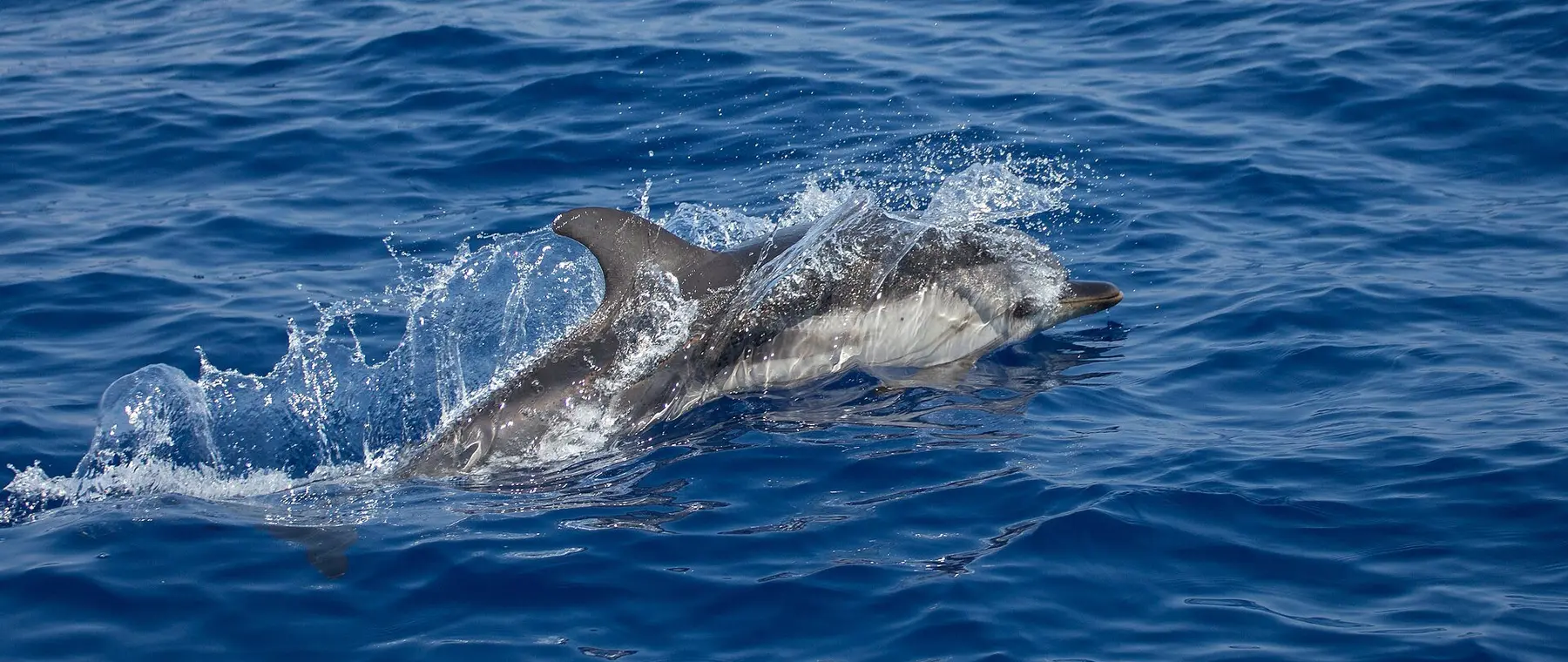
Licensed archival Mediterranean dolphin photograph, not an event image Photo: Francesca Grossi; CC BY 4.0 via Wikimedia Commons. Official source.
Explore
Go deeper into the yachts, companies, events and destinations directly connected to this article.
Company
Explore the company profile and related Superyacht Guide coverage.
Continue reading
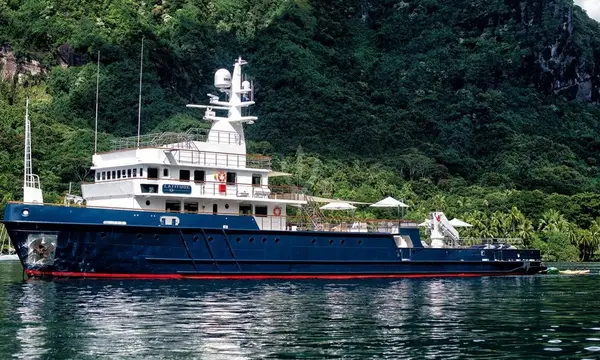
The 54.7m BUCCARA LATITUDE has been photographed in Germany’s Kiel Canal while sailing westward, highlighting a 1973 commercial vessel converted into an explorer yacht.
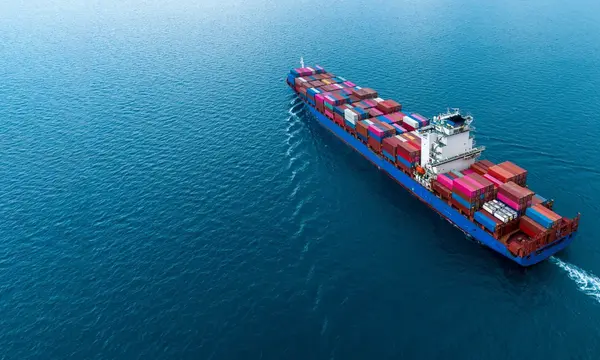
The S-100 navigation transition is not just a chart-data upgrade: Teledyne Raymarine Commercial says bridge teams and shore managers must plan workflows, training and …
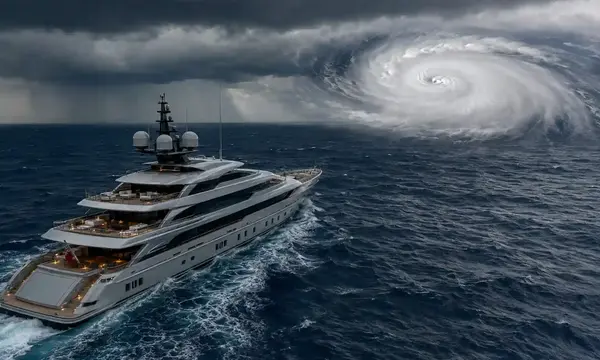
A large, ocean-going superyacht may be capable of surviving extreme tropical-cyclone conditions, but professional hurricane strategy is built around avoidance rather than proving structural …
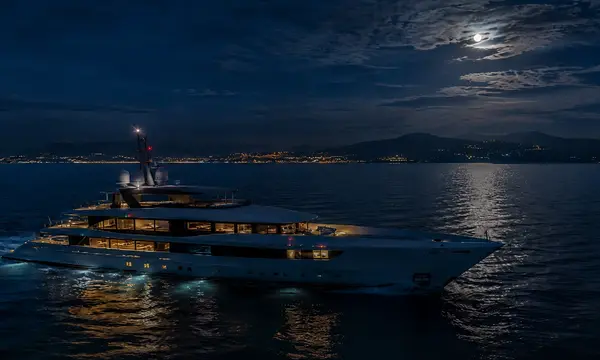
While guests sleep through an overnight passage, bridge and engineering teams remain fully engaged. Watchkeeping, machinery monitoring, fatigue control and arrival planning make the …
Superyacht Guide
Continue into the wider Superyacht Guide.
Business opportunities · Superyacht Guide
Companies serving the superyacht market can discuss clearly identified advertising, sponsorship and business-profile opportunities. Commercial activity remains separate from independent editorial coverage.