Company
Pantaenius Yacht Insurance
Explore the company profile and related Superyacht Guide coverage.

Superyacht insurance premiums are individually underwritten rather than set by a universal percentage. We explain hull, liability, claims, deductibles and war-risk cover.
Superyacht insurance is not a single fixed-price product, and there is no reliable universal percentage that can be applied to every yacht. Premiums are individually underwritten around the yacht’s value, age, construction, flag, cruising area, claims record, management, crew, intended use and the limits and deductibles selected, so two yachts of similar length can attract materially different terms.
The core package normally combines hull and machinery cover with third-party liability, while specialist programmes may add crew liabilities, tenders, toys, pollution, legal expenses, cyber, kidnap and ransom or war-related cover. Owners should therefore compare the scope of protection as carefully as the headline premium, because a cheaper policy can be expensive if exclusions, sub-limits or deductibles leave important risks outside the contract.
Underwriters begin with the insured value and the physical risk represented by the yacht, but they also look closely at where and how the yacht will operate. A vessel trading commercially, crossing oceans, carrying high-value tenders or helicopters, visiting hurricane zones or cruising politically unstable waters presents a different exposure from a privately used yacht operating seasonally in a familiar Mediterranean programme.
Age and maintenance history matter because machinery, electrical systems, fire protection, class status and survey findings influence the probability and severity of loss. A well-documented refit, experienced management team and strong maintenance record can help an owner demonstrate control of risk, while deferred maintenance, repeated incidents or incomplete survey recommendations can make insurers more cautious.
Crew quality is part of underwriting as well, particularly on large yachts where navigation, engineering, tender operations and guest activities create complex operational risk. Insurers may review captain experience, manning levels, training, safety management and loss history before offering terms, and unusual cruising or technical arrangements can trigger additional questions or conditions.
Hull insurance responds to accidental physical loss or damage to the yacht subject to the policy wording, exclusions and deductible, while machinery cover extends that protection to insured mechanical and electrical damage where the policy allows it. Marsh’s yacht insurance guidance identifies common loss causes including grounding, collision, fire, explosion, heavy-weather damage, theft and accidental damage, while ordinary wear and tear and inherent vice are typically excluded.
Liability or protection-and-indemnity style cover addresses legal liabilities to third parties, including bodily injury, loss of life, pollution and damage to third-party property. Limits need to reflect the yacht’s operating profile and the requirements of marinas, flag states, charter contracts and other counterparties, because an apparently generous hull limit does not replace adequate liability protection.
Agreed-value wording can be important on large yachts because it establishes the insured value used for a total loss, reducing uncertainty about valuation after a casualty. Owners should still keep the insured figure under review after major refits, purchases, market changes or significant equipment additions, since underinsurance and overinsurance can both create problems when a claim is adjusted.
A strong claims process begins before a casualty by keeping policy documents, surveys, inventories, valuation evidence and emergency contacts accessible to the captain and management team. If an incident occurs, the immediate priorities remain safety, pollution prevention and preventing further damage, followed by prompt notification to the broker or insurer and preservation of evidence.
Marsh advises policyholders to report incidents promptly, record the exact location, time, nature of the loss, photographs, third-party details and a preliminary damage estimate where possible. Owners and captains should also avoid admitting liability to another party without insurer approval and should preserve rights of recovery, because careless statements or delayed reporting can complicate an otherwise valid claim.
Surveyors and adjusters may be appointed to inspect damage, approve repair methods and establish the reasonable cost of reinstatement, while complex machinery, fire or grounding claims can involve class, flag, manufacturers and specialist investigators. The practical value of an experienced yacht insurance broker often becomes clearest at this stage, because the broker can coordinate information, challenge misunderstandings and help move the adjustment toward settlement.
Standard yacht policies commonly contain exclusions or restrictions for war, terrorism, confiscation and related political perils, which is why dedicated war-risk cover may be required for certain programmes. Pantaenius, for example, publishes a separate yacht war, strike and confiscation product, illustrating that these exposures are treated differently from ordinary marine hull risks and can have their own cancellation and territorial provisions.
War-risk pricing can move quickly when geopolitical conditions change, and insurers can impose listed-area restrictions, additional premiums, notice requirements or voyage-specific approval. Lloyd’s highlighted this dynamic in June 2026 when a new marine war-risk consortium was launched to provide additional capacity for vessels and cargo transiting the Strait of Hormuz, with cover still subject to individual underwriting, sanctions screening and regulatory restrictions.
For a superyacht owner, the lesson is that an insurance certificate should not be treated as a blanket permission to cruise anywhere. Before entering a listed or deteriorating risk area, the captain and manager should confirm the policy position in writing, establish whether an additional premium is payable, check cancellation clauses and make sure sanctions or flag restrictions do not prevent cover from responding.
The annual premium is only one part of the economic cost, because deductibles, uninsured losses, survey requirements, lay-up conditions and excluded activities can shift significant risk back to the owner. A lower premium with a very high machinery deductible or narrow navigation limits may be less attractive than a more expensive policy that matches the yacht’s actual programme.
Owners should also budget for risk-control work that insurers may require, such as surveys, fire-system servicing, cyber controls, security measures or hurricane plans. Those expenses are not wasted insurance costs; they can reduce the chance of a casualty, improve operational discipline and make the yacht easier to insure at renewal.
The sensible approach is therefore to obtain specialist quotations against a clear operating brief rather than ask for a generic percentage of yacht value. A broker should be able to explain what is insured, what is excluded, how deductibles work, which cruising areas require notice and how the insurer has handled significant yacht claims, allowing the owner to judge protection and price together.
Explore
Go deeper into the yachts, companies, events and destinations directly connected to this article.
Company
Explore the company profile and related Superyacht Guide coverage.
Continue reading

Pantaenius will reduce the deductible by 50% on qualifying collision, grounding or stranding claims when a professionally installed continuous anchor-monitoring system is operating.

A superyacht can function as a full-time home, but continuous living changes crew, maintenance, berthing and operating requirements. We examine the practical and financial …
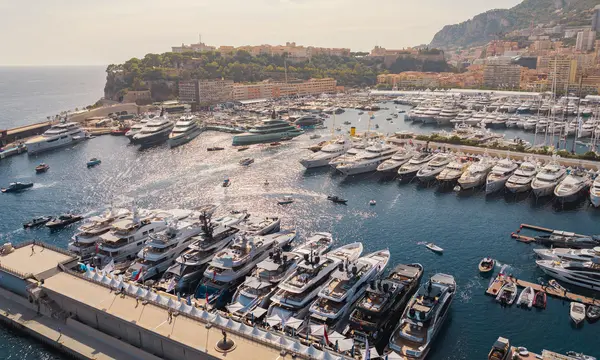
Official 2026 Port Hercule rates show how Monaco berthing scales with yacht length and season. The berth is only one part of a much …

Chartering and ownership can look surprisingly close once annual use rises, but the headline comparison hides major capital costs. Superyacht Guide models a representative …
Superyacht Guide
Continue into the wider Superyacht Guide.