Teignbridge Adjustable-Pitch Propeller Shares 2026 DAME Overall Award
By Superyacht Guide Newsroom · Edited by Superyacht Guide Newsroom
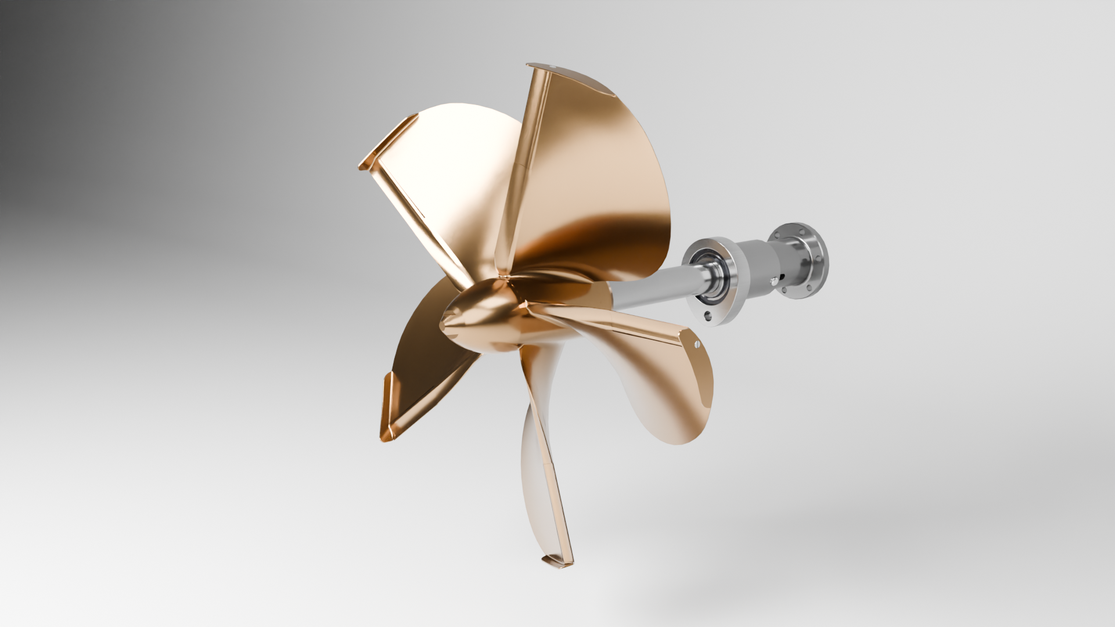
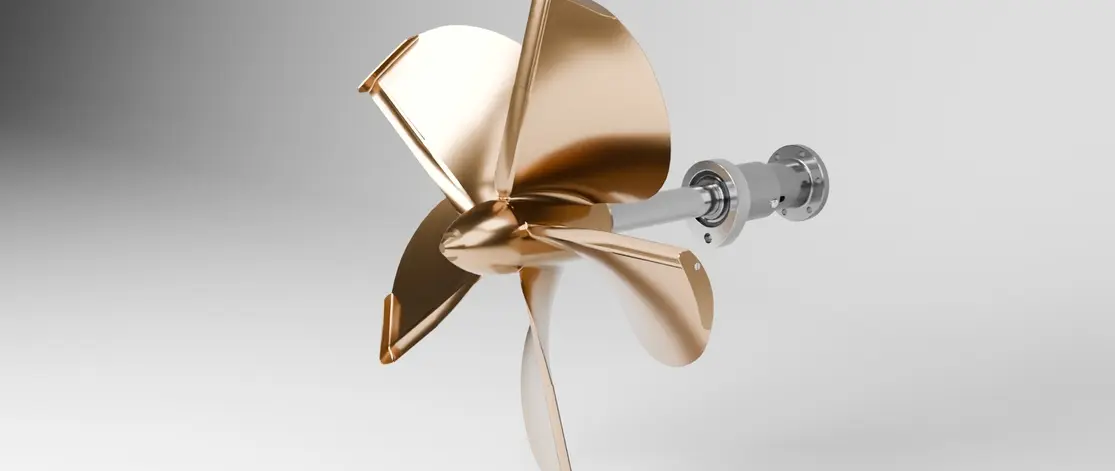
Teignbridge T-CPP full assembly official METSTRADE exhibitor rendering November 2026
Teignbridge's T-CPP is listed among the 2026 DAME overall winners and wins Propulsion and Dynamics, highlighting a different approach to adjusting propeller pitch.
The official DAME Design Awards results for 2026 name the Teignbridge Controllable Pitch Propeller, or T-CPP, among the overall winners. The same entry appears as the winner of the Propulsion and Dynamics category. The recognition comes during METSTRADE in Amsterdam, where the manufacturer is exhibiting in the specialist superyacht area. The award concerns a new approach to adjusting the characteristics of a marine propeller to changing operating conditions. It is relevant to the superyacht sector because the British manufacturer develops bespoke propulsion systems for large leisure craft, as well as equipment for commercial and other maritime applications. The award itself is recognition from a design competition rather than approval of the equipment for installation on a particular yacht. Neither the results page nor the manufacturer's submitted product description establishes that a specific superyacht is already operating with the new design.
A conventional fixed-pitch propeller has blades with geometry selected to deliver an appropriate relationship between shaft rotation, thrust and the anticipated hydraulic conditions around the hull. That geometry remains unchanged during operation. Naval architects and propulsion specialists must choose an arrangement that can perform satisfactorily across the conditions anticipated for the vessel, but those conditions rarely remain identical throughout its working life. A motor yacht travelling with full fuel tanks may displace more water than it does toward the end of a long passage. Wind, sea state and marine growth can also alter resistance or affect the relationship between shaft speed and vessel speed. A propeller selected for one operating point may therefore function differently when the yacht operates at another. This is one reason why propulsion trials and fuel-consumption information should be interpreted in the context of the displacement, loading and environmental conditions under which the measurements were obtained.
Controllable-pitch propulsion allows the effective pitch of a propeller to be changed during use. The potential attraction is the ability to alter the way the propeller interacts with the water without relying solely on a change in speed of the shaft. Existing variable-pitch arrangements have long been used in different sectors of shipping. Teignbridge's description of its new concept specifically refers to moving sections at the trailing edges of the blades, rather than presenting it merely as another conventional assembly. The company compares the principle to the change in lift produced through adjustments to an aircraft wing. Its submission also describes the possibility of automated control. The published description does not set out the complete mechanical arrangement, the intended range of shaft powers or the conditions under which the system can be deployed. Those details would be essential to an assessment of suitability for an individual superyacht or propulsion package.
In its official exhibition catalogue entry, Teignbridge states that improvements of more than twenty percent in fuel saving and efficiency can be achieved relative to a fixed-pitch propeller. This is the manufacturer's reported claim, not a verified performance result for a nominated yacht. The release does not specify the baseline vessel, loading, speed, sea state, measurement procedure or duration of the trial from which the figure is derived. These omissions matter because the benefit of adjusting pitch will depend on the characteristics of both the reference arrangement and the vessel being evaluated. A well-designed fixed-pitch propeller working close to its intended operating point may offer a different basis for comparison from an older propeller used far from its optimum conditions. An engineering team should request supporting data and establish whether the comparison applies to the operating profile envisaged for the yacht. The award is noteworthy without converting a promotional efficiency figure into a universal promise.
Superyachts may operate in materially different ways over the course of a season. One owner might make frequent short trips between neighbouring ports at moderate speed, while another might request long passages between distant cruising grounds. Other vessels spend extended periods at anchor or travel at relatively high speed for limited periods. The appropriate propulsion specification depends on the distribution of time spent in these different operating conditions. A design that improves efficiency within one part of that distribution may have less influence on total fuel use if the vessel rarely operates there. When assessing a proposed adjustable-pitch arrangement, an owner or naval architect should establish the typical and extreme operating points for the yacht, together with the limitations of its machinery. A comparative assessment can then consider the likely effect on the actual cruising programme rather than concentrating only on a single advertised performance figure.
A propeller is only one element within a vessel's propulsion system. Engine characteristics, gearing, shaftline geometry and the flow of water around the hull contribute to its behaviour. A pitch-adjustment mechanism introduces additional elements that need to work within the limits of the associated machinery. For an existing yacht, the assessment must account for the physical space and interfaces available in the present installation. For a new build, there may be greater flexibility in selecting the accompanying equipment and incorporating the control system into the engineering design. The relevant parties should establish which manufacturer is responsible for each part of the integrated arrangement and how the complete system is to be tested. Teignbridge's current catalogue submission is not a detailed integration specification. In particular, its recognition at DAME should not be read as confirmation that the product can replace an existing fixed-pitch propeller without additional design work.
A superyacht propulsion arrangement must frequently meet demanding expectations concerning noise and vibration. These characteristics are influenced by the interaction between the propeller and the surrounding flow, by the shaftline and its supports, and by the way machinery vibration is transmitted through the vessel. Variable propeller characteristics could provide additional options during operation, but the actual acoustic outcome would have to be measured for a specified design and installation. An engineering evaluation should also consider how the adjustable sections can be examined, maintained and repaired. Exposure to marine growth, corrosion and accidental damage is an established concern for underwater propulsion equipment. Moving elements introduce further questions about their materials, service intervals and behaviour following a fault. The official exhibition entry does not provide enough information to quantify these requirements. Service arrangements and the availability of spare components are therefore important subjects for prospective users to address directly with the manufacturer.
The DAME results identify multiple overall winning entries in 2026. Teignbridge's propulsion design is listed alongside a Garmin communications product and a Scanstrut navigation light. The T-CPP also received the category-level recognition for propulsion and dynamics. This distinction should be understood in the context of a wide-ranging marine equipment design competition: the award does not imply that the different products perform comparable functions. A propeller that receives recognition for an innovative approach can attract the attention of engineering teams looking for alternatives to existing systems. The next stage of any commercial evaluation is to examine the detailed engineering evidence and the product's suitability for a particular application. Classification and any other applicable approvals must be addressed separately. Participation in competitions and exhibitions is useful for identifying promising technical developments, but final equipment selection requires information tailored to the vessel and its intended operation.
The T-CPP represents a potentially interesting direction for a sector in which yachts can move between widely differing operating conditions. Prospective users should seek details of the adjustments available, the mechanical and control arrangements, and any operational limitations set by the manufacturer. They should also request sufficient evidence to compare the design with other solutions against a realistic operating profile, and to assess the implications of future maintenance. Owners considering changes to an established propulsion package should involve the appropriate naval architect, engineering specialists and classification representatives before committing to any installation. Teignbridge's inclusion among the 2026 overall DAME award winners provides a verified news development, and the exhibitor's technical description explains the particular design principle that has drawn attention. The award marks recognition of the product concept rather than proof of quantified savings for the superyacht fleet as a whole.
Primary source: Teignbridge's official exhibitor-submitted T-CPP specification.
Further official information: DAME Design Awards official 2026 winners results.
Image: Teignbridge Propellers, official METSTRADE exhibitor-submitted T-CPP assembly illustration. Official source.
Image: Teignbridge Propellers, official METSTRADE exhibitor-submitted T-CPP assembly illustration.
Explore
Go deeper into the yachts, companies, events and destinations directly connected to this article.
Continue reading
AquaPrime will preview its new watermaker control platform at METSTRADE, with touchscreen monitoring and diagnostic features under development for yacht crews.

Vulkan Italia will present its 200kW H1000 parallel-hybrid module for marine diesel engines rated 500–1,500kW during METSTRADE's Next Gen showcase.
Pearl Yachts’ 30m Pearl 100 Hybrid makes its world debut at Fort Lauderdale with twin-shaft hybrid propulsion, five cabins and two full-beam suites.

Northrop & Johnson has profiled StarEDGE's approach to superyacht communications, including multi-orbit satellite links, mobile networks and a dashboard for yacht managers.
Superyacht Guide
Continue into the wider Superyacht Guide.
Business opportunities · Superyacht Guide
Companies serving the superyacht market can discuss clearly identified advertising, sponsorship and business-profile opportunities. Commercial activity remains separate from independent editorial coverage.