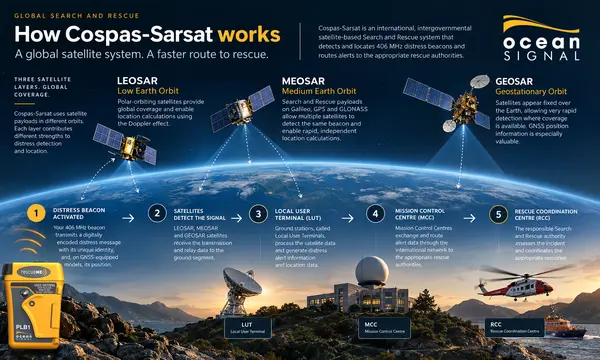
Ocean Signal Explains How 406MHz EPIRB Alerts Reach Rescue Authorities
Ocean Signal has published a current guide to the Cospas-Sarsat chain that carries 406MHz EPIRB distress alerts from a vessel to rescue coordination authorities.
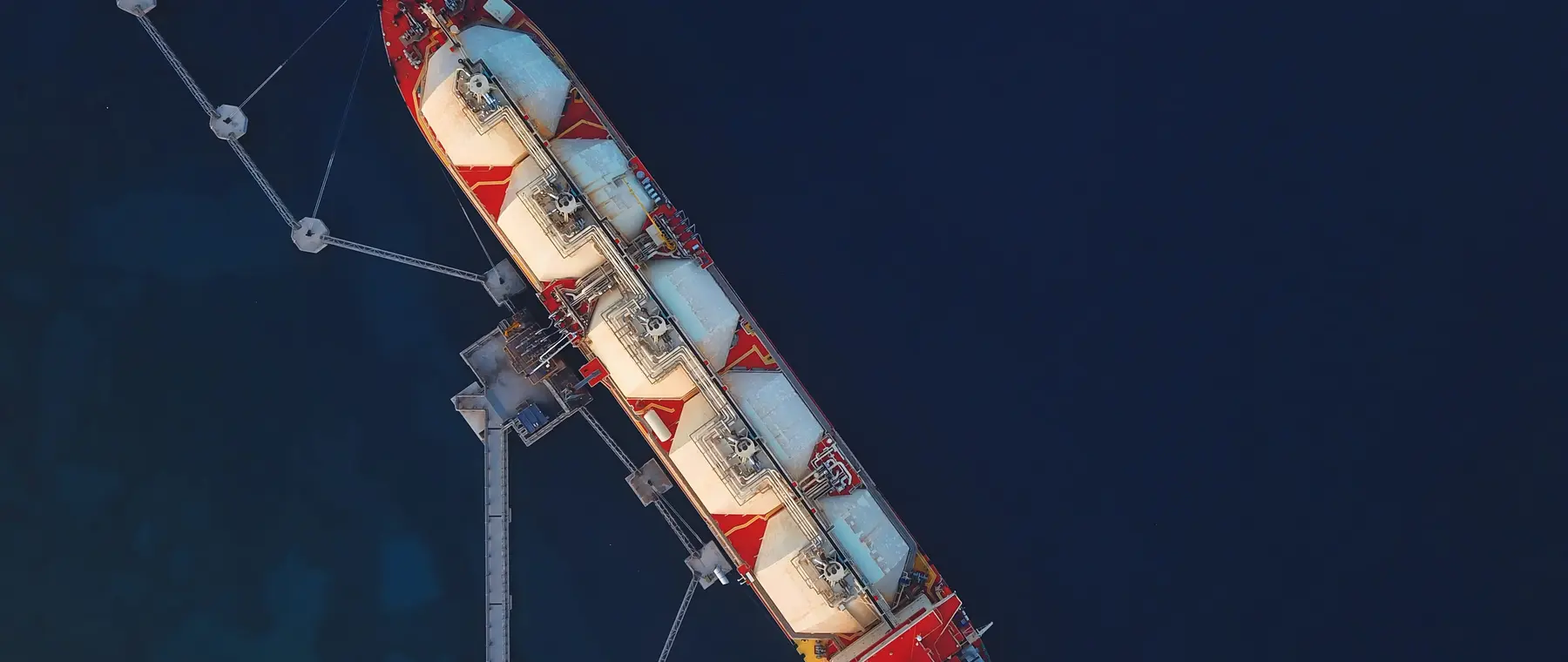
Trelleborg and Simwave are rolling out equipment-specific training for LNG and emerging alternative-fuel transfer operations as marine fuel systems become more complex.
Trelleborg Marine & Infrastructure and maritime training specialist Simwave have expanded their partnership with a new programme focused on the safe operation and maintenance of fuel-transfer equipment. The first modules are being introduced at Gastech 2026 in Bangkok as LNG bunkering grows and methanol, ammonia and hydrogen create additional handling challenges for marine crews.
The programme is aimed at the wider maritime industry rather than superyachts alone, but the competency issue is directly relevant to large yachts as alternative fuels and more complex bunkering arrangements move from concept studies into real vessel projects. New technology in the machinery room ultimately has to be operated safely by engineers and deck teams under real-world turnaround pressures.
The initial e-learning modules cover characteristics and handling of LNG composite hoses, visual inspection procedures, Trelleborg's Universal Safety Link and servicing procedures for Cryo DC tank-end units. Each module concludes with a certificate of completion, creating a structured route for equipment-specific familiarisation.
Trelleborg says the curriculum will expand to routine and emergency scenarios across cryogenic hoses, safety links, ship-to-shore links and emergency-release systems. That focus is significant because transfer safety depends on the complete interface between two independently operated assets, not simply the fuel tank or hose considered in isolation.
LNG, methanol, ammonia and hydrogen have very different physical properties and risk profiles. Cryogenic temperatures, toxicity, flammability, pressure and emergency isolation requirements mean that procedures suitable for conventional diesel bunkering cannot simply be carried across unchanged.
Superyachts adopting new fuels will therefore need competency development to advance alongside hardware installation. Even where a yacht uses conventional diesel for main propulsion, support vessels, future refits or operations alongside alternative-fuel infrastructure can expose crew to unfamiliar transfer systems and procedures.
The partners say later training will include emergency scenarios as well as routine operations. Understanding when and how an emergency-release or shutdown system activates is essential because the transfer interface has to protect personnel, the vessel and shore installation if communications, pressure control or physical connection is compromised.
Standardised training can also reduce variation between crew rotations. Large yachts frequently operate with multinational teams and specialist contractors, so documenting equipment-specific competence can support safer handovers and give technical managers a clearer view of who has been trained on a particular system.
Much of the discussion around lower-carbon yacht propulsion focuses on engines, batteries, fuel cells and storage tanks. Trelleborg and Simwave's initiative highlights the parallel human requirement: crews must understand the interfaces, inspections and emergency procedures that make those technologies practical to operate.
For yacht designers and managers, training requirements should therefore be considered during specification rather than after delivery. As alternative fuels diversify, safe operation will depend as much on repeatable crew competence and procedures as on the engineering hardware installed aboard the vessel.
Continue reading
Ocean Signal has published a current guide to the Cospas-Sarsat chain that carries 406MHz EPIRB distress alerts from a vessel to rescue coordination authorities.

Inmarsat Maritime has launched a safety-data platform combining three years of GMDSS distress information with 106,975 maritime safety broadcasts from 2025.
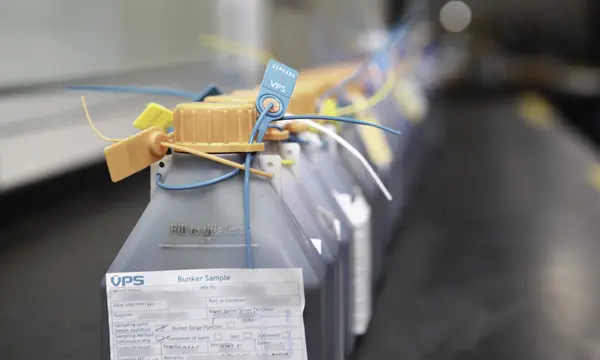
VPS has launched SampLogic 2.0 to modernise worldwide collection and tracking of marine fuel samples on their way from vessels and ports to laboratories.
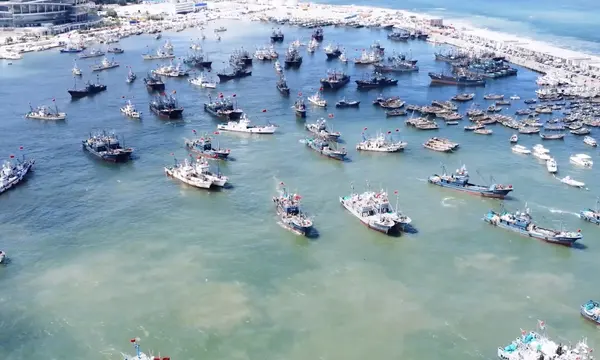
Gard says half of 65 fishing-vessel collision claims occurred in Chinese waters, with speed, lookout and over-reliance on electronics among recurring risks.
Superyacht Guide
Continue into the wider Superyacht Guide.