U-Boat Worx Completes Super Sub Trials Ahead of First Client Delivery
By Stephen Yardley · Edited by Stephen Yardley
U-Boat Worx has completed Curaçao sea trials of its Super Sub and confirmed first-client delivery, with a 300m operating depth and nine-knot top speed.
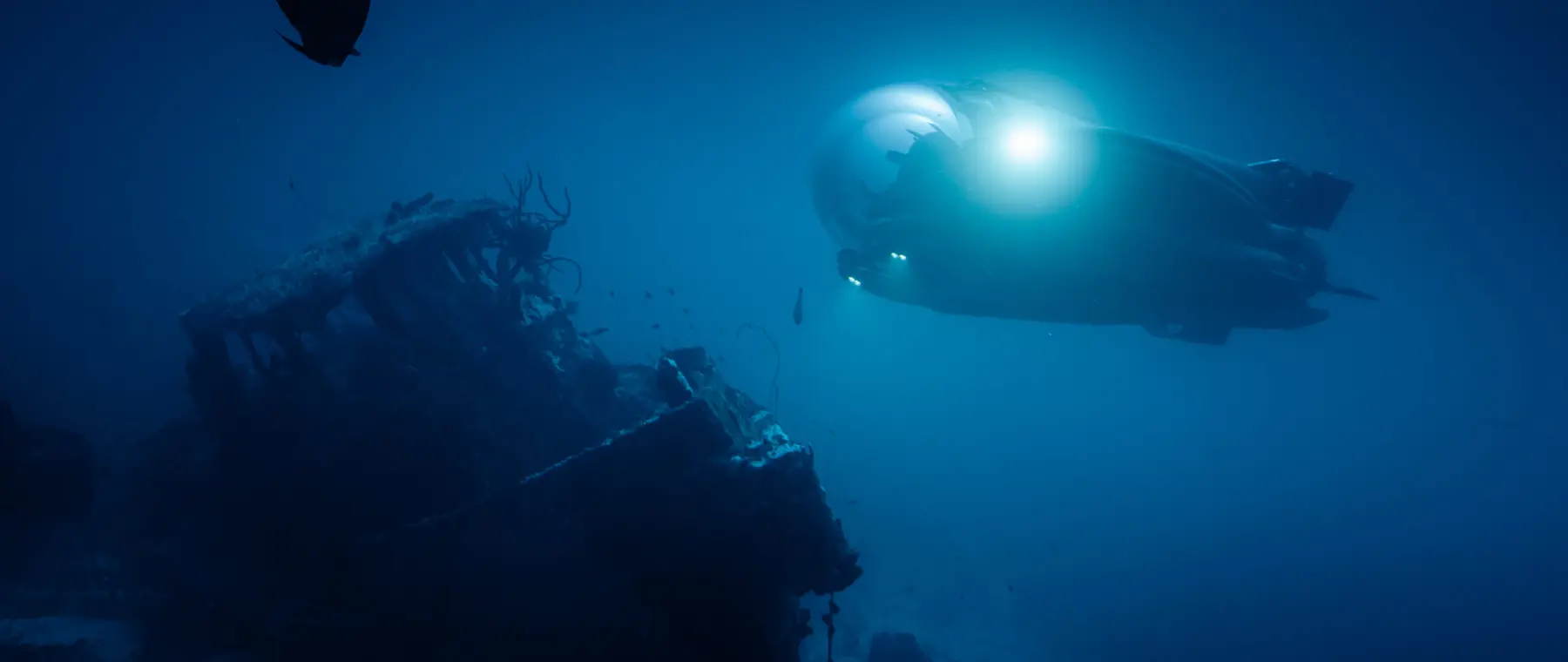
U-Boat Worx has completed the sea-trial programme for its Super Sub off Curaçao and says the three-person private submersible is ready for delivery to its first client. The testing confirmed a 300-metre operating depth, 100 kW of horizontal thrust and a quoted top speed of nine knots.
The project is directly relevant to explorer-yacht design because submersibles are becoming increasingly capable payloads rather than slow observation capsules. Their speed, charging requirements, launch weight, maintenance footprint and pilot-training needs all influence how a mothership has to be engineered around them.
U-Boat Worx says the Super Sub uses four proprietary thrusters with a combined horizontal output of 100 kW. The hydrodynamic hull and wing configuration allow the submersible to make steep climbs and descents of up to 45 degrees, creating a more aircraft-like operating profile underwater.
A nine-knot top speed is unusually high for a private manned submersible, where endurance and observation have traditionally mattered more than rapid transit. Higher speed expands the area that can be explored during a dive but also increases the importance of pilot training and obstacle awareness.
The 300-metre operating depth takes the Super Sub far below recreational diving limits and into a zone where sunlight, temperature and pressure change dramatically. U-Boat Worx quotes a range of up to ten nautical miles, giving the craft meaningful mobility once deployed from its support vessel.
Two passengers and one pilot sit beneath a panoramic acrylic pressure hull with five-point harnesses. The seating arrangement reflects the dynamic manoeuvring capability, while the transparent hull is intended to provide near-continuous outward visibility during exploration.
For a yacht, carrying a submersible involves far more than finding deck space. Launch and recovery equipment, charging, spares, maintenance access, certification, pilot competence and emergency procedures all have to be integrated into the vessel's operating system.
A faster and more powerful sub can increase those demands because the support equipment must handle the craft safely in real sea conditions. Weight distribution and crane outreach can influence the yacht's stability and deck structure long before the sub ever enters the water.
The Curaçao programme is significant because it moves the Super Sub beyond renderings and factory specifications into demonstrated operation before client handover. U-Boat Worx says performance runs, manoeuvrability trials and safety verification were part of the campaign.
For explorer-yacht owners, the appeal is obvious: greater speed and manoeuvrability can turn a submersible into a genuine exploration vehicle rather than a short-range attraction. The engineering challenge is ensuring the yacht, crew and launch systems are equally ready for that capability.
Explore
Go deeper into the yachts, companies, events and destinations directly connected to this article.
Continue reading
Marine Results International has become a RINA Approved Service Supplier for mast and rigging surveys with no restriction on yacht size or rig type, …
Where Is the Best Place to Buy a Superyacht? There is no single best country or boat show for every buyer: the strongest market …
What Paperwork Do You Need When Buying a Superyacht? A superyacht acquisition requires far more than a bill of sale: buyers normally need a …
What Is a Superyacht Sea Trial? A superyacht sea trial is the buyer’s opportunity to observe the yacht operating underway before contractual acceptance, testing …
Superyacht Guide
Continue into the wider Superyacht Guide.