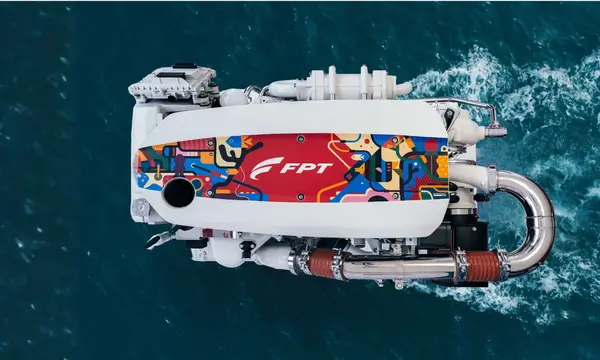
FPT Marine Joins Confindustria Nautica as Demand for Yacht Propulsion Grows
FPT, part of Iveco Group, joins Italy's Confindustria Nautica to strengthen relationships with yachtbuilders as interest in marine propulsion systems grows.
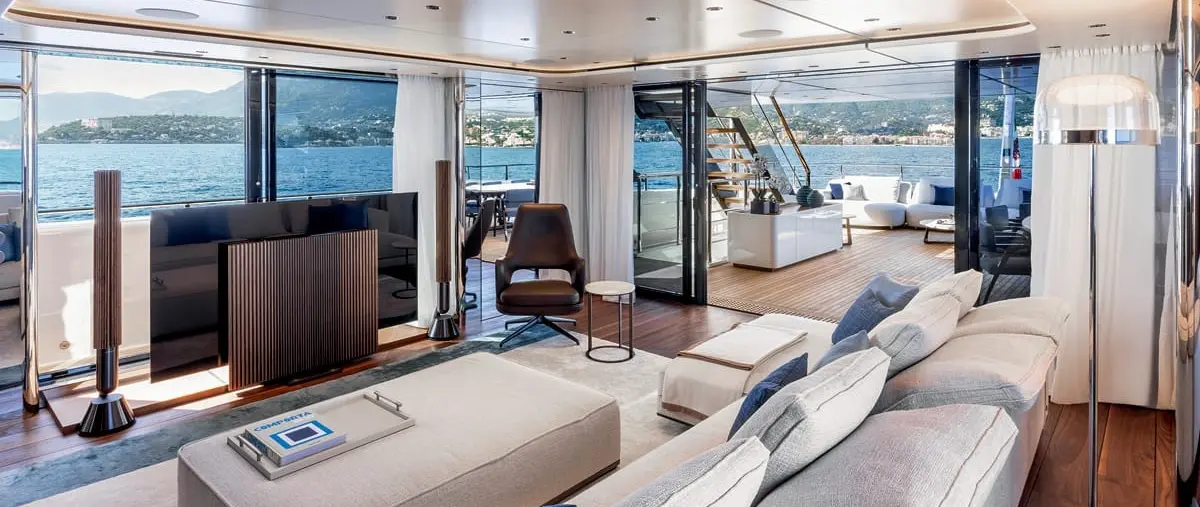
Videoworks Fits Custom Line 50 and Navetta 38 With B&O Audio — source image
Videoworks chief executive Maurizio Minossi says the company wants to extend its yacht technology role into refit, connectivity management and cybersecurity support after delivery.
Videoworks is preparing to broaden its role in the superyacht refit market, according to chief executive Maurizio Minossi, who described the company's international expansion and service ambitions in an interview published on 6 November 2026. The Ancona-based specialist supplies audio-video systems, entertainment technology, lighting and yacht IT infrastructure. Its next emphasis, Minossi said, is supporting yachts after delivery, including connectivity management, maintenance and cyber-security work. The remarks mark a service-development direction rather than a newly announced acquisition, contract or completed refit. For owners and managers, the important issue is how an equipment integrator plans to remain involved throughout the life of systems that increasingly affect day-to-day operations.
Speaking to Press Mare after the Monaco Yacht Show, Minossi said that about 22 of the roughly 110 superyachts on display were fitted with Videoworks technology. Those numbers are his company's account of its presence at the event, not an independently audited market-share figure. They provide a useful indication of the extent to which the specialist's installations are represented across an international fleet. They do not mean Videoworks built the yachts or supplied every digital system aboard them. Nor do they prove that the same proportion applies to the worldwide superyacht fleet. The statistic is most informative when understood as a snapshot of one show, where participating yachts are selected for many reasons.
A new-build installation is usually scoped alongside a shipyard, designer, owner's team and technical consultants. Once a yacht enters operation, its digital environment changes as software, devices, crew requirements and communications services evolve. In the interview Minossi identified refit as Videoworks' next development priority and described a desire to work on internet-traffic management, maintenance and security throughout a yacht's service life. That approach would allow the company to support systems beyond their initial installation and commissioning. The interview does not announce that every existing Videoworks installation has become subject to a new maintenance contract; it describes the business direction being pursued.
Minossi described the company's move from an Italian foundation towards international operations through its presence in the Netherlands, the United States and the Turkish market. These are important locations because superyacht design, construction and refit work often involves clients and project teams crossing borders. The executive said his ambition was for Videoworks to be present in major shipbuilding centres so that it can participate early in projects, regardless of where an owner chooses to build. The interview does not establish a newly opened office in every market mentioned or list the staffing of each location. The stronger verified point is the firm's stated strategy of widening access to the people who specify yacht technology.
On large bespoke yachts, a systems contractor may not enter a blank design process. Minossi explained that owners typically work with professional design and project-management teams who have already prepared drawings and specifications, then choose a yard for construction. That sequence puts pressure on suppliers to engage before important equipment and spatial choices become difficult to change. An audio-video, network or lighting installation must coexist with interior design, equipment rooms, cable routes and access for servicing. These operational considerations help explain why Videoworks wants relationships in several building countries. They are a reasoned implication of the process the executive described, not a claim that any particular current project faces a technical problem.
According to Minossi, technology support and internet connectivity account for the greatest volume of demand among the company's services. He acknowledged the presence of major connectivity providers, including Starlink, while arguing that there is a role for firms offering complementary solutions and management. That distinction is important because providing a satellite connection is not the same as designing and supervising an entire on-board network. Guest devices, crew systems, media distribution and shoreside links can all compete for available resources. A specialist may be asked to coordinate these elements, though the interview does not identify a new Videoworks subscription package or guarantee a specific service level across all cruising regions.
The chief executive also described rising attention to the security of yacht networks. In particular, he referred to assessments of systems installed by other suppliers, including penetration testing and checks aimed at identifying vulnerabilities. Where problems are found, the company says it works to improve protection. The remarks reflect the difficulty of treating a vessel's IT configuration as permanently finished at delivery. Equipment is updated, guests and crew change, and remote-access arrangements may be revised during service. Nothing in the interview suggests a named yacht has suffered a breach, or that particular installations were proved insecure. A sensible reading is that cyber-security assessment is becoming part of routine technology planning during refit.
Unlike many domestic technology projects, a yacht may change country, port and connectivity provider within a single itinerary. A crew must also keep accommodation and service functions working while guests are present. When systems fail or need updating, access to equipment can be constrained by interiors and the vessel's schedule. These are practical reasons that maintenance arrangements matter to an owner, even if the technology is rarely visible. Videoworks' proposed shift towards after-delivery support addresses this broader operating context. It should not be taken as proof that a refit contract has already been signed for a named yacht or that the business has disclosed quantified recurring revenue from maintenance.
Minossi identified series-built aluminium yachts around 50 metres as an attractive market segment, partly because those projects can share relatively consistent platform and interior arrangements. More repeatable underlying systems may make it easier for specialist suppliers to organise installation, configuration and service work across several vessels. That is a commercial and technical observation from the executive rather than a statement that every yacht in the class has identical digital infrastructure. Owners may still choose different entertainment, networking or lighting packages, and shipyards can change specifications between builds. The opportunity is that some engineering work may be more transferable than in a succession of entirely unrelated one-off projects.
The executive explained that Videoworks provides warranties extending over a period of roughly 12 to 24 months, and that a project's ultimate margin cannot be judged until those obligations are taken into account. That is a useful reminder that a technology package has continuing costs after it is installed. A supplier may need to revisit a vessel, resolve faults or support equipment through changes in operation. For yacht owners, it also underlines the importance of understanding who is responsible for each system after handover. The interview does not publish a warranty schedule for a particular yacht or disclose margins for any contract, so readers should not infer financial results from those general comments.
Videoworks says its software applications are developed internally. Minossi referred to research work involving artificial intelligence and a scientific relationship with the University of Pisa, while maintaining that the company retains direct control of software development. The statement is about its engineering organisation and programme direction, not a demonstration that an artificial-intelligence product can autonomously manage every system aboard a yacht. No performance results, customer deployment figures or approval certifications for a named new AI tool were supplied in the interview. Those distinctions are important at a time when technological claims are easy to overstate. The verifiable news is the company's emphasis on owning its software capabilities while working with academic partners.
Alongside connectivity and security, the firm continues to develop entertainment technology. Minossi mentioned a collaboration with Japanese sound-design company Coton presented at Monaco, described as an immersive audio experience intended to make sound part of the yacht's spatial atmosphere. The collaboration itself had been introduced earlier, so the November interview should not be portrayed as a fresh product launch. Its relevance here is that Videoworks sees multiple technical disciplines as interconnected: media, networks, interfaces and environments that owners use every day. A visually impressive lounge can depend on reliable infrastructure hidden from view, while the quality of that infrastructure can influence the enjoyment of the finished space.
Minossi characterised demand for larger superyachts, especially projects above 500 gross tonnes, as remaining solid. He also mentioned yachts in build with expected deliveries around 2031 and 2032. The interview does not identify those vessels, their builders, their owners or the value of Videoworks' work on them. The gross-tonnage threshold concerns internal volume, not length, and should not be treated as equivalent to a particular number of metres. The account nevertheless helps explain why suppliers must balance new construction programmes extending several years ahead with the immediate requirements of yachts already afloat. These are separate businesses with different timetables, warranties and service responsibilities.
The interview drew a distinction between concentrated new-build hubs and the geographically broader refit market. Minossi referred to work across the Mediterranean as well as capable providers in Dubai, Abu Dhabi and other regions. A yacht may decide where to undertake a refit according to its cruising programme, available facilities, engineering needs and project schedule, rather than returning automatically to its build yard. A technology supplier seeking long-term work must therefore support projects at varied locations and coordinate with unfamiliar yard teams. Videoworks has expressed an ambition to meet that demand; the published conversation does not amount to a commitment to open new facilities in each refit centre.
The clearest future evidence of Videoworks' refit expansion would be specific service contracts, named installations, recurring support arrangements and outcomes reported by yacht operators. Owners will also want to know how the firm coordinates systems it did not originally supply and how it handles equipment lifecycles over several years. No fresh revenue, contract count or market-share forecast accompanies the November discussion. For now, the company's chief executive has outlined a shift from construction-stage installation towards a broader relationship with operating yachts. That is relevant news for the 24-metre-plus market because connectivity and digital-system reliability are increasingly important to owners, captains and management companies. The primary evidence is Minossi's direct interview with Press Mare, published on 6 November 2026.
Continue reading
FPT, part of Iveco Group, joins Italy's Confindustria Nautica to strengthen relationships with yachtbuilders as interest in marine propulsion systems grows.
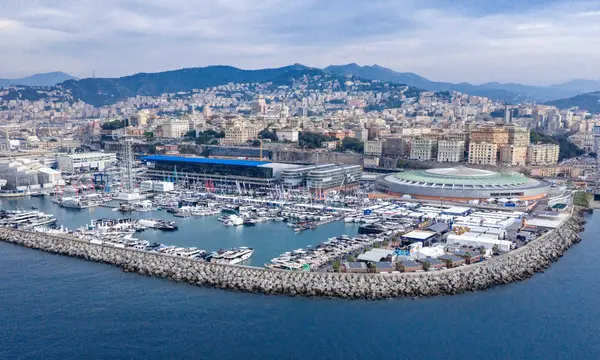
FORUM26 at the Genoa International Boat Show has opened with anti-money-laundering, tax, customs, cybersecurity and technology among the main industry themes.

Monaco's 2026 Smart & Sustainable Marina Rendezvous will focus on AI, cybersecurity, investment, biodiversity and decarbonising the existing yacht fleet.

Vulkan Italia will present its 200kW H1000 parallel-hybrid module for marine diesel engines rated 500–1,500kW during METSTRADE's Next Gen showcase.
Superyacht Guide
Continue into the wider Superyacht Guide.
Business opportunities · Superyacht Guide
Companies serving the superyacht market can discuss clearly identified advertising, sponsorship and business-profile opportunities. Commercial activity remains separate from independent editorial coverage.