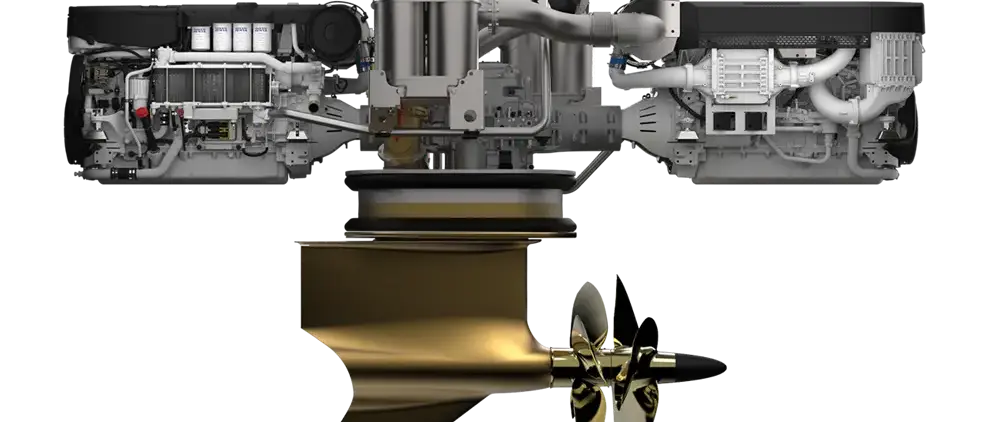
For many years, Volvo Penta was most readily associated with production motor yachts, tenders and smaller commercial vessels. Its engines and Inboard Performance System, better known as IPS, became familiar across the leisure market, but the largest custom yachts generally remained the territory of conventional shaft drives, diesel-electric arrangements and higher-output propulsion manufacturers.
That boundary is becoming less distinct. Volvo Penta now markets dedicated superyacht systems, is extending IPS into vessels measuring 25 to more than 55 metres, and is working with builders including Sanlorenzo, Amer Yachts and Baglietto. Its role is also moving beyond the supply of an engine and pod drive. Integrated controls, automated power management, emissions equipment, remote diagnostics and future hybrid-electric capability are turning propulsion into a wider vessel platform.
The change matters because propulsion decisions influence far more than speed and fuel consumption. They affect machinery-space volume, stern architecture, noise, vibration, manoeuvrability, redundancy, service planning and the amount of the yacht that can ultimately be devoted to owners and guests.
Volvo Penta’s established superyacht IPS range is based around D11 and D13 diesel engines. Published output extends from 510 hp for the lower-rated D11 installation to 1,000 hp for the most powerful D13 package, allowing several engines and individually steerable pod drives to be combined within one yacht. The company continues to offer conventional inboard-shaft solutions, but IPS has become its clearest point of differentiation in the yacht market.
In a traditional shaft-driven yacht, the main engines, gearboxes, shafts, rudders and steering systems may come from several suppliers and must be integrated by the shipyard and its technical partners. Volvo Penta’s approach brings engines, drives, propulsion controls and many helm functions into one interconnected architecture using its Electronic Vessel Control system.
The IPS Professional Platform extends that principle into larger and more technically demanding vessels. It incorporates functions including joystick control, Assisted Docking, Dynamic Positioning, integrated autopilot, monitoring and Eco Mode, which can start or stop individual engines according to the power required. Volvo Penta says the platform can accommodate as many as eight power sources, allowing a yacht to use only the number of engines needed for a particular operating condition.
This is an important distinction. Volvo Penta is no longer presenting itself simply as an engine manufacturer supplying components to a shipyard. It is increasingly offering a propulsion, control, software and support environment extending from the bridge to the propellers.
The most visible advantage of pod propulsion is manoeuvrability. Each IPS drive can steer independently, directing thrust without relying on conventional rudders. When connected to joystick and positioning systems, the arrangement can give captains more intuitive low-speed control during docking, turning and station keeping.
The architectural consequences may be still more valuable. Conventional shafts impose fixed geometric requirements because the engines, gearboxes and propellers must be connected along a defined line. An aft-positioned pod installation can reduce the longitudinal space occupied by the machinery and driveline, potentially releasing more volume for accommodation, tender storage, technical access or waterfront areas.
Volvo Penta states that its standard IPS installations can provide up to 30 per cent lower fuel consumption, up to 40 per cent longer range and up to 50 per cent lower perceived noise than comparable inboard-shaft arrangements. These are manufacturer comparisons rather than universal results. Actual performance depends on hull form, displacement, loading, speed, engine configuration, sea conditions and the quality of the installation.
The Professional Platform is also built around dual power inputs. This means that a drive can be connected to different sources of power rather than being permanently dependent upon one conventional engine. For naval architects, the significance is not merely the possibility of lower consumption. It creates greater freedom to determine how machinery is distributed and how a yacht might later incorporate combustion, electrical or hybrid power.
Compact machinery does not automatically produce a better yacht. Space saved in an engine room must be balanced against service access, ventilation, aftertreatment systems, redundancy and the ability to remove major equipment. Nevertheless, propulsion has become an increasingly important part of the architectural conversation. Owners want larger beach clubs, better tender arrangements, quieter cabins and more flexible sterns, while shipyards must still accommodate the machinery required to move and support the yacht safely.
The clearest recent example is the 41.45-metre Amer 42 Explorer Even Further. The steel-hulled yacht uses four Volvo Penta D13 engines connected to two IPS40 drives through the IPS Professional Platform. At lower speeds, the system can operate with two engines while bringing the remaining pair online as power demand rises.
Superyacht Guide covered the yacht’s delivery separately in July 2026. Amer reported consumption of approximately 60 litres per hour at 9.5 knots in Eco Mode during trials and calculated a potential range of around 8,900 nautical miles. Those figures will require confirmation through extended owner operation, but the yacht is significant because it moves IPS into a steel displacement explorer rather than a relatively light, fast composite yacht.
Sanlorenzo has also selected the Professional Platform for its SX120 and SX132 programmes. The partnership is particularly notable because Sanlorenzo’s crossover yachts depend heavily on efficient use of internal volume and expansive aft living areas. A compact propulsion arrangement is therefore directly connected to the architectural identity of the yacht rather than being treated as a hidden technical choice.
A further step came with the sale of a fully custom 48-metre Baglietto project developed with Floating Life. Volvo Penta described the yacht as the first fully custom superyacht contracted with the IPS Professional Platform. Unlike a repeat production model designed around a standard machinery package, a one-off project creates an opportunity to integrate the propulsion system around an individual owner’s cruising and accommodation requirements from the beginning.
These projects do not mean that IPS will replace conventional propulsion throughout the large-yacht market. Very large displacement yachts, vessels requiring much higher continuous power and projects with particular endurance or redundancy requirements will continue to use a variety of shaft, pod and diesel-electric systems. Volvo Penta’s own stated focus on vessels from approximately 25 to 55 metres nevertheless places it in one of the most active and design-sensitive parts of the superyacht sector.
Propulsion manufacturers must now address emissions compliance alongside performance. For yachts subject to IMO Tier III nitrogen-oxide requirements, Volvo Penta offers an integrated aftertreatment solution designed for vessels of 24 metres and above. The company says the installation is comparatively compact and supports operation using 100 per cent hydrotreated vegetable oil, or HVO.
HVO compatibility can reduce lifecycle carbon emissions when an appropriate fuel supply and verified production pathway are available, but it does not remove all emissions or eliminate the need for careful fuel management. The practical value for a yacht depends on bunkering availability, fuel quality, engine approval, operating area and the owner’s willingness to pay any price premium.
The more fundamental transition is towards electrical integration. In May 2026, Volvo Penta revealed a D13 IPS Hybrid system for yachts that it intends to bring to market later in the year. The proposed package combines diesel engines, electric motors, batteries, energy management and propulsion controls within one system. Volvo Penta says the arrangement is intended to permit near-silent manoeuvring and cruising, while reducing the need to operate generators during quiet onboard periods.
The company has separately indicated that hybrid-electric and fully electric versions of the larger Professional Platform are expected from 2027 onwards. These remain developing products rather than a reason to describe existing IPS yachts as electrically powered. Final performance, battery capacity, installation weight, charging strategy and operational range will need to be judged yacht by yacht as the systems enter service.
Even so, the dual-input architecture is strategically important. A yacht designed around a rigid mechanical driveline may require substantial structural alteration to change its propulsion concept later. A platform conceived to accept several forms of power could make future upgrades less invasive, although no owner should assume that a later conversion will be simple or inexpensive without a detailed project-specific assessment.
The attraction of an integrated propulsion platform is clear. One supplier can take responsibility for a larger proportion of the system, while connected diagnostics and monitoring may help identify faults, balance engine hours and plan maintenance. Volvo Penta also promotes global parts support, remote monitoring and extended coverage as part of the Professional Platform.
Integration can also create dependency. When engines, controls, software, drives and diagnostics operate as one ecosystem, the yacht becomes more reliant on the supplier’s authorised technicians, proprietary tools, replacement parts and long-term software support. That is not necessarily a disadvantage, but it should be considered during specification rather than discovered after delivery.
Owners and their representatives should therefore request project-specific evidence rather than relying only on headline efficiency percentages. Fuel curves should reflect the proposed hull and displacement. Redundancy analysis should explain what happens after the loss of an engine, drive, control network or electrical component. Maintenance planning should consider haul-out requirements, underwater impact risk, oil analysis, corrosion protection, spare parts and the availability of trained support in the yacht’s intended cruising regions.
Captains should also be involved early. Assisted Docking and Dynamic Positioning can reduce workload, but automated features do not replace seamanship or engineering knowledge. Crew must understand how the system behaves in degraded modes, how to isolate faults and when manual intervention is required.
For shipyards and designers, the opportunity lies in treating propulsion as part of the yacht’s architecture. The most successful applications will not simply fit pods beneath a hull originally conceived for shafts. They will use machinery arrangement, weight distribution, controls and power management to improve the yacht as a complete vessel.
Volvo Penta’s expansion reflects a wider change in superyacht construction. The industry is moving away from isolated machinery components towards integrated technical platforms in which propulsion, electrical power, controls, emissions treatment, monitoring and service support are increasingly connected.
The company is unlikely to become the answer for every superyacht. Its growing importance lies instead in offering builders and owners another credible route through the difficult middle ground between production-yacht propulsion and the highly customised machinery systems traditionally found on much larger vessels.
Amer’s steel explorer, Sanlorenzo’s crossover models and Baglietto’s fully custom project show that this transition is already moving beyond concept presentations. Hybrid development and dual-input drives suggest that Volvo Penta intends to remain part of the conversation as the source of power changes as well.
For owners, the relevant question is therefore no longer simply whether Volvo Penta makes engines powerful enough for a superyacht. It is whether an integrated IPS platform can produce a yacht that is more spacious, quieter, easier to control and more efficient without compromising reliability, serviceability or long-term value. The first generation of larger installations will begin to provide that answer.
This feature draws on Volvo Penta’s official information about its superyacht offering, superyacht IPS systems, IPS Professional Platform, IMO Tier III solutions, its collaboration with Sanlorenzo, the 48-metre Baglietto project and its D13 IPS Hybrid announcement. Superyacht Guide’s separate report on the delivery of the Amer 42 Explorer Even Further provides the project-specific context referenced above.
Explore
Go deeper into the yachts, companies, events and destinations directly connected to this article.
Continue reading
Volvo Penta is showcasing the D13-IPS1350H at Cannes, combining its most powerful IPS engine with an integrated hybrid propulsion architecture.

The partners appoint Philippe Hamon to lead Elektra Marine and expand the JOOOL electric propulsion and energy platform across 14 boat models.
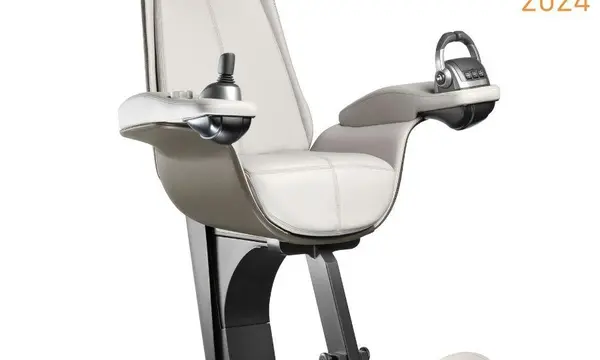
Besenzoni is exhibiting its UNICA custom superyacht accessories at Monaco, including the P470 Manta Comfort and P400 Matrix pilot chairs.
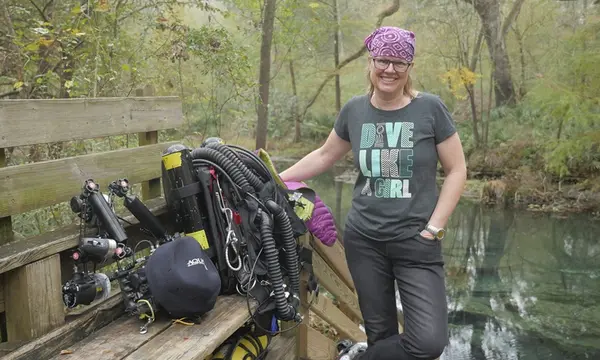
Torqeedo has brought underwater explorer Jill Heinerth into its Electric Explorers programme, highlighting its 1.6kW Travel XP outboard for remote fieldwork.
Superyacht Guide
Continue into the wider Superyacht Guide.