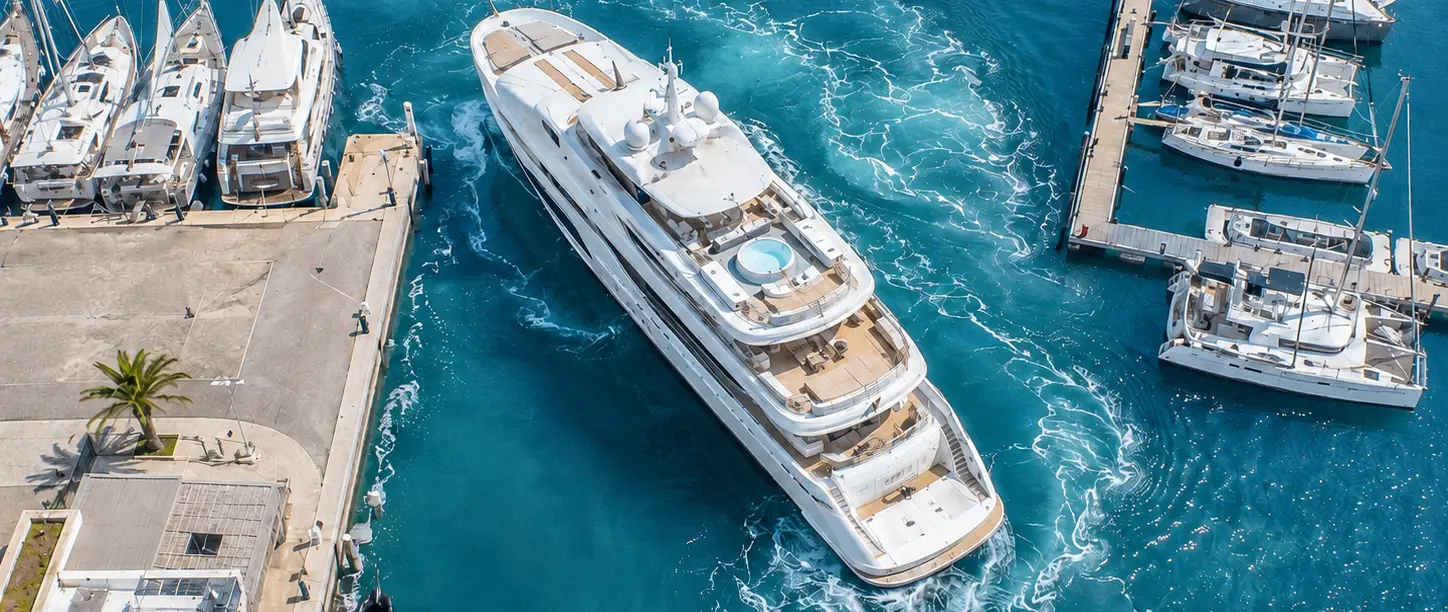
Two superyachts of similar length can behave very differently inside a marina. Windage, displacement, propulsion, thruster authority, visibility and berth geometry determine how much control a captain really has when the margins become small.
A 70-metre superyacht crossing open water can look almost effortless. The yacht has room to turn, speed creates predictable flow over rudders and control surfaces, and small corrections can be made over hundreds of metres rather than a few metres. Bring the same yacht inside a crowded marina and the physics have not changed, but the margin for error has. A vessel that seemed composed at sea may suddenly be operating between concrete quays, mooring chains, neighbouring yachts and shallow water while crosswind and current continue acting on thousands of tonnes of moving mass.
Length is an obvious part of the problem, but it is far from the whole explanation. Two yachts of almost identical length may require very different handling techniques. One can be unusually manageable because its propulsion arrangement provides strong transverse control, its superstructure presents relatively modest windage and its bridge gives the captain excellent visibility over the quarters. Another can be awkward in exactly the same berth because it has a tall profile, substantial displacement, conventional shaft lines, limited stern authority or poor sightlines from the bridge.
That distinction matters to owners because port manoeuvring is one of the few occasions when the physical compromises within a yacht's design become immediately visible. The owner may see a large yacht move sideways under joystick control and reasonably assume that docking has become almost automated. In reality, the captain is working with a finite amount of thrust against wind, current, momentum and the dimensions of the berth. Technology can increase the available control enormously, but it does not repeal those forces.
The International Maritime Organization's manoeuvrability framework illustrates the broader point. Its standards distinguish between turning ability, initial turning response, yaw checking, course keeping and stopping rather than treating manoeuvrability as a single quality. IMO guidance on shipboard manoeuvring information likewise recognises that masters need vessel-specific knowledge of turning circles, stopping characteristics and other handling behaviour. Not every provision applies identically to every yacht, but the underlying principle is directly relevant: a vessel's ability to manoeuvre is a collection of characteristics, not a number attached to its length.
The first clue to how a yacht may behave in harbour is often visible before anybody looks at the propulsion specification. Modern superyachts can carry enormous volumes above the waterline. Full-beam upper decks, enclosed lounges, broad glazing, helicopter facilities, large mast structures and tall superstructures give owners the interior and exterior spaces they want, but they also present a large surface to the wind.
Below the waterline, the situation can be very different. The underwater hull provides lateral resistance, but the wind is acting on the structure above it. Where those forces act relative to the yacht's centre of lateral resistance helps determine whether a crosswind tends principally to push the yacht sideways, rotate it, or do both at once. A yacht with a particularly large forward superstructure may therefore respond differently from one whose windage is concentrated farther aft, even if their overall dimensions appear similar.
The practical consequence is that a moderate crosswind can become more important than a much stronger wind would be to a smaller, lower-profile vessel. The captain is not merely trying to move the yacht toward the berth; propulsion and thrusters may already be working simply to cancel the environmental force and prevent the yacht from drifting away. The margin available for the actual manoeuvre is whatever control remains after that demand has been met. Professional mooring guidance treats wind and current as fundamental environmental loads precisely because their effect continues after the vessel reaches the berth as well as during the approach.
The situation becomes still more complicated inside built-up ports. Hangars, cruise ships, harbour walls and other large yachts can shelter one part of a basin while funnelling wind through another. A captain may begin an approach in relatively stable conditions and encounter a stronger or differently aligned flow as the yacht comes behind a building or clears the stern of another vessel. The forecast remains useful, but what matters during the final metres is the wind acting on the yacht at that moment.
Current creates a similar problem beneath the surface. It may be weak in the marina yet significant at the entrance, or it may set across a river berth in a direction that is not immediately obvious from the bridge. When the bow enters sheltered water before the stern, or vice versa, different parts of the hull can briefly experience different environmental forces. The result can be an unwanted rotation at exactly the stage when manoeuvring room is shrinking.
Mass then adds consequence to every movement. Harbour speeds can look almost negligible from ashore, but a large yacht still possesses momentum. The captain must therefore think not only about where the yacht is moving, but about how much distance will be required to arrest that movement before changing it. The IMO's standards for ship manoeuvrability include stopping performance alongside turning and course-control characteristics, reflecting the fundamental importance of controlling a ship's energy rather than merely pointing it in the right direction.
This is why the most accomplished large-yacht berthing manoeuvres often appear extraordinarily slow. Low speed buys time. It allows the bridge team to see whether the yacht has actually stopped sliding before introducing a new movement, gives deck crew time to prepare lines and allows the captain to reassess if the wind changes. Arriving with unnecessary speed removes those options and converts a manageable environmental force into a rapidly diminishing margin.
The second major difference between yachts lies below the waterline. At sea, propulsion choices are usually discussed in terms of efficiency, vibration, draught, speed and noise. In port, the same engineering choices determine which directions the captain can generate thrust and how quickly that thrust becomes useful.
A traditional twin-shaft yacht can use differential engine power to assist rotation, with rudders contributing increasingly as water flows across them. At very low speed, however, the yacht cannot rely on rudder authority in the same way it can while making passage speed. Bow and stern thrusters therefore become central to the final approach, particularly when the yacht needs to move laterally rather than ahead or astern.
Azimuthing propulsion changes that geometry considerably. Wärtsilä defines an azimuth thruster as a propeller unit capable of rotating through 360 degrees so that thrust can be directed as required. Systems of this type can therefore generate manoeuvring forces without first relying on a conventional rudder to redirect the propeller stream. Kongsberg Maritime's positioning and manoeuvring systems similarly combine propulsion, thrusters and steering into integrated control arrangements capable of producing vessel movements that would be far less intuitive with independent conventional controls.
Waterjet yachts have their own low-speed characteristics. Kongsberg's waterjet technology uses steering and reversing arrangements to provide low-speed manoeuvring as well as propulsion. The point is not that one system is inherently superior for every superyacht, but that a captain moving from conventional shafts to pods or waterjets is effectively moving to a vessel with a different control language.
Thrusters add another layer of control, but their presence on a specification sheet can be misleading if interpreted simply as proof that a yacht will move sideways whenever commanded. A tunnel bow thruster creates transverse force by moving water through the hull, yet its effectiveness changes as the vessel gains forward speed. Wärtsilä notes that the hydrodynamic interaction between the thruster jet and the hull can significantly reduce useful effect when a vessel is moving ahead. A bow thruster that feels extremely authoritative when the yacht is almost stationary is therefore not necessarily providing the same lateral control during a faster approach.
Placement matters as much as nominal power. A thruster positioned far forward has greater leverage to rotate the bow around the yacht's centre of rotation than the same thrust located closer to amidships. Stern-thruster performance, hull form, appendages and the interaction between transverse and main propulsion all contribute to how cleanly the yacht can translate sideways rather than beginning an unwanted rotation.
Available electrical or hydraulic power matters too. Thrusters are substantial consumers, and installations differ in duty rating and the amount of continuous thrust they are designed to deliver. Wärtsilä distinguishes between different thruster applications and duty requirements, reinforcing an operational reality familiar to captains: maximum indicated thrust is not necessarily something that can be demanded indefinitely without considering machinery limitations.
Integrated joystick and dynamic-positioning technology can greatly reduce bridge workload when properly designed and understood. Dynamic positioning uses position and environmental information together with propulsion and thrusters to counter forces from wind and current. Kongsberg's positioning systems demonstrate how far modern control arrangements have moved beyond simply operating individual engines and thrusters.
For the captain, however, sophistication does not remove the need to know what happens if part of the system disappears. A berth that is comfortable with two main propulsors, bow and stern thrusters and full electrical generation may look very different after the loss of one engine, a generator or a transverse thruster. The relevant measure of manoeuvrability is therefore not only what the yacht can do when everything works perfectly, but what margin remains after a credible equipment failure.
Some yachts acquire reputations for being difficult to handle when the real problem is the environment in which they are regularly expected to berth. A technically responsive yacht can still become challenging when the fairway is barely wider than its turning requirement, the depth restricts where it can manoeuvre or neighbouring vessels remove the escape route the captain would normally use.
A berth's nominal length tells only part of the story. The yacht must first reach it. A large vessel may need sufficient water to swing before reversing toward a stern-to berth, or enough fairway width to approach at an angle and arrest lateral movement before coming alongside. Mooring chains, laid lines, underwater obstructions and the positions of neighbouring yachts can remove usable water that looks empty on a marina plan.
Shallow water can also change the feel of the yacht. The relationship between the hull and the surrounding water becomes more constrained, and the captain may notice that familiar engine or rudder inputs no longer produce quite the response expected from deeper water. Confined-water effects are one reason professional harbour planning considers available depth and manoeuvring area alongside the yacht's headline dimensions rather than treating berth length as the sole criterion.
Visibility can compound all of these problems. A large superyacht may have excellent forward visibility from the main bridge but still leave the captain unable to see the hull at the point that matters most during docking. The stern can be tens of metres behind the control position, while projecting balconies, beach-club structures or broad quarters complicate the visual reference. Bridge-wing control stations, cameras and well-positioned crew reports therefore become part of the manoeuvring system rather than mere conveniences.
The best bridge teams establish an agreed language for those final distances. A deck officer on the quarter is not providing commentary; he or she is supplying information the person controlling the yacht cannot directly obtain. In a confined berth, a precise report of distance and rate of closure can be more useful than another electronic display because it links the yacht's actual position to a physical hazard.
Once the first line is ashore, mooring itself becomes part of the control problem. Springs and breast lines can restrain movement and allow propulsion to be used against a controlled line, but those techniques transfer significant loads into ropes, winches, bollards and fittings. OCIMF's mooring guidance places strong emphasis on understanding mooring-line forces and human factors because apparently routine operations can contain substantial stored energy. The same principle applies on a superyacht: a line should never become an improvised substitute for manoeuvring control without the bridge and deck teams understanding the forces involved.
There are therefore circumstances in which the correct decision is not to prove that the yacht can enter. A berth can be physically long enough yet operationally unsuitable in the prevailing wind. A captain may require daylight, local pilotage, a tug or simply a better weather window. That can be frustrating when the owner can see another large yacht already secured inside, but visual similarity does not establish equal manoeuvring capability. Draught, displacement, windage, propulsion arrangement and thruster authority can make two yachts of the same length fundamentally different harbour propositions.
This is also why an aborted approach should not automatically be interpreted as poor handling. A captain who recognises that the yacht is not developing the expected transverse movement and returns to safe water has preserved the most valuable resource available in close quarters: margin. The professional failure is not going around. It is continuing after the manoeuvre has stopped behaving as planned.
The final element cannot be read from the general arrangement or propulsion specification. Captains repeatedly become better at handling a yacht because they learn how that individual vessel translates control inputs into movement.
They learn how much ahead power is needed before the yacht begins to answer reliably, how long she carries way after the controls return to neutral and whether the stern has a tendency to move laterally when astern propulsion is introduced. They learn whether the bow thruster arrests drift immediately or needs to be anticipated several seconds earlier, how the yacht behaves with full fuel compared with lighter displacement and whether particular wind directions expose an awkward imbalance between bow and stern authority.
This experience is why formal manoeuvring information and practical familiarisation complement rather than replace one another. IMO guidance on manoeuvring information aboard ships calls for vessel-specific information because ships differ in turning and stopping behaviour. Actual harbour practice then gives the captain the fine-grained knowledge that a printed diagram cannot provide: how the yacht feels as loads change, which visual reference works from a bridge wing and how quickly a particular control response becomes evident.
The wider bridge and deck teams acquire the same familiarity. Officers learn when the captain wants distance reports rather than general descriptions. Deck crew understand which line is likely to take load first and prepare fenders for the particular shape of the quay. Engineers know which machinery needs to be online before entering confined water and what redundancy remains if a component trips during the approach.
Owners sometimes encounter this operational reality when a new captain initially appears more conservative than the person who commanded the yacht for years. The difference may not be confidence in the ordinary sense. The previous captain possessed an accumulated model of the vessel built through hundreds of manoeuvres, while the new captain is deliberately creating margin until the yacht's reactions become familiar.
That conservatism is particularly important because the most demanding harbour situation usually combines several disadvantages rather than presenting one isolated problem. A large crosswind might be manageable in open water. A tight berth might be straightforward in calm conditions. Limited stern-thruster authority may be acceptable with ample manoeuvring room. Put the three together and the yacht may reach a point where the available control margin is no longer sensible.
The captain's responsibility is therefore not to demonstrate that the yacht can overcome every combination of circumstances. It is to know the point at which the manoeuvre stops offering enough room for an error, equipment failure or unexpected gust. Technology provides impressive capability, but professional shiphandling still depends on deciding how much of that capability should actually be used.
For the owner, this is the most useful way to understand a yacht described as difficult in port. It does not necessarily mean the yacht is badly designed, underpowered or badly commanded. Large interior volume, exceptional seakeeping, high-speed performance, shallow draught, low noise and efficient cruising all involve design choices, and those choices can influence low-speed behaviour in ways that only become obvious around a quay.
A well-handled superyacht therefore does not need to look dramatic. The strongest manoeuvres are usually the opposite: speed falls early, the yacht approaches with very little residual momentum, the bridge team communicates quietly, propulsion changes are measured and lines arrive in the planned sequence. If conditions move outside the anticipated margin, the captain retains enough water and enough time to stop and reconsider.
What makes a superyacht hard to handle in port is ultimately the relationship between the yacht and the space around it. Windage determines how strongly the atmosphere can move it; hull and displacement determine how the water and momentum resist that movement; propulsion and thrusters determine how much corrective force is available; visibility and crew communication determine how accurately that force can be applied; and the berth determines how much room exists when something does not happen exactly as expected.
The captain who understands all of those things does not make the yacht easier by changing its physics. The captain makes it safer by ensuring that the manoeuvre never asks more of the yacht than the yacht can reliably deliver.
Explore
Go deeper into the yachts, companies, events and destinations directly connected to this article.
Continue reading
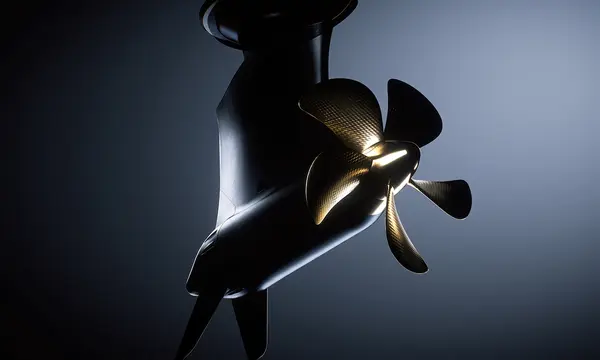
Kongsberg Maritime is extending its Elegance Pod electric propulsion family with five larger sizes delivering up to 22 MW for high-power vessel applications.
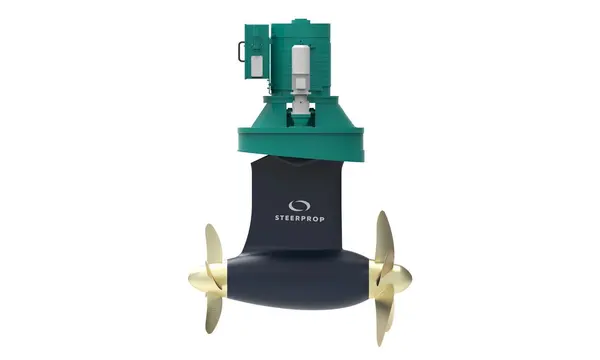
Kongsberg Maritime has agreed to acquire Finnish propulsion specialist Steerprop, days after Steerprop announced its first yacht propulsion project.
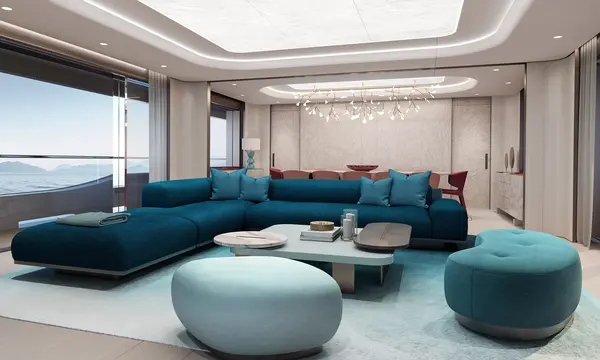
Dixon Yacht Design’s 48.27m Project OXO combines integrated solar generation, hybrid-ready propulsion and a 16-knot aluminium platform with interiors by Design Unlimited.
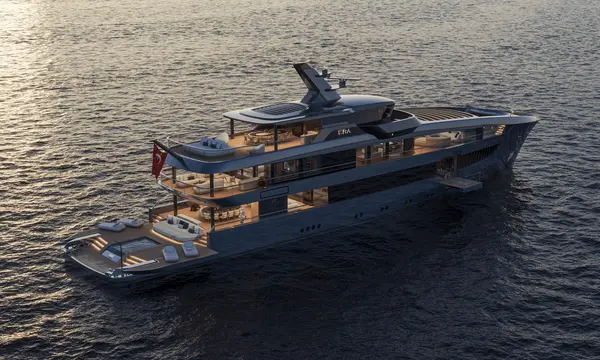
RMK Yachts has revealed the 55m ARCANE ERA, a 499 GT steel-and-aluminium expedition concept by Espen Øino with IPS propulsion and a 5,000nm eco-range …
Superyacht Guide
Continue into the wider Superyacht Guide.