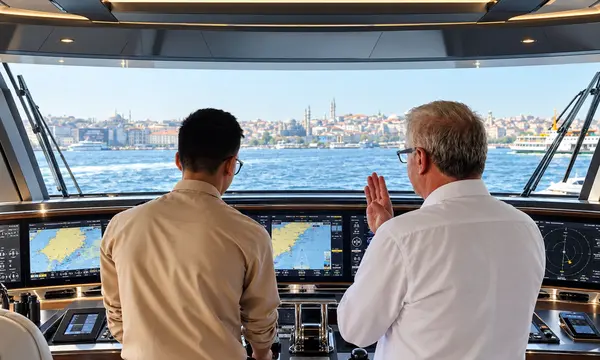
AnchorGuardian Examines Captain–Owner Choices at Anchor
AnchorGuardian's latest guidance explores anchor-dragging concerns, company-reported survey results and why masters retain responsibility for safe yacht anchoring.
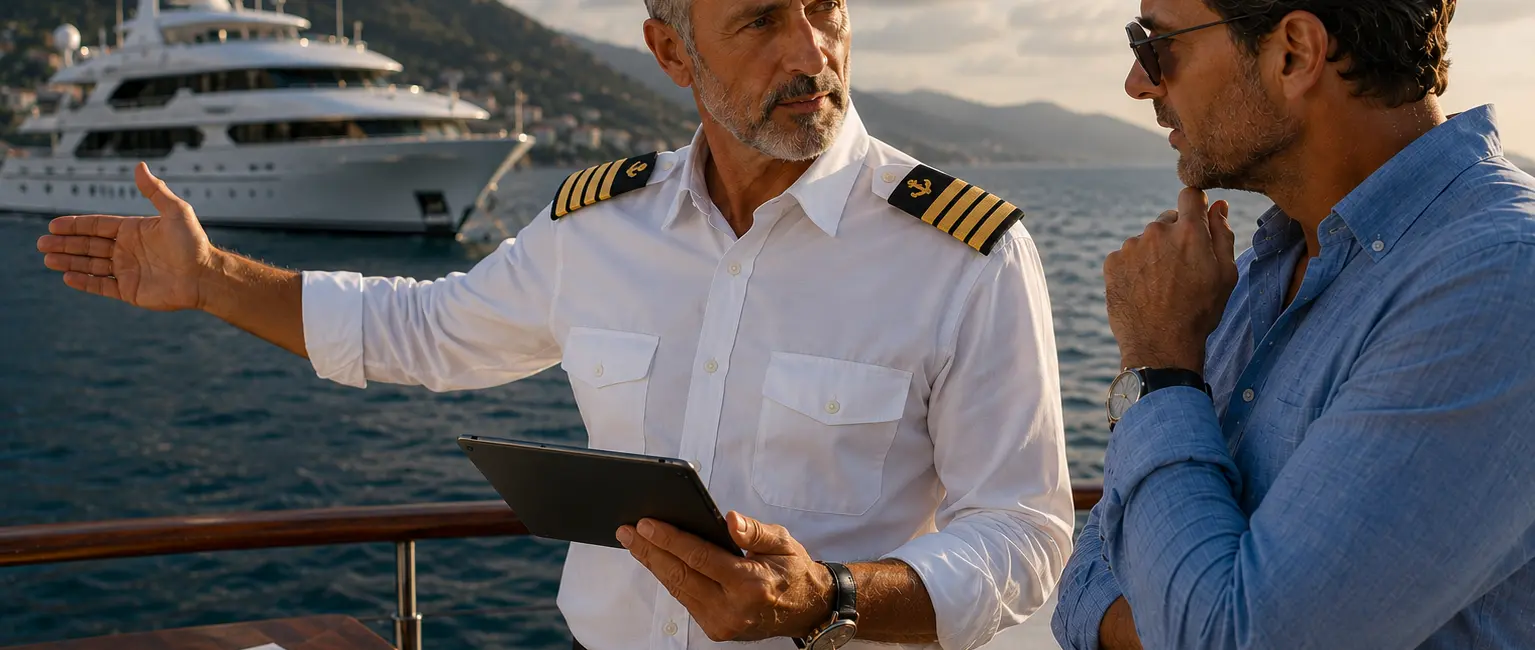
Owning a superyacht brings extraordinary freedom, but there are times when a captain must refuse an owner's request. We explore the safety decisions behind those difficult moments and why trust between owner and captain matters.
Owning a superyacht gives you an extraordinary degree of freedom. You decide where the yacht goes, who comes aboard, how it is used and what kind of life you want to create around it. You may wake up in Sardinia and decide that you would rather have dinner in Corsica, change an itinerary halfway through the season, invite another group of friends aboard or stay at anchor for three extra days simply because nobody wants to leave. That freedom is one of the great attractions of ownership, but there is one important limit that every owner eventually encounters: sometimes the captain will say no.
For a first-time owner, this can be difficult to understand. You bought the yacht, you employ the crew and you are paying every bill associated with operating it. If you want to leave tonight rather than tomorrow morning, enter a particular harbour, launch the tenders, increase speed or move closer to the beach, it can seem entirely reasonable to expect that instruction to be followed. Most of the time it will be. A good captain's job is to make the owner's wishes happen, not to place unnecessary obstacles in the way. Yet there are moments when what the owner wants and what the captain believes is safe are not the same thing, and at that point the relationship changes.
The captain is not simply the most senior member of staff aboard. The master carries professional and legal responsibilities for the safe operation and navigation of the yacht and for the people onboard. International maritime safety principles recognise the master's overriding authority in matters affecting safety, which is why ownership of the vessel does not translate into the right to override every navigational or operational judgement. The easiest comparison is private aviation. An owner may own the aircraft, employ the pilots and be paying thousands of euros an hour to operate it, but if the captain says the aircraft cannot safely depart because of weather or a technical fault, ownership does not suddenly make the runway longer or the storm disappear.
The same principle applies at sea, although it is often less obvious because yachting is more personal. Owners may spend weeks with their captain, involve them in family arrangements, discuss restaurants, guests, itineraries and even private matters. The captain can become part navigator, part manager, part adviser and sometimes part confidant. That familiarity can make a refusal feel personal when in reality it is often purely professional. The captain is not necessarily saying, “I do not want to do this.” They may be saying, “I do not believe we can do this safely in the way you want to do it.”
Weather is probably the most common reason an owner first discovers this boundary. Imagine the yacht is in Saint-Tropez and the plan is to leave in the evening for Sardinia. Guests are arriving the following afternoon, cars have been arranged, restaurants booked and perhaps the owner has a very specific reason for wanting to be there. The yacht is alongside, the sky is blue and the sea outside the harbour looks perfectly manageable, yet the captain recommends delaying departure.
To someone standing on the aft deck, that decision can appear overly cautious. The captain, however, may be looking at a very different picture. They are considering not just the weather at departure but the sea state six or ten hours later, the direction and period of the swell, wind against current, the yacht's expected motion, the comfort of guests, the ability of crew to work safely and the conditions likely to exist at the destination when the yacht arrives. A 60-metre yacht looks enormous when viewed from the quay, but it remains a small object in relation to the sea, and the question is not simply whether the vessel is capable of surviving the conditions.
Many yachts are capable of operating safely in weather that would make the experience onboard thoroughly unpleasant. Furniture has to be secured, exterior areas become unusable, service becomes difficult and guests who expected a luxurious overnight passage may spend hours feeling ill. The captain may therefore recommend delaying not because the yacht is incapable of making the passage but because leaving at the planned time creates unnecessary risk and discomfort when waiting six hours could provide a dramatically better journey. What sounds like a refusal may actually be an attempt to preserve the owner's holiday.
This becomes more difficult when the itinerary contains fixed commitments. Superyacht schedules often involve private aircraft, restaurant reservations, events, guests arriving from several countries and berths that have been difficult to secure. Once those arrangements are made it is very easy for the yacht to acquire an artificial deadline: we have to be there by tomorrow morning. Experienced captains are wary of that mentality because the sea does not care that a table has been booked or that a car is waiting. A destination should be a plan, not an obligation that overrides changing conditions.
Another disagreement may arise when an owner chooses a destination that appears perfectly accessible. Perhaps they visited the harbour years earlier on a smaller boat, have friends already there or can literally see the waterfront restaurant from the yacht. The harbour looks inviting, the weather is good and there may even be space on the quay, yet the captain says the yacht should not enter.
The reasons are often invisible to anyone who is not studying the charts, pilotage information and vessel characteristics. There may be insufficient depth beneath the keel, limited turning room, an awkward entrance exposed to wind or swell, restrictions on draught, a narrow approach or simply too little margin for error given the yacht's size and manoeuvring characteristics. A marina may advertise that it accepts yachts of a certain length, but length alone tells very little. Beam, draught, displacement, windage, mooring configuration and the ability to manoeuvre safely all matter.
This is one of the moments when ownership can be most frustrating because the solution sometimes seems absurdly close. You can see the destination. You can see people ashore. You may be only a few hundred metres from where you intended to spend the evening. Yet the correct decision may be to anchor outside and use the tender, move to another harbour or change plans entirely.
To the owner, that can feel like inconvenience. To the captain, it is simply seamanship.
The same judgement applies to anchorages. A beautiful bay may look ideal from photographs but prove unsuitable because of depth, holding ground, swell, crowding or wind. The yacht may arrive in perfect conditions and still need to leave several hours later because the forecast has changed. Owners sometimes imagine anchoring as little more than dropping a very large piece of metal onto the seabed, but on a large yacht the captain is considering swinging room, underwater hazards, other vessels, weather changes and what happens if the anchor begins to drag at three o'clock in the morning.
The safest anchorage is not always the prettiest one.
Many difficult decisions begin with a request that sounds completely reasonable. Why not move a little closer to the beach? Why not leave an hour later? Why not increase speed so we still arrive on time? Why not launch another tender? Why not take everyone ashore in one trip rather than two?
The problem is that yacht operations are interconnected. A decision that appears small from the guest area may affect navigation, machinery, crew hours, local regulations or the ability to respond if something goes wrong.
Speed is a good example. Owners naturally know the performance figures of their yacht and may reasonably ask why the vessel is making 11 knots when it can travel at 17. The answer may involve sea state, visibility, traffic, local speed restrictions, fuel consumption, machinery considerations or simply passenger comfort. A yacht's maximum speed is a capability, not a requirement to use it at every opportunity. Increasing speed may save an hour while dramatically increasing fuel consumption and making the journey less comfortable, or it may simply be inappropriate for the conditions.
The same principle applies when manoeuvring. Moving the yacht twenty metres closer to the beach might improve the view, but it may reduce under-keel clearance or leave less room if the wind changes. Staying another hour at anchor may seem harmless, but that extra hour may place the yacht in worsening conditions during departure. What appears to be a small lifestyle decision can have consequences that are not obvious from the sun deck.
This is why experienced captains often think several steps ahead. They are not only asking whether something can be done now. They are asking what happens next.
Few things make a yacht feel more alive than opening the beach club and putting the water toys into the sea. Tenders appear, jet skis are launched, Seabobs come out, children start swimming and what looked like a quiet anchorage becomes a private watersports centre. For many families this is one of the main reasons they own a yacht, which is why it can be disappointing when the captain or crew restrict an activity that seems perfectly normal.
Again, the problem is rarely the activity itself. It is the circumstances around it. There may be strong current, increasing wind, commercial traffic passing nearby or local rules affecting personal watercraft. The yacht may be anchored in a place where swimmers and tenders cannot safely operate together, or there may not be enough qualified crew available to supervise several activities simultaneously. One tender may be taking guests ashore while another is being used for watersports, somebody may need to remain on the yacht, and every additional toy launched creates another operation that must be monitored, recovered and managed.
From the owner's perspective, putting one more jet ski in the water can seem trivial. From the captain's perspective, it may be the point at which an organised operation becomes unnecessarily stretched.
The best captains do not simply stop an activity and walk away. They look for an alternative. Perhaps the yacht can move to a better anchorage after lunch. Perhaps the water toys can be used once tender traffic decreases. Perhaps activities can be run in stages rather than all at once. That is an important distinction between good safety management and bureaucratic obstruction. The objective is not to say no. The objective is to find the safest practical way to say yes.
Some of the most difficult decisions are not dramatic at all. They involve small exceptions. The owner wants the tender to carry a few extra people because the restaurant is only five minutes away. A guest wants to remain on the bow during manoeuvring for a photograph. Somebody wants to swim while preparations for departure are already underway. The yacht is asked to anchor slightly closer to shore because everyone will only be there for lunch. An extra overnight guest seems harmless because there is obviously plenty of physical space aboard.
Each request can sound reasonable because it is temporary. The problem is that safety procedures exist precisely because accidents do not announce themselves in advance. The tender does not become incapable of an accident because the journey is short. Machinery does not become harmless because somebody will only be nearby for thirty seconds. A crowded operation does not become safe because everyone promises to be careful.
Professional captains can therefore seem particularly stubborn when asked for exceptions, not because they enjoy enforcing rules but because “just this once” is one of the easiest ways for risk to become normalised aboard. Once one exception is accepted, the next becomes easier.
Perhaps the most frustrating refusal of all occurs when the owner, guests and crew are ready to leave and a technical problem is discovered. The luggage is onboard, provisions have arrived, the itinerary has been planned and everyone is expecting the yacht to sail. Then an engineer reports a fault.
The first question is almost inevitable: can we still go?
Sometimes the answer is yes. Superyachts contain substantial redundancy, and a great many technical defects can be safely managed while repairs are arranged. Not every alarm requires the yacht to remain in port. A competent engineering team and captain are constantly balancing operational needs against the condition of equipment.
But some failures change the equation completely. A problem involving steering, navigation systems, fire detection, generators, watertight integrity or another critical system may make departure unacceptable even if the yacht appears otherwise normal.
This can be especially difficult for an owner because the failed component may sound insignificant. The captain and engineer, however, are considering the consequences rather than simply the component itself. What backup exists? What happens if the backup also fails? Can the yacht safely complete the intended voyage? Does departure create a situation in which a manageable defect alongside becomes an emergency at sea?
A captain who refuses to sail because of a genuine technical concern is not preventing the owner from using the yacht. They are preventing a controllable problem from becoming a much larger one.
The owner should still expect a clear explanation. Good technical management is not simply announcing that something is broken. It is explaining what has failed, what the risk is, what repair is required and what alternatives are available. Perhaps guests can remain aboard alongside for the evening. Perhaps departure can be delayed until morning. Perhaps the yacht can move once a replacement part arrives.
The important thing is that the pressure created by an owner's presence should never become a reason to ignore a serious defect.
Superyachts create an impression of effortless service, and when the operation is working well the owner should not have to think constantly about crew schedules. Breakfast appears, tenders are ready, cabins are serviced, dinner is served and the yacht moves through the night while guests sleep.
What is easy to forget is that someone is working behind every one of those things. An overnight passage still requires bridge and engineering watches. The tender that returned late may need to be washed down, refuelled and prepared again. The interior team may finish clearing dinner long after the guests have gone to bed and begin preparing breakfast only a few hours later. Deck crew may be handling watersports during the day and then assisting with night operations.
A single busy day is part of yachting. The difficulty comes when an itinerary repeatedly demands overnight navigation, early arrivals, full guest service, late dinners and intensive watersports without enough people or rest to support it. At that point fatigue becomes more than a staffing problem. It becomes a safety issue.
The owner may never hear the captain explicitly say, “No, the crew are too tired,” because a well-managed yacht should anticipate this through rotations and planning. But the captain may change departure times, reduce simultaneous activities, bring in temporary crew or alter the programme because safe operations depend on people being capable of doing their jobs properly.
The solution is not to make ownership less enjoyable. It is to structure the crew so the owner's lifestyle can be supported safely. If a yacht regularly needs to operate at a level the existing crew cannot sustain, the answer may be more crew rather than fewer activities.
The captain's responsibility does not mean every decision should be beyond question. Owners are entitled to expect explanations.
If the yacht cannot depart, there should be a reason. If a harbour is unsuitable, the captain should be able to explain why. If an activity is cancelled, the owner should understand the risk and what alternatives exist. Safety should never become a convenient phrase used to end every discussion.
A captain who constantly says no, repeatedly discovers problems at the last minute or seems unable to find practical alternatives may simply not be managing the yacht very well. There is a major difference between responsible caution and excessive conservatism.
Superyachts are built to travel. They exist to cross seas, visit islands, enter unfamiliar harbours and create experiences that cannot be replicated ashore. Reducing every possible risk to zero would mean never leaving the berth.
Professional command is therefore about judgement, not avoidance. A good captain should be able to take an ambitious owner and make ambitious cruising happen safely. They should understand what the owner wants, anticipate obstacles early and find solutions before those obstacles become problems.
When they do have to say no, they should usually be able to follow it with something else.
We cannot enter that harbour, but we can anchor outside and have the tender alongside in ten minutes.
We should not cross tonight, but if we leave at five tomorrow morning the conditions will be much better.
We cannot run all the water toys here, but there is an excellent anchorage forty minutes away where we can.
That is the difference between simply refusing and professionally managing the owner's experience.
There is another side to the relationship that is rarely discussed. Captains quickly learn how owners react to bad news.
If every technical fault causes anger, every weather delay is treated as incompetence and every change of plan becomes an argument, people aboard gradually become reluctant to deliver information the owner does not want to hear. That is dangerous.
An engineer should feel completely comfortable reporting an unusual vibration before it becomes a machinery failure. An officer should be able to say that an anchorage is deteriorating. The captain should be able to recommend leaving a favourite destination early because tomorrow's forecast is becoming problematic.
The owner does not need to accept every recommendation without question. In fact, good owners should ask questions. They should expect proper planning, accurate information and competent decision-making. But there is an enormous difference between challenging a decision and creating a culture in which people are afraid to make one.
The safest yachts are often those where bad news travels quickly.
This is particularly important because most successful yacht operations are almost invisible to the owner. Hundreds of decisions are made behind the scenes every week. Weather is monitored, routes adjusted, maintenance brought forward, anchorages reconsidered, crew schedules changed and contractors called before small problems become large ones.
The owner sees the result: the yacht appears to work effortlessly.
Occasionally, however, one of those decisions affects something the owner genuinely wanted to do. That is when trust becomes important.
When a captain says no, the most natural response is to ask why. That is a reasonable question. There is another question that is often even more useful: What can we do instead?
That simple change turns a disagreement into planning. The weather prevents the planned crossing tonight? Leave at dawn. The harbour is unsuitable? Anchor nearby and use the tender. The anchorage is becoming uncomfortable? Move before dinner rather than at midnight. The crew cannot safely support several watersports at once? Run them in stages. A technical defect delays departure? Enjoy the yacht alongside while the engineering team resolves it.
One of the great advantages of superyacht ownership is flexibility. There is almost always another bay, another harbour, another route or another day.
The captain's job is not to win an argument with the owner. The owner's job is not to prove that ownership gives them the final word in every situation. Both should be trying to achieve the same thing: making the yacht go where the owner wants to go, creating the experience the owner wants to have and bringing everybody home safely afterwards.
Most of the time, nobody aboard will ever hear the captain say no. The yacht will move when expected, the tenders will appear when needed, the toys will be ready, the next harbour will be waiting and the entire operation will appear effortless.
Then, one day, the owner may ask for something that the captain genuinely believes should not happen. The weather may be wrong. The harbour may be unsafe. The equipment may not be ready. The people may be too tired. The risk may simply be greater than the reward.
The owner may have travelled halfway around the world to be there. They may own the yacht outright. They may employ every person onboard.
And the captain may still say: No, we're not going.
A good captain will explain why. A great captain will already have another plan.
And a good owner eventually learns that the most valuable captain is not the one who always says yes. It is the one whose judgement they trust when the answer has to be no.
Continue reading
AnchorGuardian's latest guidance explores anchor-dragging concerns, company-reported survey results and why masters retain responsibility for safe yacht anchoring.

The 2026 ACREW Crew Awards are scheduled in Fort Lauderdale on 25 October, recognising superyacht captains and crew across 14 professional categories.

Fraser's 2026 Monaco captains' awards recognised crews aboard VIRTUOSITY, NAFISA, HAZE 2, O'PTASIA and K2 for environmental, safety and charter achievements.
CrewRenew starts a South Florida-focused web service connecting verified yacht crew with local experiences and discounts for days away from the vessel.
Superyacht Guide
Continue into the wider Superyacht Guide.
Business opportunities · Superyacht Guide
Companies serving the superyacht market can discuss clearly identified advertising, sponsorship and business-profile opportunities. Commercial activity remains separate from independent editorial coverage.