
IDEA Release 2026.4.5 Adds Crew Records and Fleet Reporting Tools
IDEA Data Solutions confirms new 2026.4.5 yacht-management software functions for crew records, maintenance tasks and shoreside fleet reports.
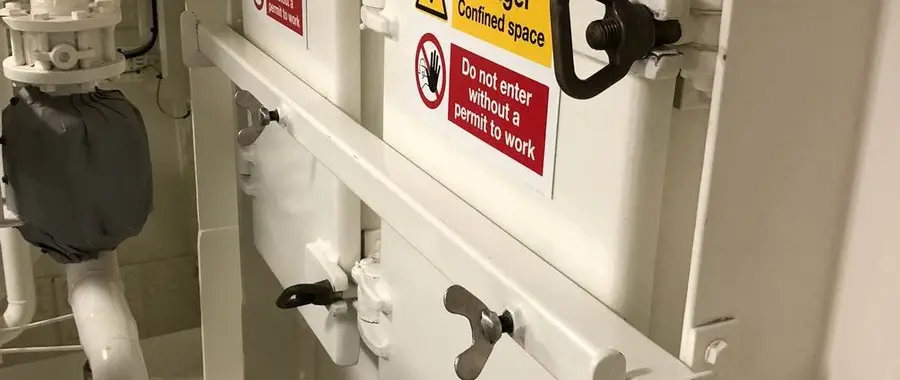
Sentini Marine official marine safety photograph showing a confined-space danger warning; vessel/location unidentified.
A 26 November 2026 Sentini Marine safety review examines how the IMO's existing enclosed-space entry recommendations translate into superyacht hazard registers, entry procedures and emergency plans.
A new safety review published by yacht-service specialist Sentini Marine on 26 November 2026 has brought renewed attention to a dangerous category of routine work aboard large yachts: entry into enclosed spaces. The company examines the International Maritime Organization's revised recommendations on the subject and argues that crews should know more than simply the location of a tank or chain locker. They need to understand how its atmosphere may change, what the surrounding spaces contain, and how an emergency rescue could be organised without creating further casualties.
The IMO recommendations are not a regulation introduced this week. Resolution MSC.581(110) was adopted on 27 June 2025 and replaced the earlier recommendations developed in 2011. The current news is Sentini Marine's industry-focused 2026 guidance for yacht crews. For operators of yachts exceeding 24 metres, the practical significance is the renewed opportunity to check that a documented safety system also reflects the vessel's actual spaces, equipment, personnel and working routines.
The danger associated with a confined or enclosed space often lies in an atmosphere that cannot be assessed by sight or smell. Oxygen deficiency, toxic gases or flammable vapours may develop in places that otherwise look familiar. A chain locker, void, sewage tank, cofferdam or other space may appear unchanged since the last inspection, but the conditions inside it can be materially different. A safe workplace cannot be assumed merely because access is physically possible.
Large yachts often have teams skilled in hospitality, deck maintenance and technical engineering. That professional mix creates a need for shared terminology and clear authority over hazardous jobs. The individual who knows how to open a tank cover may not be the person authorised to approve entry, test the atmosphere or lead a rescue. Separating those responsibilities is important because an apparently urgent task can put pressure on someone to enter before the appropriate controls are in place.
The Maritime Safety Committee adopted Resolution MSC.581(110) in June 2025 as revised recommendations for entering enclosed spaces aboard ships. The text is published within the IMO's official resolution series and addresses risk assessment, atmosphere testing, entry controls and emergency preparation. Sentini Marine's 26 November 2026 article considers what those recommendations mean for day-to-day operations on yachts, where a dangerous space may be opened only occasionally.
That distinction between an international recommendation and a vessel's legally applicable requirements deserves emphasis. The resolution invites administrations and operators to apply the revised guidance appropriately, while particular flag-state rules, safety-management obligations and national regulations may impose their own requirements. A captain or manager should therefore verify the yacht's actual compliance position rather than treating a general industry article as a substitute for flag advice.
One prominent feature of the revised recommendations is a ship-specific enclosed-space register. Sentini Marine describes it as more than a list of compartments. A useful entry would identify the space, how it is reached, its relationship to adjacent spaces and the physical hazards that may affect a person working inside. The register needs to be maintained as a working reference rather than an archive prepared once and then forgotten.
For a superyacht, that exercise can reveal the practical differences between similar-looking spaces. A tank entered during a shipyard period may have a different access arrangement from a locker crew visit more frequently. Adjacent systems or residues can affect atmospheric risk, and an opening that is adequate for entry may be problematic when carrying out a rescue. The register helps those details become part of the planned job rather than a discovery made after someone is in difficulty.
The IMO's recommendations place substantial weight on assessing the atmosphere before entry and maintaining appropriate controls throughout the work. A space may need ventilation, testing and continued monitoring as the job proceeds. Personnel must understand the limitations of their instruments and what the readings actually represent. A reading from one location or one moment in time is not permission to assume that every part of a space is safe.
Sentini Marine's discussion highlights the importance of documenting the available ventilation and atmosphere-testing arrangements for each space. This is especially relevant on complex yachts where temporary equipment may be stored away from the job location. An effective procedure needs to identify who is competent to perform the checks, how a safe condition is verified and what action follows if that condition changes. Such questions are more useful than simply adding another form to an existing checklist.
Safe entry begins before a hatch is opened. Risk assessment, personnel assignment, appropriate equipment and an entry permit can make sure that the hazards have been considered and that the team understands the planned work. The exact form of the permit system depends on the yacht's applicable rules and management arrangements. The important principle is that the work is not self-authorised by the person most eager to complete it.
The power to stop a job is equally important. If ventilation fails, a detector alarms, communication is lost or unexpected conditions appear, a predetermined response is safer than improvisation under pressure. Owners and managers should support crews who halt work for a genuine safety reason. No maintenance deadline, appearance requirement or operational inconvenience justifies assuming an enclosed space is safe when the evidence is incomplete.
A person collapsing inside a tank or locker creates a particularly dangerous emergency because a well-intentioned colleague may enter without protection and become another casualty. The revised IMO recommendations emphasise considered, ship-specific emergency response. Equipment, training, communications and the physical route for extraction all need attention before the entry begins, not only when someone fails to answer a call.
Yacht layouts can make recovery especially difficult. Access openings may be narrow, ladders steep and the space too small for several rescuers. The equipment required for one compartment may not suit another, so a single generic rescue statement may conceal crucial weaknesses. An appropriate plan should be developed with competent maritime safety specialists, tested where required and reviewed after changes to the vessel or its equipment.
Sentini Marine draws attention to yachts where an enclosed space is entered only a few times each year. Familiarity with general seamanship does not necessarily give a crew member recent experience of this particular task. Machinery spaces and tanks can also be altered during maintenance, changing their hazards and access arrangements. A vessel may have excellent training records while still lacking practical confidence with a specific enclosed-space recovery scenario.
This is why a register and rescue plan must be linked to drills, competency and handover. A new engineer should be able to understand the location and hazards of relevant spaces without relying only on informal advice from someone who previously worked on the yacht. Seasonal crew changes and refit periods can make that consistency particularly valuable. The goal is a reliable shared procedure that survives changes in personnel.
The revised guidance also has implications for how a yacht's onboard team communicates with the people who manage it ashore. A vessel undergoing refit may have contractors entering spaces that crew rarely visit. Shipyard personnel will bring their own safety systems, but the yacht remains a complex environment with vessel-specific hazards that cannot be fully understood from a generic work permit.
Before work starts, the relevant parties should establish who controls the space, who authorises entry, what has been isolated and how the emergency response will operate. The yacht's captain, engineer, management company and yard may need to coordinate procedures and records. Unclear boundaries between contractor responsibilities and the vessel's own safety management are themselves a hazard, particularly if an incident requires rapid decisions.
A safety-management document can appear comprehensive while offering little help at the entrance to a difficult space. A useful enclosed-space register should be recognisable to the crew who will work from it. Access arrangements, connected compartments, ventilation equipment and rescue provisions must correspond to the yacht as it exists today, including modifications made during recent refit work.
Periodic review provides an opportunity to discover gaps. The team can compare recorded spaces with actual compartments, check the condition and location of detection equipment and identify procedures that are too generic. Revisions should have clear ownership so they do not disappear when a department head leaves. A strong system makes it straightforward for a newcomer to understand the vessel and supports a deliberate decision about whether a task can proceed.
The owner is unlikely to be involved in deciding which crew member tests a tank's atmosphere, but management oversight can influence whether that work is properly resourced. A reasonable discussion with the captain or management company might cover the existence and condition of the register, the competence of crew involved in entry, the suitability of rescue equipment and the way contractors are supervised during maintenance.
It would also be useful to ask how the safety-management system is updated when the yacht changes. New machinery, revised pipework or altered access can create new conditions. Owners who value a well-maintained vessel should see these reviews as part of professional operation, not an unnecessary administrative exercise. The aim is to prevent a routine maintenance task from becoming an avoidable emergency.
Sentini Marine's article is an accessible prompt for reviewing a hazard that has caused serious casualties across the wider maritime industry. It should not be used to create unsupported statistics for superyachts or to imply that one yacht has suffered an incident. Nor should a short editorial summary be substituted for the IMO text, applicable flag guidance or a competent vessel-specific assessment.
The relevant conclusion is practical: yacht crews should know precisely which spaces are hazardous, how entry is authorised and monitored, and what help is available if a situation deteriorates. When the relevant plans exist only as general templates, the weaknesses can remain hidden until the moment they matter most. The renewed attention in November 2026 gives operators a reason to test whether their documentation and training genuinely match the ship.
The current yacht-industry source is Sentini Marine's 26 November 2026 article on enclosed-space entry. The underlying international guidance is IMO Resolution MSC.581(110), adopted on 27 June 2025. The date and distinction between recommendation and enforceable vessel-specific requirements are preserved in this report.
The accompanying photograph is sourced from Sentini Marine's official media library and shows a confined-space danger warning in a marine machinery setting. It does not purport to show any identified superyacht or a specific incident. The first-party source is credited; no AI-generated imagery or photograph from a competing magazine has been used.
Continue reading
IDEA Data Solutions confirms new 2026.4.5 yacht-management software functions for crew records, maintenance tasks and shoreside fleet reports.
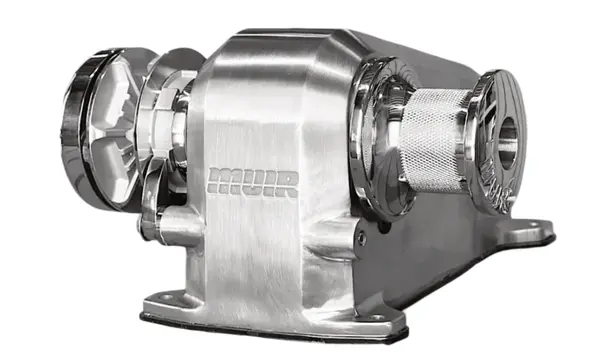
Muir introduces Volume II of its anchoring guide at METSTRADE, addressing equipment handover, commissioning, safe operation and maintenance for large yacht crews.
A new Northrop & Johnson crew advisory questions whether rotational employment suits every position, highlighting differences between senior and junior crew and between yacht …

An IYC and SuperYacht Times panel at Monaco Yacht Show 2026 examined how crew rest, staffing, mental wellbeing and working culture affect the guest …
Superyacht Guide
Continue into the wider Superyacht Guide.
Business opportunities · Superyacht Guide
Companies serving the superyacht market can discuss clearly identified advertising, sponsorship and business-profile opportunities. Commercial activity remains separate from independent editorial coverage.