
IYC Monaco Panel Links Crew Welfare to Better Yacht Charters
An IYC and SuperYacht Times panel at Monaco Yacht Show 2026 examined how crew rest, staffing, mental wellbeing and working culture affect the guest …
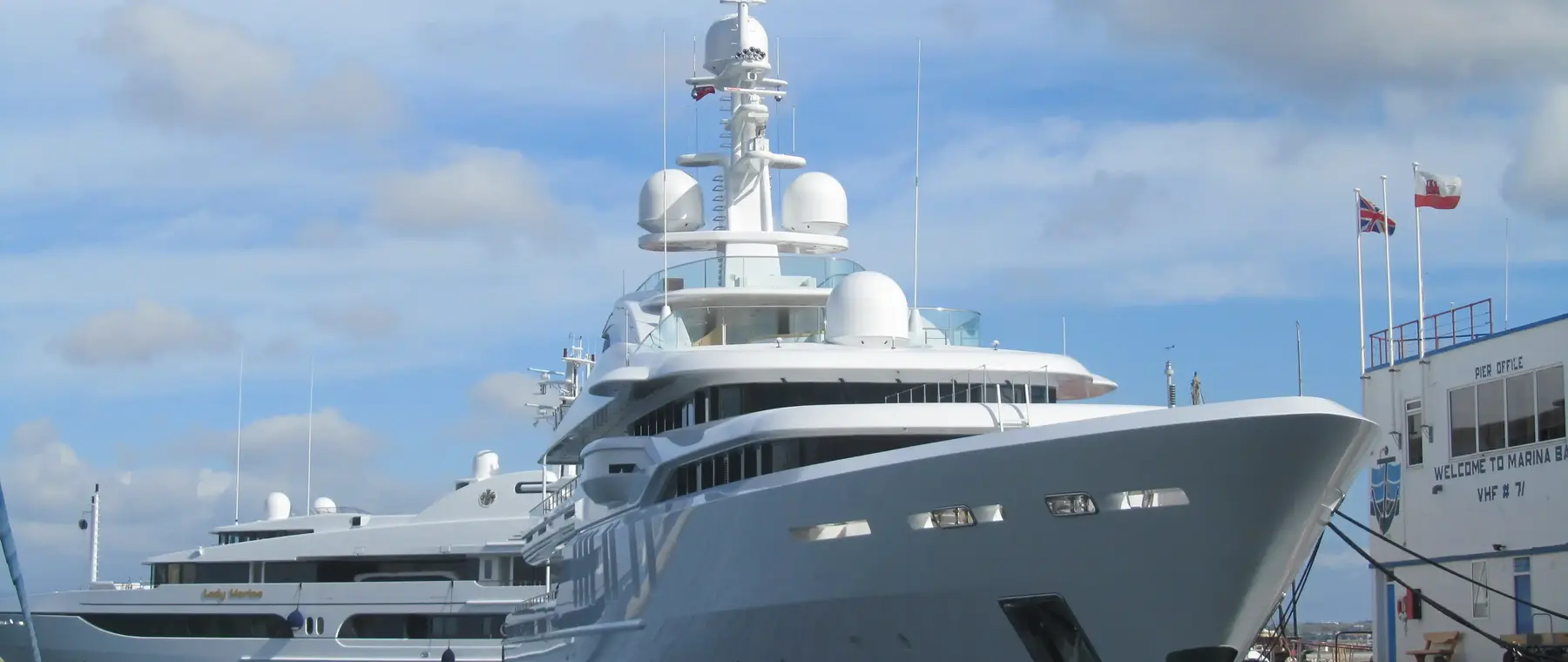
An 80m superyacht is a major maritime operation requiring a large professional crew, sophisticated engineering, significant fuel capacity and year-round technical support. Using Superyacht Guide's established 14% operating-cost baseline, a representative €150 million yacht produces a €21 million annual planning budget before exceptional capital projects.
An 80-metre superyacht is no longer simply a larger version of a 50m or 60m yacht. At this scale the vessel can operate more like a private maritime estate, with departmental crew structures, substantial hotel loads, complex machinery, large tenders, specialist contractors and an operating budget that can comfortably move into eight figures each year.
Actual 80m yachts also demonstrate why length alone cannot determine cost. Heesen's 80.07m Genesis is approximately 1,700 GT and carries 19 crew, Burgess lists the 80m Excellence at 2,115 GT with 22 crew, while Oceanco's 80m Y729 is around 2,600 GT and is designed for up to 28 crew, showing how three yachts of nearly identical length can represent very different operating platforms.
Superyacht Guide uses annual operating expenditure equal to 14% of current yacht value as its standard planning baseline unless a reliable yacht-specific budget is available. Applied to the value range already used in Superyacht Guide's ownership-cost analysis, an 80m yacht valued between €80 million and €180 million produces an indicative annual OPEX range of approximately €11.2 million to €25.2 million.
For this worked example, the yacht is assigned a current planning value of €150 million, producing annual OPEX of €21 million. That is equivalent to roughly €1.75 million per month or about €57,500 per day averaged across the year, although real expenditure arrives unevenly through payroll, insurance renewals, fuel purchases, yard work and seasonal berthing.
| Current yacht value | 14% annual OPEX baseline |
|---|---|
| €80m | €11.2m |
| €100m | €14.0m |
| €120m | €16.8m |
| €150m | €21.0m |
| €180m | €25.2m |
These are planning figures rather than claims about the accounts of any particular yacht. Gross tonnage, age, machinery, crew structure, cruising programme, charter use and technical condition can move actual expenditure materially above or below a value-based estimate.
A €21 million operating allowance becomes more useful when it is divided into the cost centres the captain, management company and owner's office actually need to control. The following model is an editorial planning allocation rather than a set of supplier quotations, and individual yachts may spend far more in one category and less in another while arriving at a similar annual total.
| Annual operating category | 80m planning budget |
|---|---|
| Crew, payroll, rotation, travel and training | €8.50m |
| Maintenance, engineering and spares | €3.80m |
| Fuel and lubricants | €2.20m |
| Insurance | €1.40m |
| Berthing, shore power and port agency | €1.30m |
| Management, accounting and administration | €650,000 |
| Class, flag and compliance | €300,000 |
| Provisions and guest operations | €750,000 |
| Communications, IT and security | €300,000 |
| Tenders, toys and supporting equipment | €400,000 |
| Operating contingency | €1.40m |
| Total annual OPEX | €21.00m |
The budget excludes financing, depreciation, owner taxation and exceptional capital projects such as a complete repaint, major machinery replacement or substantial interior rebuild. Those costs should be planned separately because allowing an unusually expensive refit year to distort routine OPEX makes year-to-year ownership comparisons less useful.
An 80m yacht normally needs much more than a captain, engineer and hospitality team. Command, deck, engineering, electrical and AV/IT, interior, galley and administrative functions may each have their own departmental structure, while rotational senior positions can mean the annual payroll supports more people than there are permanent crew berths onboard.
Current real-world examples show the range clearly: Genesis carries 19 crew, Excellence 22, and Oceanco's Y729 is designed for as many as 28. The difference illustrates why crew expenditure cannot be derived from length alone, with rotation, recruitment, medical cover, travel, certification and training all contributing to the annual personnel budget.
The €8.5 million personnel allowance in this model therefore covers considerably more than salary. It represents the cost of maintaining a stable professional organisation around the yacht throughout the year, including relief coverage and logistics that continue even when the owner is not aboard.
Fuel remains one of the most visible variable expenses, but two 80m yachts can have radically different consumption profiles. Burgess publishes a cruising consumption figure of around 550 litres per hour at 13 knots for the 80m Excellence, while Heesen's 80.07m Genesis is a very different high-performance design with four main engines, a top speed of around 29 knots and 120,000 litres of fuel capacity.
That comparison explains why assigning fuel solely from length is unreliable. Cruising hours, passage speed, generator load, air-conditioning demand, tender operations, Atlantic crossings and time spent at anchor can all change the annual fuel bill, while an intensive Mediterranean-and-Caribbean programme will look very different from a yacht operating mainly within one region.
Hotel load also matters at this scale because an 80m yacht consumes energy even when the main engines are stopped. Heesen says yachts spend about 90% of their time at anchor or docked on average and calculates that generators and hotel load can account for around half of total emissions, reinforcing the importance of modelling electrical demand alongside propulsion fuel.
An 80m yacht contains a large inventory of machinery that has to remain available at professional standards: engines, generators, stabilisers, HVAC, watermakers, pumps, navigation systems, safety equipment, AV/IT, tenders and hotel systems all have maintenance cycles. Paint, teak, exterior glass, hydraulic systems and specialist interior finishes add further recurring work that becomes disproportionately expensive as surface area and technical complexity increase.
Fraser treats maintenance, refit planning and technical management as structural parts of yacht ownership rather than optional extras. That is why the €3.8 million maintenance line in this model should be treated as routine engineering and repair expenditure rather than permission to absorb a complete repaint or major five-year refit into ordinary OPEX.
A separate capital reserve remains advisable for paint systems, machinery overhauls, tenders, technology replacement and major class-related work. Several comparatively controlled years can be followed by a very expensive yard period, so liquidity planning matters more than pretending those costs arrive evenly.
At 80 metres, the problem is not simply what a berth costs but whether a suitable berth exists in the required location. Length, beam, draft, shore power, security, tender access and manoeuvring space reduce the number of practical options, especially during the Mediterranean summer and major events.
Official Monaco pricing illustrates the scale of premium-event berthing. For the 2026 Formula One Grand Prix period, Port Hercule published a rate of €137,930 excluding VAT for yachts from 79.50m to 89.49m in the relevant berth-sale zone, demonstrating how a single high-demand period can become a six-figure marina expense before the rest of the year's home berth, shore power and port services are considered.
The €1.3 million annual allowance in the worked model therefore assumes a blend of home berthing, transient ports, shore services and agency support rather than continuous premium-event positioning. Owners whose programmes prioritise Monaco, Saint-Tropez, Porto Cervo or similarly constrained locations should stress-test the berth budget independently.
Insurance becomes material on a yacht worth €150 million because even a relatively small percentage of insured value produces a seven-figure premium. Fraser describes comprehensive superyacht insurance as commonly falling between roughly 0.5% and 2% of vessel value per year, depending on age, condition, cruising area, claims history and scope of cover, which shows why the planning allowance should be replaced with an actual broker quotation before a working budget is approved.
Professional management likewise becomes more important as the yacht grows. Annual budgets, payroll, supplier payments, class and flag requirements, technical planning and owner reporting need structured control, and Fraser describes its management process as working from an agreed annual budget with regular comparison of actual expenditure against forecast.
At 80 metres that reporting may also need to integrate with an owner's family office, security advisers, aviation operations or shoreside staff. The yacht effectively becomes one substantial operating business within a much larger ownership structure.
The difference between Genesis at approximately 1,700 GT and Y729 at about 2,600 GT is substantial even though both measure around 80 metres. Greater volume can mean more guest spaces, crew accommodation, technical plant, HVAC demand, interior surface area and equipment to maintain, while speed and propulsion configuration can create another completely separate cost curve.
This is why the phrase “an 80m yacht costs €21 million a year” should never be treated as an engineering fact. It is a planning model for a representative high-value yacht, and the correct owner budget ultimately has to be rebuilt from the vessel's gross tonnage, crew list, machinery hours, insured value, berth commitments and cruising programme.
For a representative €150 million 80m yacht, €21 million a year is a useful Superyacht Guide planning baseline for routine annual operation. An owner should maintain additional liquidity outside that figure for major paint, refit, machinery renewal and other capital projects rather than assuming that a normal operating allowance will absorb every lifecycle event.
The most important step is to replace the model with real numbers as soon as they exist. Crew contracts, insurance quotations, fuel-consumption curves, home-berth agreements, planned engine hours, class schedule and yard forecasts should progressively replace each assumption, turning the 14% rule from a broad ownership indicator into a vessel-specific financial plan.
At 80 metres, budgeting discipline is no longer simply about controlling luxury expenditure. It is about funding a complex maritime organisation reliably enough that the yacht remains safe, compliant, technically ready and capable of delivering the programme for which it was built.
Continue reading
An IYC and SuperYacht Times panel at Monaco Yacht Show 2026 examined how crew rest, staffing, mental wellbeing and working culture affect the guest …
Yacht Chef Salary 2026: Pay, Tips and Charter Earnings Yacht-chef pay depends on yacht size, private or charter use, professional background, qualifications, rotation and …
Superyacht Crew Tips: How Much Can Crew Earn on Charter? Charter-yacht crew often receive discretionary guest tips, but tips are not guaranteed salary and …

During a charter, the captain has to balance guest expectations with crew capability, rest requirements and a weather picture that can change by the …
Superyacht Guide
Continue into the wider Superyacht Guide.
Business opportunities · Superyacht Guide
Companies serving the superyacht market can discuss clearly identified advertising, sponsorship and business-profile opportunities. Commercial activity remains separate from independent editorial coverage.