
IYC Monaco Panel Links Crew Welfare to Better Yacht Charters
An IYC and SuperYacht Times panel at Monaco Yacht Show 2026 examined how crew rest, staffing, mental wellbeing and working culture affect the guest …
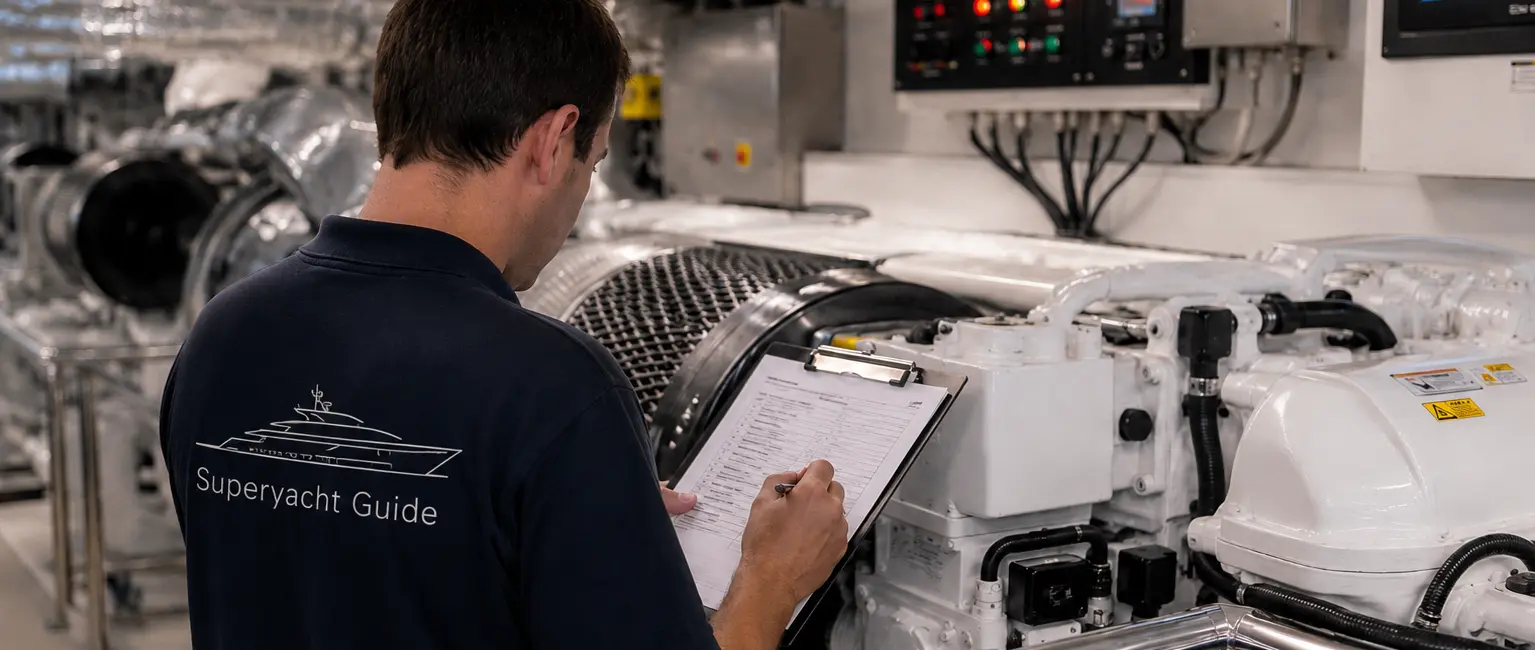
Image: Superyacht Guide
Engineering offers one of the clearest technical career ladders on a superyacht, but the ticket system can be confusing. This 2026 guide explains the MCA Small Vessel route, current salary bands and how engineers progress toward Chief Engineer.
Engineering is one of the clearest technical career ladders on a superyacht, but the qualifications can look confusing because crew still talk about “tickets” while the regulator talks about certificates, capacities and limitations. In 2026, anyone planning a UK-ticketed engineering career needs to understand both the MCA Small Vessel route and the way yacht size, propulsion power, sea time and onboard responsibility shape promotion.
In everyday yacht language, a ticket can mean anything from an Approved Engine Course certificate to a full Certificate of Competency, but they are not equivalent. The MCA says the position an engineer holds onboard must be reflected by the capacity and limitations on the relevant CoC, so a course certificate that helps someone enter the engine room is not automatically authority to serve as engineer officer on every yacht.
The regulatory structure has also changed. The MCA states that the old yacht engineering structure is closed to new Notices of Eligibility apart from resits, while existing Yacht CoCs can still be revalidated or converted, so new progression is now through the Small Vessel structure in MSN 1904.
AEC 1 remains a practical entry point for people building small-vessel engineering knowledge, and MCA guidance describes it as a non-STCW certificate designed to provide a foundation for an engineering career. AEC 2 is the enhanced continuation, adding further theoretical and practical work across auxiliary systems and forming part of the wider Small Vessel training framework.
For someone aiming beyond junior or dual-role work, the important step is to obtain an action plan from an MCA-approved Small Vessel engineering training provider and build the correct sea service toward a CoC. MSN 1904 is structured as a progressive career path, with examinations, approved training, ancillary requirements and sea-time evidence becoming more demanding as the engineer moves toward operational and management-level responsibility.
Actual job titles vary with yacht size and manning, so there is no single universal sequence that every engineer follows. A typical large-yacht department may include a motorman or junior engineer, third engineer, second engineer and Chief Engineer, while the very largest yachts can add a first engineer, ETO and dedicated AV/IT specialists.
The safest way to plan promotion is therefore to work backwards from the certificate required for the next position rather than simply chasing a more senior title. Sea service, machinery power, yacht size, written and oral examinations and the limits printed on the CoC all matter, and engineers moving between yachts need to make sure their qualification actually covers the role shown on the vessel’s manning arrangements.
2026 engineering salary guide shows how sharply pay rises with yacht size, qualification and responsibility. Its published monthly ranges put Chief or Sole Engineers at €5,000–€7,000 on 30–40m yachts, €6,500–€8,000 on 40–50m yachts, €8,000–€12,000 on 50–60m yachts and €11,000–€12,000-plus on 60–80m yachts.
These are market guide ranges rather than guaranteed rates, and the package matters as much as the headline salary. Rotation, leave, bonus structure, cruising programme, private-versus-charter use, tax position, ticket level and the complexity of the technical plant can all change what two apparently similar engineering jobs are worth to a candidate.
Rotation describes time-for-time 2:2 rotation as the standard expectation for Chief Engineers and Second Engineers in the 2026 market, particularly at senior levels. That matters because promotion is no longer judged only by whether the next yacht pays more; experienced engineers increasingly compare rotation, continuity, technical challenge and the owner or management team alongside salary.
Longevity is also being rewarded because senior engineers who have remained with a yacht for several years are in demand, while hybrid propulsion and sustainability knowledge are becoming more valuable recruitment skills. An engineer who can combine a higher CoC with proven reliability, modern electrical knowledge, hybrid-system experience and a strong maintenance record can therefore strengthen both promotion prospects and negotiating power.
For a new entrant, the sensible sequence is to build genuine mechanical competence, complete the appropriate foundation training and then record sea service carefully while working toward the first CoC required for officer-level responsibility. From there, each promotion should be planned around the next certificate, the sea time needed to obtain it and the size and power of yacht on which that certificate will be used.
The biggest mistake is treating tickets as isolated courses to collect rather than a structured professional pathway. The engineers who progress most effectively are the ones who match training to real onboard responsibility, preserve clean sea-service records, choose yachts that give them the machinery exposure needed for the next step and continue upgrading until their certification matches the level at which they want to work.
Continue reading
An IYC and SuperYacht Times panel at Monaco Yacht Show 2026 examined how crew rest, staffing, mental wellbeing and working culture affect the guest …
Captain-developed software from Helmwise turns crew notes and handover material into structured records, addressing the loss of operational knowledge when superyacht personnel rotate.
TWW Yachts has launched its 2026 Crew Awards programme, creating four categories covering teamwork, guest experience, individual contribution and onboard content.

D-Marin is positioning winter home ports around crew welfare as well as yacht operations, combining community, wellness, shoreside access and digital administration.
Superyacht Guide
Continue into the wider Superyacht Guide.
Business opportunities · Superyacht Guide
Companies serving the superyacht market can discuss clearly identified advertising, sponsorship and business-profile opportunities. Commercial activity remains separate from independent editorial coverage.