AB Inflatables Alumina 9.5 ALX Offers a Lightweight Tender Option for Superyacht Fleets
By Superyacht Guide Newsroom · Edited by Superyacht Guide Newsroom
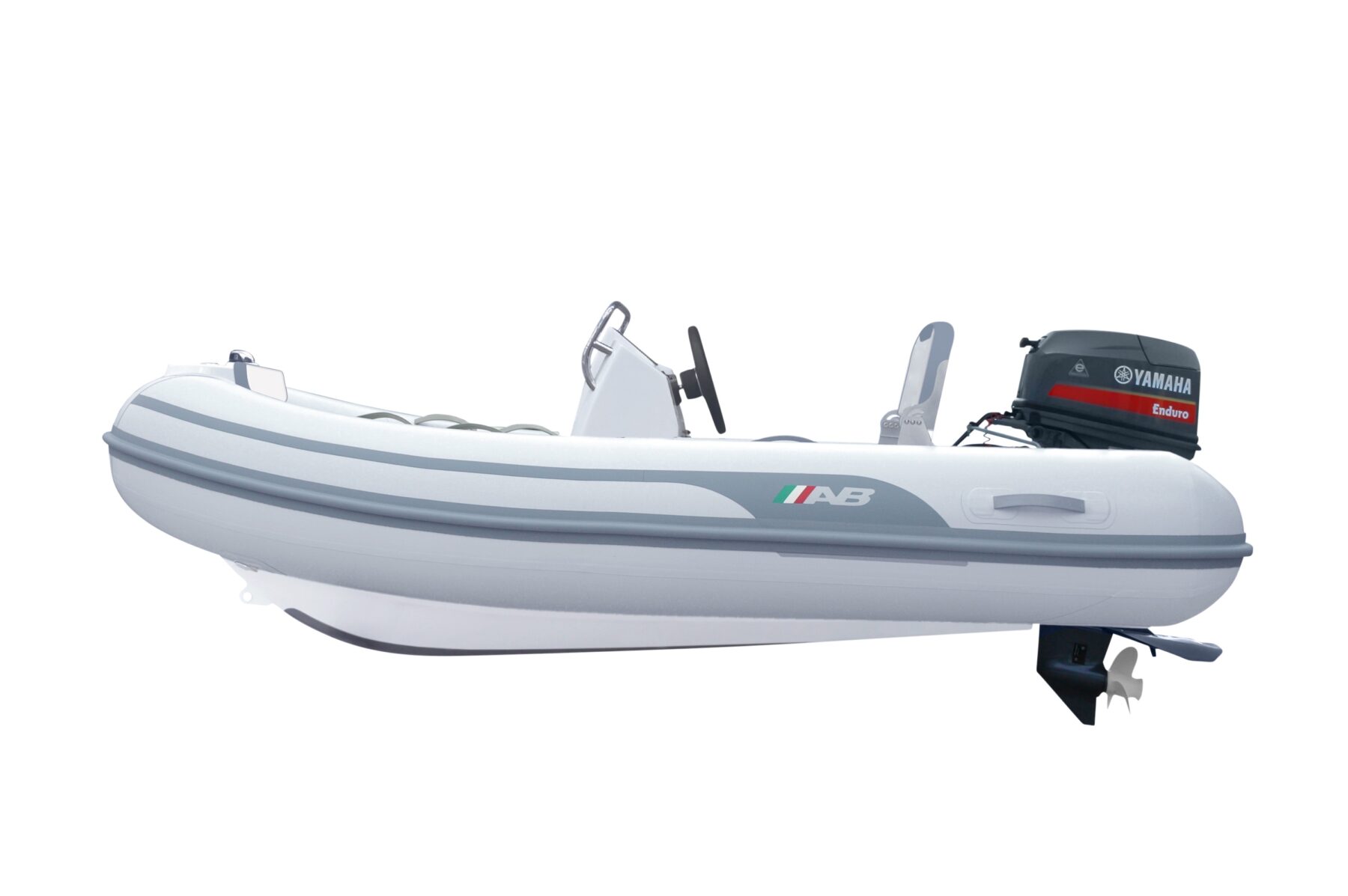
AB Inflatables official specific Alumina 9.5 ALX model photo original yacht tender 2026 SYG
AB Inflatables details its 2.90m Alumina 9.5 ALX tender, with an aluminium hull, five-person rating and lightweight stowage for yacht support.
AB Inflatables is presenting its Alumina 9.5 ALX within the METSTRADE 2026 exhibitor catalogue, drawing attention to a small aluminium-hulled rigid inflatable that may interest yacht owners with limited tender-storage space. The manufacturer's model page describes a 2.90-metre boat with a console layout, capacity for five people and an empty weight quoted at approximately 117 kilograms. It is one of a wider group of Alumina boats designed to combine a robust aluminium hull with manageable lifting requirements.
The 9.5 ALX is not presented by the manufacturer as a newly launched November 2026 model. Its appearance in the current industry catalogue and the availability of a 2026 Alumina range brochure provide a reason to reassess the product for today's yacht tenders. Its scale also demands honest context: it is a compact utility and passenger boat, not a direct replacement for the larger enclosed or limousine-style tenders carried by many superyachts.
The model page gives an overall length of 9 feet 6 inches, or approximately 2.90 metres, and a beam of 5 feet 6 inches, or about 1.68 metres. The quoted interior dimensions include a usable length of 2.11 metres and an inside beam of 0.76 metres. That is a small working area once occupants, equipment and safety gear are aboard.
The tender's suitability depends on more than its length. A parent yacht must also consider height, lifting points, stowed beam and the space required to service the outboard and steering. The published model dimensions provide a starting point for a garage layout or davit assessment, but the actual delivery configuration should be checked against an up-to-date technical drawing.
AB Inflatables lists the model's weight as 258 pounds, equivalent to approximately 117 kilograms. A relatively low empty weight may be attractive to owners of smaller yachts or those carrying a secondary service craft, particularly where the boat must be handled with compact davits or a platform lift.
The quoted figure should not be taken as the complete lifting load. The outboard, fuel, battery, equipment, removable accessories and any remaining water can increase the mass substantially. A naval architect or lifting-equipment specialist should calculate the fully equipped boat weight and verify the lifting arrangement. A light empty hull does not mean that any available crane can handle the finished tender safely.
The Alumina name reflects the use of an aluminium hull rather than the fibreglass construction found on many other RIBs. The manufacturer promotes the strength and practicality of this material for exploring shallow waterways and beaches. Aluminium can be suitable for demanding use, but the way it is fabricated, protected and maintained matters.
A tender regularly driven onto sand or handled around a concrete quay will still be vulnerable to physical damage. The crew should inspect the hull, its welds and any applied coatings during routine maintenance. A robust material choice is not permission to disregard safe approach speed or to operate over unknown underwater hazards.
AB's model specification identifies a recommended outboard power of 15 horsepower and a maximum of 25 horsepower. The correct engine selection should consider performance expectations, the craft's loading and the manufacturer's permitted combinations. A larger engine is not automatically the better choice if it adds unwanted weight or alters balance.
The installer should follow the approved shaft length and mounting requirements, which are also specified on the manufacturer's page. An outboard chosen without reference to the hull's design can affect trim and safe handling. The owner's programme should define whether the tender's role is short guest transfers, crew errands or exploration at modest speeds.
The product specification lists capacity for five persons. Such a figure represents a formal design limit under the relevant manufacturer's conditions, not an assurance that five adults with luggage will enjoy unlimited room or that the boat can be loaded beyond its maximum capacity. The console and tubular buoyancy chambers occupy space that would otherwise be available for movement.
For superyacht use, a captain may decide to operate the tender with fewer people to preserve comfort, handling or payload margins. The crew also need sufficient space for lifejackets, communication equipment and required safety gear. Passenger planning should be based on total load, not simply the maximum number printed on a brochure.
The manufacturer identifies three chambers in the inflatable tube arrangement. Dividing the tubes into separate sections can be a feature of RIB construction, providing some ability to maintain buoyancy if one section loses pressure. The exact behaviour depends on the design, loading and the nature of the damage.
The presence of multiple chambers should not be interpreted as proof that the craft is unsinkable or approved as a rescue boat. Crew must check pressure and condition before departure and follow the maker's maintenance directions. Damage to one chamber demands assessment and repair rather than continued use on the assumption that the others are sufficient.
The 9.5 ALX model page identifies Recreational Craft Directive Design Category C. This category refers to specific design conditions under applicable recreational craft requirements. It should be read together with the boat's documentation, the permitted load and the captain's assessment of conditions rather than treated as permission to operate in any weather.
A superyacht tender can encounter unexpected wind, wake and traffic while moving between the parent yacht and shore. A small boat has less physical margin for comfort and exposure than a larger enclosed tender. Operators should set conservative operating limits appropriate to the route and crew experience.
Many substantial superyachts carry more than one tender. The principal guest craft may be fitted for comfort and longer transfers, while a smaller boat can handle crew movements or simple errands in sheltered waters. A compact Alumina may be worth evaluating for that secondary role, depending on deck space, handling equipment and the owner's preferences.
It would be unwise to select the model solely because it is lightweight. The required mission should determine the boat's configuration. If the yacht routinely needs to transfer large groups over long distances or in challenging weather, a larger vessel may be more suitable. A compact tender adds value when its actual workload matches its capabilities.
Tender garages, aft platforms and deck cradles impose different limitations. The yacht's lifting arrangement must support the tender while leaving safe access for securing and maintenance. A small boat can sometimes fit where a larger craft cannot, but its outboard and console may be the controlling dimensions rather than the hull length.
The builder or refit yard should prepare a stowage drawing using the actual specification, including protruding fittings and securing points. Consideration should also be given to draining water, protecting the tubes from abrasion and accessing the engine for checks. Poorly planned storage can undermine the convenience of an otherwise compact boat.
Inflatable tubes require regular attention in a hot, salty marine environment. Excessive sunlight, inappropriate cleaning agents and constant abrasion can affect their surfaces over time. Crew should use cleaning and pressure-adjustment procedures approved for the specific tube material fitted to the tender.
The manufacturer's general Alumina information does not establish the precise tube fabric or finish on every configuration. A prospective buyer should confirm this along with colour choices and replacement arrangements. A tube that is easy to keep in good condition can make a meaningful difference to the appearance of a superyacht's supporting fleet.
A rigid inflatable of this size may provide a straightforward way to move personnel or equipment over short distances, but the available seating and protection are modest compared with a larger custom tender. Guests in formal clothing or with limited mobility may find boarding and disembarking less convenient than they would in an enclosed craft.
A yacht management team should match the tender to the intended passengers and destinations. A useful secondary boat does not need to provide the comfort of the principal guest transfer vessel, but it should be operated within clear limitations. An owner who values occasional exploration may have different priorities from a charter programme with frequent hospitality transfers.
A small tender still needs appropriate navigation, communication and safety arrangements for its operating area. The exact requirements will depend on the yacht's procedures, flag and local rules. The console layout should leave enough space for essential controls without obstructing the driver's vision.
Adding electronics creates electrical and service demands. A buyer should consider whether the delivered package includes the desired equipment and how it will be powered. The tender's technical documentation should identify the battery, charging arrangements and any interface to the parent yacht's communication procedures.
AB describes the Alumina hull as rugged enough for exploration in rivers, lakes and shallow coastal areas. This may appeal to owners who want a practical craft for accessible beaches or quiet anchorages. However, shallow-water operation carries risks from rocks, sandbars, submerged objects and the propeller's position.
The coxswain needs local knowledge and an appropriate approach plan. Running aground deliberately can damage any boat, particularly if the seabed is uneven. Crew should distinguish between the manufacturer's intended recreational use and the specific conditions they expect to encounter on a superyacht itinerary.
A yacht operating internationally should consider service support for both hull and outboard. The hull manufacturer may supply replacement tube sections and fittings, while the engine requires its own dealer network. A compact tender can be economical to own if these systems remain straightforward to maintain, but the actual cost depends on configuration and use.
A useful procurement package includes model-specific instructions, serial numbers, warranty documents and the recommended service schedule. The crew should preserve those records in the main yacht's technical archive. An inexpensive component can delay an entire tender programme if it is difficult to identify or obtain in a remote port.
Superyacht owners sometimes expect the colours and finishes of their tenders to complement the parent vessel. The manufacturer's catalogue highlights customisation options across its wider product family, but the exact available arrangements for the 9.5 ALX should be confirmed. Decorative choices need to be balanced against durability, visibility and practical cleaning.
An owner representative should approve a final specification listing finishes, upholstery, tubes and accessories. It is better to identify the important details before ordering than to rely on the appearance of one online photo. Any additional equipment may also alter the boat's empty weight and storage requirements.
The official AB Inflatables website provides model-specific dimensions, weight, occupant capacity, engine guidance and a current 2026 Alumina brochure. The METSTRADE 2026 entry confirms that the manufacturer continues to promote the 9.5 ALX as a lightweight console tender. Neither source establishes a new model launch this month or guarantees suitability for every superyacht installation.
For large-yacht captains, the question is whether a small, manageable aluminium RIB fills a genuine gap in the supporting fleet. The strongest answer will come from a careful assessment of stowage, lifting, passenger comfort and operating conditions. When a tender is selected for the tasks it will actually perform, compact dimensions can be a practical advantage rather than a compromise imposed by the yacht's garage.
Primary source: AB Inflatables official model-specific Alumina 9.5 ALX technical specifications and 2026 Alumina range brochure.
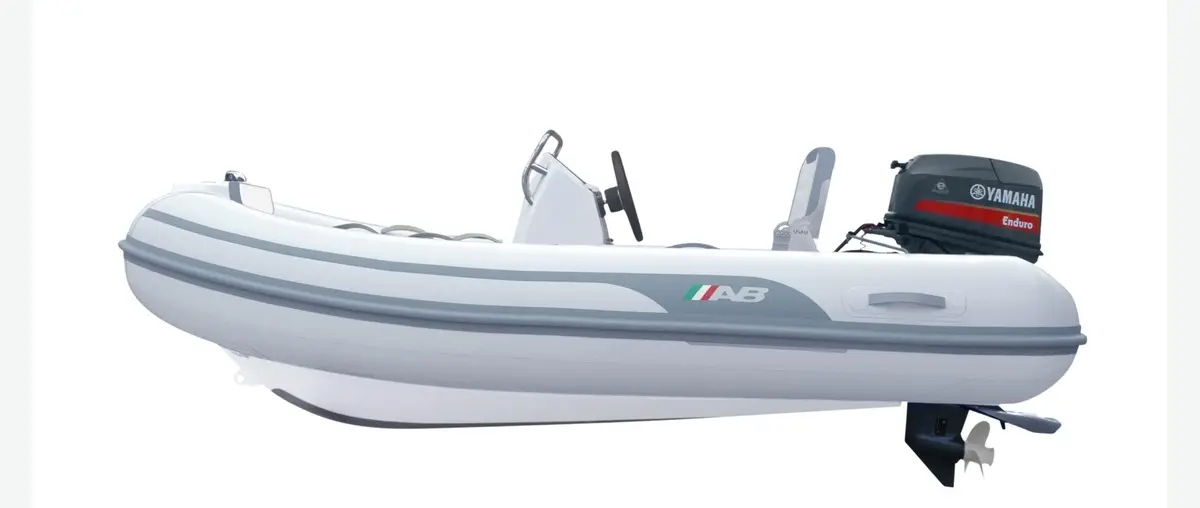
AB Inflatables official Alumina 9.5 ALX side-view manufacturer photograph from its exact model page, preserving source credit. Official source.
Explore
Go deeper into the yachts, companies, events and destinations directly connected to this article.
Continue reading
Sleipner E-series electric tunnel thrusters combine proportional controls, compact design and integrated electronics for yacht manoeuvring systems.

Aegir Cork Group presents SEACORK Deck Plus, a cork-granule deck covering with a low polyurethane content and claims of thermal comfort and grip.
DM Tech Co., Ltd. showcases the SV156 15.6-inch touch BlackBox monitor with six channels, inviting integration review for yacht wheelhouse layouts.
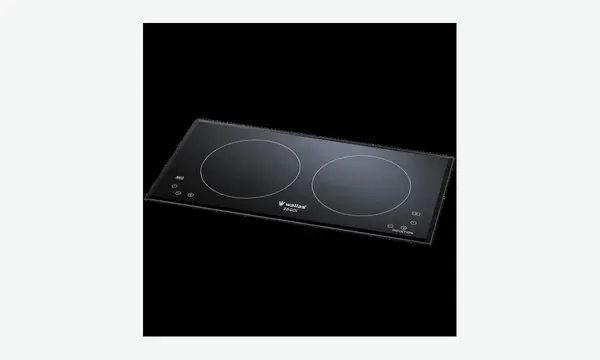
Wallas presents the 3600i two-zone induction cooker with 230V and 110V power adaptation, adjustable output and a shallow marine galley installation.
Superyacht Guide
Continue into the wider Superyacht Guide.
Business opportunities · Superyacht Guide
Companies serving the superyacht market can discuss clearly identified advertising, sponsorship and business-profile opportunities. Commercial activity remains separate from independent editorial coverage.