DM Tech SV156 Gives Yacht Bridge Designers a 15.6-Inch Touch BlackBox Display Option
By Superyacht Guide Newsroom · Edited by Superyacht Guide Newsroom
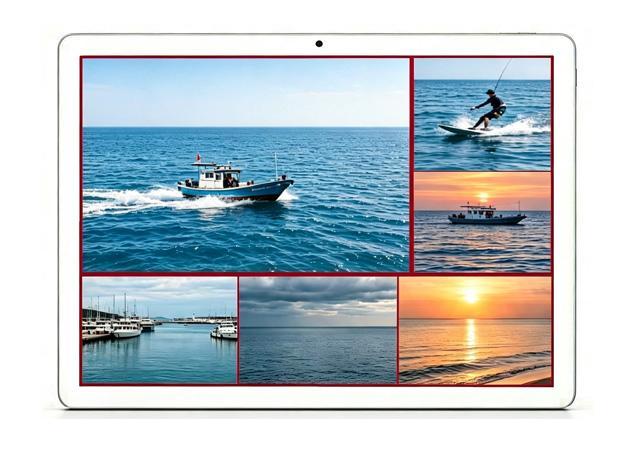
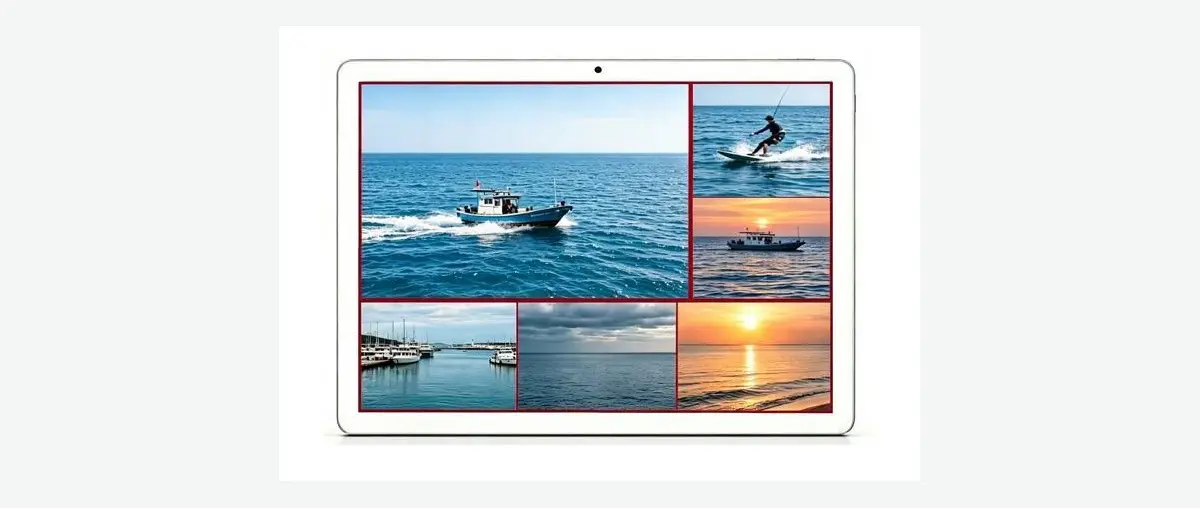
DM Tech SV156 maker original 15.6 inch marine touch BlackBox display monitor product photo SYG November 2026
DM Tech Co., Ltd. showcases the SV156 15.6-inch touch BlackBox monitor with six channels, inviting integration review for yacht wheelhouse layouts.
South Korean marine electronics company DM Tech is presenting its SV156 touch display through the METSTRADE 2026 exhibitor catalogue. The manufacturer describes the unit as a 15.6-inch touch BlackBox monitor with a six-channel arrangement, making it one of several screen sizes offered for vessel helm and electronic-system layouts. The company's product submission identifies 1 August 2026 as the original release date, placing this model within the current year's marine-electronics offerings rather than an older display merely re-labelled for the exhibition.
For yacht builders and electronics integrators, the principal subject is the careful design of the working helm. Increasingly sophisticated boats may have several navigation, camera and equipment-control interfaces competing for space. A screen described as touch-enabled and BlackBox-compatible could offer another candidate to consider, but its exact technical capabilities must be verified before it is specified for any critical function.
The METSTRADE entry for SV156 is concise. It names a 15.6-inch touch monitor and six BlackBox channels, without publishing a full table of brightness, resolution, viewing angle, ingress protection, power consumption or approved interfaces. The manufacturer's broader exhibitor listing places the SV156 between a 14.1-inch four-channel model and an 18.5-inch eight-channel model, suggesting a family of differently sized display arrangements.
That is useful commercial context but not sufficient to prove interoperability with every navigation system. The exact meaning of six channels must be confirmed with DM Tech. It would be inappropriate to state that the device has six particular video inputs, a given screen resolution or a named marine certification without current technical evidence.
A 15.6-inch display can occupy an intermediate position between a compact standalone instrument and a much larger multifunction screen. In a wheelhouse with several displays, the available panel width may determine whether an additional unit can be installed without obstructing controls or sightlines.
The designer should assess the screen's actual external dimensions, not only its diagonal measurement. Bezels, mounting brackets and cable connections can add considerable depth or width. The dimensions of a display are part of a broader ergonomic arrangement that also includes seating, visibility, reach and access for maintenance.
The term BlackBox in marine electronics commonly describes an arrangement in which some computing or signal-processing components may be located separately from the visible display. Such separation can create flexibility in layouts, particularly when the wheelhouse has limited space behind the panel. The public SV156 catalogue, however, does not show a detailed system architecture, so an integrator should not assume which external processors or inputs are supported.
A modular arrangement can be attractive if it allows a display to be replaced without disturbing the entire navigation installation. That potential benefit depends on documented interfaces and long-term component availability. An owner should ask how the selected screen, processing equipment and cabling are connected before approving a design.
Touchscreens can reduce the number of permanent physical controls needed to navigate menus. They also require careful consideration aboard a vessel in motion. A watchkeeper may find a small target difficult to operate when the boat is pitching, or may be wearing gloves that affect the screen's responsiveness.
The user interface should therefore be demonstrated in conditions resembling real operation. Important functions should not depend exclusively on delicate touch gestures that are difficult to execute under stress. Where appropriate, physical controls, steering and navigation equipment should remain accessible independently of an optional screen.
An instrument panel can display a great deal of information but still be poorly designed if the watchkeeper cannot identify what matters. Position, heading, depth, speed, alarms and camera feeds have different levels of urgency depending on the vessel and operation. A successful helm groups these functions logically and avoids unnecessary distraction.
The SV156's six-channel description may be relevant to an operator considering several video or data sources, but channel count alone does not describe the finished interface. The system integrator must establish how sources are selected, how warnings are displayed and what happens when a feed becomes unavailable.
Cameras can help a coxswain or bridge team see areas that are difficult to observe directly, such as a transom near the quay or a blind spot beside a tender. A touch monitor may form part of an arrangement presenting these images, provided its supported interfaces and viewing performance are appropriate.
It must not be assumed that the DM Tech model has any specific camera capability beyond what the supplier confirms. A bridge trial should check latency, image clarity and switching behaviour using the actual cameras intended for installation. Camera feeds supplement direct observation and seamanship rather than eliminate their need.
Sunlight can make a display that looks clear indoors difficult to read aboard a yacht. Reflective glazing, polished helm surfaces and changing viewing positions create additional challenges. A buyer should request tested brightness, contrast and viewing-angle data and verify that the figures apply to the actual screen revision.
The supplier's brief METSTRADE entry does not publish those specifications. A satisfactory result therefore requires an independent sample test or detailed maker documentation. The same applies to night dimming: a display must be able to reduce glare without making essential information difficult to see.
On a superyacht, the main navigation bridge may already contain an integrated system designed to particular class or flag requirements. Adding a separate touch monitor should not undermine the operation or certification of that installation. An SV156 might instead be considered for an auxiliary view, a non-critical camera panel or a supporting craft, subject to the supplier's actual approvals.
An owner representative should identify the proposed function before selecting the device. If it is to present information used for navigation, the relevant integration and regulatory implications must be reviewed. A commercial marine-equipment listing is not itself a certificate authorising use as a primary navigation display.
A superyacht chase boat or enclosed guest tender may have a smaller console than the parent vessel but still need access to navigation information, cameras and machinery data. A 15.6-inch screen could be of interest when the designer wants a readable interface without devoting the entire dashboard to a single display.
The potential value depends on seating position, helm width and the boat's operating conditions. An open tender exposed to spray and direct sunlight may need a different environmental rating from a protected wheelhouse. Buyers should not infer that all devices sold to the marine market are equally suitable for every mounting position.
Electronics on smaller vessels rely on a finite electrical system. A monitor may consume relatively little compared with propulsion, but several screens, cameras and associated processors can form a significant part of a boat's hotel load. The exact SV156 power requirement must be obtained from the current specification.
Designers should verify operating voltage, protection and the behaviour of the screen during supply interruptions. An unstable connection may cause reboots or loss of data at an inconvenient moment. The electrical installation needs to be designed as carefully as the visible dashboard layout.
Screens can appear to be simple flat components once installed, yet their connections and mounting arrangement require access for inspection or replacement. A yachtbuilder should avoid placing a display in a location where removing it demands substantial dismantling of expensive interior joinery.
The mounting design should allow cables to be inspected without damage and provide adequate space for any required cooling. It is wise to keep as-built photographs and a diagram of the connections. A change of crew or electronics contractor should not make a routine repair unnecessarily difficult.
If the monitor is part of a larger electronic system, the vessel must have a plan for losing the display or the data feeding it. An additional screen can increase situational awareness in normal circumstances, but excessive dependence on one interface can create a new point of failure.
The integrator should confirm what other equipment remains available if the SV156 becomes unusable. Emergency procedures and operator training should make the distinctions clear. Even where a manufacturer advertises a versatile interface, the finished yacht must be designed around dependable functions rather than a single appealing screen.
Some modern displays rely on software and may communicate with connected processing equipment. The public product summary does not establish the SV156's update method, network connectivity or security characteristics. Those details should be requested from DM Tech before the unit is included in a connected onboard architecture.
The yacht's IT or electronics specialist should record the installed software versions and the service route. A system used for navigation-related information should not be casually connected to the guest network. Control of configuration changes is essential when several contractors may access equipment during refits.
DM Tech lists four touch BlackBox models in its METSTRADE portfolio: SV104 at 10.1 inches with four channels, SV141 at 14.1 inches with four channels, SV156 at 15.6 inches with six channels, and SV185 at 18.5 inches with eight channels. These are the manufacturer's published labels, not proof of shared components or identical installation features.
The range provides an opportunity to compare space and information needs across different boats. The largest screen is not necessarily the best choice. A smaller display may be preferable where the watchkeeper's reach, field of view or available console width is constrained.
A sales display can show attractive graphics without demonstrating how a particular vessel's information will appear. An effective evaluation should connect representative sources and ask the future users to perform realistic tasks. Can they select the relevant view promptly? Are critical numbers readable? Does the screen respond predictably when touched?
It is equally important to examine the system in both bright daylight and low-light conditions. The yachtbuilder should record any limitations and obtain support commitments for the exact configuration. The outcome of a trial is more meaningful than treating a screen diagonal as a measure of quality.
DM Tech is listed as a South Korean exhibitor at METSTRADE 2026, with a company website and portfolio that includes marine monitors and cameras. A superyacht travelling internationally should determine how spare screens and technical assistance are supplied. An imported component can still be a good choice if the distributor and integrator provide dependable service.
The purchasing specification should identify the precise model, revision, supplied cables and mounting hardware. Warranty and replacement arrangements should be documented. If the original screen becomes unavailable in future, the owner needs to know whether an alternative unit can fit the same space and connect to existing equipment.
The manufacturer's official August 2026 product entry establishes the SV156 as a 15.6-inch touchscreen described with a six-channel BlackBox arrangement. Its place in a family of smaller and larger monitors is also verifiable through the METSTRADE exhibitor catalogue. The source does not verify detailed resolution, interface types or environmental certifications.
For superyacht designers and managers, that combination of known features and unanswered questions is itself instructive. New equipment should be considered through an evidence-led specification process, with operational requirements defined before hardware is ordered. The value of a bridge display is measured by the information it presents reliably to the person operating the boat, not merely by its screen size.
Primary source: DM Tech Co., Ltd. first-party SV156 15.6-inch six-channel touch BlackBox monitor listing, released 1 August 2026.
DM Tech Co., Ltd. original SV156 15.6-inch BlackBox touch monitor product photograph from its official METSTRADE exhibitor page. Official source.
Explore
Go deeper into the yachts, companies, events and destinations directly connected to this article.
Continue reading
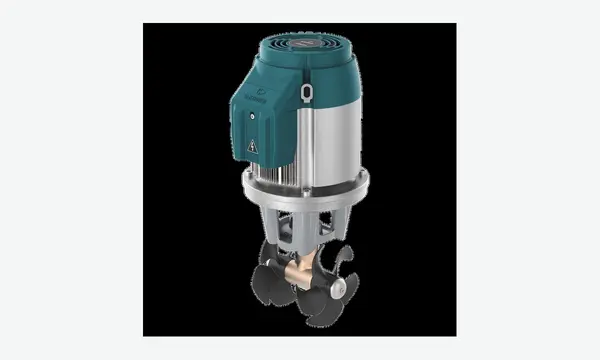
Sleipner E-series electric tunnel thrusters combine proportional controls, compact design and integrated electronics for yacht manoeuvring systems.
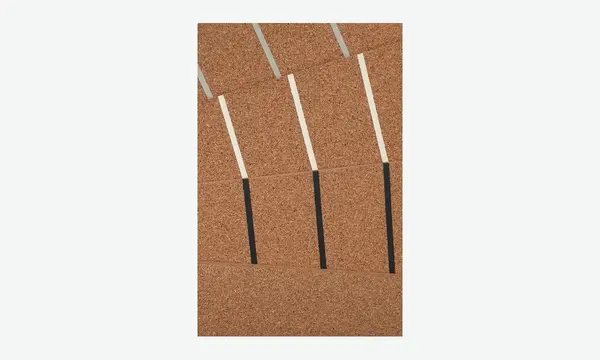
Aegir Cork Group presents SEACORK Deck Plus, a cork-granule deck covering with a low polyurethane content and claims of thermal comfort and grip.
Wallas presents the 3600i two-zone induction cooker with 230V and 110V power adaptation, adjustable output and a shallow marine galley installation.
Navico Group introduces Lowrance Scout with GPS anchoring, FreeSteer joystick and NMEA 2000 integration for sportfishing boats and yacht tenders.
Superyacht Guide
Continue into the wider Superyacht Guide.
Business opportunities · Superyacht Guide
Companies serving the superyacht market can discuss clearly identified advertising, sponsorship and business-profile opportunities. Commercial activity remains separate from independent editorial coverage.