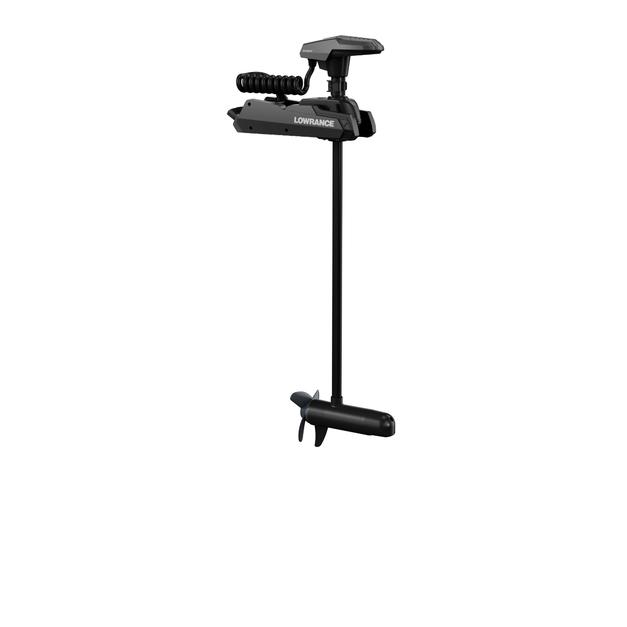
Lowrance Scout Trolling Motor Links GPS Position-Holding and Yacht Sportfishing Support Boats
By Superyacht Guide Newsroom · Edited by Superyacht Guide Newsroom
Navico Lowrance Scout maker original trolling motor GPS station keeping product photo METSTRADE 2026 SYG batch06
Navico Group introduces Lowrance Scout with GPS anchoring, FreeSteer joystick and NMEA 2000 integration for sportfishing boats and yacht tenders.
Navico Group is presenting the Lowrance Scout trolling motor in its METSTRADE 2026 product catalogue, positioning the electrically driven unit as a precise, quiet way to control a boat during fishing. The manufacturer's description combines GPS-based position-holding, near-silent operation, flexible control methods and integration with compatible Lowrance displays. It also identifies a FreeSteer joystick, a foot pedal and a wireless remote as available ways to operate the system.
The product listing carries a 17 November 2026 release date, making it a contemporary item in the marine-equipment industry's autumn announcements. For a superyacht owner, the relevant context is the support fleet: sportfishing tenders and dedicated chase boats can have requirements quite different from those of the main yacht. A bow-mounted trolling motor may improve the way a fishing crew holds position or moves slowly, but it is not a substitute for the propulsion and manoeuvring systems of an oceangoing superyacht.
An ordinary fishing motor was once associated mainly with slow, simple movement along a bank or anchorage. Contemporary designs can use satellite positioning and electronically controlled thrust to help the operator hold a position or make small adjustments. That can reduce the need to continually operate the main engine while angling, although conditions and available power still determine what can be achieved.
Lowrance's Scout exemplifies that direction. The official product submission speaks about GPS anchoring rather than a traditional anchor, a distinction that matters. The boat is not physically secured to the seabed. Its motor uses energy to oppose movement, and the vessel can still drift if available thrust, power or positioning information is inadequate.
Navico describes three principal control routes: a foot pedal, a handheld wireless remote and the FreeSteer joystick. The catalogue also identifies a straightforward stow-and-deploy arrangement, Lowrance display integration and an NMEA 2000 connection. Together, these features suggest a system intended to let an angler adjust the boat without constantly moving back to a conventional helm.
The exhibition entry does not establish a complete list of thrust ratings, shaft lengths, operating voltages or compatible hull sizes. Those details are essential when assessing whether the product suits a particular tender. A buyer should obtain the full current manual and installation schedule rather than choose the motor based solely on the number of control interfaces.
A motor-driven station-keeping system estimates where the boat is and applies thrust to reduce its movement away from a selected position. The result depends on the accuracy and availability of the positioning information, the control software and the forces acting on the boat. Wind, current, wash and nearby traffic can all affect performance.
For a yacht owner used to dynamic-positioning terminology, the phrase GPS anchoring may sound familiar. It should not be confused with a formally approved dynamic-positioning installation aboard a larger vessel. A fishing-tender motor offers convenience within its designed use, not guaranteed position-holding during an emergency or a substitute for appropriate anchoring equipment.
Large motor yachts may carry a sportfishing chase boat capable of travelling some distance from the parent vessel. During a fishing session, the team may want to hold near a reef edge or move along a feature without the noise and disturbance of repeatedly accelerating the main outboards. A dedicated trolling motor can be relevant to that operating style.
Not every chase boat has a layout suitable for one. The bow may already accommodate anchoring gear, seating and passenger access, while the electric unit requires its own mounting space and power system. Designers should examine the actual use case before deciding that another piece of equipment offers enough benefit to justify the space.
Navico describes Scout as near-silent. Reduced noise can be attractive to anglers and guests who want a less intrusive experience while a boat is moving slowly. It may also help crew communicate without the constant sound of a larger engine idling. The benefit, however, depends on the surrounding conditions and the exact installation.
A manufacturer's qualitative claim should not be treated as a laboratory noise rating. The crew may still hear propeller cavitation, vibration or other onboard machinery. If acoustic comfort is an important purchasing criterion, an owner can ask for measured sound levels or evaluate the unit during a practical demonstration.
A foot pedal can allow an angler to maintain control while both hands are occupied with fishing equipment. That convenience is well established in small-boat fishing, but its suitability depends on the deck layout and how securely the operator can stand. On a moving boat, a misplaced control can also be difficult to reach safely.
Crew training should address where the pedal is kept, how it is protected from accidental activation and how control is transferred to another user. Equipment needs to be positioned so that it does not create a trip hazard or obstruct access to safety gear. A comfortable demonstration in calm weather is only one part of the assessment.
A handheld remote can be useful when crew are distributed around the deck, but any wireless control device can be misplaced, discharged or damaged. The operator should know how the system responds when a remote stops communicating. An emergency procedure should not depend on finding a particular handset in a crowded fishing locker.
Owners should also ask whether the remote is uniquely paired with the correct motor and how permissions or settings are restored after a replacement. The official summary does not explain all the underlying technical safeguards. The installing dealer should demonstrate the relevant safety functions before the boat is returned to service.
The FreeSteer joystick is described as another way to control Scout. A joystick can make small directional adjustments intuitive for some users, particularly when they need to maintain a position relative to a fishing area. The practical response will depend on the motor, boat displacement and environmental conditions.
A captain should distinguish fishing-position control from marina manoeuvring. The product is marketed as a trolling motor, and nothing in the official entry establishes that it should replace a main helm, bow thruster or propulsion control in a confined commercial berth. Its operating instructions should define appropriate uses and limitations.
The METSTRADE listing identifies integration with compatible Lowrance displays and NMEA 2000, the marine network commonly used to connect electronic equipment. This may help an operator monitor or control aspects of the system through the boat's existing interface, reducing the need for separate displays.
Compatibility must be established by model and software version. A tender could have a different manufacturer's chartplotter or an older display that does not provide the expected functions. The integrator should verify the actual supported messages and control features, and preserve a record of the installed configuration for future maintenance.
A trolling motor requires an electrical supply. Its energy consumption depends on the operating mode, thrust demand, boat movement and conditions. A support craft may use dedicated batteries or a broader onboard DC system, but the public Scout summary is not sufficient to calculate a specific endurance figure.
The electrical engineer should request maximum current, nominal voltage, charging requirements and protective arrangements for the exact model. The battery capacity must be considered alongside radios, navigation electronics and other safety-related loads. An operator should not use a recreational convenience feature in a way that jeopardises the boat's required electrical reserve.
Sportfishing tenders may be built from fibreglass, aluminium or other materials. The motor mount needs a suitable structural foundation, appropriate fasteners and correct protection against water ingress and corrosion. Cable routes should avoid sharp edges, hot areas and locations where guests might trip over them.
An aluminium hull requires particular care in managing electrical connections and contact between dissimilar metals. The installation must follow the vessel builder's and motor manufacturer's instructions. A visually tidy bow mount is not evidence that its foundation can handle the loads generated during turning or rough-water movement.
A fishing tender may travel at considerable speed between the mothership and the fishing location, even though the trolling motor is intended for slow work. The unit must therefore be secured in its designated stowed position before a fast passage. Any projecting gear could create handling, impact or passenger-safety concerns.
Navico highlights easy stow-and-deploy operation, but the captain should test how the mechanism behaves on the actual boat. Crew need a checklist that confirms the motor is correctly locked before accelerating. The mechanism should also remain accessible for inspection after a period of saltwater exposure.
A quiet electric motor could be useful in certain environmentally sensitive locations, but silence is not permission to approach wildlife or operate in protected zones without observing local restrictions. A vessel using GPS-based position-holding can still disturb the seabed indirectly through other activity or affect nearby craft.
The skipper must continue to follow navigation rules and local fishing regulations. Where a physical anchor is prohibited, an electric station-keeping function might be worth considering, yet the operator should check whether motorised position-holding is itself permitted. The product does not remove the need for good seamanship.
A superyacht's fishing tender may be driven by several crew members over the course of a season. Each should know how to deploy the motor, select control authority, monitor battery condition and recover from a fault. Training should include unexpected movement and communication failures rather than only the successful demonstration of a position-holding feature.
For charter programmes, the management company should confirm whether the equipment falls within the tender's approved operating arrangements and insurance conditions. Guest access to controls may require restrictions. A fishing demonstration is more enjoyable when the professional coxswain retains clear responsibility for the boat.
Electrical motors, mounting mechanisms and exposed propellers need periodic checks. A boat used in saltwater should follow the supplier's cleaning and inspection schedule, including careful attention to connectors and moving parts. Replacement components must be available at the yacht's likely cruising locations, especially if Scout becomes important to a regular fishing programme.
The crew should record the specific motor model, serial number, firmware where relevant and installed accessory configuration. These details can make servicing easier when the parent yacht moves between countries. Long-term support is an important part of the purchasing decision, even for a device that appears compact and self-contained.
The official Navico Group product listing establishes that Lowrance Scout combines GPS anchoring, near-silent electric operation, a foot pedal, wireless remote, FreeSteer joystick and integrations with Lowrance electronics and NMEA 2000. Released in the METSTRADE catalogue on 17 November 2026, it is a credible new topic for owners examining the capabilities of their fishing support boats.
Its significance for superyachts lies in a specific operational niche, not universal applicability. A properly equipped sportfishing tender may benefit from precise low-speed control, but the system's value must be demonstrated with the actual hull, electrical installation and crew procedures. Smart controls improve a fishing day when they support safe handling and do not distract from it.
Primary source: Navico Group first-party Lowrance Scout Trolling Motor catalogue entry at METSTRADE, released 17 November 2026.
Navico Group original Lowrance Scout trolling-motor product photograph supplied for its official METSTRADE 2026 catalogue entry. Official source.
Explore
Go deeper into the yachts, companies, events and destinations directly connected to this article.
Continue reading
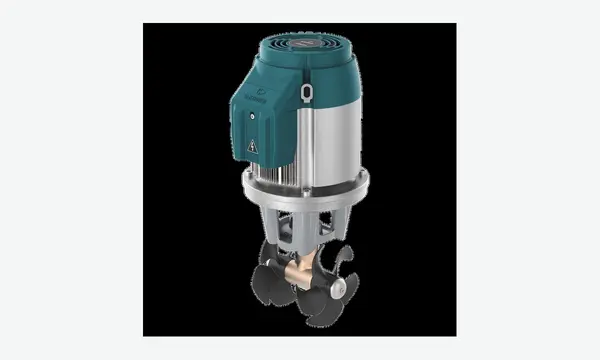
Sleipner E-series electric tunnel thrusters combine proportional controls, compact design and integrated electronics for yacht manoeuvring systems.
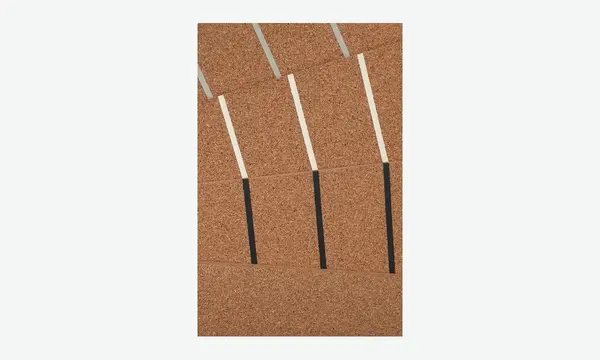
Aegir Cork Group presents SEACORK Deck Plus, a cork-granule deck covering with a low polyurethane content and claims of thermal comfort and grip.
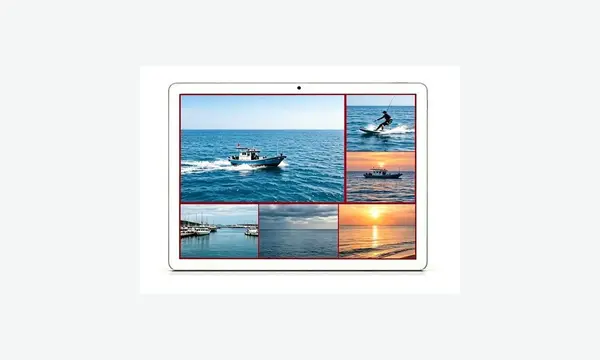
DM Tech Co., Ltd. showcases the SV156 15.6-inch touch BlackBox monitor with six channels, inviting integration review for yacht wheelhouse layouts.
Wallas presents the 3600i two-zone induction cooker with 230V and 110V power adaptation, adjustable output and a shallow marine galley installation.
Superyacht Guide
Continue into the wider Superyacht Guide.
Business opportunities · Superyacht Guide
Companies serving the superyacht market can discuss clearly identified advertising, sponsorship and business-profile opportunities. Commercial activity remains separate from independent editorial coverage.