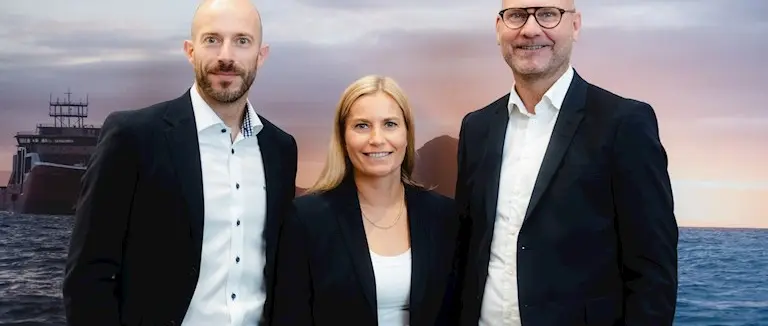
ABB Completes Høglund Acquisition to Expand Marine Automation
By Stephen Yardley · Edited by Stephen Yardley
Image: ABB
ABB has completed its acquisition of Høglund, adding a marine automation platform installed on more than 600 vessels and an 85-person international team.
ABB Marine & Ports has completed its acquisition of Norwegian marine-automation specialist Høglund AS, bringing an established integrated-automation platform and an 85-person international team into ABB Group’s marine business. The transaction closed on 1 September 2026 after the acquisition agreement was announced in June.
Although the deal spans commercial shipping as well as yachts, the underlying technology is directly relevant to the superyacht sector. Modern large yachts depend on integrated automation to monitor and control machinery, power generation, alarms and other technical systems, so consolidation among the companies building those platforms can influence system choice, service support and long-term lifecycle management for newbuilds and refits.
Høglund is headquartered in Tønsberg, Norway, and ABB says the acquired business includes 85 employees across Norway, Poland, Romania and China. The company has spent roughly three decades developing marine automation, giving ABB an established engineering team rather than only a software product or intellectual-property package.
The core Høglund Integrated Automation System is modular and scalable and is already installed on more than 600 vessels, according to ABB. The system combines data from engines, generators and other onboard systems so operators can monitor performance, alarms and operating conditions from a common automation layer, with the objective of improving safety, energy efficiency and operational visibility.
That installed base matters because marine automation is a lifecycle product. Owners and managers need software support, spare parts, engineering knowledge and upgrade paths long after a yacht or ship is delivered, and an acquisition that combines an established platform with ABB’s global service network could strengthen support for vessels already using Høglund systems as well as create new opportunities for future installations.
A contemporary superyacht is effectively a complex floating building, power station and transport system operating as one vessel. Main engines, generators, shore power, switchboards, pumps, tanks, HVAC, stabilisers, alarms and hotel loads all need to be monitored and coordinated, and integrated automation gives engineers a central view of systems that would otherwise be managed through multiple separate interfaces.
The value is not only convenience. Better integration can help engineering teams identify abnormal conditions sooner, understand how equipment is loading and track energy use across the vessel, which is increasingly important as yachts add batteries, hybrid propulsion, variable-speed generation and more sophisticated hotel systems. The automation layer becomes the point where many of those technologies are made visible to the crew.
For owners, the system is largely invisible when it works properly, but failures can affect reliability and guest experience quickly. A fault in monitoring or control can complicate machinery operation, while poor integration makes troubleshooting harder for engineers. That is why builders and technical managers evaluate automation suppliers not just on initial features but also on service coverage, software continuity and the ability to support a yacht across multiple cruising regions.
ABB says Høglund’s platform is a natural fit because its IAS already uses ABB control-system hardware. That existing technical overlap should make integration easier than an acquisition involving completely unrelated architectures, while allowing ABB to combine Høglund’s marine-specific software and engineering experience with its own propulsion, electrification, power-management and service capabilities.
Rune Braastad, President of ABB’s Marine & Ports division, said the acquisition combines Høglund’s automation expertise with ABB’s global reach and service network. Høglund chief executive Peter Morsbach described the transaction as the next stage for technology and expertise developed over three decades, while ABB has said it intends to preserve the strengths of the Høglund platform within a broader marine portfolio.
The strategic logic is therefore broader than increasing market share in one product category. ABB can potentially offer owners, shipyards and integrators a more closely connected package of automation, electrification and marine systems, while Høglund gains access to a larger support network and customer base. For superyacht projects, that could be particularly relevant where yards want fewer interfaces between major technical suppliers.
There is no suggestion that every Høglund installation will be converted into a wider ABB package, and existing yacht projects will continue to depend on their individual contracts, specifications and service arrangements. The more immediate change is organisational: Høglund is now part of ABB, giving the automation specialist access to a larger corporate engineering and service structure.
For newbuilds and major refits, the acquisition may make integrated system packages more attractive where a yard or owner already uses ABB hardware elsewhere on the vessel. A common technical ecosystem can simplify interfaces and support, although procurement decisions should still consider redundancy, cybersecurity, openness to third-party equipment and the crew’s ability to maintain and troubleshoot the system over the yacht’s life.
The deal also underlines how marine automation is becoming strategically important as vessel systems grow more connected. The superyacht industry often focuses on propulsion or visible sustainability technologies, but the software and control architecture linking engines, generators and onboard systems is increasingly central to efficiency and reliability. ABB’s purchase of Høglund strengthens its position in that less visible but critical part of the technical stack.
The acquisition also matters for refit because automation systems are often among the hardest technical packages to replace wholesale. A yacht can upgrade sensors, displays or individual controllers, but the underlying control architecture links many systems together, so continuity of engineering knowledge and access to compatible hardware can reduce the risk and cost of future modernisation.
For crews, better-integrated automation does not eliminate the need for engineering judgement. Alarm quality, sensible system design and good data presentation can help an engineer understand what is happening more quickly, but the value depends on commissioning, documentation and training. The combination of Høglund’s installed marine experience with ABB’s larger service organisation will therefore be judged as much on lifecycle support as on new-project sales.
The transaction therefore sits at the intersection of two trends already visible in large-yacht engineering: deeper system integration and greater dependence on specialist software support. As technical platforms become more connected, owners will increasingly evaluate not only what a system can do at delivery but whether the supplier can maintain, update and troubleshoot it globally over a yacht’s full operating life.
Explore
Go deeper into the yachts, companies, events and destinations directly connected to this article.
Continue reading
Lloyd’s Register says nuclear propulsion for superyachts now warrants serious safety and regulatory work, while major technical and societal barriers remain.
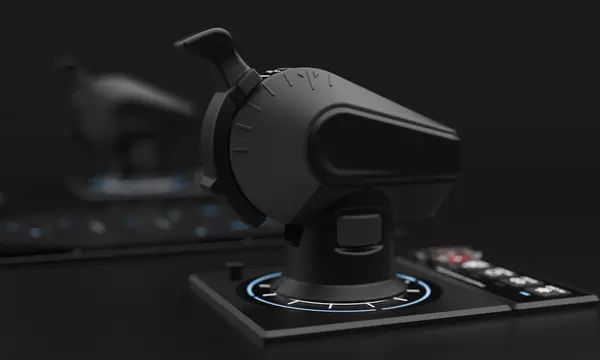
SCHOTTEL’s new PropControl 4 platform combines propulsion controls, telemetry, cybersecurity and remote service for thrusters and controllable-pitch propellers.
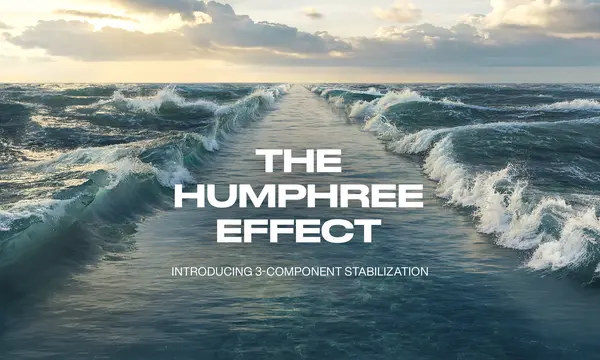
Humphree has integrated a new HIG5 gyro with its fins and interceptors under one control system, claiming roll reduction of up to 95% in …
Jotun says its Imperial fouling-protection system can deliver an approximately 50% lower lifecycle carbon footprint over 30 years than a conventional coating specification.
Superyacht Guide
Continue into the wider Superyacht Guide.