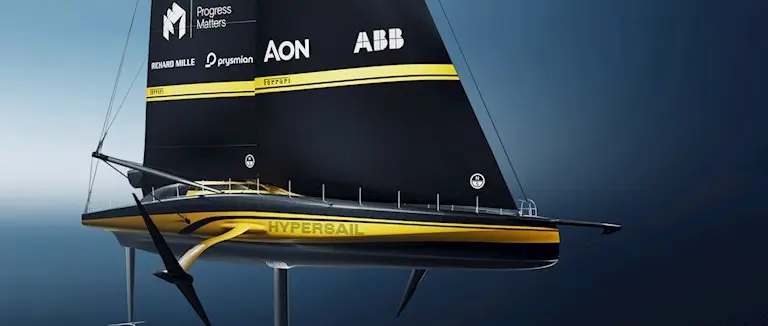
ABB Joins Ferrari Hypersail on 800V DC Renewable Power System
By Stephen Yardley · Edited by Stephen Yardley
Image: ABB / Ferrari Hypersail
ABB will support Ferrari Hypersail with marine DC, energy storage and intelligent power-distribution expertise for the renewable-powered 100-foot foiling yacht.
ABB has become Electrification Partner to Ferrari Hypersail, the 100-foot oceanic full-foiling monohull being developed as a renewable-energy-powered offshore yacht. The project will use ABB expertise in marine electrical systems, Direct Current architecture, energy storage and intelligent power distribution.
The yacht is intended to operate for weeks at a time without relying on conventional onboard generation. That makes electrical resilience central to the project rather than an auxiliary consideration, with renewable generation, storage and distribution all required to remain stable under extreme motion, salt exposure and changing ocean conditions.
Ferrari Hypersail's electrical architecture will operate across 48V and 800V DC systems. ABB says the onboard network will generate, store and manage electrical power for critical navigation equipment, foil controls, safety systems and propulsion-related functions while the yacht is offshore.
The high-voltage architecture is particularly notable because it treats the yacht as a compact self-sufficient microgrid. Instead of managing renewable input, batteries and consumers as separate subsystems, the aim is to coordinate them dynamically so that power can be distributed according to changing onboard demand and available generation.
A fully foiling offshore yacht creates an unusually demanding environment for electrical and control systems. Loads can change quickly, control surfaces require dependable actuation and the vessel must maintain essential systems even when exposed to vibration, cold, salt spray and repeated high-energy motion.
ABB brings more than 25 years of experience in DC technology to the project and says its team will support system integration, intelligent distribution and resilience at sea. The company also sees the yacht as a test environment for technologies that may have wider value in marine, renewable-energy and industrial microgrid applications.
The project is unusual because renewable generation is not being positioned simply as a way to reduce hotel-load fuel burn. Ferrari Hypersail is being designed around self-sufficiency, so energy capture and storage become part of the yacht's fundamental operating capability and therefore part of the overall performance equation.
That approach may be relevant to future high-performance sailing yachts and other advanced craft where electrical demand is rising but carrying more conventional fuel and machinery works against weight and efficiency targets. The practical test will be whether the system can maintain enough energy margin across long offshore passages when generation conditions are variable.
ABB says lessons from Ferrari Hypersail will help inform future resilient DC power systems across shipping, renewables, data centres and industrial infrastructure. For the yacht sector, the immediate interest is the integration of high-voltage DC, renewable generation, battery storage and mission-critical controls in one tightly constrained platform.
Superyacht Guide will follow the project as Ferrari releases further technical information on the yacht's launch programme, energy-generation package and sea-trial performance. The current partnership announcement confirms that the electrical system will be one of the defining technologies aboard the 100-foot foiling yacht.
Explore
Go deeper into the yachts, companies, events and destinations directly connected to this article.
Continue reading
ABB has completed its acquisition of Høglund, adding a marine automation platform installed on more than 600 vessels and an 85-person international team.
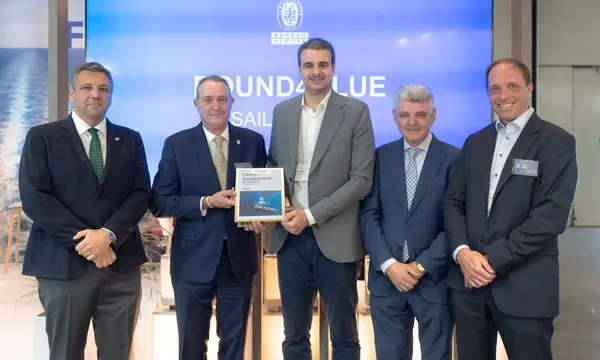
Bureau Veritas has completed a Design Assessment of bound4blue’s Model 3-24 eSAIL, independently reviewing the large-vessel suction-sail propulsion system.
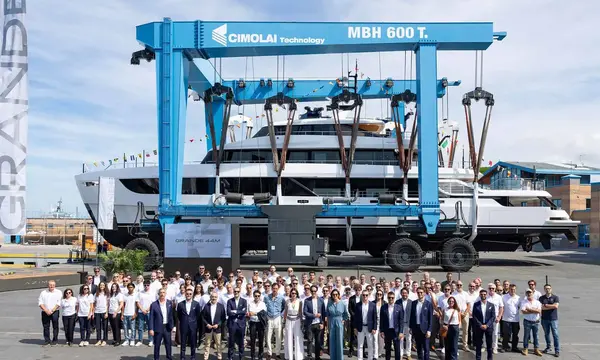
Azimut Grande 44M has won the Special Jury Award at the 2026 Innovation Route Awards during its Cannes Yachting Festival world debut.
Raymarine Commercial will bring Pathfinder radar and ECDIS to Monaco 2026, alongside FLIR thermal imaging for professional yacht bridge systems.
Superyacht Guide
Continue into the wider Superyacht Guide.