
ACR Launches 720,000-Candela RCL-200 LED Searchlight
By Stephen Yardley · Edited by Stephen Yardley
Image: ACR Electronics
ACR Electronics has introduced the RCL-200 LED marine searchlight, delivering a 720,000-candela beam and up to 1,697 metres of stated beam distance.
ACR Electronics has introduced the RCL-200 LED marine searchlight, a new 12-LED unit aimed at medium-to-large recreational boats and commercial vessels. The company specifies a peak beam intensity of 720,000 candela and a maximum beam distance of 1,697 metres, placing the unit well beyond the output expected from routine deck lighting.
Searchlights remain a relatively simple piece of bridge equipment, but their value becomes obvious during night approaches, identification of unlit objects, tender recovery and emergency situations. On a superyacht, a powerful controllable light also gives bridge teams another visual tool when cameras or ambient lighting do not provide enough context.
The RCL-200 uses twelve high-intensity LEDs in a 60-watt light source and is offered in a die-cast aluminium housing. ACR states a 50,000-hour lamp life, while the housing carries an IP66 rating and the LED module is rated IP68 for protection against water ingress.
The searchlight is designed as a spot beam rather than a broad floodlight, concentrating output where distance matters. ACR quotes 720,000 candela of peak beam power, which translates into the stated 5,568-foot or 1,697-metre maximum beam distance under the manufacturer’s specification.
The unit provides continuous 360-degree rotation and 55 degrees of vertical tilt. Two rotation speeds are available, giving operators a faster sweep for repositioning and a slower movement for accurate aiming once the target area has been located.
Control options include a wireless handheld remote and a wired dash-mounted point pad, allowing the installation to be adapted to different helm layouts. On larger yachts, where bridge ergonomics are heavily engineered, the ability to position controls without redesigning the entire console can be as important as the lamp’s raw output.
ACR specifies operation on either 12-volt or 24-volt DC systems, widening the range of vessels able to install the light without a dedicated voltage-conversion arrangement. The searchlight itself weighs approximately 7.5kg and is offered in white or black housings to suit different exterior and bridge-wing treatments.
The company says the RCL-200 is intended for recreational and commercial vessels, with availability expected in the 2026 season. For yacht builders and refit teams, it sits between smaller leisure searchlights and the very high-output units traditionally associated with large commercial ships.
A powerful searchlight does not replace radar, thermal imaging, night-vision cameras or proper lookout practice, and careless use can impair the night vision of crew or other vessels. Its best role is therefore as part of a broader bridge toolkit, deployed deliberately when visual identification or illumination is required.
For superyachts operating at night around anchorages, remote coastlines or busy tender routes, the launch is another reminder that bridge upgrades do not always need to involve complex software. Sometimes the operational gain comes from a durable piece of equipment that simply allows the watch team to see farther and aim light more precisely.
Explore
Go deeper into the yachts, companies, events and destinations directly connected to this article.
Continue reading
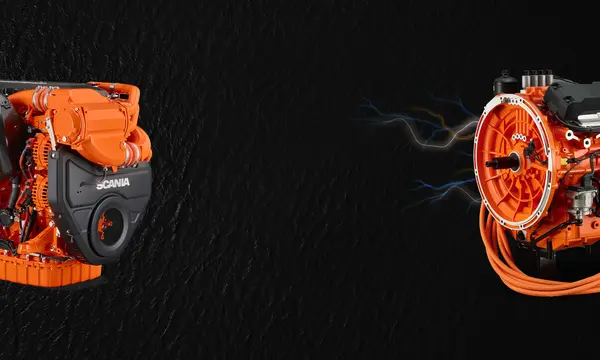
Scania is showcasing its 13-litre marine engine built on the Scania Super platform alongside hybrid systems and industrial battery technology.
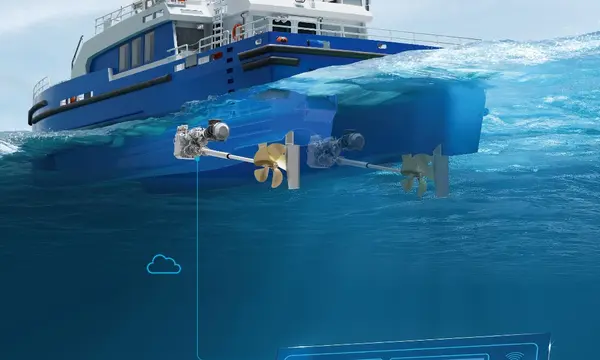
ZF is expanding its marine digital-services and control portfolio with condition monitoring and the latest AutoTroll low-speed manoeuvring system.
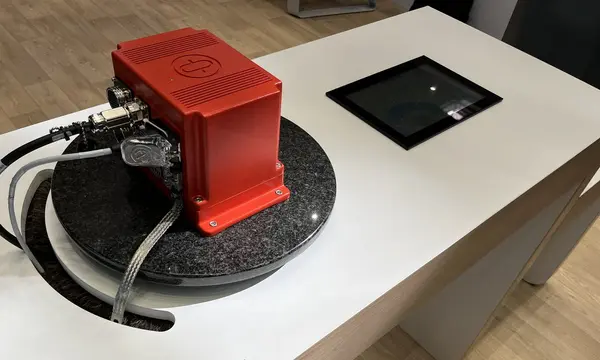
Anschütz has unveiled the Standard 100 MF, a maintenance-free gyrocompass designed for straightforward new-build and retrofit integration from 2027.

D-Marin is combining its app, Smart Sensors and Smart Pedestals into a connected-marina system for remote yacht monitoring, utilities and berth management.
Superyacht Guide
Continue into the wider Superyacht Guide.