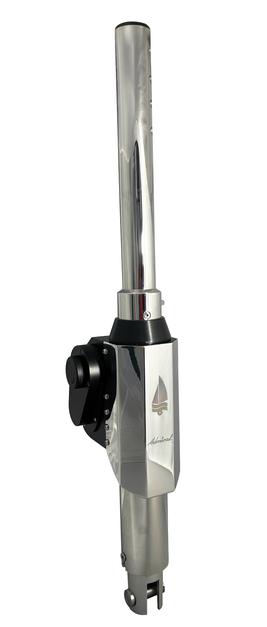
Admiral Marine Equipment Shows Furling and Deck Hardware for Sailing Yachts to 80 Metres
By Superyacht Guide Newsroom · Edited by Superyacht Guide Newsroom
Admiral Marine Equipment maker supplied sail handling furlers winches original 2026 exhibition photo SYG
Admiral Marine Equipment presents furlers, winches and custom sail-handling hardware for sailing boats to 80 metres at METSTRADE 2026.
Turkish deck-equipment manufacturer Admiral Marine Equipment is presenting its range of sailing hardware at METSTRADE 2026, including genoa and mainsail furlers, winches, sliders, tracks, blocks and bespoke in-mast equipment. The company describes a portfolio covering sailing craft from six to 80 metres, giving the exhibition entry direct relevance to the larger sailing-yacht market. Its published information also identifies manual, electric and hydraulic operation, specialist racing products called Race & Reef and Rollmaster, and under-deck systems intended for large gennakers.
The product entry was originally released on 5 December 2024, so the current catalogue should not be interpreted as evidence of a completely new 2026 launch. The story is the breadth of equipment being offered to builders and refit teams now, at a time when large sailing yachts can combine demanding sail plans with high expectations for safe and discreet deck operation.
An 80-metre sailing yacht is a very different engineering proposition from a 12-metre cruiser. Loads on sails, sheets and standing rigging can grow dramatically, while deck space and the need to protect crew complicate the design. Admiral's exhibitor listing states that its equipment range covers boats up to 80 metres, but this does not mean every device in the catalogue is suitable for any yacht at that length.
A naval architect should select products according to calculated loads, sail area, rig arrangement and intended operating conditions. A builder may need custom machinery or a particular size of winch and furler. The supplier's broad vessel range is an indication of the market it serves, not a substitute for model-specific engineering data.
The company describes more than 40 types of genoa furlers and a wider range of furlers, winches, cars, tracks and blocks. This variety matters because a large sailing yacht uses interacting systems rather than a single piece of sail-handling hardware. A furler relies on correct line leads and rig geometry, while a winch must work with the expected sheet load and crew procedures.
Purchasing these elements as a coherent package may simplify integration, although it does not eliminate the need for independent design review. Builders should confirm component compatibility and the detailed specification for each installation. Different products from the same manufacturer can have different duty limits and service requirements.
Admiral identifies manual, electric and hydraulic options across its winch and furling range. Each drive method has attractions and limitations. Manual equipment may be simpler in some circumstances but demanding under high loads; electric drives introduce power and control requirements; hydraulic systems need fluid circuits, pumps, protection and maintenance.
An owner should not regard one method as universally superior. The appropriate choice depends on the vessel's size, rig configuration, redundancy strategy and expected crew competence. On a professionally crewed sailing superyacht, the deck department must understand how powered equipment behaves during normal sail changes and when a system becomes unavailable.
A genoa furler allows a sail to be rolled around a support arrangement, potentially simplifying handling and reducing the need for crew to work on the foredeck in difficult conditions. The manufacturer describes furlers intended for different stay dimensions and references equipment for rod rigging in its official product entry.
A furler is exposed to substantial loads and repeated cyclic movement. Its bearings, structural attachments and drive components must be sized appropriately. A yacht builder should verify the compatible rigging specification and obtain approval from the rig designer. Improvised substitutions in the forestay system can have consequences extending far beyond convenience.
The supplier identifies Race & Reef and Rollmaster as patented products developed with racing applications in mind. It does not provide a complete design explanation in the brief METSTRADE entry, so the specific mechanisms and advantages should be reviewed through technical drawings or a demonstration rather than inferred from the product names.
Racing-oriented equipment can interest owners of fast cruising yachts, where sail-handling performance and ease of control contribute to the sailing experience. Yet equipment chosen for high-performance racing may require different service routines from a system selected for long-distance cruising. The proper selection follows the yacht's actual programme.
The official catalogue refers to under-deck hydraulic gennaker furlers for sail areas up to 1,000 square metres. That is a significant figure and helps explain why specialist equipment is needed on larger sailing yachts. A large asymmetric sail can generate substantial loads and requires controlled handling during deployment and recovery.
A nominal sail-area figure is not a complete operating limit. Wind conditions, vessel speed, rig geometry and the sail's shape can affect the loads transmitted into the furler. A designer must evaluate the actual system and the planned operating envelope. The crew should also have procedures for stopping or reversing an operation if the sail begins to behave unexpectedly.
Under-deck arrangements can preserve the appearance of a clean foredeck and reduce some exposed machinery. This may be attractive on a superyacht whose owner values uncluttered circulation routes and a refined exterior design. It can also help a naval architect integrate sail-handling systems into a complex deck layout.
The trade-off is access. A machine concealed beneath deck panels must still be reachable for routine inspections and emergency repairs. Service hatches, drainage, ventilation and structural foundations should be coordinated before interior or deck finishes are completed. An elegant installation that cannot be maintained becomes a burden over the yacht's life.
Winches control the movement of lines under tension and can be among the most demanding mechanical items on a sailing yacht's deck. The published Admiral range includes manual, electric and hydraulic versions. Selection should account for expected line loads, required line speed, duty cycle, drum capacity and the consequences of a loss of power.
The location of a winch affects both its mechanical load path and how safely crew can work around it. Naval architects and deck officers should review line angles and potential trapping points. Crew cannot rely on an equipment maker's reputation alone; they need clear operating limits and training suited to the chosen hardware.
Cars, tracks and sliders can appear less prominent than large winches, but they enable sails and controls to move as intended. A poorly aligned track or inappropriate bearing arrangement may increase friction and complicate handling. The supplier's broad catalogue makes these smaller components part of the same procurement discussion as the major machinery.
The equipment must be coordinated with the sailmaker and rig designer. Loads and movement requirements should be defined before final attachment details are agreed. A refit may involve new sails with different geometries, creating a need to reassess existing tracks rather than assume old hardware will remain adequate indefinitely.
Admiral's product listing refers to a ten-year warranty for furlers and winches. This is a notable supplier statement, but a buyer needs the applicable terms for the exact model, installation and service programme. Coverage may depend on maintenance, approved use and other contractual conditions, none of which can be established from a short exhibition entry.
A warranty should be considered alongside global service support. A large yacht may operate far from the original builder, and even a strong warranty has limited practical value if a critical component cannot be inspected or replaced promptly. The management company should obtain written details and understand how claims are handled internationally.
The company offers custom-made in-mast furlers and other bespoke products. Sailing superyachts commonly require equipment built around a specific mast section, deck structure or sail plan. Customisation may help achieve the owner's desired sailing performance while keeping the exterior layout coherent.
Bespoke machinery also demands careful documentation. Drawings, material specifications, software where relevant, and maintenance instructions should be preserved with the vessel's technical records. If the original yard or equipment supplier changes staff, future engineers must still understand what was installed and why.
Powered sail-handling systems can move quickly and hold substantial stored loads. A crew member may be tempted to approach a jammed line or furler without fully considering what will happen when the mechanism is released. Training must therefore include stop controls, exclusion zones and the safe method of responding to abnormal resistance.
The deck team should practise under suitable conditions and understand the captain's limits for using particular sails. A technical device cannot replace seamanship. Equipment that promises easier handling is most useful when it supports clear procedures and reduces the need for crew to enter hazardous areas.
A yacht making long passages needs dependable access to replacement parts, lubrication instructions and inspections. Deck equipment can experience salt exposure, cyclic loading and abrasion. Even corrosion-resistant components require care, and a winch that performs well during a brief demonstration may need a different service schedule under intensive use.
Procurement should include the maker's recommended intervals and any specialist tools required. The chief engineer and sailing master can then plan service around the cruising calendar. A complete inventory of fitted models and serial numbers helps avoid delays when parts must be ordered from another country.
An older vessel may have equipment whose manufacturer no longer supports particular parts or control arrangements. A refit can provide an opportunity to improve handling and reliability, but replacement components must work with the existing structure and rig. Swapping a mechanical furler for a powered system, for example, can require electrical or hydraulic changes well beyond the visible fitting.
A feasibility study should define the complete scope, including foundations, cabling, controls and class requirements. It should also address weight, access and crew training. The new system should be judged by the total operational result rather than the appeal of one product.
Admiral Marine Equipment's official METSTRADE catalogue presents a portfolio for sailing boats up to 80 metres, spanning furlers, winches, blocks, tracks and bespoke installations, with manual, electric and hydraulic drive options. It identifies Race & Reef, Rollmaster, specialist gennaker systems and a published warranty claim, while making clear through its original listing date that the product range predates the 2026 exhibition.
For owners of large sailing yachts, the most valuable message is that sail-handling equipment needs to be specified as an integrated system. Correct load calculations, service access, documented controls and realistic crew procedures matter much more than choosing the longest list of features. The current catalogue gives yards and managers a reason to review what is available, but the final engineering decision belongs to the yacht's design and operating teams.
Primary source: Admiral Marine Equipment original manufacturer deck hardware product portfolio at METSTRADE 2026, first listed 5 December 2024.
Admiral Marine Equipment manufacturer-supplied image of its sailing deck hardware range, official METSTRADE catalogue. Official source.
Explore
Go deeper into the yachts, companies, events and destinations directly connected to this article.
Continue reading
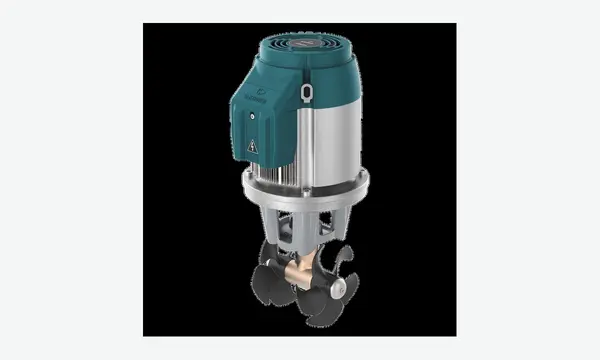
Sleipner E-series electric tunnel thrusters combine proportional controls, compact design and integrated electronics for yacht manoeuvring systems.

Aegir Cork Group presents SEACORK Deck Plus, a cork-granule deck covering with a low polyurethane content and claims of thermal comfort and grip.
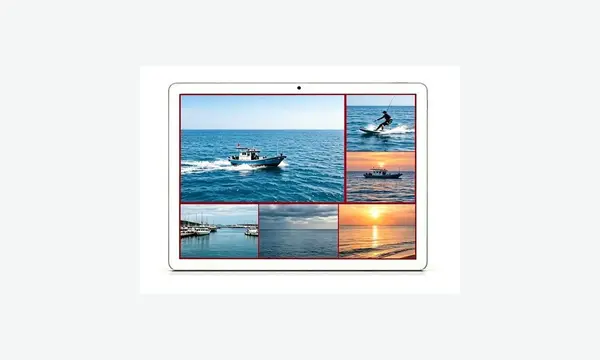
DM Tech Co., Ltd. showcases the SV156 15.6-inch touch BlackBox monitor with six channels, inviting integration review for yacht wheelhouse layouts.

Wallas presents the 3600i two-zone induction cooker with 230V and 110V power adaptation, adjustable output and a shallow marine galley installation.
Superyacht Guide
Continue into the wider Superyacht Guide.
Business opportunities · Superyacht Guide
Companies serving the superyacht market can discuss clearly identified advertising, sponsorship and business-profile opportunities. Commercial activity remains separate from independent editorial coverage.