Alrose & Falcon Displays Marine Gas Springs and Acrylic Hatch Systems
By Superyacht Guide Newsroom · Edited by Superyacht Guide Newsroom
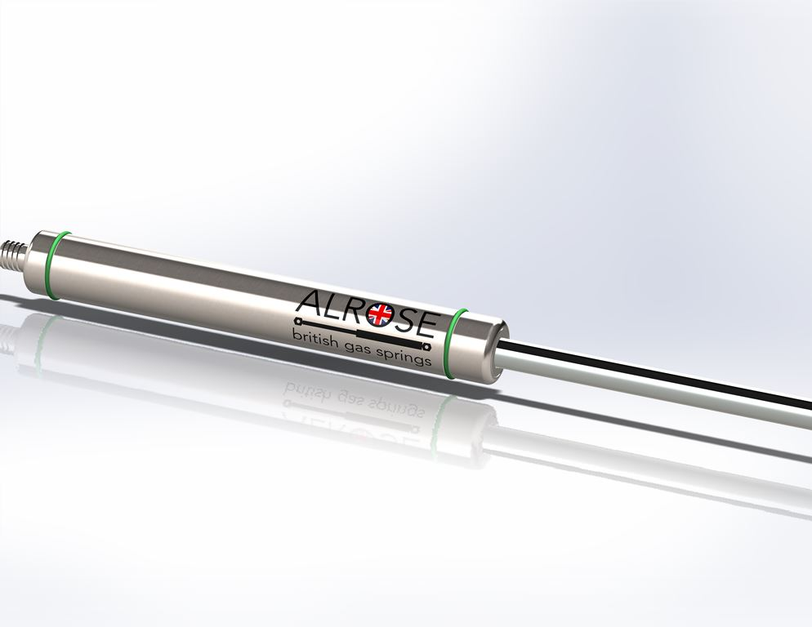
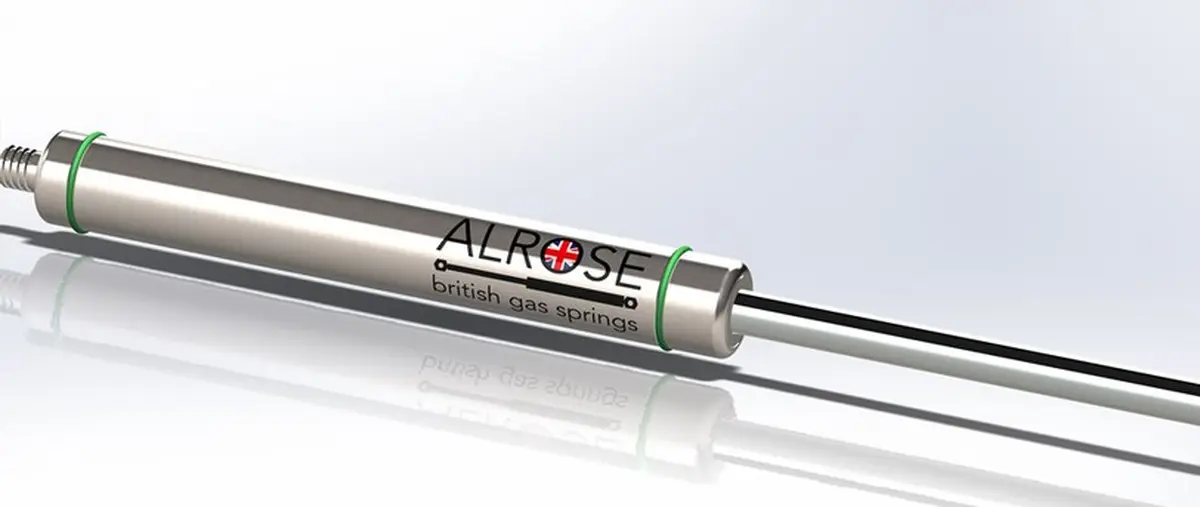
Alrose & Falcon stainless steel gas spring technical yacht hardware manufacturer photograph
Alrose & Falcon exhibits Marineline springs, Electromax actuators and acrylic yacht hatches at METSTRADE 2026, focusing on safe movement and maintainability.
British marine hardware manufacturer Alrose & Falcon Products has presented its gas springs, dampers, electric actuators and acrylic openings to the superyacht equipment audience at METSTRADE 2026. The company's exhibitor information highlights its Marineline modular spring range, Economax products and Electromax actuators, alongside bespoke design and vessel-survey services. These are not the largest components aboard a yacht, but their reliability can affect how safely heavy hatches, doors and access panels operate. A small mechanism hidden behind a finished surface may perform thousands of movements over a vessel's life. The Amsterdam showcase provides a useful opportunity to examine the engineering behind those everyday tasks rather than assuming that all gas springs and powered actuators are interchangeable.
Alrose & Falcon describes itself as a designer and manufacturer of gas springs, tension springs, dampers and actuators for marine motion-control applications. A spring can help balance the weight of a hatch, while a damper can regulate speed and reduce abrupt movement. An electric actuator may move a panel at the touch of a button. Each system serves a different purpose even when the components are installed in similar-looking positions. The manufacturer also offers bespoke engineering, reflecting the fact that yacht structures rarely share identical dimensions and loads. A buyer should identify the mechanical task before deciding whether a standard or customised component is appropriate.
A compression gas spring contains pressurised gas and a moving rod, generating force as the rod is pushed into the cylinder. Depending on the geometry, it can help support a hatch or panel and reduce the physical effort required to open it. The required force changes with the weight of the object, hinge position and angle of operation. A spring that feels comfortable at one point in the movement may provide insufficient support elsewhere. Designers should therefore calculate the complete force curve rather than select a component by visual size alone. An incorrectly rated spring can create a safety hazard even if it fits within the available space.
The company promotes its Marineline range for marine environments, where corrosion resistance and durable sealing are important. Stainless-steel hardware is commonly chosen for exposed positions, but material selection alone does not guarantee long service life. Surface finish, crevices, installation orientation and the chemicals used during cleaning all affect performance. A spring mounted inside a damp locker can face different conditions from one concealed within a dry cabin. A yard should discuss the actual exposure with the supplier and request suitable materials and ratings. Consistent inspection is important because a small component can lose force gradually before a crew member notices that a hatch is no longer supported correctly.
Economax is presented by the manufacturer as a product family suited to higher-volume applications. Such equipment may be relevant to production yachts or repeated use of similar mechanisms throughout a vessel. Standardisation can simplify spares and maintenance, but it should not override the needs of an individual opening. A spring fitted to a small access hatch cannot automatically be used on a much heavier panel merely because the dimensions appear convenient. Owners and yards should confirm force, travel and corrosion suitability, then document the exact part in the vessel's technical records. The advantage of a consistent product family is greatest when its components are correctly specified.
The company also lists Electromax actuators for powered movement. An electric actuator can be useful where a panel is too heavy or inconvenient to move manually, or where the designer wants a controlled opening sequence. Motorised movement creates additional responsibilities, including protection against pinch points and a safe response to power failure. The control system must be matched to the loads and movement range, and the mechanism must remain accessible for inspection. A simple button can disguise substantial forces. For guest areas, crew should know how the system is supervised and how an opening can be secured if the motor or control device becomes unavailable.
The forces produced by a spring or actuator depend on the points where it connects to the moving structure. Small changes in mounting position can alter the leverage dramatically, particularly near the start or end of travel. A hatch may require high force when nearly closed but much less when open, or the reverse. A supplier can help determine a suitable configuration, but the yard must provide accurate dimensions and load information. A mechanism should not be installed by trial and error on a structure where unexpected closure could injure someone. Technical drawings and calculations form the foundation of safe movement.
A heavy hatch that closes unexpectedly can cause serious injury. Gas springs may gradually lose pressure as they age, and hinges or seals can also change the force needed to move the panel. Critical openings should have an appropriate means of securing them in the open position, especially when crew need to work beneath. The specific arrangement depends on the vessel and applicable safety rules. A gas spring is a useful assistance device but should not be assumed to provide all required mechanical restraint by itself. Crew should inspect operation during routine maintenance and report any reduction in support force promptly.
A damper can slow or smooth movement without necessarily providing the same supporting force as a gas spring. This distinction matters for doors and access panels that may otherwise slam as a yacht moves or wind increases. Controlled closing can improve comfort and reduce wear, but a damper must be selected for the intended speed, load and operating conditions. The surrounding hinges and locking systems still need to function correctly. A designer might combine damping and spring assistance to achieve the desired result, but the components must be evaluated together. Successful operation depends on the interaction of the whole assembly, not one part chosen independently.
Alrose & Falcon's wider portfolio includes luxury acrylic hatches, doors and roof components. These products can provide light and a sense of openness while introducing questions about strength, sealing and the long-term behaviour of materials in sunlight. Acrylic is used in marine glazing for particular applications, but its suitability depends on thickness, support and the location of the opening. It should not be treated as a direct substitute for every glass installation. A superyacht project must consider applicable safety and classification requirements, including the expected loads. The visual result needs to be supported by appropriate engineering and service instructions.
The manufacturer advertises a bespoke design service and survey options, useful for retrofits where the original mechanism may no longer be manufactured or its performance is unsatisfactory. A proper survey establishes the weight, movement path and available space before a replacement is specified. Crew reports about difficulty opening a hatch can provide important clues, but they do not replace measurements. For unusual systems, a prototype or controlled demonstration may be necessary. A custom spring can solve an awkward problem, yet spare-parts planning becomes more important when the component is not part of a standard catalogue range.
Gas-spring performance and life can depend on how the unit is installed. The Alrose & Falcon product information recommends typical rod-down installation during the position in which a spring spends most of its time, allowing internal oil to help lubricate the rod seal. This is a detail that can be overlooked when a component is fitted in a confined space. A designer should review the intended orientation and operating cycle with the supplier rather than simply mount the spring wherever it fits. The correct configuration can reduce premature wear, while poor alignment may damage seals even on a high-quality component.
Superyachts contain numerous access hatches for machinery, storage and maintenance. Some are used infrequently, while others may be opened several times a day. A mechanism that reduces manual effort can improve safety and make regular inspections more practical. However, an access panel should not be made unnecessarily complex when a simpler arrangement would be more dependable. Engineers need space to service the equipment and should not be forced to remove furniture or structural trim to replace a small spring. Maintainability should be considered when the opening is designed, not discovered after the first component fails in service.
Outdoor mechanisms face a combination of salt spray, ultraviolet light, temperature changes and repeated wet-dry cycles. Protective materials may reduce corrosion, but dirt and cleaning products can affect rods, bearings and seals. Crew should follow the supplier's instructions for cleaning and avoid applying unsuitable lubricants that could damage seals or attract debris. A spring that has become bent or corroded should be assessed rather than forced to continue operating. Simple routine inspections can prevent an otherwise minor fault from developing into a failed hatch during a busy cruise. The environmental exposure of the installation should shape the maintenance schedule.
The company advertises stockists and support arrangements in Europe and the United States, along with an EU distribution centre. Such infrastructure can be valuable for yachts travelling widely, though owners should confirm actual availability of the exact parts they need. A custom component may still have a lead time even when a supplier operates internationally. Technical records should identify part numbers, force ratings and dimensions, making it easier for a remote engineer to obtain a replacement. Carrying a spare may be sensible for a mechanism whose failure would disrupt important access, but the decision depends on the vessel's layout and usage.
Replacing a worn gas spring may appear straightforward, but an older yacht can present difficulties if the original part is obsolete or the mounting brackets have deteriorated. A specialist survey can reveal whether the spring alone is the problem or if the hinge, structure or locking arrangement also needs work. Installing a stronger spring without understanding the cause could overload the mounts. A refit manager should define the scope before ordering, especially when a large number of similar openings require attention. Standardisation of replacement parts may offer benefits, provided that each installation is validated against its actual load.
An exhibition listing can introduce useful equipment, but it is not a comprehensive specification or independent approval for every marine application. Owners and builders should request load data, corrosion details, temperature limits, installation instructions and any relevant certificates. A test carried out on one geometry cannot be assumed to cover a completely different hatch. The same applies to acrylic openings, which should be engineered for their intended location. A strong supplier relationship makes it easier to resolve these details before they become problems during commissioning. The aim is predictable performance, not simply a component that looks suitable in a demonstration.
The Alrose & Falcon range illustrates how relatively compact pieces of equipment can influence safety and convenience aboard sophisticated yachts. A dependable spring may make a machinery hatch easier to inspect, while the correct damper can prevent a door from slamming in a seaway. An electric actuator or custom acrylic opening can enhance an interior when it is carefully specified. METSTRADE 2026 offers an opportunity to compare these solutions and discuss them with the manufacturer. Their real value will be established through safe integration, clear documentation and long service life. The most successful hardware is often the equipment crew barely notice because it works reliably every time.
Primary source: Alrose & Falcon Products — official METSTRADE 2026 Superyacht Zone exhibit and gas-spring specifications.
Manufacturer image: Alrose & Falcon stainless-steel marine gas spring, official METSTRADE 2026 Superyacht Zone catalogue. Official source.
Explore
Go deeper into the yachts, companies, events and destinations directly connected to this article.
Continue reading
Alrose & Falcon describes marine stainless-steel compression gas springs, explaining positioning, seal lubrication and safe hatch support for yacht applications.
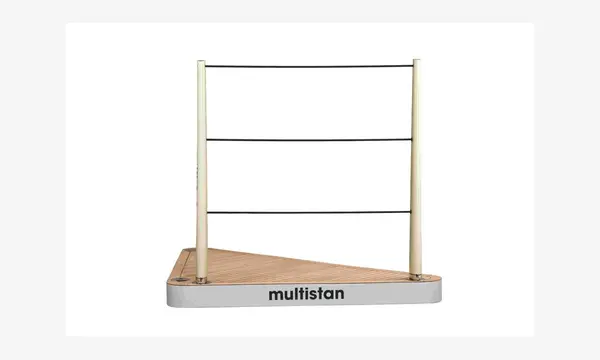
Multiplex describes its multistan removable carbon-fibre railings with a 180-degree locking mechanism and folding option for frequently accessed yacht deck areas.
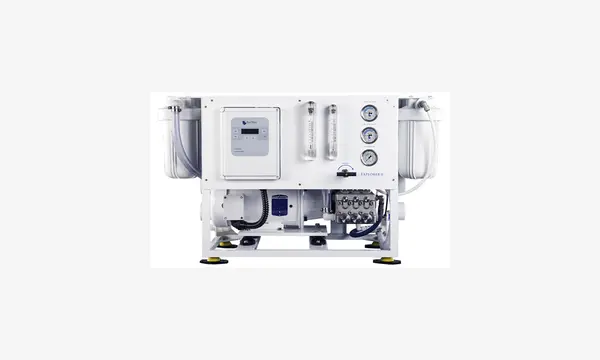
The Explorer LX from Blue Water Desalination offers a semi-automatic reverse-osmosis option for larger yachts, with published output up to 12,870 litres daily.
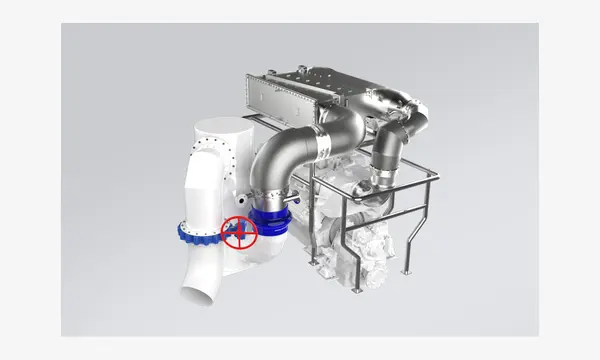
Hug Engineering presents a compact selective catalytic reduction arrangement intended to reduce nitrogen-oxide emissions from larger yacht engines.
Superyacht Guide
Continue into the wider Superyacht Guide.
Business opportunities · Superyacht Guide
Companies serving the superyacht market can discuss clearly identified advertising, sponsorship and business-profile opportunities. Commercial activity remains separate from independent editorial coverage.