Multiplex multistan Carbon Railings Revisit Fast-Access Deck Safety on Superyachts
By Superyacht Guide Newsroom · Edited by Superyacht Guide Newsroom
Multiplex multistan Carbon Railings Revisit Fast-Access Deck Safety on Superyachts — first-party photo SYG News 24 Nov 2026 batch08
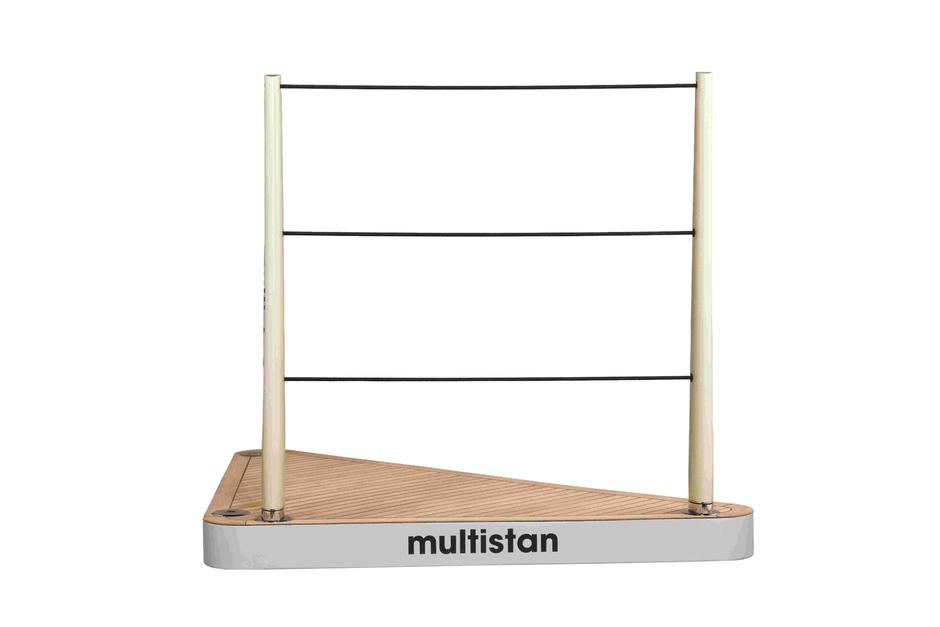
Multiplex describes its multistan removable carbon-fibre railings with a 180-degree locking mechanism and folding option for frequently accessed yacht deck areas.
A deck railing is often treated as a simple barrier, but on a busy superyacht it can become part of a carefully choreographed system of boarding, tender transfer, guest movement and equipment handling. Multiplex GmbH is presenting the multistan carbon-fibre railing concept in its METSTRADE 2026 supplier catalogue. The manufacturer describes lightweight stanchions, titanium fittings, a secure 180-degree locking arrangement and an integrated hinge that allows sections to fold down when access is needed. These are the company's product descriptions, not a universal guarantee that any configuration will be approved for any yacht. The significant design question is how removable or folding railings can offer practical flexibility without creating an opportunity for an unsecured opening or a misunderstanding about when a deck is safe for use.
Superyachts frequently need temporary access through areas that would normally have a continuous side barrier. A tender may come alongside, a gangway may be deployed, provisions may be transferred or a piece of machinery may need to pass across a deck edge. Permanent railings can interfere with those activities; removable systems offer another approach. But the ability to create an opening places responsibility on the people who control it. A good installation should make the safe condition obvious and allow staff to restore it without relying on complex tools or improvised methods. The operator must know which openings are permitted, who authorises their use and how an area is isolated from guests while its barrier is down.
The official Multiplex listing identifies multistan as a premium carbon-fibre railing system designed for superyachts. It highlights low weight, corrosion resistance and the ease with which crew can handle and store individual stanchions. The product description also names titanium fittings and a 180-degree locking concept, with a hinge for folding a railing section out of the way. Those details make the offering relevant to yachts that regularly reconfigure deck access. However, the short catalogue does not publish a complete set of dimensions, load tests or certifications for every possible deck installation. The supplier's technical drawings and the project's regulatory review remain essential before an owner approves the arrangement.
A heavy removable barrier may be technically strong yet awkward for crew to position repeatedly, particularly in wind or when a vessel moves at the berth. Carbon-fibre construction can reduce the mass of structural components when correctly engineered. Multiplex promotes that potential benefit for multistan. Lower weight may make crew handling easier and reduce the chance that a stanchion is dropped or dragged across an expensive deck. But a light component can still cause harm if mishandled, and its strength cannot be judged from weight alone. Engineers should confirm load paths, connection details and any local impact limitations before treating a carbon railing as interchangeable with a traditional metal assembly.
The company's reference to a secure 180-degree locking mechanism is a distinctive technical feature, but it requires clarification in the exact product documentation. Does the angle describe rotation during installation, a folding position or a particular mechanical lock geometry? The catalogue text alone should not be stretched into an invented operating sequence. The crew needs a demonstration of what a correctly engaged fitting looks and feels like, how to recognise incomplete locking and whether it remains secure under the permitted loading. An indicator or positive confirmation may be valuable if available. The practical principle is that a railing must never appear safe when its supporting connection has not been fully engaged.
A folding stanchion can reduce the effort involved in opening a deck area, especially during repeated tender or gangway operations. But hinges introduce pinch points, moving parts and the possibility of leaving a barrier partially lowered. During design, the team should consider where the folded section rests and whether it creates a trip hazard or obstructs another piece of equipment. Crew members should not be expected to hold a railing in an unstable intermediate position while handling lines or luggage. The manufacturer's current operating instructions should define how the section is moved and secured in both states. A smooth mechanism is valuable only if the safe position is unambiguous.
A stanchion is only one part of a railing system. The loads applied by a person leaning or falling against it must be carried through the fittings into the deck structure. Those forces are influenced by spacing, geometry and the condition of the supporting material. Titanium components may provide strength and corrosion advantages in the appropriate design, but the surrounding deck foundation still requires proper engineering. A refit should not reuse existing socket positions without checking their suitability for the new system. Naval architects and class representatives may need to review the barrier's total arrangement, including continuous rails, openings and mounting details. A new material does not automatically validate an old foundation.
Carbon fibre and titanium are both associated with high-performance marine components, yet their interaction with surrounding metals and saltwater must be understood. Galvanic considerations can arise when conductive materials are connected in a wet environment. The suitability of fasteners, seals, insulators and nearby deck hardware should therefore be confirmed rather than assumed from individual material reputations. Multiplex's catalogue highlights corrosion resistance, but the actual installation's life depends on the details of joints and drainage. Cleaning crews should know which products are approved, and engineers should have an inspection routine for fittings that are repeatedly removed and reinserted. Premium materials still need careful maintenance.
A crew member familiar with a deck may notice when an access section is temporarily open, whereas a guest moving between lounges may expect the normal barrier to be continuous. That difference affects operational procedures. During boarding or tender transfers, the affected area may need clear supervision, temporary barriers or an alternative route. At night, lighting and the clarity of the opening become especially important. The decision to fold or remove railings should be communicated to hospitality staff as well as deck crew. A product's convenience cannot justify leaving an unprotected edge accessible to people who have not been told about the change.
Removable equipment must have a defined home when it is not installed. Stanchions placed loosely in a deck locker can damage their finishes, injure crew or become difficult to locate during a rapid change of operation. A light carbon construction may simplify lifting, but the yacht still needs suitable cradles, soft protection and securing arrangements. If pieces are frequently moved between locations, clear identification can help prevent installation in the wrong socket. The manufacturer should explain whether individual components are interchangeable and how they should be inspected after an impact. A rail system that is simple to remove but awkward to store can create persistent operational problems.
Railings and guard arrangements are subject to technical requirements that depend on vessel type, location and the applicable flag or class standards. The height, strength, continuity and opening dimensions may all be relevant. Multiplex's product description is not, on its own, evidence that every installation meets those requirements. Owners should seek the required test evidence and have the design assessed in the context of the yacht. This is especially important where a railing performs a protective function at a considerable height above the water. A designer might prefer a lighter or more attractive component, but the safe working arrangement must remain the governing criterion.
A yacht entering refit may already have nonstandard barriers and deck finishes that make a replacement system difficult to install cleanly. If new fittings require structural work, the project must consider waterproofing, paint or teak repairs and access to backing plates. A folding feature may interfere with furniture, tender equipment or other fittings in the same zone. Early coordination with the deck department can reveal those conflicts before construction begins. A prototype fitting tested on the actual deck may be more informative than a catalogue rendering. The cost of repairing surrounding finishes can outweigh the price difference between alternative railing products if integration is handled late.
An acceptance test should include the actual sequence of opening and closing a railing section, checking its lock, inspecting the connection and making the area safe for guests. Multiple crew members should be able to perform the sequence without confusion. The team should also examine how the system behaves after repeated use and how wear is detected. Any planned loading or strength test needs to follow the manufacturer's and surveyor's approved method rather than an improvised push by crew. The yacht should retain clear photographs of correctly secured fittings and provide instructions for removing a damaged component from service. Familiarity is an important part of safe deployment.
Multiplex's official METSTRADE 2026 description establishes that multistan is offered as a carbon-fibre railing system using titanium fittings, a 180-degree locking concept and a folding hinge intended to make deck openings more flexible. It does not identify an independent performance comparison, universal approval for all yacht sizes or named installation in a newly delivered yacht. The product therefore deserves treatment as a documented supplier offering rather than a proven solution to every railing challenge. Owners should ask for current test reports, load limitations, construction drawings and detailed user instructions before deciding whether the system is appropriate.
A removable railing can make a yacht more versatile, particularly where boarding zones and tender operations change throughout the day. Multiplex's multistan highlights material and mechanism choices that may help crews manage those transitions. Yet the safest deck is not the one with the lightest hardware or quickest-folding hinge; it is the one where people know which barrier is open, why it is open and who will secure it again. Engineering, guest management and crew training must work together. That operational discipline is the proper benchmark against which the advertised carbon construction and locking details should be evaluated.
Primary source: Multiplex GmbH original multistan railing product description, METSTRADE 2026 supplier catalogue.
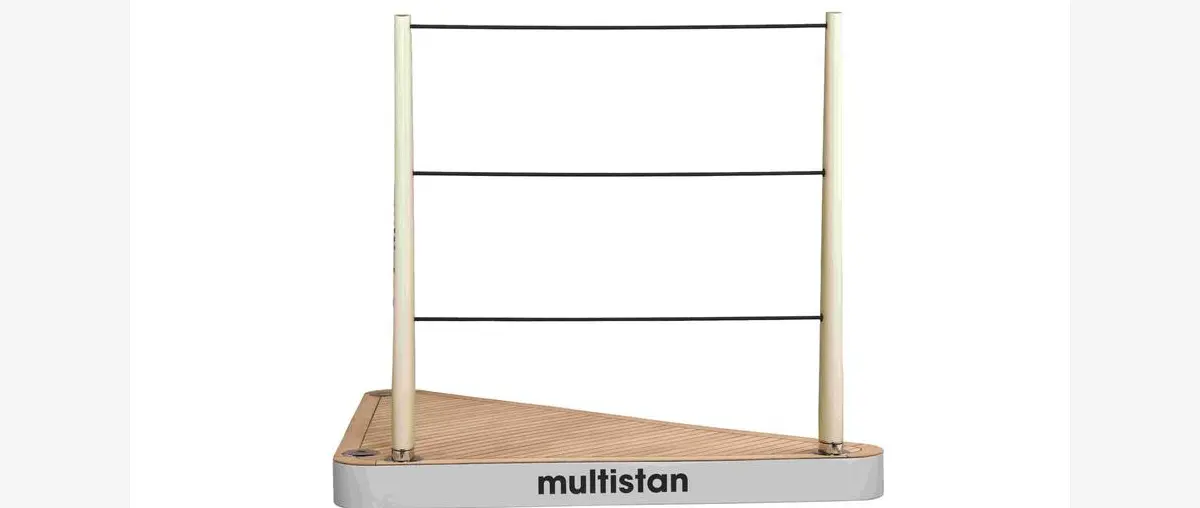
Photo copyright multiplex GmbH. Manufacturer catalogue photograph of the multistan carbon-fibre yacht railing system. Official source.
Explore
Go deeper into the yachts, companies, events and destinations directly connected to this article.
Continue reading
Videoworks has issued technical details of its completed digital refit aboard the 60m CRN charter yacht ELENI, covering multi-zone audio, a 115-inch upper-deck screen …
SEA.AI has tested its machine-vision technology across multiple crewed and uncrewed vessel platforms during the REPMUS 2026 exercise in Portugal.

Floatist has launched a managed website product for charter fleet operators that displays live availability, equipment details and booking payments.
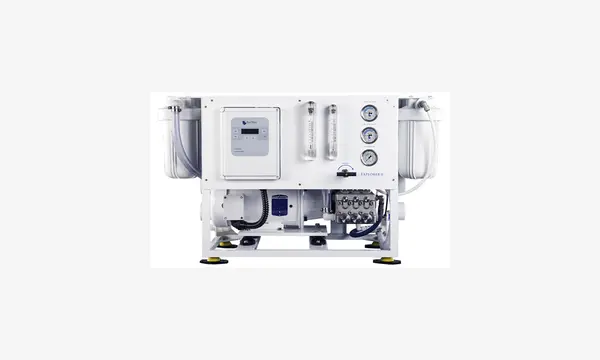
The Explorer LX from Blue Water Desalination offers a semi-automatic reverse-osmosis option for larger yachts, with published output up to 12,870 litres daily.
Superyacht Guide
Continue into the wider Superyacht Guide.
Business opportunities · Superyacht Guide
Companies serving the superyacht market can discuss clearly identified advertising, sponsorship and business-profile opportunities. Commercial activity remains separate from independent editorial coverage.