Alrose Stainless Steel Gas Springs Highlight Safe Hatch Movement for Superyachts
By Superyacht Guide Newsroom · Edited by Superyacht Guide Newsroom
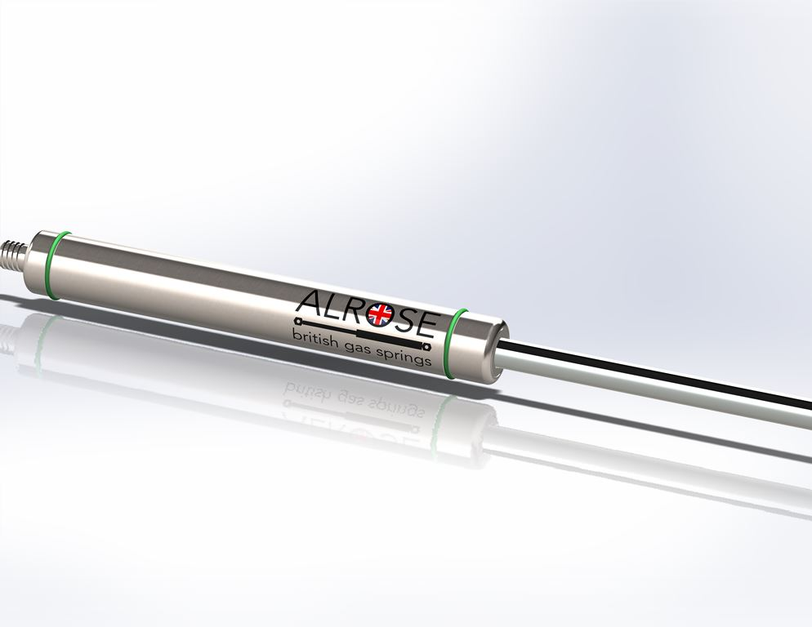
Alrose Stainless Steel Gas Springs Highlight Safe Hatch Movement for Superyachts — official supplier photograph, SYG 2026-11-24 News batch 04
Alrose & Falcon describes marine stainless-steel compression gas springs, explaining positioning, seal lubrication and safe hatch support for yacht applications.
Alrose & Falcon Products is presenting its stainless-steel compression gas springs within the METSTRADE 2026 marine-equipment catalogue, drawing attention to the small mechanical components that help open and support doors, hatches and access panels aboard large yachts. The British manufacturer describes a gas spring that behaves differently from an ordinary coil spring: a pressurised cylinder and extending rod can be selected to provide a controlled supporting force, with piston design, seals, bearings and internal lubricating oil influencing its characteristics. The company's listing also explains why the preferred installation orientation can affect seal lubrication. Although the component is modest in size, its operational importance can be considerable when a heavy hatch is opened by a crew member or when movement occurs close to guests. The current exhibition entry is a technical product reference, not proof of a fresh November 2026 launch.
Many yachts contain access panels that are heavy enough to require assistance when opened. These may include engine-room inspection hatches, storage lids, exterior lockers or interior service doors. A gas spring can help a person lift or hold a panel, reducing the effort needed during routine work. Yet the presence of a spring does not automatically make the assembly safe. The panel, hinge and supporting structure must all be designed for the loads involved. A failure or uncontrolled closing movement can create a serious pinch or crushing hazard, particularly when someone is working beneath an open hatch.
The Alrose product description compares a compression gas spring with a coil spring while noting that its behaviour is generally flatter over part of the stroke. The rod moves into the cylinder when the external load compresses it, while the internal gas pressure provides an opposing force. This offers a useful way of balancing the movement of a hatch across part of its travel. The exact force curve depends on the unit's construction, gas charge and geometry. Engineers should obtain manufacturer data rather than assume one gas spring provides constant force at every extension.
The supplier specifically states that compression gas springs are normally installed with the rod facing downward in the position in which they spend most of their time. This helps internal oil lubricate the rod seals. That recommendation illustrates why installation cannot be decided solely by where the mounting brackets are convenient. The correct orientation may influence service life and leakage behaviour. On a yacht, a hatch can remain closed for most of the year or be left open during repeated technical work, so the actual normal position should be considered. The manufacturer's instructions must govern the final arrangement.
A spring may help carry part of a hatch's weight or resist closing, but it is not automatically intended to serve as the sole structural support or restraint. The primary hinge, brackets and surrounding panel still need suitable strength. A safety stay or positive locking device may be necessary where the panel presents a significant risk if a spring fails. The choice depends on the applicable standards and the equipment's hazard assessment. Crew should never rely on an unspecified gas spring alone to keep a large panel safely above a person during maintenance. A proper mechanical design considers what happens if assist force disappears unexpectedly.
The spring's useful force depends not only on its rating but also on its angle and distance from the hinge throughout the hatch's movement. The mechanical advantage changes as the panel opens. A spring that makes lifting easy from one position could make closing unexpectedly difficult elsewhere, or allow movement to accelerate near the end of travel. Designers should model the force and moment across the complete operating arc. The yacht's exterior designer may prefer a concealed mounting, but engineering calculations should determine whether that location is workable before the joinery or metalwork is finalised.
Alrose markets stainless-steel springs for marine use, reflecting the importance of corrosion resistance in salty environments. Yet stainless steels differ in composition and performance, and some can still suffer corrosion under adverse conditions. The detailed grade, surface finish, seals and end fittings need to suit the actual installation. A spring installed near a boarding platform may face greater salt exposure than one behind an interior service panel. The manufacturer should specify the materials for the complete assembly, because a corrosion-resistant cylinder will not compensate for an unsuitable mounting pin or bracket.
The company's product listing explains that seal and bearing design and lubricating-oil selection can be varied to obtain different operating characteristics. These components may be less visible than the stainless cylinder but are essential to reliable movement. A worn seal may allow internal pressure to fall, while poorly aligned bearings or mounts can create friction and wear. A gas spring that feels weak or develops unusual resistance should be inspected according to the supplier's recommendations. It would be unsafe to treat the device as an ordinary refillable cylinder or attempt unapproved repair of pressurised parts.
A luxury yacht's access equipment may be expected to operate smoothly and quietly. Sudden changes in force can make a hatch feel difficult or unpredictable, particularly if the person opening it must also handle tools or supplies. Alrose notes that its spring characteristics can be adjusted through internal design choices. A designer may therefore be able to specify a unit suited to a particular movement requirement. However, the catalogue does not provide a universal time-to-open or damping figure. Operational feel should be demonstrated with a prototype or finished installation under controlled conditions.
Gas springs transfer loads through mounting points that can experience substantial forces as a panel moves. Bracket material, pin size, fasteners and attachment to the underlying structure all matter. A strong spring installed on a weak bracket can lead to damage or failure. In composite panels or lightweight interior structures, engineers may need reinforcement around the attachment points. The correct hardware should follow the manufacturer's approved design. An owner should be cautious about an inexpensive replacement unit whose end fittings do not match the original geometry, even if its length and nominal force look similar.
A hatch on the open deck can be exposed to wind loads, spray and movement of the vessel. A gas spring sized for the hatch's weight in calm harbour conditions may not be enough to control it in a sudden gust. Safe operation may require locking arrangements or restrictions on when the hatch can be opened. Crew should also ensure that it does not interfere with walkways or emergency routes. The manufacturer cannot establish every vessel's safe wind limit through a generic product entry. The yacht's operating procedures should reflect the actual assembly and its intended environment.
Gas springs can sometimes be concealed inside lockers or beneath exterior panels to preserve a yacht's appearance. That may please designers but make later inspection or replacement difficult. A serviceable installation should provide enough room to identify the part, safely support the hatch and remove the unit using approved methods. Technicians should not be required to dismantle large areas of finished joinery for routine work. Spare access and clear equipment identification are particularly useful when a yacht changes management or moves away from its original shipyard. Long-term reliability is easier to achieve when maintenance was considered from the beginning.
A technical team may be tempted to select a replacement because it has a similar overall length or stainless-steel appearance. But stroke, extended force, mounting orientation, end fittings and operating conditions all affect compatibility. Installing a stronger spring can overload hinges or make a hatch difficult to close; fitting a weaker one could leave it inadequately supported. A properly controlled replacement uses the original part specification or an approved engineering substitute. The yacht's maintenance record should preserve the model, force rating and installation drawing so that the right part can be sourced in a different country.
The rod-down recommendation highlighted by Alrose is especially relevant when a hatch normally remains closed. The position at which the equipment spends most of its life can influence where internal lubricating oil sits relative to the rod seals. A yacht designer should therefore assess the normal stowed geometry as well as the appearance of the spring when the hatch is open. This is an example of a small installation detail with a potential effect on service life. The actual operating instructions may differ among spring designs, so the general recommendation should never override the selected product's specific documentation.
A hatch may work normally for years and then begin to lose assist force or behave differently. Crew should know that unusual resistance, uncontrolled movement or visible leakage warrants investigation. Heavy panels should be supported by suitable approved equipment during maintenance and spring replacement. No one should attempt to puncture, heat or dismantle a pressurised cylinder. Where the panel presents an appreciable crushing risk, the operating procedure should include any mechanical locking or safety supports provided by the design. A gas spring is a useful mechanical aid, not a substitute for a safe access system.
Some gas-assisted equipment sits where guests may use it, such as access to storage or certain exterior furnishings. Operators may not appreciate the force needed to move a heavy panel or the risk of placing fingers near a hinge. Designers can improve safety through appropriate geometry, guarded pinch points, controlled movement and clear user instructions. A decorative cover that hides the mechanism should not hide the risk. Crew may need to operate certain panels themselves rather than leave them for guests to handle. The component choice is part of the larger human-factors design.
A yacht undergoing a refit may have hatches that no longer move as smoothly as intended. Replacing worn springs or redesigning their placement might improve service access, but any change should be based on a survey of the panel and its supporting structure. The presence of corrosion, altered upholstery weight or previous repairs can affect the forces involved. Alrose describes bespoke design and vessel-survey capabilities in its exhibitor profile. Such services may be relevant where an older installation no longer matches its original specification. The appropriate solution should come from a measured assessment rather than an informal substitution.
A superyacht might experience a failed spring while far from its usual yard. Finding a visually similar unit at a general hardware supplier can be tempting, especially if guests need a panel operating again. However, the correct force rating and mounting details should not be guessed. The yacht should keep records of essential gas springs and any approved spares. Alrose's company profile discusses manufacturing and distribution support, but buyers should verify practical parts availability in their cruising regions. Good documentation and a spare-parts policy reduce the temptation to make unsafe repairs under time pressure.
A hatch that opens acceptably in the first few degrees may behave differently near full extension. Commissioning should therefore observe movement throughout the complete travel, including the force needed to close and the effectiveness of any end stops or locks. The assembly should be tested by competent personnel using appropriate safety supports. The crew should understand the intended operating positions and the conditions under which movement should be stopped. Any interference with adjacent cables, seals or surfaces should be addressed before the equipment enters routine service. A safe design is verified in motion, not only on a drawing.
A marine stainless-steel spring may cost more than a generic alternative, but the relevant comparison includes suitable materials, service life, downtime and the consequences of failure. Conversely, a higher price does not automatically establish better performance. Buyers should compare rated characteristics, corrosion suitability and maintenance requirements. The METSTRADE entry does not supply a universal replacement interval or independently measured lifetime in every marine environment, so such a claim should not be invented. A technical purchasing decision should prioritise correct force, installation geometry and dependable sourcing over a superficial match of appearance.
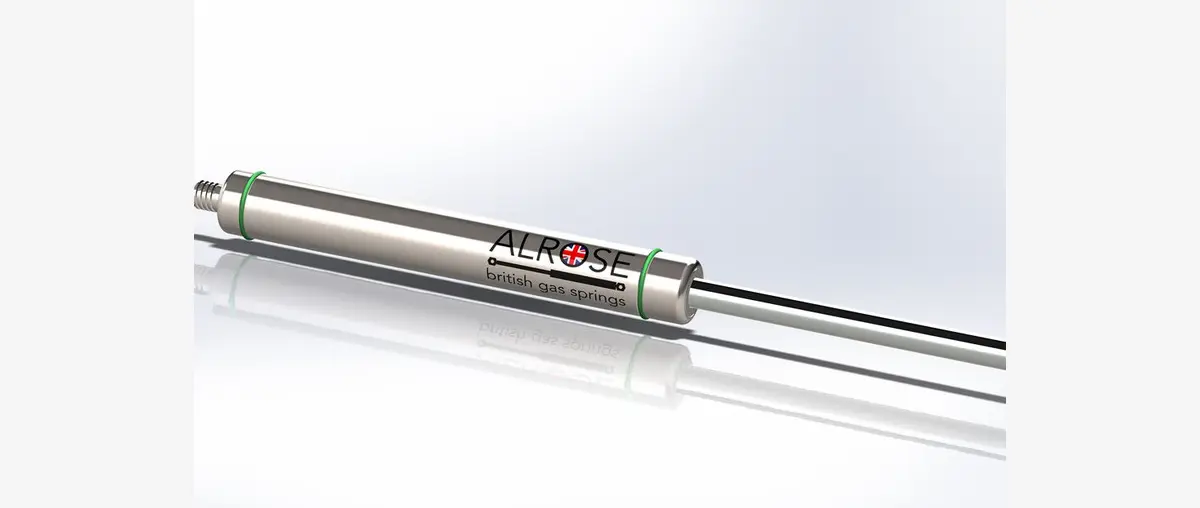
The lead photograph is the original stainless-steel gas spring product image submitted by Alrose & Falcon Products to its official METSTRADE catalogue entry. It is credited to the company and linked to the first-party source. The listing explains the compression spring principle, preferred rod-down orientation and how internal components can influence operation. This report does not claim that the image shows a spring installed aboard a named superyacht or that a specific 2026 launch occurred. The discussion of hatch geometry, safety support and maintenance is independent editorial analysis intended to guide further technical evaluation.
Much attention in the superyacht industry goes to sophisticated automation, propulsion and guest features, yet reliable operation also depends on small mechanical parts selected and fitted correctly. Alrose's 2026 exhibition listing is a reminder that a gas spring has a defined force characteristic, sealing arrangement and preferred orientation that designers must respect. A properly engineered hatch should move predictably, remain safe throughout its stroke and be serviceable without unreasonable difficulty. Owners and chief engineers considering replacements should request the exact specification and assess the complete assembly. Small components deserve the same discipline as larger equipment when crew safety and valuable finishes are at stake.
Primary source: Alrose & Falcon Products first-party Stainless Steel Gas Spring product page in METSTRADE 2026 catalogue.
© Alrose & Falcon Products. Original manufacturer-supplied stainless steel gas spring product photograph. Official source.
Explore
Go deeper into the yachts, companies, events and destinations directly connected to this article.
Continue reading
Alrose & Falcon exhibits Marineline springs, Electromax actuators and acrylic yacht hatches at METSTRADE 2026, focusing on safe movement and maintainability.
The 76-metre clipper Stad Amsterdam has selected Royal Huisman’s Huisfit division for a programme of refit work, according to the yard’s October announcement.
Flexiteek International's Flexiteek 3 synthetic decking uses bio-attributed PVC derived from tall oil, with extensive colour choices and practical refit considerations.

International Paint's B-Free Explore uses a smooth, slick biocide-free coating approach for marine fouling control; superyacht technical teams must assess operating fit.
Superyacht Guide
Continue into the wider Superyacht Guide.
Business opportunities · Superyacht Guide
Companies serving the superyacht market can discuss clearly identified advertising, sponsorship and business-profile opportunities. Commercial activity remains separate from independent editorial coverage.