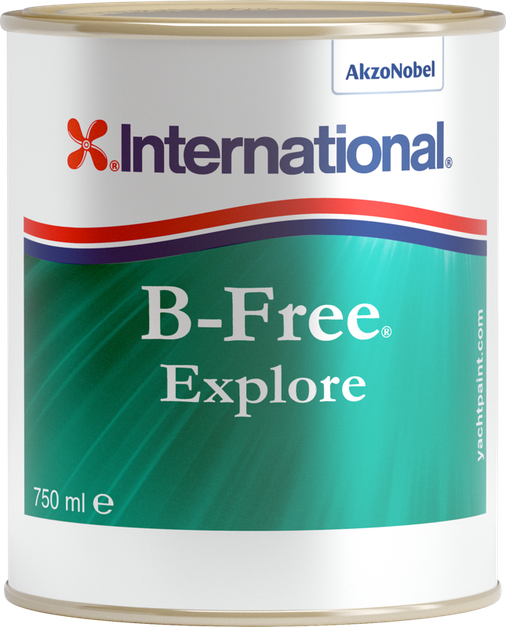
International Paint B-Free Explore Shows Biocide-Free Hull-Coating Option
By Superyacht Guide Newsroom · Edited by Superyacht Guide Newsroom
International Paint B-Free Explore Shows Biocide-Free Hull-Coating Option — official manufacturer image SYG News 2026-11-24 batch02
International Paint's B-Free Explore uses a smooth, slick biocide-free coating approach for marine fouling control; superyacht technical teams must assess operating fit.
International Paint's B-Free Explore is among the fouling-control products presented through the company's current METSTRADE 2026 catalogue, offering a different approach to hull maintenance from traditional antifouling paints that rely on biocides. The manufacturer describes a smooth, slick coating surface intended to control marine growth without incorporating biocidal active ingredients. For a superyacht technical manager, the important question is not whether a product carries the word sustainable in its sales material. It is whether the coating's operating characteristics suit the yacht's cruising itinerary, lay-up periods, speed profile and maintenance routine. Fouling can alter resistance, increase cleaning work and affect the finish of a high-value hull, so choosing a system is as much about a vessel's real operating programme as the chemistry in the can.
The official METSTRADE product entry identifies B-Free Explore as the first product system in International's biocide-free range and describes its surface as smooth and slick. The entry is available in the manufacturer's 2026 exhibition catalogue, but it does not establish that the product was invented or launched during the November event. This report is therefore about its continuing presence in the market and relevance to superyacht refits, rather than a fictitious release announcement. International Paint belongs to AkzoNobel's marine-coatings activities, making the product part of a wider industrial portfolio. That background is useful, but suitability must still be established for each individual hull.
Marine organisms can attach to submerged surfaces, including hull plating, appendages and other fittings. The effect ranges from cosmetic appearance to increased surface roughness and drag, depending on species, growth density and speed. A vessel that spends weeks stationary in warm water may face different conditions from one making long voyages in cooler seas. Fouling may also affect the maintenance of underwater sensors, thruster tunnels and cooling intakes. A coating system can help manage the hull surface, but no single formulation automatically protects every submerged component. The owner's programme should distinguish hull coating from the wider set of underwater maintenance tasks.
Traditional antifouling products often release substances intended to discourage organism growth. A biocide-free system can instead seek to make it more difficult for organisms to adhere, or easier for them to be removed, through the properties of the surface. International Paint positions B-Free Explore in that category. However, a smooth finish does not mean that organisms will never attach. The nature of the coating, local biology, water chemistry and how often the yacht moves can influence results. Any specific cleaning or self-release behaviour should be confirmed from the manufacturer's documentation rather than inferred from the phrase slick surface.
An owner considering B-Free Explore should ask how frequently the hull may need inspection and what cleaning techniques are permitted. Some fouling-control coatings can be damaged by unsuitable brushes, scrapers or high-pressure methods. The correct procedure depends on the product and should be followed to avoid shortening service life. An absence of added biocides does not remove the need for an underwater management plan. A captain may still need cleaning arrangements between yard periods, particularly in areas with rapid seasonal growth. The best coating choice is the one whose service requirements can be met throughout the vessel's actual itinerary.
On a yacht longer than 24 metres, the underwater coating area can be substantial and may include intricate shapes around stabiliser fins, propeller brackets, bow thrusters and appendages. Applying an alternative coating involves more than choosing the colour or calculating the number of tins. The yard must verify the approved specification for each substrate and component, including primers and any tie coats. Different underwater fittings may require different products. An attractive smooth coating on the main hull does not guarantee that it is suitable for every metal, composite or moving surface present on the yacht.
Coating manufacturers generally specify conditions for cleaning, abrasion, adhesion and film application. A refit team must understand the condition of the old paint and whether it can be overcoated safely. Poor preparation can lead to premature failure that is unrelated to the underlying fouling-control concept. The B-Free Explore product entry does not set out a complete yacht-specific application schedule, so detailed instructions must come from current technical data sheets and an approved yard method. A technical manager should document the surface condition, environmental conditions and all layers applied. The finished coating is only as reliable as the preparation beneath it.
Some non-biocidal fouling-control systems perform differently depending on the speed and regularity of vessel movement. A motor yacht that frequently travels at cruising speed may experience a different pattern of biological attachment from an expedition yacht spending long periods at anchor. The manufacturer's precise operating recommendations should be reviewed rather than assumed. A yacht with an unpredictable charter schedule needs a coating strategy that remains manageable when plans change. It may be helpful to discuss the programme with both the coating supplier and the yard, including the longest likely period without movement in a warm harbour.
The term biocide-free refers to an aspect of the product formulation, but it is not a guarantee of zero environmental effect across manufacture, application, use and disposal. Solvents, packaging, surface preparation, cleaning practices and removal of old coatings can each have environmental consequences. The supplier's official product description establishes its stated positioning; it does not provide a full independent lifecycle assessment for every installation. An owner who wants to include the coating in a broader sustainability report should request verifiable documentation and define the reporting boundary. Marketing language alone is not a sufficient basis for an emissions or ecological-impact calculation.
Even when a coating itself is described as biocide-free, in-water cleaning may be subject to local port or marina rules. Some locations restrict scraping or require containment of residues; others may set specific conditions for underwater contractors. A yacht visiting several countries cannot assume that a cleaning method accepted in one harbour will be permitted everywhere. Captains should confirm applicable restrictions with local authorities and professional dive-service providers. A product's environmental positioning does not override those rules. A planned maintenance programme can help avoid the need for urgent cleaning in a port where the operation is difficult or prohibited.
A clean, smooth underwater hull is generally desirable for reducing unnecessary resistance. But it would be misleading to assert that choosing B-Free Explore guarantees a defined percentage saving in bunker fuel. Actual consumption depends on hull shape, propeller condition, speed, loading, sea state and the existing coating being replaced. If a supplier offers performance data, the baseline and test method must be examined. A yacht's own monitoring programme can help identify changes over time, although comparable voyage conditions are needed. The best commercial justification for a coating should be grounded in actual operating costs rather than a generic claim about environmental benefits.
A refit team evaluating alternatives can request information about approved substrates, compatible undercoats, application temperature, film thickness, cleaning procedures and expected service interval. The yard can then develop comparable cost and downtime estimates. It is important to include the consequences of surface preparation and any restrictions on using existing application equipment. Comparing only the price of coating material may omit most of the project cost. An owner may also value the ability to obtain approved repairs or cleaning support in several regions. The product choice should fit both engineering requirements and realistic maintenance logistics.
Superyachts may have carefully scheduled refit periods between charter seasons or long voyages. Changing a coating system can alter the preparation, cure and inspection sequence, with potential effects on the launch date. Weather, humidity and available dry-dock facilities can influence the process. It is unwise to promise that a biocide-free product can be applied in an identical time to every conventional antifouling system. The coating manufacturer and the yard should approve the actual application specification and inspect the result where required. A detailed programme reduces the likelihood that a late material decision will disrupt a yacht's operational calendar.
Stabilisers, propellers, thrusters and underwater lights may have distinct coating requirements. A main-hull system that performs well does not automatically meet the demands of rotating equipment or sensitive surfaces. Some components may need specialist protective treatments, while others should not be coated at all. The manufacturer needs to specify the boundaries of the B-Free Explore application and any compatible products. A systematic approach will also make future cleaning easier by identifying what can be treated by which method. Technical drawings and photographs can be used to map these areas before a refit begins.
A captain may already record fuel use, speed, engine load and environmental conditions. Adding notes about underwater inspections and cleaning can help build a longer-term picture of coating performance. Such records will not isolate every variable, but they can help an owner identify whether a particular maintenance strategy is practical. Underwater photographs taken at regular intervals may also show changes in fouling patterns. The key is consistency, not collecting large amounts of data that nobody reviews. If a new coating system is introduced, maintaining an understandable baseline can help determine whether the change delivered the expected operational benefit.
Some owners prioritise reduction of biocidal ingredients; others are most concerned about hull appearance, cleaning frequency or the cost of dry-docking. Those priorities can lead to different choices even for otherwise similar yachts. A supplier should be given the full operating profile, including planned cruising regions and extended periods of inactivity. A written agreement about the maintenance assumptions is particularly useful when a coating is described as low-maintenance. The manufacturer, yard and captain should use the same definition of acceptable fouling and the same inspection intervals. A coating cannot be judged fairly against an objective that was never defined.
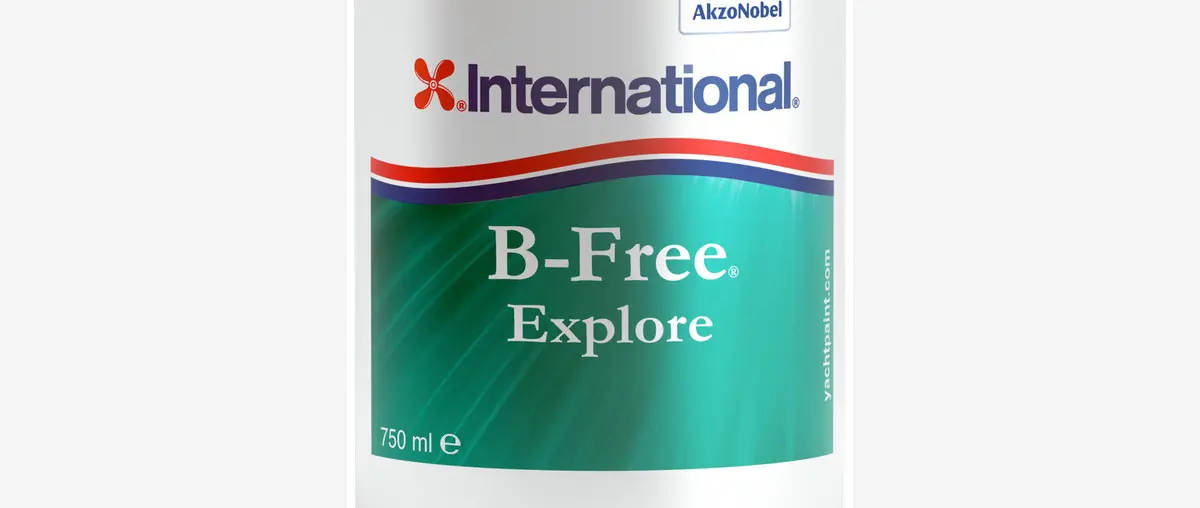
The lead illustration is International Paint's manufacturer-supplied B-Free Explore product image from its official METSTRADE catalogue entry. It identifies the actual coating system and is credited to International Paint and AkzoNobel; it is not an unrelated stock photograph of a newly painted hull. The company's first-party listing is the source of the biocide-free and smooth-surface description. The newsroom has not run a comparative fouling trial, inspected a vessel using the product or measured a fuel saving. Copyright attribution and original source links accompany the image.
B-Free Explore illustrates a broader discussion within superyacht maintenance: how to control underwater growth while reconsidering the active ingredients and lifecycle impact of coatings. A biocide-free approach may suit particular operations, but the decision should be built around technical data, application quality and a workable cleaning strategy. The 2026 METSTRADE listing makes the system easy for builders and refit managers to revisit, not a newly invented product for the month. Owners who evaluate it should ask what happens during long lay-ups, how the surface is maintained and what evidence supports the claimed benefits. Those practical questions will do more to improve fleet outcomes than any single environmental slogan.
Primary source: International Paint official B-Free Explore fouling-control product at METSTRADE 2026.
© International Paint / AkzoNobel. Official first-party B-Free Explore product image supplied with the METSTRADE listing. Official source.
Explore
Go deeper into the yachts, companies, events and destinations directly connected to this article.
Continue reading
Awlgrip HDT features on the METSTRADE 2026 sustainability route, bringing coating repairability and lifecycle assessment into superyacht refit decisions.
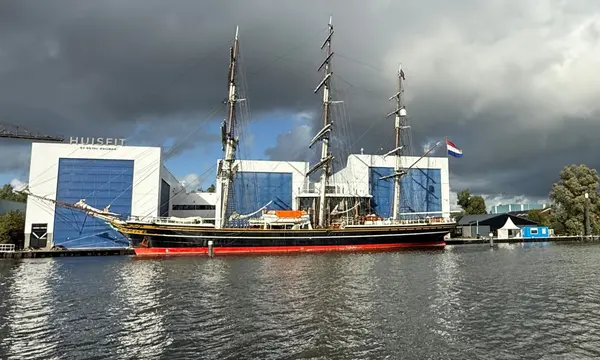
The 76-metre clipper Stad Amsterdam has selected Royal Huisman’s Huisfit division for a programme of refit work, according to the yard’s October announcement.

Flexiteek International's Flexiteek 3 synthetic decking uses bio-attributed PVC derived from tall oil, with extensive colour choices and practical refit considerations.
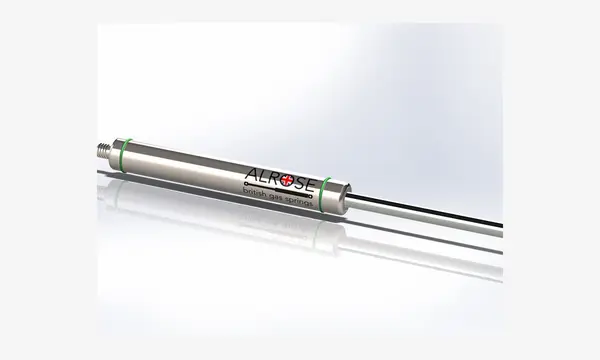
Alrose & Falcon describes marine stainless-steel compression gas springs, explaining positioning, seal lubrication and safe hatch support for yacht applications.
Superyacht Guide
Continue into the wider Superyacht Guide.
Business opportunities · Superyacht Guide
Companies serving the superyacht market can discuss clearly identified advertising, sponsorship and business-profile opportunities. Commercial activity remains separate from independent editorial coverage.