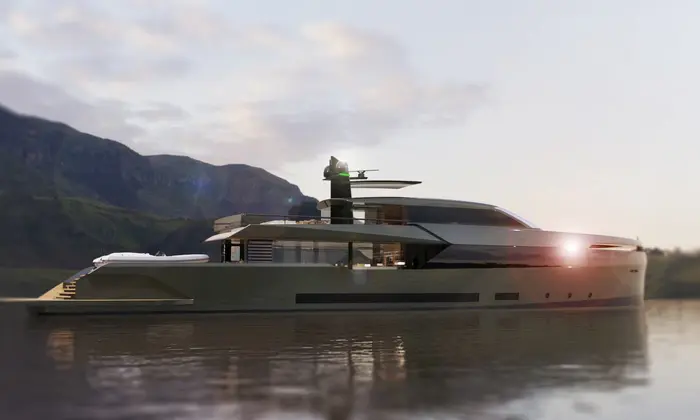

ARES Sets Out Full-Custom Superyacht Strategy After Delivering 62m SIMENA
By Stephen Yardley · Edited by Stephen Yardley
ARES outlines its full-custom shipbuilding strategy after delivering the 62m SIMENA, drawing on Antalya facilities and more than 350 commercial and naval projects.
ARES Yachts has detailed how it intends to compete for full-custom superyacht commissions after delivering the 62-metre sailing yacht SIMENA in 2026. Speaking about its current industrial strategy, the Antalya-based business points to the experience of its parent ARES Shipyard, whose commercial and naval production record extends to more than 350 vessels supplied to customers in over sixteen countries. SIMENA's appearance at the Monaco Yacht Show gave prospective clients the chance to see a completed luxury project rather than relying on computer renderings.
The company's October account of its offering is a statement of capability rather than an announcement of another signed contract. Its argument rests on an industrial base already developed for demanding professional vessels, a dedicated large-yacht facility and a willingness to commission entirely individual designs. Those are worthwhile attributes, but owners should distinguish verifiable completed work from the shipyard's projections for future growth.
ARES says it expanded its Antalya infrastructure in 2022 with a production building planned around the needs of the superyacht market. Yacht Projects Director Piraye Şahinkaya Orhun describes a facility capable of accommodating as many as three yachts of approximately ninety metres at a time, with support space for owner representatives and crew. The provision of offices and a place for technical oversight matters because a large custom commission can require years of regular inspections and decisions.
Yard capacity should be assessed carefully. Physical space capable of receiving three large hulls does not mean three vessels of any specification can always be delivered at identical speed. Availability of naval engineers, systems integrators, paint specialists, suppliers and commissioning crews is equally important. A buyer should review the detailed build programme and workforce arrangements instead of treating a building's dimensions as a guarantee of future throughput.
The yard identifies Atlas and Spitfire as developed design platforms that allow substantial personalisation, alongside a genuinely full-custom route for owners whose operational requirements do not fit an existing hull. A platform may offer benefits in mature engineering drawings, understood weights and earlier supplier decisions. A blank-sheet commission allows an owner to set a very different cabin plan, machinery arrangement or expedition brief, but asks the entire design team to resolve more unknowns.
Neither route is inherently more luxurious. The relevant question is whether an owner wants to optimise a familiar arrangement or commission a vessel for a use case that demands fresh architecture. The cost of change often rises rapidly after class drawings and major equipment specifications are approved. A disciplined brief should therefore identify the planned cruising regions, number and age of guests, crew model, tender inventory, leisure facilities and expected time aboard before visual styling dominates.
ARES describes its approach as one in which exterior styling, interior architecture and engineering run in parallel. That principle matters because the most visible features of contemporary yachts often have hidden technical consequences. A large opening sea terrace changes structure and watertight design, a broad glazed wall affects weight and temperature control, and a special tender bay may require machinery and lifting components to be moved. A technically coherent project resolves these interactions while ideas remain adaptable.
The owner benefits when the naval architect, design studios, shipyard engineers and crew representative share a working specification. A beautiful concept can become impractical if the generator compartment has no adequate maintenance access or if equipment loads were underestimated. Drawing revisions should be controlled, agreed in writing and linked to schedule and budget effects. That procedure preserves creativity by making its consequences understandable rather than suppressing ambition.
SIMENA is the first completed large-yacht reference under the ARES Yachts brand, marrying the technical demands of a substantial sailing rig with the comforts of a modern superyacht. Her 62-metre size, hybrid-related systems and bespoke living spaces made the project a substantial test of organisation and specialist collaboration. Delivering one such yacht provides a basis for prospective buyers to inspect workmanship and review commissioning records.
It does not prove that every proposed new model will deliver identical performance or come through without delays. Sea-trial reports, rigging inspections, vibration measurements, hotel-power data and maintenance documentation can help potential owners draw useful lessons from an existing reference. They should also request information about warranty issues, service response and parts availability, since early operating experience often reveals strengths and weaknesses not visible at a show.
The Antalya Free Zone hosts a cluster of marine manufacturers, technical contractors and craftspeople. ARES argues that geographic proximity can ease supervision and shorten communication between its project team and specialist suppliers. The yard also points to a cost structure that can be competitive with some traditional northern European construction centres. These factors may help an owner obtain more engineering or detail for a given budget, but they should not be mistaken for a guarantee of lower overall ownership cost.
Price comparisons should include scope and exclusions, class requirements, warranty coverage, payment guarantees, currency exposure and the costs of travelling to inspect a vessel during construction. A lower headline contract value may be of little advantage if significant changes are priced later or service support proves difficult. Value in a full-custom yacht is measured over its operating life, when technical access and reliability can matter more than an impressive original quotation.
ARES describes a deliberately measured expansion rather than an attempt to maximise the number of parallel yachts. This reflects the danger of a large order book absorbing the attention of the same senior technical staff across too many complex programmes. The builder says project scale alone is not its sole selection criterion; engineering complexity and the owner's ambitions also influence whether a commission fits its capabilities.
A buyer should test those claims through agreed reporting intervals, access to production managers and clarity about which outside experts will actually work on the yacht. Shipyards can make persuasive statements about individual attention, but the working reality is revealed in a live build schedule and how quickly technical issues are resolved. Independent surveyors, clear milestone definitions and realistic contingency provisions are essential regardless of the builder's nationality.
The October account positions ARES at a moment when a completed high-profile sailing yacht can support further conversations about large full-custom vessels. The next proof will be whether its engineering-led offer translates into signed contracts, well-controlled construction and dependable after-sales service. The company's commercial and naval pedigree is relevant, but owners are commissioning a different combination of hospitality and technical capability than they would on a patrol craft or workboat.
For Superyacht Guide readers, the larger lesson concerns industrial depth. A specialist luxury brand can benefit from a parent company already experienced in complex shipbuilding, provided it also develops the judgement needed for highly individual owners. SIMENA provides a useful starting point for assessing ARES's ambitions; the outcomes of its next private commissions will determine how firmly the builder establishes itself in this market.
Explore
Go deeper into the yachts, companies, events and destinations directly connected to this article.
Continue reading
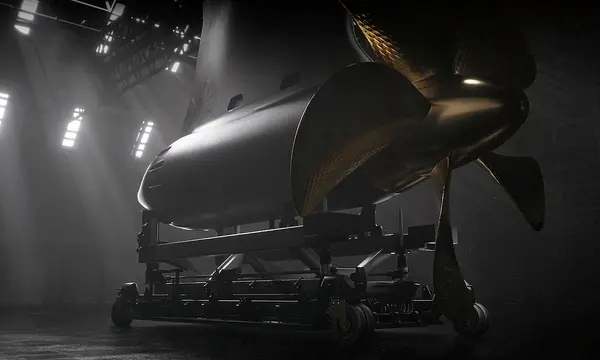
Kongsberg Maritime is building dedicated superyacht sales and service teams, citing installations aboard at least 250 new-build yachts over 70 metres since 2000.
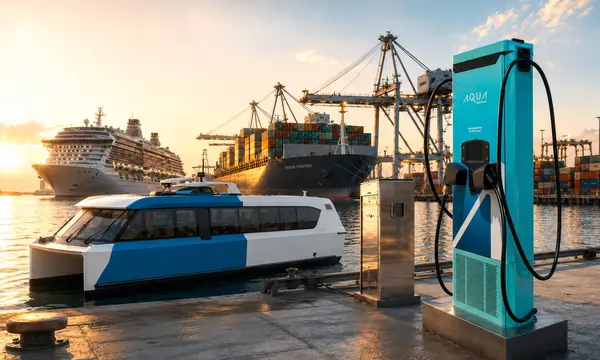
NatPower Marine agreed to acquire Aqua superPower's network spanning over 80 ports and marinas, aiming to accelerate charging access for electric boats, tenders and …

AST is investing roughly €3m in a 4,000-square-metre Berlin-area factory for specialist composite marine structures and yacht tenders, targeting mid-2027 operations.
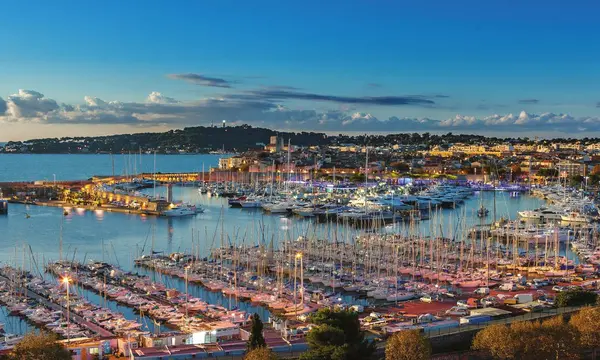
Smart Yachts lists long-term right-of-use opportunities for a 60m superyacht at Marina Genova and a 53.99m yacht at Port Vauban, Antibes.
Superyacht Guide
Continue into the wider Superyacht Guide.
Business opportunities · Superyacht Guide
Companies serving the superyacht market can discuss clearly identified advertising, sponsorship and business-profile opportunities. Commercial activity remains separate from independent editorial coverage.