
Company
AST – semi-custom carbon tenders
Explore the company profile and related Superyacht Guide coverage.
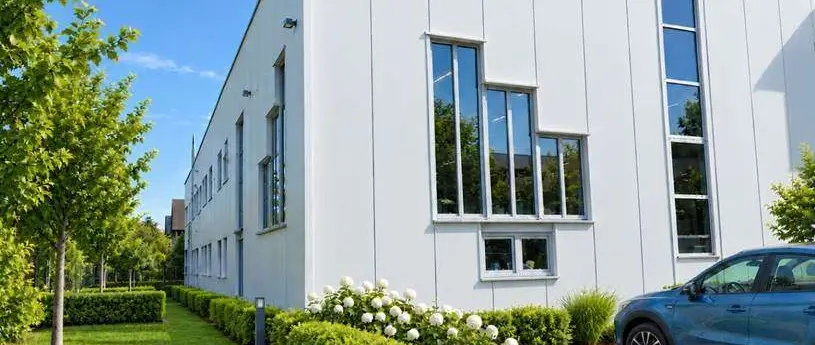
AST is investing roughly €3m in a 4,000-square-metre Berlin-area factory for specialist composite marine structures and yacht tenders, targeting mid-2027 operations.
AST – Advanced Sailing Technologies has announced an investment of approximately €3 million in a new production facility near Berlin, with operations planned for the middle of 2027. The German manufacturer works with carbon-fibre composite structures and specialist tenders, serving customers who need lightweight, precisely engineered equipment. Its new hall is planned to offer around 4,000 square metres of production space as the company seeks to expand international sales.
The announcement published on 9 October 2026 comes at a time when superyacht projects increasingly demand highly customised tenders and equipment rather than standard catalogue boats. The reported investment is a factory-development commitment, not evidence that the building is operating today. Delivery capacity, staffing and the precise commissioning date will become clearer as construction and equipment installation progress.
A tender carried on a large yacht may perform very different jobs: moving passengers discreetly to shore, transporting equipment, serving as a watersports platform or providing rapid access to a remote beach. Even a relatively compact vessel can require complex seating, storage, communications, boarding and propulsion arrangements. The parent superyacht imposes additional restrictions on dimensions, lifting weight and the ability to secure the tender at sea.
Carbon-fibre composites can be attractive where strength and weight savings matter, but material choice alone does not guarantee a superior boat. Engineers must address laminate design, impact resistance, fatigue, joining details and the behaviour of structures under repeated slamming. The final tender must also be able to withstand salt water, sunlight, careless luggage loading and the everyday realities of yacht-crew operation.
More production space can allow a manufacturer to separate moulding, curing, trimming, assembly and final fitting, improving control over dust, temperature and workflow. Carbon-composite production often benefits from carefully managed environments, and moving from a smaller workshop to a purpose-developed factory can support larger projects and more consistent scheduling. It can also require considerable investment in ventilation, handling equipment and staff training.
AST has not published a binding figure for how many tenders the new hall will produce annually, so no such capacity should be inferred from floor area alone. Different tender models require different moulds, labour hours and finishing operations. What matters to a superyacht yard is less the theoretical number of boats and more whether the supplier can meet quality milestones that match the mother yacht's launch and commissioning programme.
A tender's weight influences a yacht's lifting equipment, structural supports, stability calculations and overall displacement. A lighter boat may allow easier launch and recovery or reduce demands on a deck crane, but an owner needs the certified loaded weight, not merely the bare hull figure. Fuel, batteries, water, loose equipment and passengers can change the real operating mass significantly.
Carbon structures can reduce weight in suitable designs, yet a tender's upholstery, glazing, propulsion and installed options may account for a large portion of the final mass. The owner and naval architect should agree the vessel's intended role before selecting the tender. Changing the specification late in the yacht build may require revisions to cradle arrangements, deck openings, winches and operational procedures.
A yacht tender is rarely produced by one company in isolation. AST may manufacture the principal structure while other specialists supply engines, propulsion controls, electronics, hinges, upholstery and lifting fittings. These components have their own lead times and certification requirements, and successful delivery depends on the manufacturer's ability to coordinate them. International service support is particularly important for boats that spend much of the year far from their original workshop.
The planned commercial expansion points to a business that wants to serve a wider network of yacht builders and owners. Establishing distributors and technical partners can shorten the time needed to obtain replacement parts, but those arrangements should be verified by customers rather than assumed from marketing claims. A tender operating in the Caribbean requires a very different support plan from one used mostly in the western Mediterranean.
Owners should request a clear weight statement, hull-construction schedule, operating limits, lifting-point certification and a realistic record of sea trials. A tender may look ideal in a showroom yet behave differently in a steep chop while heavily loaded. Detailed tests should cover manoeuvring, braking, boarding, water ingress and the handling of the boat by yacht crew. Certified safety equipment and suitable towing arrangements matter alongside performance.
Environmental questions also deserve attention. Composite materials can provide long service lives but raise challenges around waste, repair and the end of a hull's useful life. Recycled content, production energy and disposal options should be supported by specific evidence if they become part of a procurement decision. A lightweight boat is not automatically the lowest-impact option across a full lifecycle.
AST's investment reflects the specialised industrial skills required to turn fibre, resin and core materials into accurate, repeatable structures. Technicians must understand layup orientation, cure conditions, bonded joints and non-destructive inspection. The work also involves conventional disciplines such as fit-out, metalwork, electrical integration and final quality control, reinforcing that advanced composites are only one component of a successful marine product.
A modern production facility may improve traceability by linking material batch records, inspection results and finished parts to individual hull numbers. That information can help a future owner investigate damage or order an approved repair. For a superyacht captain it is often more valuable than a brochure statement about technological sophistication because it provides a pathway to safe long-term operation.
The company's October announcement establishes an investment amount, a proposed location near Berlin, planned production area and a mid-2027 operating horizon. It does not identify a completed factory, an order book value or a series of guaranteed delivery dates. Those milestones should be reported when the relevant work is finished and independently documented.
For shipyards commissioning tenders and owners planning extensive expedition or family cruising, the underlying development is a stronger specialist manufacturing base in Germany. It is a reminder that even the most spectacular superyachts depend on relatively small companies able to deliver accurate equipment on time. AST's expansion will be judged by production reliability, technical support and the quality of the completed composite craft rather than its investment figure alone.
Explore
Go deeper into the yachts, companies, events and destinations directly connected to this article.
Company
Explore the company profile and related Superyacht Guide coverage.
Continue reading
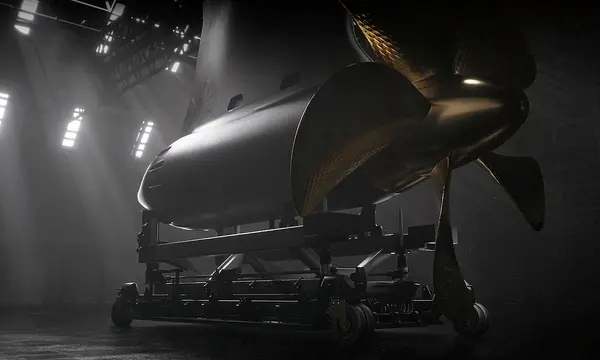
Kongsberg Maritime is building dedicated superyacht sales and service teams, citing installations aboard at least 250 new-build yachts over 70 metres since 2000.
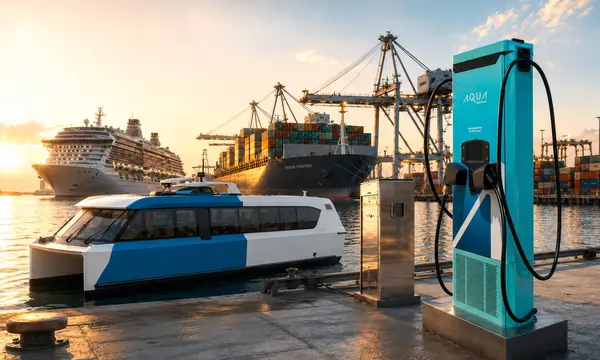
NatPower Marine agreed to acquire Aqua superPower's network spanning over 80 ports and marinas, aiming to accelerate charging access for electric boats, tenders and …
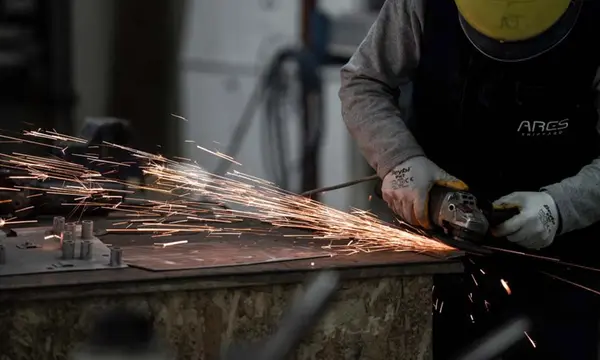
ARES outlines its full-custom shipbuilding strategy after delivering the 62m SIMENA, drawing on Antalya facilities and more than 350 commercial and naval projects.
Smart Yachts lists long-term right-of-use opportunities for a 60m superyacht at Marina Genova and a 53.99m yacht at Port Vauban, Antibes.
Superyacht Guide
Continue into the wider Superyacht Guide.
Business opportunities · Superyacht Guide
Companies serving the superyacht market can discuss clearly identified advertising, sponsorship and business-profile opportunities. Commercial activity remains separate from independent editorial coverage.