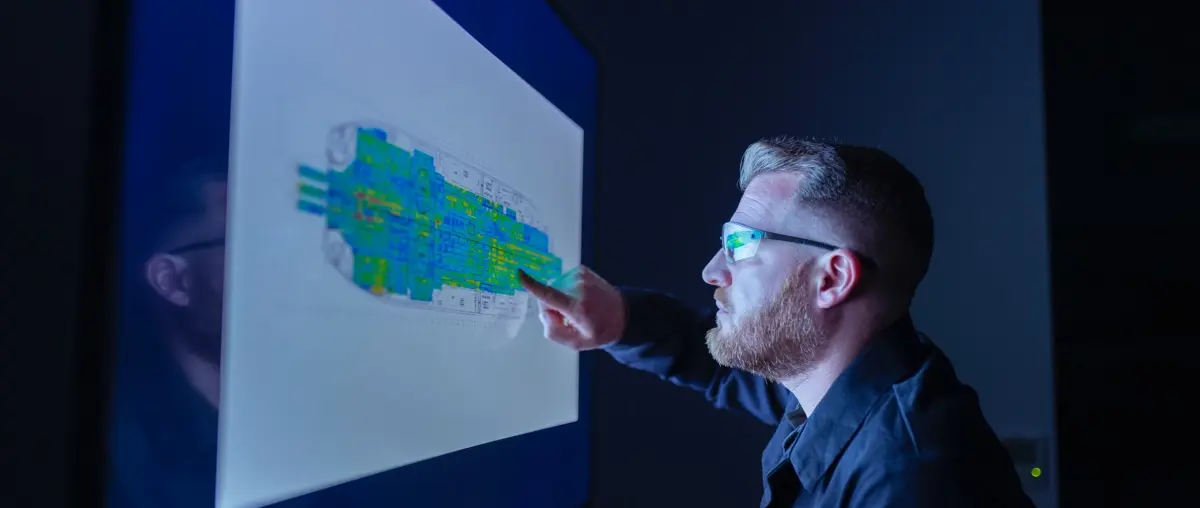
Brookes Bell CMAP Maps Hidden Superyacht Corrosion Through Decking and Fairing
By Stephen Yardley · Edited by Stephen Yardley
Image: The Lab at Brookes Bell
Brookes Bell's CMAP corrosion-mapping service helps refit teams assess steel plate condition beneath superyacht decking, coatings and fairing before yard work begins.
Hidden corrosion can be one of the most expensive surprises when an older superyacht enters a refit yard, particularly where steel structure is concealed beneath thick fairing, paint or teak. Brookes Bell is applying its CMAP full-corrosion-assessment service to make those decisions more evidence-led before extensive coverings are removed.
The system uses Pulsed Eddy Current Array, or PECA, inspection and maps the findings in three-dimensional software rather than relying only on a small number of isolated thickness readings. The purpose is to give owners, surveyors and project managers a clearer overview of where material loss is occurring and how that may affect the refit worklist.
According to The Lab at Brookes Bell, the method can assess steel through a range of materials, including fairing compounds, coatings, teak or composite deck coverings and some interior flooring. That capability can reduce the need to strip finished surfaces simply to decide where further investigation is warranted.
The method is not a universal replacement for ultrasonic thickness measurement, visual inspection or opening-up work where these are required. Its value is to locate and quantify areas of concern more systematically so the subsequent inspection and repair programme can be targeted.
CMAP combines survey data with a digital representation of the vessel's steel structure, highlighting remaining wall thickness and estimated material loss across inspected areas. That can help a yard price likely steel renewal work before the yacht is committed to a dry-dock period.
Better knowledge in advance is particularly relevant to projects with complex access, bespoke interiors or tightly scheduled summer and winter cruising programmes. It can also reduce disputes about whether corrosion was anticipated, although any repair decision still needs to follow the applicable class and engineering requirements.
Brookes Bell states that Lloyd's Register has validated its PECA methodology for naval and commercial marine applications, and that LR inspectors can use CMAP findings as factual evidence of steel condition. That is an important distinction from claiming that a data map alone constitutes class approval of the yacht or its repairs.
For captains and yacht managers, a sensible pre-refit sequence is to review historical problem areas, commission appropriate non-destructive assessment, agree opening-up locations and then confirm the final repair scope with the yard and surveyor. The technology is most useful when it improves those decisions before the expensive part of the yard period begins.
Explore
Go deeper into the yachts, companies, events and destinations directly connected to this article.
Continue reading
TYKUN is presenting its aluminium tender range in Monaco after completing cradle-to-grave lifecycle analysis for the X and XII, with an EPD now under …
Kite Dynamics is developing four-line kite propulsion following at-sea trials in 2025 and 2026, with yacht applications remaining at the prototype and engineering stage.
Panoblu IR combines twelve thermal sensors in a mast-mounted unit to give superyacht crews a continuous all-round view for night watch and perimeter awareness.
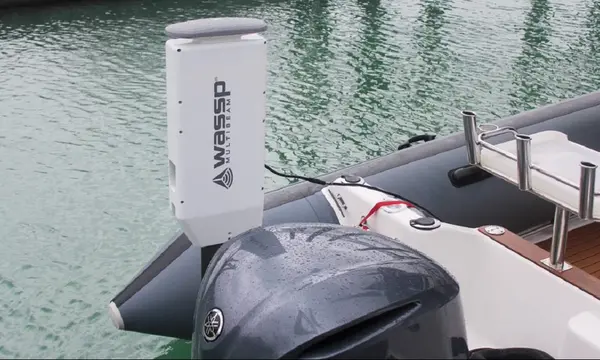
A look at WASSP's W3P portable multibeam system and how a superyacht tender can survey a remote anchorage before the mothership enters.
Superyacht Guide
Continue into the wider Superyacht Guide.