Sensiblue S4 Gains DAME Award for Flow-Powered Yacht Water Disinfection
By Superyacht Guide Newsroom · Edited by Superyacht Guide Newsroom
Sensiblue S4 Gains DAME Award for Flow-Powered Yacht Water Disinfection — original supplier image SYG news 23 November 2026 batch07
Sensiblue S4 gains a DAME 2026 category award for its salt-electrolysis water-disinfection concept, with superyacht freshwater safety and monitoring in focus.
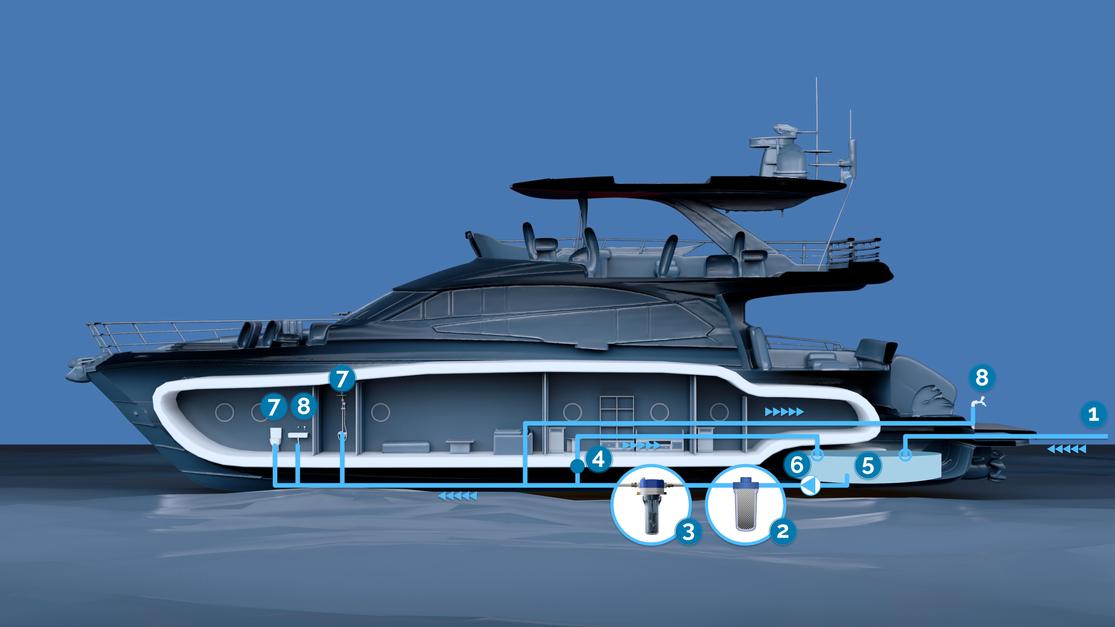
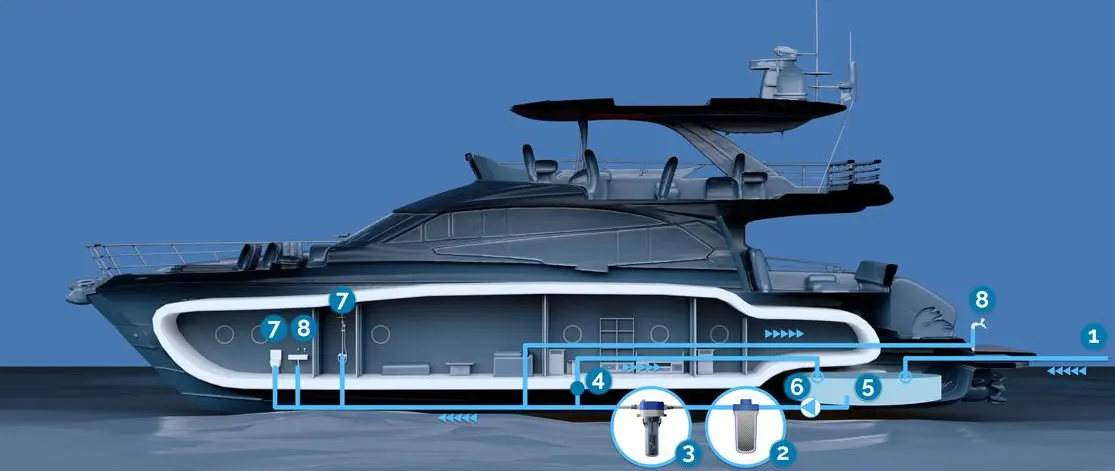
Dutch marine technology supplier Sensiblue has gained recognition at the 2026 DAME Design Awards for its S4 water-treatment system, a product intended to disinfect water moving through onboard plumbing without relying on an external electrical supply. The awards organiser confirms that the Sensiblue S4 won the Manufacturing and Support Products and Materials category at METSTRADE in Amsterdam on 17 November. The company's own catalogue explains that the device uses flow-powered salt electrolysis and is aimed at controlling microorganisms and biofilm. These claims speak to an issue familiar to superyacht crews: safe, reliable freshwater service is not simply a question of filling a large tank. Water quality can change during storage and distribution, and the plumbing network requires a documented maintenance approach. The S4 is therefore worth examining as a possible element of a treatment system. Its award, however, should not be represented as independent proof that every tap on every yacht will be safe without testing or continuing sanitation.
Sensiblue lists the S4 in its official METSTRADE catalogue and describes disinfection technology powered by the movement of water. The product description refers to patented salt electrolysis, protection against bacteria and viruses, and a capacity of approximately 1,000 litres per hour in a specified version. It also mentions a salt refill interval of around 55,000 litres for the Medium version. These are manufacturer-reported figures that need to be interpreted in the conditions and configuration used to obtain them. The public listing does not provide a complete independent microbiological test report for every organism, nor does it establish compliance with the drinking-water rules applying to every flag or destination. Owners should request current certificates, operating instructions and data concerning the quality of incoming water. Disinfection performance is a scientific and engineering claim that should be evaluated through appropriate measurements, not accepted solely on the basis of an exhibition description.
A superyacht may obtain water from several marinas, produce freshwater using a desalination system and store it for periods of varying length. The quality of source water and the condition of the distribution network may therefore change during a season. Warm climates, long sections of pipework and periods when some cabins are unused can create additional management challenges. A superyacht might serve multiple guest bathrooms, crew accommodation, galleys and exterior outlets, sometimes at the same time. A treatment device designed for flow-through disinfection must be assessed against these actual operating conditions. Crew should understand whether water quality can be verified at the tank, along the pipework and at the point of use. No single component can compensate for dirty storage tanks, unsuitable materials or poor maintenance practice. The usefulness of Sensiblue's proposal depends on how it becomes part of a complete vessel water-safety plan.
The product uses salt electrolysis to generate a disinfecting effect as water passes through the system, according to its maker. The description emphasises operation using water flow rather than a conventional external power connection. The underlying idea is to create treatment locally instead of repeatedly adding a manually measured disinfectant to a tank. That can be attractive to operators seeking a more consistent treatment process, but the details are essential. Water chemistry, flow rate and the concentration of active disinfecting species influence performance. A suitable system should make it possible for a technician to confirm that treatment remains within the manufacturer's specified range. Overdosing and underdosing are both legitimate concerns in drinking-water management. A supplier's assertion that its technology avoids these problems should be supported by test methods and operating guidance. Owners should never infer that salt is the only substance relevant to the chemistry simply because the device uses a salt-based process.
Biofilm can form on the interior surfaces of pipework and tanks, where microorganisms may be protected from ordinary cleaning approaches. It is a maintenance issue for buildings and vessels alike, but yachts bring additional challenges because sections of plumbing may remain unused for weeks. Sensiblue's first-party materials describe reducing or eliminating biofilm as a central objective. Any such claim should be interpreted with attention to the age and condition of the installation. An established biofilm problem may require a professionally planned cleaning and remediation process before a new device is installed. Owners should ask whether the S4 is intended primarily to prevent growth, treat existing deposits or perform both functions under defined conditions. The short catalogue entry does not supply enough evidence to guarantee restoration of heavily contaminated pipework. Routine inspection and periodic laboratory analysis may still be necessary, particularly in vessels with complex distribution arrangements.
The manufacturer specifically refers to Legionella among the organisms relevant to its disinfection proposition. Legionella management is a serious topic in freshwater systems because exposure can occur through water droplets under certain conditions. A yacht with numerous showers and low-use guest cabins should manage this risk through a coherent plan that considers temperatures, stagnation, cleaning and water-treatment measures. A device that claims to address Legionella is potentially relevant, but its exact performance must be checked using evidence appropriate to the risk. Crew should not substitute a marketing statement for testing, temperature control or established professional guidance. The system's location relative to tanks, hot-water equipment and shower outlets can affect the meaning of any claimed benefit. For a professionally operated superyacht, the appropriate surveyor or water-treatment specialist should review both the device and the operating programme.
One unusual element of Sensiblue's description is its assertion that water movement is sufficient to power the disinfection process. If the design works as stated in a suitable installation, it may avoid adding another electrical consumer and simplify some wiring. Nevertheless, the term no electricity should be understood as a claim about external electrical supply, not as a claim that the system operates without an energy input. Flow pressure is itself supplied by the yacht's water system, normally through pumps or another pressure source. The relevant engineering questions include pressure drop, required minimum flow, performance at varying demand and what happens when the device is bypassed or its operation falls outside the specified range. Owners should ask how a loss of effective disinfection is detected. A treatment device with few electrical components can be convenient, but monitoring and verification still have to be addressed.
The S4 listing mentions an operating figure of up to about 1,000 litres per hour and refers to serving two showers in a particular configuration. That may be useful in some sections of a yacht, but the demand from a large vessel can vary sharply. Several guest showers, laundry equipment and galley operations may be active simultaneously, while a long passage can bring different peak usage patterns. A naval architect or water engineer should calculate realistic demand and decide whether the specified unit belongs on the main freshwater trunk, a branch or a particular treatment circuit. The catalogue figure does not imply that a single S4 is appropriate for every large yacht. If more than one unit is required, the supplier should confirm how they should be arranged and monitored. The installed pressure and water quality must remain satisfactory when several outlets are in use.
Sensiblue indicates that a version of the S4 needs a salt refill after approximately 55,000 litres of treated water. The interval is a manufacturer guide tied to the model and operating assumptions, not a universal calendar-based maintenance schedule. On a yacht, actual throughput may vary widely across the year. Crew should know how the amount treated is measured, what sign indicates that replenishment is required and whether the system provides any indication of abnormal operation. The manufacturer describes the device as low maintenance, yet the yacht still needs inspection of connections, appropriate cleaning and verification of performance. Salt can be relatively simple to store, but spare materials need to be suitable for the product and carried in appropriate quantities for extended cruising. An owner should request a realistic maintenance procedure before accepting any claim that the unit needs no attention.
An onboard watermaker and a water-disinfection device solve related but distinct problems. Reverse osmosis is commonly used to remove salts from seawater and produce freshwater. Treatment and hygiene measures are needed to keep that water suitable during storage and distribution. The S4 is discussed as a disinfection system, not a replacement for desalination machinery. Owners should therefore distinguish the watermaker's measured permeate quality from the quality of water at the guest shower or galley. The design should address tanks, distribution pipes and all treatment stages in the correct order. Careful monitoring is particularly important when water comes from different marinas or when the yacht switches between shore-supplied and self-produced freshwater. A successful specification should be based on water sampling, the operational environment and the manufacturer's exact requirements rather than on a single product's headline benefits.
The maker suggests that its approach can offer water without the objectionable taste associated with some treatment methods, and its wider exhibition information presents bottled-water reduction as a possible benefit. These are interesting goals for hospitality aboard. Yet taste, odour and microbiological quality are different subjects. Water may taste pleasant while being unsuitable for drinking, or meet appropriate safety criteria while exhibiting a trace of an acceptable disinfectant. The yacht's water programme should not be guided by sensory impressions alone. If the aim is to provide drinking water directly from taps, professional testing and the correct plumbing materials are essential. Owners might reduce disposable-bottle use, but that environmental benefit would depend on the wider supply and maintenance system. A product description cannot establish the reduction in waste for a particular vessel without measuring actual operations.
The Sensiblue S4 was selected by the DAME judges as the winner of the Manufacturing and Support Products and Materials category in 2026. This recognition shows that designers and equipment specialists considered the system significant within the field of marine products. It is distinct from the overall awards, which were shared by three different manufacturers. A category win does not replace laboratory water-quality testing, regulatory certification or a trial on the vessel considering the product. It does, however, draw attention to a practical area of innovation that can receive less publicity than propulsion or navigation electronics. Water safety affects guest wellbeing, crew workload and the reliability of expensive accommodation spaces. A technology that makes treatment simpler is worthy of examination, provided its full performance is documented.
A superyacht engineer considering the S4 should request the complete specification for the selected unit, including operating-flow limits, pressure requirements, refill procedures and the types of water that may be treated. The supplier should identify which microbiological tests support its claims, what certifications apply and how operators verify successful disinfection. The engineer should also ask how the device integrates with existing carbon filters, storage tanks, hot-water circuits and any other disinfection stages. Warranty support and availability of replacement components matter when the yacht cruises internationally. If the installation is regulated, approval should be discussed with the relevant flag or service provider. A competent procurement process can identify where the technology is suitable and where traditional maintenance and monitoring remain indispensable.
Sensiblue's S4 combines an interesting technical idea with the practical challenge of freshwater safety aboard yachts. The manufacturer describes water-flow-powered salt electrolysis, treatment capacity in a specified version and control of microorganisms and biofilm; the DAME organisers confirm a 2026 category award. Those points justify a closer look by the superyacht supply chain. They do not establish that a product can make every freshwater system safe without independent testing, care and correct installation. The best outcome would be a clear technical evidence package that allows engineers to match treatment to demand and demonstrate water quality throughout the season. For owners, the value of a well-designed treatment system is not simply fewer components or reduced chemical handling, but dependable water supported by sensible procedures and accurate records. The S4 may contribute to that objective when used within a complete water-safety programme.
Primary source: Sensiblue manufacturer's official S4 water-disinfection product entry at METSTRADE, first released January 2026.
Further information: DAME Design Awards official 17 November 2026 product recognition and award list.
© Sensiblue. Original supplier photograph of Sensiblue S4 included in the official METSTRADE product entry. Official source.
Explore
Go deeper into the yachts, companies, events and destinations directly connected to this article.
Continue reading
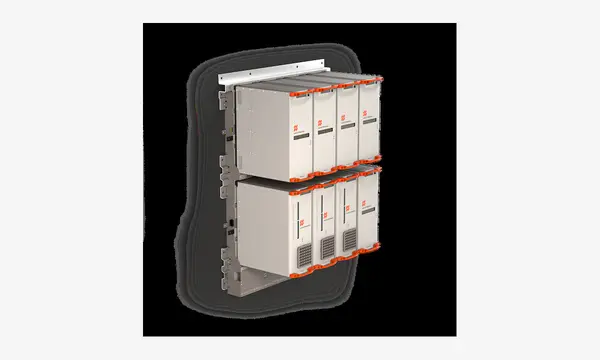
HikoTerra's H4 integrated hybrid power system gains a DAME 2026 special mention, highlighting battery-first energy architecture for superyacht projects.
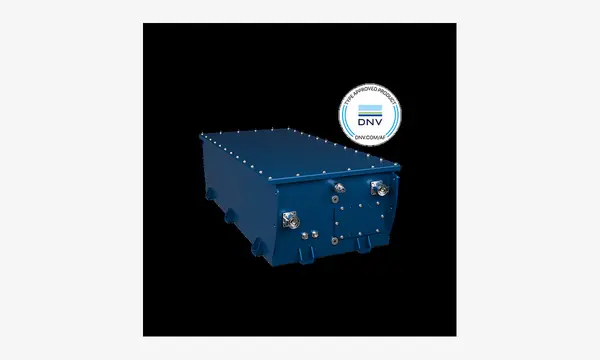
EPTechnologies SVENNER II puts DNV approval, fault containment and battery cycle-life testing into focus as yacht engineers review marine energy storage.
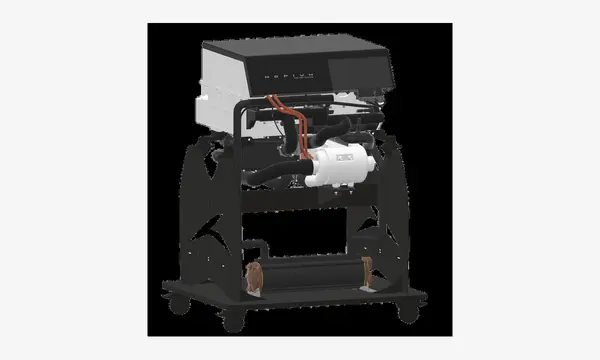
MOTA and HOPIUM's seawater-cooled H2 Marine One hydrogen fuel-cell concept wins a DAME 2026 category award, raising new superyacht integration questions.
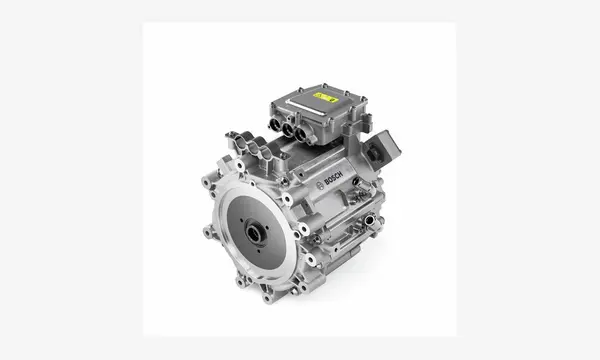
Bosch Engineering's 800V SMG230 electric motor brings a stated 200kW capability to marine power design, with installation and high-voltage safety under review.
Superyacht Guide
Continue into the wider Superyacht Guide.
Business opportunities · Superyacht Guide
Companies serving the superyacht market can discuss clearly identified advertising, sponsorship and business-profile opportunities. Commercial activity remains separate from independent editorial coverage.