MOTA and HOPIUM H2 Marine One Wins DAME Recognition for Hydrogen Power
By Superyacht Guide Newsroom · Edited by Superyacht Guide Newsroom
MOTA and HOPIUM H2 Marine One Wins DAME Recognition for Hydrogen Power — original supplier image SYG news 23 November 2026 batch07
MOTA and HOPIUM's seawater-cooled H2 Marine One hydrogen fuel-cell concept wins a DAME 2026 category award, raising new superyacht integration questions.
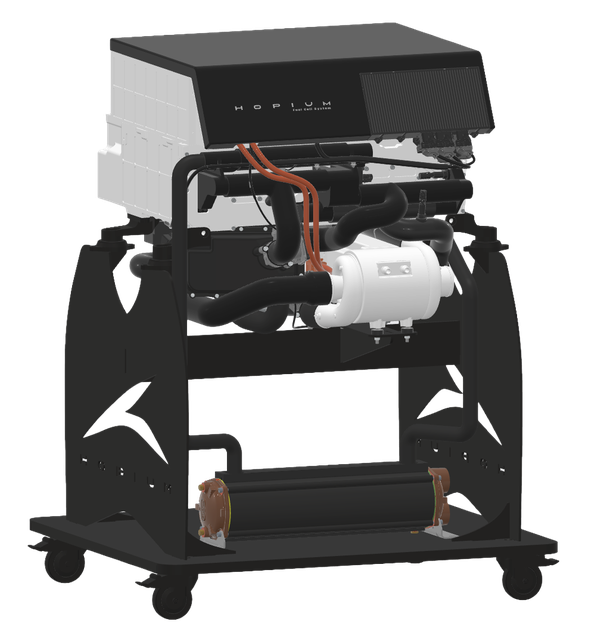
French cooling specialist MOTA and hydrogen technology company HOPIUM have presented H2 Marine One, a modular hydrogen fuel-cell concept incorporating direct seawater cooling. The product was recognised as a category winner in Electronic and Electrical Systems at the 2026 DAME Design Awards, announced during METSTRADE in Amsterdam on 17 November. The manufacturer's official catalogue description focuses on simplified thermal architecture, a single heat exchanger and possible uses ranging from propulsion support to onboard hotel loads. These are significant technical subjects for superyachts, where the space occupied by power generation, cooling, ventilation and fuel storage can influence the entire vessel's design. At the same time, the exhibition announcement is not proof that a named superyacht already operates with the system, nor that hydrogen can replace conventional machinery on every vessel. The value of the story lies in examining a credible supplier's proposed integration approach and the substantial engineering hurdles that remain.
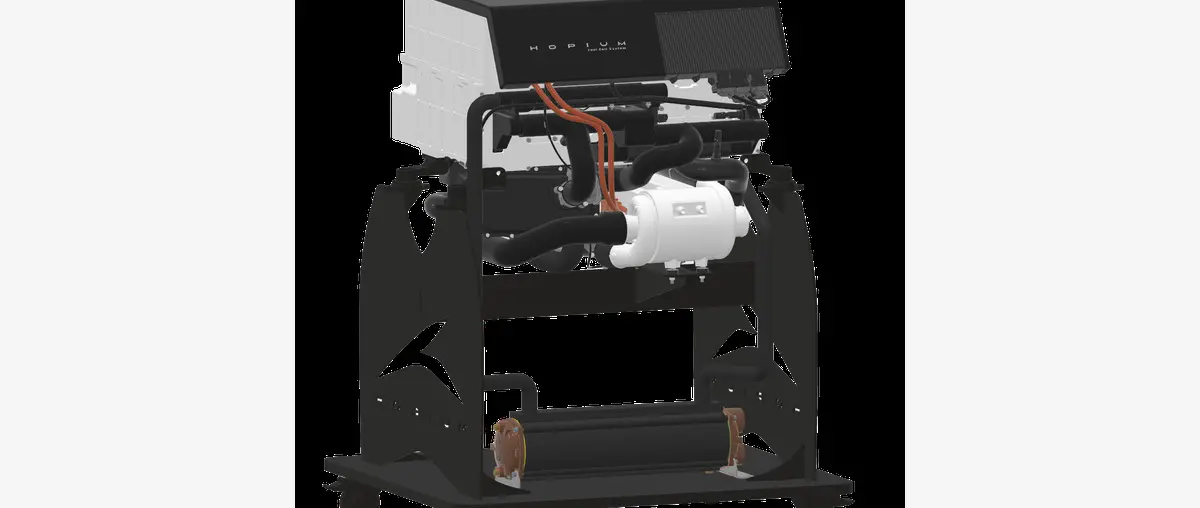
MOTA describes H2 Marine One as a compact hydrogen fuel-cell solution developed with HOPIUM, with direct seawater cooling intended to reduce the complexity and size of the installation. Its catalogue entry identifies an architecture using a single heat exchanger and refers to modular applications for marine propulsion and hotel power. The DAME organiser's official 2026 award announcement separately confirms the product's category recognition. Neither short public source provides all the figures necessary to establish net electrical output, hydrogen consumption, continuous operation limits or the mass of a complete installed marine system. Buyers should therefore treat descriptions such as high efficiency and compact design as manufacturer claims requiring specific supporting data. The distinction matters particularly when considering hydrogen, because the fuel cell itself may occupy less space than the hydrogen storage, distribution, monitoring and ventilation arrangements it requires. The complete vessel integration is the relevant object of assessment.
A fuel cell converts chemical energy into electricity and also produces heat. Managing that heat is essential to maintaining performance and protecting the equipment. On a superyacht, cooling systems occupy space, consume electrical power and require inspection. MOTA's core contribution to the H2 Marine One concept is its attention to the thermal side of the engineering. The proposal of direct seawater cooling and a streamlined heat-exchanger arrangement addresses a real challenge, but it does not eliminate the need to evaluate seawater quality, corrosion protection, pumping, heat rejection and fault response. Cooling capacity must be suitable across the operating conditions expected by the vessel, including warm water and extended periods of high electrical demand. The yachtbuilder should request thermal performance data and the exact boundaries between seawater and sensitive fuel-cell components. A compact heat-exchanger drawing is the beginning of an integration plan, not the end of one.
Marine engineers are familiar with using seawater to remove heat from propulsion and auxiliary machinery. Its availability is an advantage, yet seawater systems can encounter biological fouling, sediment, scale and corrosion. Depending on intake location and cruising conditions, a circuit may need strainers, monitoring and scheduled cleaning. A yacht in a warm marina can face different conditions from one operating offshore in cool water. Any design using direct seawater cooling should account for the risk of restricted flow, leaks and unsuitable operating temperature. Crew members need clear alarms and procedures if cooling is reduced while the fuel cell is producing power. The supplier's catalogue statement does not establish maintenance intervals or whether redundant pumps are included. Those details should be requested explicitly. A system intended to reduce integration complexity must still show that it can be serviced safely and efficiently over a long yacht operating life.
A hydrogen-powered yacht needs more than a fuel-cell module. The fuel must be stored and delivered according to strict engineering requirements, and arrangements may include pressure systems, monitoring, ventilation and measures to prevent hazardous accumulation. The required storage volume and mass depend on the fuel state, the amount carried and the operating profile. The H2 Marine One announcement does not specify a complete yacht fuel-storage solution, so it should not be reported as a self-contained replacement for a conventional generator room. A realistic design study must consider the entire hydrogen chain from bunkering and onboard containment to electrical distribution and emergency isolation. Naval architects should examine how tanks and safety zones affect guest space, structure and vessel stability. For some yacht projects, the challenges may outweigh the advantages; for others, the concept may deserve further development. Only vessel-specific engineering can settle that question.
One potential use identified by the supplier is electrical generation for onboard hotel loads. A modern superyacht's domestic systems can include extensive air conditioning, refrigeration, galleys, lighting, communication networks and entertainment equipment. They create a variable demand profile that can be analysed separately from propulsion requirements. Fuel cells may be attractive to designers seeking a different approach to generating electricity during periods at anchor. However, the amount of useful power, response to changing loads and relationship with battery storage must be specified. A fuel cell may operate most effectively under certain conditions, while batteries and power-management equipment handle short peaks or other demands. The product listing provides no independently verified hotel-power endurance or fuel-consumption figures. Owners should therefore ask for a detailed energy balance and practical operating scenarios rather than equating hydrogen technology with unlimited quiet electricity.
The manufacturer's reference to propulsion use should also be considered carefully. A large yacht may demand substantial power during passage, with operating profiles varying between efficient displacement cruising, manoeuvring and higher-speed travel. A fuel cell's electrical output would need to be integrated with motors, drives, storage and vessel control. A nominally modular product does not automatically scale to all these requirements without changes in supporting equipment. The propulsion designer must consider redundancy, power quality and the consequences of equipment failure during a voyage. If batteries buffer demand, their mass and energy capacity become part of the system. Fuel storage and refuelling availability may determine practical range. The H2 Marine One catalogue entry suggests flexibility for different applications, but no detailed performance table for an actual superyacht has been verified. That should remain explicit in any responsible coverage.
A yacht's ability to use hydrogen depends on access to fuel of the required specification in places where it actually cruises. An owner may be interested in an innovative machinery plant but unwilling to plan every passage around a rare or uncertain bunkering point. Refuelling safety also requires compatible equipment, trained personnel and appropriate port procedures. It is not enough to demonstrate that a fuel cell can generate electricity in a controlled environment. The yacht must be able to obtain and safely manage its fuel over the life of the installation. The environmental benefit of hydrogen also depends partly on how it is produced, transported and supplied. A full assessment should distinguish the absence of certain onboard exhaust emissions from the upstream footprint of the fuel. The manufacturer has not supplied a complete well-to-wake environmental analysis in the short product listing, so any claim of zero overall emissions would be unsupported.
Superyachts above 24 metres may operate under class and flag requirements that affect machinery spaces, hazardous materials, fire safety and electrical systems. Hydrogen introduces particular issues that a naval architect and safety engineer must address early, rather than after a hull and interior layout have been finalised. Ventilation, detection, isolation and the relationship between fuel equipment and accommodation require careful assessment. The precise approval route depends on vessel type and operating category. A DAME design award acknowledges product design quality; it is not a substitute for certification of a complete yacht installation. Owners considering a new fuel architecture should consult their class society, flag administration and insurer and ask the supplier what type approvals and test evidence exist for the proposed configuration. These checks are part of making innovation practical rather than obstacles to be overlooked for publicity.
The phrase simplified integration can refer to fewer heat exchangers, fewer interconnections or reduced space occupied by a subsystem. Each potential benefit should be verified independently. Fewer components can improve maintainability in some cases but can also place greater dependence on the components that remain. If a shared heat exchanger becomes unavailable, engineers must understand what operations are affected and what backup procedures exist. The most meaningful measure is the behaviour of the complete system under normal and abnormal conditions, including maintenance access and the ability to isolate faults. A successful design is not necessarily the one with the fewest parts, but the one that delivers the required function without unnecessary complexity and with acceptable fault tolerance. The H2 Marine One description makes an interesting proposal; detailed engineering records will determine how much of the benefit survives practical installation.
MOTA and HOPIUM's category award places their concept among the products recognised by an industry design jury at the 2026 METSTRADE event. That is newsworthy because it highlights interest in hydrogen, thermal management and better integration of alternative power systems. The result should be reported accurately as a category win in Electronic and Electrical Systems, not as one of the three joint overall awards, which went to different products. Jury recognition does not mean a product has achieved commercial deployment on a large number of yachts or that it has been independently proven under every service condition. For owners, the award is a reason to investigate the technology and request evidence, rather than a reason to assume the proposed installation is ready for immediate purchase. Clear provenance protects the distinction between industry enthusiasm and completed engineering verification.
A useful technical conversation begins with the fuel cell's net and gross electrical outputs, efficiency at different load levels, cooling demand and the mass of its complete supporting equipment. The owner should ask how hydrogen is stored, what fuel quality is required, what maintenance and operating procedures apply, and how the system is isolated during an incident. Information about class acceptance, warranties and availability of servicing personnel is equally important. If a supplier proposes hotel-power operation, it should provide a realistic electrical-load model for the yacht. If propulsion is the objective, the owner needs a complete drivetrain study and a credible cruising plan. No single exhibition photograph can answer these questions. They must be resolved by engineering teams working from authoritative current documents.
H2 Marine One brings fuel-cell and cooling specialists together around a clear technical problem: providing low-carbon marine power without making machinery installation unnecessarily difficult. The manufacturer describes a modular hydrogen solution with a single heat exchanger and direct seawater cooling, while the DAME Design Awards confirm its 2026 category recognition. These are the verified elements of the news. The full environmental effect, efficiency, safety, refuelling practicality and commercial performance remain matters for documented engineering and real-world operation. For the superyacht sector, the longer-term significance may be the possibility of treating alternative energy generation and thermal management as one coherent design task from the beginning. That is more useful than assuming a fuel-cell module alone will transform yacht operations. Owners will ultimately judge the technology by dependable electricity, safe fuel handling, transparent operating costs and a support network capable of maintaining it wherever they cruise.
Primary source: MOTA Cooling System first-party H2 Marine One by MOTA and HOPIUM METSTRADE product overview.
Further information: DAME Design Awards official 17 November 2026 product recognition and award list.
© MOTA Cooling System / HOPIUM. Original manufacturer-supplied H2 Marine One product visual. Official source.
© MOTA Cooling System / HOPIUM. Original manufacturer-supplied H2 Marine One product visual.
Explore
Go deeper into the yachts, companies, events and destinations directly connected to this article.
Continue reading
HikoTerra's H4 integrated hybrid power system gains a DAME 2026 special mention, highlighting battery-first energy architecture for superyacht projects.
EPTechnologies SVENNER II puts DNV approval, fault containment and battery cycle-life testing into focus as yacht engineers review marine energy storage.
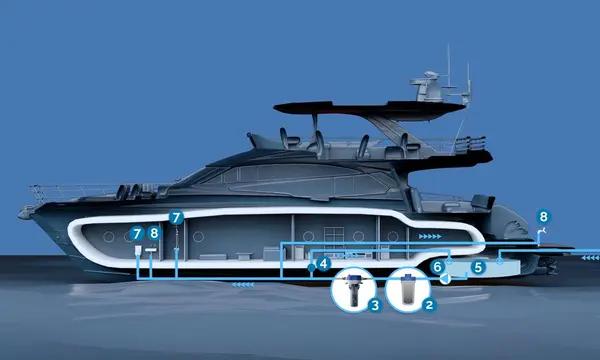
Sensiblue S4 gains a DAME 2026 category award for its salt-electrolysis water-disinfection concept, with superyacht freshwater safety and monitoring in focus.
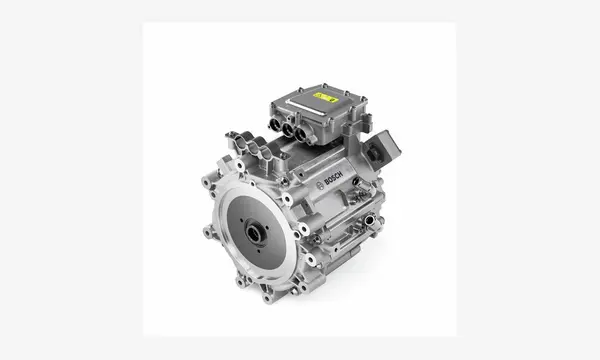
Bosch Engineering's 800V SMG230 electric motor brings a stated 200kW capability to marine power design, with installation and high-voltage safety under review.
Superyacht Guide
Continue into the wider Superyacht Guide.
Business opportunities · Superyacht Guide
Companies serving the superyacht market can discuss clearly identified advertising, sponsorship and business-profile opportunities. Commercial activity remains separate from independent editorial coverage.