SVENNER II Battery Safety Design Puts DNV Approval and Fault Containment in Focus
By Superyacht Guide Newsroom · Edited by Superyacht Guide Newsroom
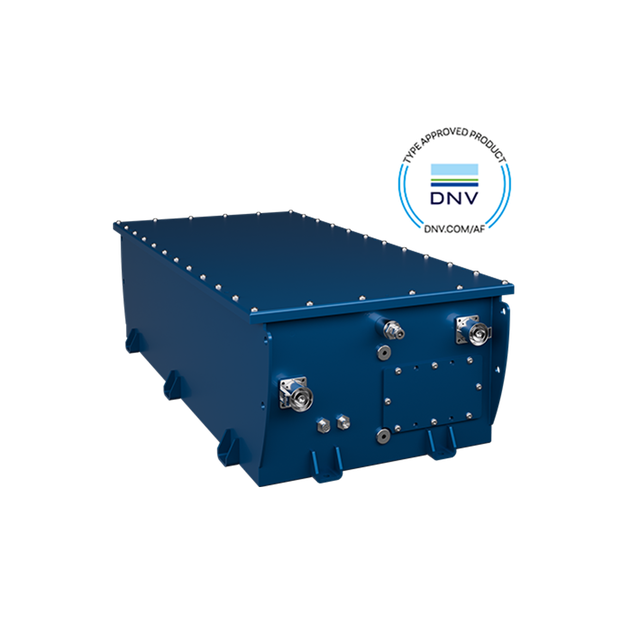
EPTechnologies official SVENNER II battery manufacturer photo — SYG 20261123 engineering focus batch07
EPTechnologies SVENNER II puts DNV approval, fault containment and battery cycle-life testing into focus as yacht engineers review marine energy storage.
Danish marine energy specialist EPTechnologies has drawn fresh attention to its SVENNER II solid-state-technology battery through the 2026 DAME Design Awards, where the product received a special mention in Electronic and Electrical Systems. The manufacturer's official METSTRADE catalogue describes a modular marine battery with DNV approval, a design intended to limit propagation of faults, advanced battery management and a claimed life of more than 10,000 cycles under specified conditions. These features matter to the superyacht sector, where increasing electrical demand is creating interest in compact storage for hybrid propulsion and quieter hotel-power operation. The product listing is dated May 2026, so the November news is the design-award recognition and renewed examination of the equipment, not the introduction of a product for the first time. Nor should the award be mistaken for independent testing of every possible installed system. Owners and engineers need to examine exactly what the technical documentation and approvals cover before treating any battery technology as a complete solution.
EPTechnologies identifies SVENNER II as a solid-state-technology marine battery developed for demanding electric and hybrid applications. The catalogue refers to DNV approval, modular scalability, remote monitoring and a design that seeks to prevent fault propagation. It states a cycle-life capability exceeding 10,000 cycles, but does not provide a full lifetime test report with all relevant environmental and charge-discharge assumptions in the short description. These details are significant, yet they remain manufacturer claims until examined against the corresponding certificates and supporting data. Buyers should ask what precisely is meant by solid-state technology, since that term can describe different cell and electrolyte architectures. The performance of the complete battery system depends not only on its chemistry, but also on thermal management, packaging, protective electronics and the installation environment. A credible engineering evaluation begins with a documented model and configuration.
Interest in solid-state batteries has grown because different architectures may offer opportunities for improved safety or energy density. However, the phrase solid state is sometimes used broadly in marketing, and not every product described that way has the same internal construction. The EPTechnologies announcement does not justify assuming a particular electrolyte composition or comparing the product directly with every experimental battery in another industry. Engineers should request the cell specification, test evidence and the approved marine product documentation. The important questions are how the battery responds to mechanical damage, overheating, internal faults and demanding discharge conditions. Claims of improved safety should be assessed within recognised test frameworks and the exact permitted operating limits. The yacht's technical team needs evidence of how the product behaves in an installed bank rather than a general claim that a technology category has solved all familiar lithium-battery hazards.
The catalogue states that the battery has DNV approval. This is a stronger and more specific statement than a generic claim of marine suitability, but it still requires verification of the actual certification scope. A chief engineer should request the current certificate, its holder, covered models, conditions and any restrictions. An approval of a battery module does not necessarily establish acceptance of every shipboard enclosure, charging arrangement or machinery-space design in which it might be installed. Other requirements may apply according to the yacht's class, flag and commercial status. The owner should know which project party will submit the full installation for approval and how any modifications to hardware or software affect the evidence. Certificates are important because they give engineering teams a framework for compliance, but they cannot eliminate the need for yacht-specific safety assessment.
Battery developers pay particular attention to limiting the consequences of a cell fault. Heat generated inside one cell can threaten adjacent components unless the design provides appropriate protection and separation. EPTechnologies describes its SVENNER architecture as having a no-propagation design. This is a technical claim that should be examined through the test regime and conditions used to support it. It must not be interpreted as a declaration that a battery can never fail, generate heat or require emergency measures. A complete marine installation should still include suitable monitoring, isolation, structural protection and procedures for responding to abnormal conditions. The engineering team also needs to assess how any gases, heat or other consequences would be managed in the chosen machinery space. The best safety systems combine several controls instead of depending on one feature or a slogan.
A manufacturer claim of more than 10,000 cycles attracts attention because batteries can be expensive components with significant replacement implications. Yet cycle life has meaning only when the end-of-life criterion, depth of discharge, temperature and charge-discharge rates are specified. A shallow daily cycle under controlled conditions can produce a very different lifetime result from repeated demanding high-power operation. Owners should ask how much usable capacity remains at the stated cycle count and whether the warranty reflects the same test conditions. A marine battery also ages while sitting unused, so calendar life and maintenance practices matter. It would be misleading to convert 10,000 cycles directly into a guaranteed number of years of service aboard a particular yacht. A sound ownership model should combine cycling and calendar assumptions with the vessel's actual energy use.
The SVENNER range is described as scalable, a feature potentially valuable where designers need to spread storage across more than one location or configure banks for a high-energy installation. Modularity can simplify manufacturing and allow engineers to select capacity in predictable increments, but the complete arrangement still needs appropriate wiring, switching, protection and mechanical support. The yacht's electrical designer should calculate fault current, charging requirements and the consequences of losing one part of the bank. Thermal conditions may vary between compartments, making uniform performance difficult if different modules are installed in different environments. Owners should also know whether additional modules can be installed later without changing other components or affecting warranty and approval. These questions should be answered before the arrangement is described as expandable. A battery bank is an integrated system, not merely a collection of identical boxes.
EPTechnologies refers to advanced battery-management electronics and remote monitoring as part of the product proposition. These can help operators see cell and module conditions, interpret alarms and provide useful records to service teams. Monitoring does not make a battery immune to damage, and remote access adds the need for secure configuration and sensible access permissions. A yacht may spend time without a dependable connection to shore, so essential safety functions should not depend on a cloud service. The system should operate within its approved local safety architecture even when monitoring screens or outside communications become unavailable. Chief engineers should request the alarm list, recording procedures and any permitted operator settings. Predictable fault behaviour and clear documentation matter more than an attractive dashboard. The shipyard should ensure that the battery controls are coordinated with the wider power-management system.
Many owners want to reduce generator running time when the yacht is anchored, especially during sleeping hours or guest activities that benefit from reduced vibration and noise. Batteries can supply hotel loads for a limited period, provided their capacity, discharge limits and the vessel's equipment demand have been matched. SVENNER II may be among the products considered for such an application, but its general catalogue does not establish the endurance of any named yacht. Air conditioning, galley equipment, entertainment systems and refrigeration can all affect the result. A useful energy plan should show normal and peak consumption, reserve margins and the charging strategy for the following day. The battery may help provide flexibility but does not generate energy. Its environmental benefits also depend on where electricity is sourced and what generators or engines are displaced in the vessel's real operating pattern.
A yacht using batteries for propulsion assistance may need to deliver high power for sustained periods, absorb regenerative or charging input where supported and coordinate several operating modes. These requirements differ from a system designed mainly for hotel loads. The propulsion integrator should review the battery's permitted voltage and current, thermal characteristics and response to rapid changes in load. A module that performs well in one application may not be optimal for another. The manufacturer describes a battery intended for electric and hybrid marine vessels, but the suitability of a proposed system must be demonstrated through the complete propulsion architecture. Owners need to know how the vessel behaves when a battery bank is isolated, how power demand is reduced in an emergency and whether a conventional propulsion route remains available. Design assumptions should be tested at sea rather than inferred from catalogue language.
Energy storage aboard a superyacht can occupy technical spaces close to other machinery and accommodation. That requires thoughtful structural and fire-safety planning even where the battery supplier reports strong internal protection. Engineers need adequate access, suitable cable routes, detection and emergency isolation procedures. The arrangement may also affect vessel stability, particularly if a large bank is added during a refit. The appropriate class or flag requirements should be reviewed from the start. A manufacturer approval is one part of the evidence chain, not the sole document required for a completed yacht. Crew should be trained on what alarms signify and when equipment must be isolated by authorised personnel. The installation should make it clear which actions are safe and which require specialist support. A battery system is most valuable when it integrates into the yacht's normal maintenance and emergency procedures without ambiguity.
Owners considering an energy-storage refit should begin with a survey of the vessel's electrical distribution, generators, charging equipment and machinery spaces. A new battery can offer more storage but may require changes to chargers, protective switching, cooling and control systems. The cost of that supporting work may be significant. Suppliers should provide actual dimensions, weight, service clearances and approved mounting conditions, together with warranty terms and availability of replacement modules. International cruising adds another dimension: it should be possible to obtain competent diagnosis and support away from the original installer. The full project budget should cover commissioning and documentation as well as the battery purchase. A genuinely maintainable installation will remain understandable to future engineers who did not participate in the refit.
The 2026 DAME result confirms a special mention for SVENNER II within the Electronic and Electrical Systems category. This should not be described as a category win or an overall award. Nonetheless, it marks industry attention to marine energy storage and the importance of design decisions surrounding fault protection and integration. EPTechnologies also markets wider propulsion and power-management products, making the battery part of a broader engineering ecosystem. Whether that integration is beneficial on a particular yacht depends on compatibility, commissioning and support. Owners should take the award as a signal to review the product's documented capabilities, not as a substitute for the normal procurement process. It is possible for a promising technology to require considerable development work before it is appropriate for a specific vessel.
EPTechnologies' SVENNER II brings several concrete manufacturer-reported characteristics to the superyacht energy-storage discussion: a solid-state-technology architecture, DNV approval, no-propagation design, monitoring, modularity and a high stated cycle-life figure. The DAME organiser verifies the product's special mention at METSTRADE 2026. The exact scope of approval, the assumptions behind the cycle rating and the safety performance of an installed system still require professional review. For owners and builders, that distinction is central. Advanced batteries may help yachts operate more quietly and support new propulsion designs, but only when the surrounding energy system is appropriate. A technology's greatest strength is not how innovative it sounds, but how clearly its limits can be documented and how consistently its performance can be maintained over years of service.
Primary source: EPTechnologies original SVENNER II solid-state marine battery METSTRADE product entry, dated 1 May 2026.
Further information: DAME Design Awards official 17 November 2026 product recognition and award list.
© EPTechnologies. Official manufacturer photograph showing the SVENNER II battery product. Official source.
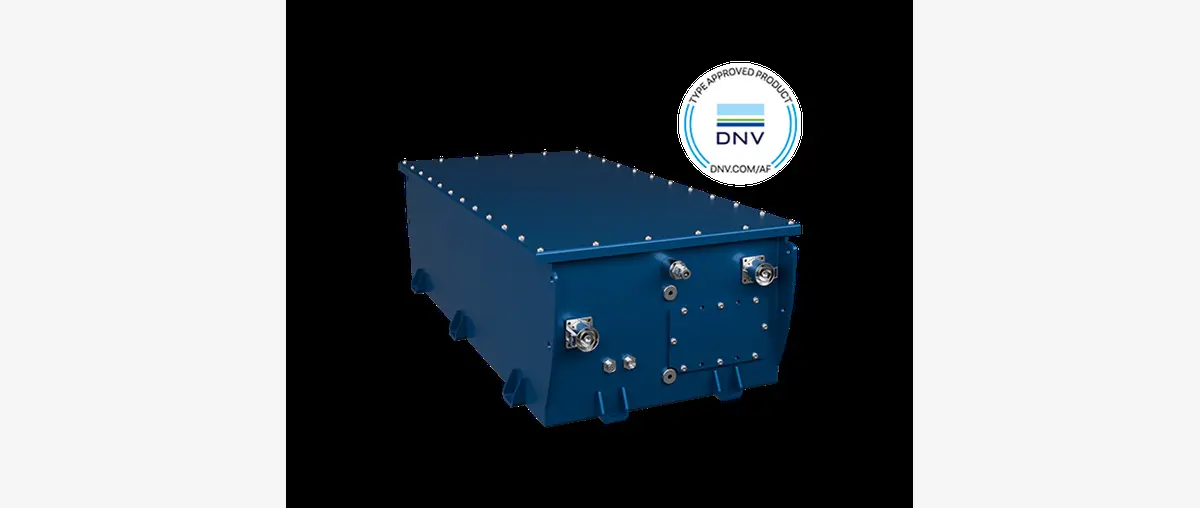
© EPTechnologies. Official manufacturer photograph showing the SVENNER II battery product.
Explore
Go deeper into the yachts, companies, events and destinations directly connected to this article.
Continue reading
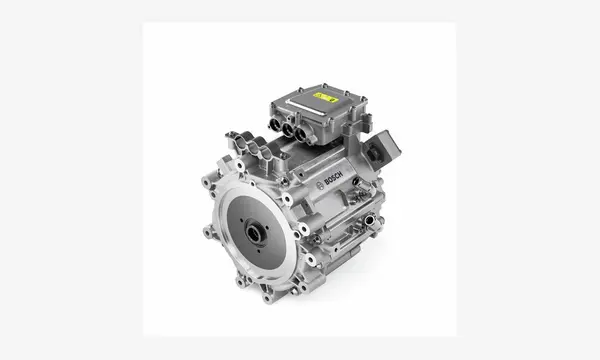
Bosch Engineering's 800V SMG230 electric motor brings a stated 200kW capability to marine power design, with installation and high-voltage safety under review.
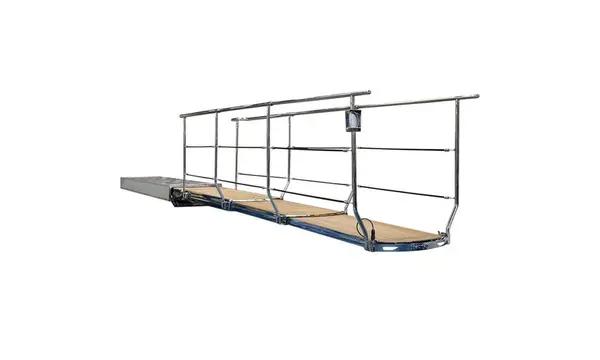
Opacmare details VIPER 1181 stainless-steel telescopic gangways with hydraulic actuation, multiple sections and a 150kg boarding limit at METSTRADE for crews.
MarQuip marks 25 years of specialist exhaust engineering, tracing its development from wet-exhaust technology to compact emissions systems for superyachts.
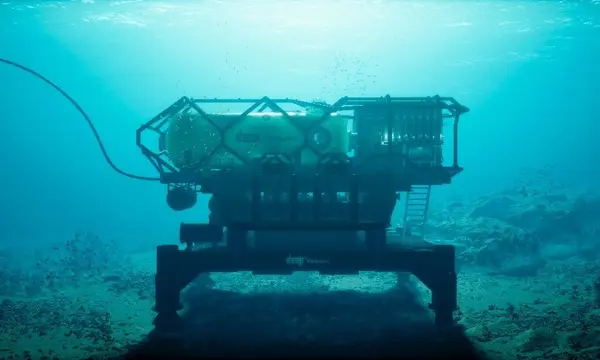
Triton Submarines provided engineering and integration assistance for DEEP's Vanguard human habitat, installed 17 metres underwater at Tennessee Reef in the Florida Keys.
Superyacht Guide
Continue into the wider Superyacht Guide.
Business opportunities · Superyacht Guide
Companies serving the superyacht market can discuss clearly identified advertising, sponsorship and business-profile opportunities. Commercial activity remains separate from independent editorial coverage.