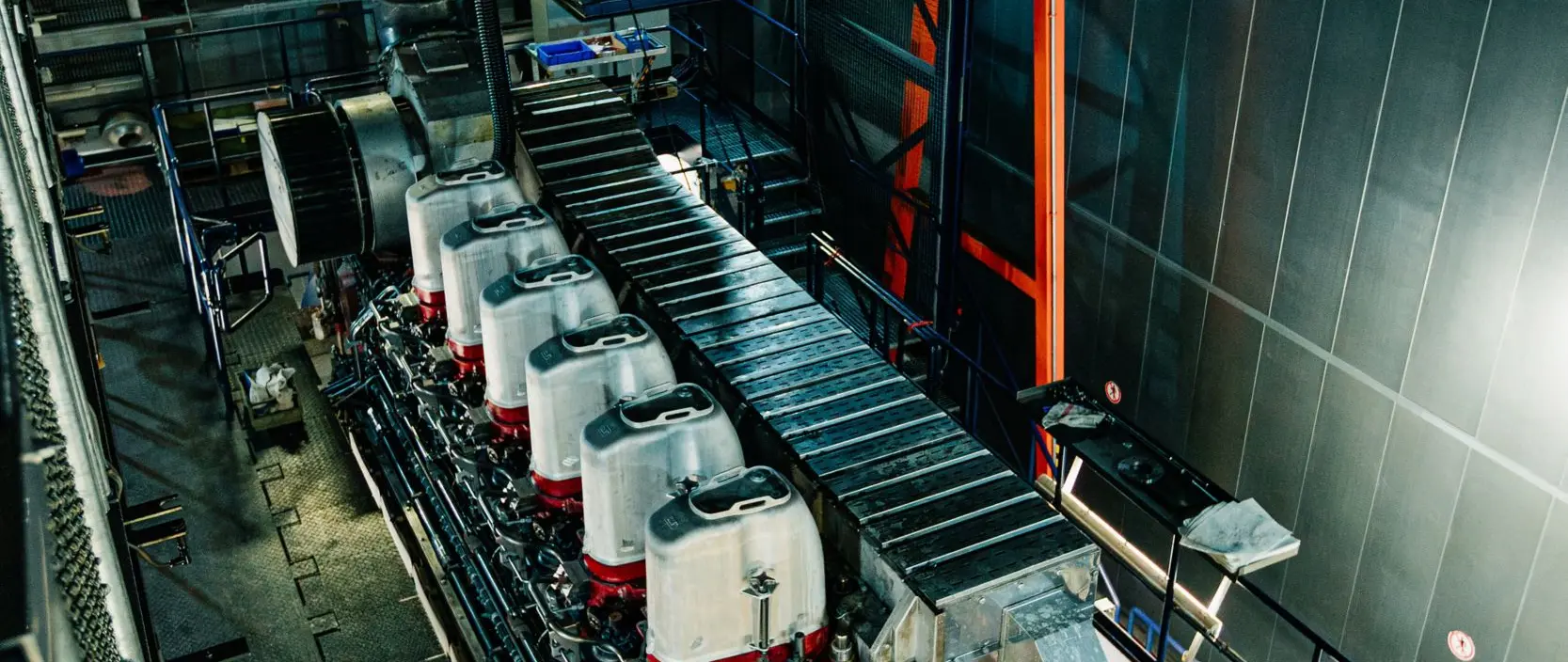
Caterpillar Wins DNV AiP for MaK Fuel-Blending Conversions
By Stephen Yardley · Edited by Stephen Yardley
Image: Caterpillar Marine
Caterpillar has received DNV Approval in Principle for a MaK fuel-blending conversion concept spanning M20 to M43 engines, with dual-fuel pathways including methanol.
Caterpillar Marine has received DNV Approval in Principle for a MaK fuel-blending conversion solution intended to give existing engines a lower-carbon pathway without requiring immediate replacement. The programme covers MaK M20 through M43 and legacy engines and is being developed around the practical reality that many large marine assets will remain in service for decades.
Caterpillar says the fuel-blending conversion can reduce greenhouse-gas emissions by up to 20 per cent, depending on the fuel and operating scenario. The company is also introducing a separate dual-fuel conversion option for M32 and M43 engines that can operate with up to 95 per cent methanol or ethanol by volume.
The significance of the DNV Approval in Principle is that it addresses machinery already in service rather than focusing only on new engines. For large yachts and support vessels with substantial investment tied up in existing propulsion packages, a conversion route can be more realistic than removing otherwise serviceable machinery simply to access a different fuel strategy.
Caterpillar links the programme to tightening greenhouse-gas requirements and the cost of replacing long-life marine assets. Fuel flexibility can also give operators more options from port to port, although the practical value will depend on the availability, quality and price of lower-carbon fuels in the vessel's actual cruising regions.
The new dual-fuel conversion for MaK M32 and M43 engines is designed to use up to 95 per cent methanol or ethanol by volume. Caterpillar says that can reduce greenhouse-gas emissions by up to 80 per cent based on the original carbon intensity of the fuel, while noting that tailpipe emissions remain the same as with fossil fuels.
That distinction is important because lifecycle carbon performance and local exhaust emissions are different measures. Owners evaluating methanol or ethanol therefore need to consider how the fuel is produced as well as what comes out of the exhaust, particularly when comparing renewable pathways with alcohol fuels derived from fossil feedstocks.
Although the MaK range is used widely across commercial shipping, the conversion concept is relevant to the upper end of the yacht market where larger machinery packages and long service lives make repower decisions expensive. A major refit can increasingly involve not just overhauling engines but deciding whether fuel tanks, piping, ventilation, controls and safety systems should be prepared for a different energy carrier.
Caterpillar is presenting the technology at SMM 2026 in Hamburg, alongside wider marine energy-room concepts covering biofuels, hybrid systems and electric architectures. That systems approach mirrors the direction of modern superyacht engineering, where propulsion, hotel load, batteries and generation are being considered as one energy-management problem.
DNV Approval in Principle confirms that the concept has been reviewed at an early engineering level, but individual vessel conversions will still require detailed design, class and statutory approval. Methanol and ethanol introduce their own storage, fire-safety and material-compatibility considerations, so a yacht-specific project cannot be reduced to an engine-software change.
Even with those constraints, the Caterpillar programme expands the number of pathways available to owners trying to preserve valuable machinery while preparing for lower-carbon fuels. The commercial question will be whether the cost and complexity of conversion compare favourably with replacement, hybridisation or continued operation on approved drop-in fuels such as HVO.
Explore
Go deeper into the yachts, companies, events and destinations directly connected to this article.
Continue reading
Intellian has given its new GMDSS Console a European debut at SMM while also showing the 65cm VS60 ViaSat-3 terminal and OneWeb maritime flat …

Furuno’s VNS-100 combines charts, radar, AIS and collision-risk visualisation in a 3D bridge environment designed to improve situational awareness in congested waters.
Baudouin has expanded its yacht-engine offering at Cannes with the compact 100kW 4M11 and a new 16M23 platform aimed at larger yacht applications.
Rolls-Royce has secured DNV Methanol Readiness for current mtu Series 4000 marine engines after more than 5,000 hours of methanol testing, preserving a future …
Superyacht Guide
Continue into the wider Superyacht Guide.