Company
Cayman Islands Shipping Registry
Explore the company profile and related Superyacht Guide coverage.
Cayman Registry’s voluntary yacht notations cover enhanced fire protection, survivability, seaworthiness and future weight-growth margin under the REG Yacht Code.
Cayman Islands Shipping Registry has introduced a set of additional voluntary flag notations that allow yachts to record safety and design features going beyond the baseline requirements of the Red Ensign Group Yacht Code. Guidance Note 04/2026, revised in May 2026, sets out five current notations covering fire safety, passive fire protection, survivability, seaworthiness and future weight-growth margin.
The notations are voluntary rather than a new layer of mandatory regulation. Their purpose is to give owners, builders, surveyors and future buyers a formal way to document selected higher standards on the yacht’s Cayman statutory record when the vessel meets the defined criteria.
The Fire Safety+ notation can be assigned to a yacht below 500 GT when accommodation and service spaces are protected by a sprinkler system complying with the relevant fixed fire-extinguishing provisions of the 2024 REG Yacht Code, as amended. Cayman excludes short-range yachts in the 300-499 GT bracket where a sprinkler has already been fitted simply to meet a mandatory requirement, because the voluntary notation is intended to identify protection beyond the baseline.
That distinction is important when interpreting any voluntary class or flag notation. A badge has value only if it represents a genuine additional standard, so a system that is already compulsory for a particular yacht cannot logically be presented as evidence that the vessel exceeds the rules.
For owners planning a new build below 500 GT, the notation provides a reason to consider enhanced fire protection during specification rather than after delivery. Retrofitting sprinklers can involve pipework, tanks, pumps, electrical integration, ceiling access and interior disruption, whereas incorporating the system during construction is generally easier.
Passive Fire Protection+ applies to short-range yachts below 500 GT that meet the structural fire-protection requirements used for unrestricted-service yachts under the REG Yacht Code. Instead of relying only on active systems such as detectors and extinguishers, passive protection is concerned with construction standards that limit the spread of heat and fire through divisions and boundaries.
Survivability+ addresses a different hazard. Cayman says the notation can be assigned to short-range yachts below 500 GT whose approved stability booklet demonstrates compliance with the Yacht Code’s damage-stability criteria, meaning the vessel has been assessed for its ability to remain in a safe condition after specified flooding damage.
Both notations potentially matter in the resale and insurance context because they record design decisions that are difficult to judge from a normal sales specification. A buyer can see that the yacht has been assessed against a defined higher standard rather than relying on an unverified statement that the vessel was “built beyond code.”
The Seaworthiness+ notation can be assigned where the yacht’s stability booklet demonstrates compliance with the severe wind and rolling criterion in the IMO 2008 Intact Stability Code. That criterion examines the vessel’s ability to resist a combination of wind pressure and rolling rather than considering calm-water stability alone.
Stability is a technical subject that cannot be reduced to one notation, and compliance does not mean a yacht is safe in every weather condition. Loading, free-surface effects, watertight integrity, operational decisions and the master’s judgement remain critical, but an additional verified criterion can provide useful evidence of the design margin built into the vessel.
For expedition and long-range yachts in particular, owners may value formal confirmation of standards that reflect more demanding operating profiles. The notation does not replace voyage planning or weather avoidance, but it can become one part of the technical case for a yacht intended to operate beyond sheltered or seasonal cruising areas.
The Weight Growth+ notation is available where the yacht’s stability documentation includes a future weight-growth margin greater than 5% of lightweight, confirmed at the initial survey and then reconfirmed at five-year intervals. The idea addresses a familiar problem in long-lived yachts: vessels frequently become heavier as tenders, entertainment systems, batteries, communications equipment, interior modifications and other refit additions accumulate.
Weight growth can affect draft, trim, speed, fuel consumption and stability, particularly when additions are placed high in the yacht. Designing a meaningful reserve into the original stability condition gives future refit teams more room to modify the vessel without immediately consuming the margins assumed during construction.
The five-year reconfirmation requirement is equally important because an allowance on the original drawings has little value if nobody checks how much of it has been used. Periodic lightship surveys and accurate weight records help owners understand whether the yacht is approaching a point where further modifications require a more detailed stability review.
Cayman’s guidance is directed not only at existing yachts but also at owners and technical teams developing new projects under the Red Ensign framework. Deciding early whether a yacht should target one or more voluntary notations allows the naval architect, yard and surveyor to incorporate the necessary features into drawings, calculations and construction plans.
The five notations also demonstrate how flag administrations can use optional standards to encourage better practice without making every enhancement compulsory for every yacht. A short-range 400 GT vessel, a 499 GT private yacht and a much larger unrestricted yacht have different risk profiles, so a targeted notation can communicate an additional capability without rewriting the whole code.
Owners should still read each notation within its defined scope. Fire Safety+, Passive Fire Protection+, Survivability+, Seaworthiness+ and Weight Growth+ do not certify that every aspect of a yacht exceeds minimum standards, but they provide a verifiable record that particular features have been surveyed against criteria published by the Cayman Registry.
From a documentation perspective, the notations may also improve continuity when a yacht changes owner, manager or surveyor. A formal entry backed by approved calculations and survey evidence can survive those changes more reliably than project knowledge held only in yard correspondence or the memories of the original technical team.
That can also make technical due diligence more efficient during a sale or refinancing. Survey records tied to a defined flag notation give advisers a clearer starting point than marketing language alone, while still requiring the underlying documents to be reviewed.
Explore
Go deeper into the yachts, companies, events and destinations directly connected to this article.
Company
Explore the company profile and related Superyacht Guide coverage.
Continue reading
Superyacht VAT and EU Importation Explained for Owners EU VAT and customs treatment depends on where the yacht is established, owned, imported and used; …
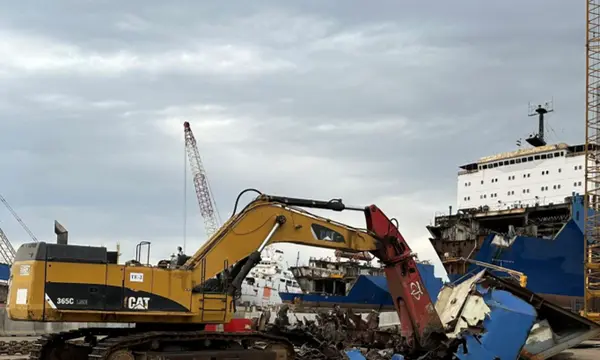
The European Commission says the EU Ship Recycling Regulation has largely raised environmental and social standards, but reflagging and weak hazardous-material inventories still undermine …

A superyacht can be easy to locate but far harder to connect legally to the person authorities want to target. Layered companies, differing ownership …
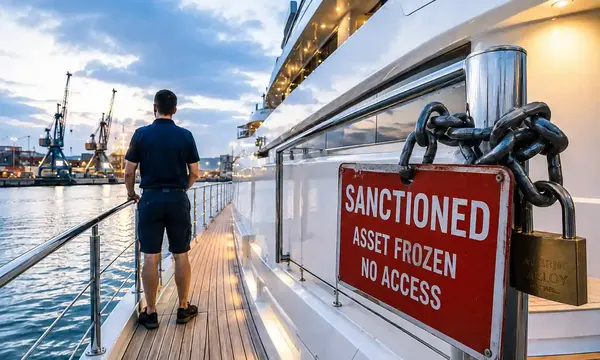
A sanctions freeze can immobilise a superyacht without making its crew sanctioned, leaving wages, contracts and daily operations caught between employment law and financial …
Superyacht Guide
Continue into the wider Superyacht Guide.